I’m not the only one who has been warning about this kind of lawfare being deployed in the PCA, but these recent cases are exactly what many of us have been talking about.
Consider two examples: Burke Parsons and @ZacharyGarris.
I would be surprised if either suspension ultimately stands if appealed all the way through the process. But that is exactly the problem.
The process is long. In the meantime, these men are suspended from office. They are sidelined from pastoral ministry. Their churches are disrupted. Their people are left without their shepherd. Even if the suspension is eventually overturned, the process itself becomes the punishment.
That creates a dangerous incentive structure. Men can use the courts of the church to temporarily remove pastors over charges they likely know will not hold up under final review. The accusations are often tied to elastic applications of ninth commandment violations, claims of “harshness,” or other highly subjective standards.
Take Garris. He was suspended for poking fun at Dr. Anthony Bradley by saying there are some things so complex that even a PhD cannot understand them. Frankly, that is funny. Dr. Bradley regularly invokes his credentials in ways that invite that kind of jab. To have a church lose its pastor, even temporarily, over something like that is absurd.
This kind of judicial maneuvering does real damage.
It chills ordinary pastoral speech. It rewards strategic accusations. It destabilizes local churches. And it sends a clear message to younger men: enter this denomination, and you may find yourself sidelined for months over charges that will eventually be overturned.
If the older conservatives in the PCA do not step up and use their authority to stop this sort of procedural abuse, younger men are going to ask a very reasonable question:
Why would I come into, or remain in, a denomination where the process itself can be weaponized against faithful pastors?
This is not mainly about whether these particular men win on appeal.
It is about whether constitutional process in the PCA will be used to secure justice or to exercise ideological control by other means.
#SavethePCA
Charles Krauthammer once said that conservatives view their politicians as tools. Liberals want to love their candidates whereas conservatives want their candidates to be useful.
A friend of mine returned from TGC this past week and said that some of the people he met there were saying that women can "shepherd" disciples in the church. (Many limited this to "shepherding" other women, while others did not. Some even used the word "pastor" as a title for women's ministry in the church.)
I have no idea whether this is the official position of those with authority at TGC, but I do know that these sorts of language games are slippery slopes that often precede full-blown egalitarianism, whether those engaging in such language realize this or not.
Besides all this, referring to the activity of women (or unordained men) in the church as "shepherding" lacks biblical precedent.
The verb ποιμαίνω (to shepherd) is only used 11 times in the NT. It refers to:
1. The ruling activity of Jesus (Matt. 2:6; Rev. 2:27; 7:17; 12:5; 19:15)
2. The literal activity of shepherding literal animals (Luke 17:7; 1 Cor. 9:7)
3. The activity of apostles and elders as overseers of the flock of God (John 21:16; Acts 20:28; 1 Pet. 5:12)
4. The activity of false teachers who feed themselves instead of caring for God's people (Jude 1:12)
That's it.
Thus, the burden of proof is on those who want to make the case that women can "shepherd" in some sense other than how the Scriptures use the term.
The same goes for the noun form of "shepherd" (ποιμήν), which is used 17 times to refer to:
1. Literal shepherds of literal sheep (Luke 2:8, 15, 18, 20)
2. The role of Jesus vis-à-vis the people of God (Matt. 9:36; 25:32; 26:31; Mark 6:34; 14:27; John 10:2, 11, 12, 14, 16; Heb. 13:20; 1 Pet. 2:25)
3. The role of "pastors [shepherds] and teachers" (Eph. 4:11), which shares a single definite article in the Greek [τοὺς δὲ ποιμένας καὶ διδασκάλους], linking the two terms as either being (a) synonymous or (b) related in some categorical fashion. Dan Wallace argues for the latter in his Greek Grammar Beyond the Basics, saying that Paul seems to envision a distinction between pastors who shepherd and pastors who both shepherd and teach with authority (cf. 1 Tim. 5:17).
Many people stake their entire argument for "women shepherds" on Ephesians 4:11, but, once again, this goes against the hermeneutical principle of clearer texts interpreting less clear texts. And since the NT never uses the noun or verb forms of "shepherd" to refer to anyone except Jesus, literal shepherds of literal animals, elders/overseers, and false teachers, there is simply no warrant for using the unclear and unhelpful language of women "shepherding" in the church.
Why not stick closer to the way the Bible speaks? Why not speak of "teaching what is good" [καλοδιδασκάλους] as Paul does in Titus 2:4, where they "encourage [σωφρονίζωσι] the young women to love their husbands and children, to be self-controlled, pure, working at home, kind, and submissive to their own husbands, that the word of God may not be reviled" (Titus 2:5)?
I suspect the reason so many are eager to use biblical words in extra-biblical ways is because they think it will be a pressure-release valve for the mounting pressure conservative churches feel as the Western world moves further and further away from a biblical vision of the sexes. This won't end well, and if you're part of a church that is flirting with this sort of terminology, I'd urge to you reconsider your course before you slide further from how the Scriptures speak about these matters.
What is much more important than the hyperventilating over Christian Nationalism, is the opposite: Christian secularism. Core beliefs about morality, justice, and government completely neutered because we don’t want to “force” our beliefs or “religious liberty”
Here’s a simple way to get unstuck when you’re worried, overwhelmed, or overthinking a decision.
Ask yourself one question:
What kind of thing am I dealing with?
Most issues fall into one of three categories.
1. Settled Things
These are things that have already been decided.
Your birth family.
Your nation of origin.
Your height.
Your past decisions.
Your upbringing.
Things you did.
Things done to you.
Some of these things were decided by your own past actions. Others were decided by God’s providence. As Paul says in Acts 17:26, God determined our appointed times and the boundaries of our dwelling place.
You can’t go back and change these things.
So the question is not, “How do I undo this?”
The question is, “Does this have any bearing on what I should do now?”
If not, leave it alone. Don’t spend your life fighting settled things.
2. Action Things
These are things you have some real control over.
Your diet.
Your exercise.
Your spending.
Your work ethic.
Your attitude.
Your friendships.
Your theological knowledge.
Your presentability.
Your habits.
Your skills.
These are your controllables.
You may not control everything about your health, finances, relationships, or future. But you usually control more than you think.
So if the issue falls here, don’t overthink it.
Take direct action.
Start small if you have to. Make the call. Go on the walk. Open the Bible. Apologize. Apply for the job. Pay the bill. Clean the room. Do the next faithful thing.
3. Prayer Things
These are things outside your direct control, but not outside God’s control.
The economy.
The weather.
The housing market.
The availability of a suitable spouse.
Other people’s choices.
Timing.
Open doors.
Closed doors.
You can’t force these things. You can’t grab the steering wheel of providence.
But God can act.
So you take indirect action through prayer. You ask. You wait. You prepare. You remain faithful. You do what you can do and trust God with what only He can do.
So ask yourself:
Is this settled?
Then accept it and learn from it.
Is this actionable?
Then do something.
Is this outside my control?
Then pray and trust God.
This is a simple framework, and yes, it’s a little reductionistic. But that’s the point. The goal is not to explain every complexity of life. The goal is to get you unstuck.
Most people waste too much energy trying to change the past, control what belongs to God, or pray about things they simply need to obey.
So categorize the issue.
Then act accordingly.
Accept what is settled.
Act on what is yours.
Pray over what belongs to God.
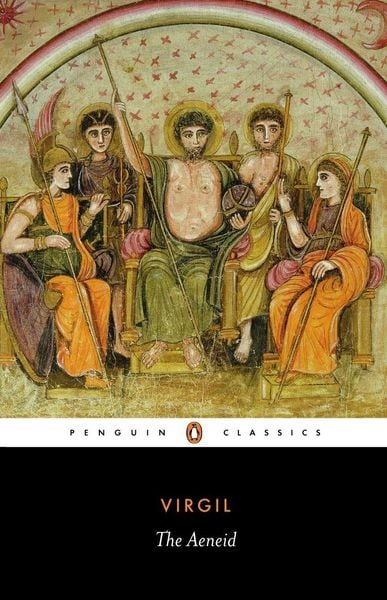
A 19-year-old Oxford student in 1900 would have read:
— Homer
— Virgil
— Thucydides
— Xenophon
— Plato
— Aristotle
— Sophocles
— Horace
— Tacitus
— Cicero
Likely in the original Greek or Latin.
Today, many elite graduates struggle to finish a book they weren’t assigned.
Why did schools abandon the classics?
"Modern schooling is systematically terrible at forming well-adjusted, curious, intellectually creative, entrepreneurial adults.
Schools, even much better schools, cannot solve this.
Here's the truth: Nobody loves your kids as much as you do."
- @BenSasse at the 2026 Alexander Hamilton Awards
Some people who jump from place to place are deeply in love with this world.
Some who lay their heads down in a home built by their great-grandfather are sojourners, with their eyes locked on heaven.
Americans married by age 30
1975
> Women 91.0%
> Men 81.0%
1985
> Women 77.5%
> Men 67.7%
1995
> Women 64.0%
> Men 54.4%
2005
> Women 50.5%
> Men 41.1%
2015
> Women 37.0%
> Men 27.8%
2025
> Women 25.6%
> Men 16.5%
The stats are depressing and has no end in sight
“Only then will our political activity bear fruit and result in something more than ‘business as usual,’ mendacity and mere opportunism, in the District of Columbia.”
— M.E. Bradford, 1986
“We need now to make certain that we are more than an alternate crew for their out-of-date engine, and that the destination of our journey is quite different from the one our adversaries had in mind.








![dougponder's tweet photo. A friend of mine returned from TGC this past week and said that some of the people he met there were saying that women can "shepherd" disciples in the church. (Many limited this to "shepherding" other women, while others did not. Some even used the word "pastor" as a title for women's ministry in the church.)
I have no idea whether this is the official position of those with authority at TGC, but I do know that these sorts of language games are slippery slopes that often precede full-blown egalitarianism, whether those engaging in such language realize this or not.
Besides all this, referring to the activity of women (or unordained men) in the church as "shepherding" lacks biblical precedent.
The verb ποιμαίνω (to shepherd) is only used 11 times in the NT. It refers to:
1. The ruling activity of Jesus (Matt. 2:6; Rev. 2:27; 7:17; 12:5; 19:15)
2. The literal activity of shepherding literal animals (Luke 17:7; 1 Cor. 9:7)
3. The activity of apostles and elders as overseers of the flock of God (John 21:16; Acts 20:28; 1 Pet. 5:12)
4. The activity of false teachers who feed themselves instead of caring for God's people (Jude 1:12)
That's it.
Thus, the burden of proof is on those who want to make the case that women can "shepherd" in some sense other than how the Scriptures use the term.
The same goes for the noun form of "shepherd" (ποιμήν), which is used 17 times to refer to:
1. Literal shepherds of literal sheep (Luke 2:8, 15, 18, 20)
2. The role of Jesus vis-à-vis the people of God (Matt. 9:36; 25:32; 26:31; Mark 6:34; 14:27; John 10:2, 11, 12, 14, 16; Heb. 13:20; 1 Pet. 2:25)
3. The role of "pastors [shepherds] and teachers" (Eph. 4:11), which shares a single definite article in the Greek [τοὺς δὲ ποιμένας καὶ διδασκάλους], linking the two terms as either being (a) synonymous or (b) related in some categorical fashion. Dan Wallace argues for the latter in his Greek Grammar Beyond the Basics, saying that Paul seems to envision a distinction between pastors who shepherd and pastors who both shepherd and teach with authority (cf. 1 Tim. 5:17).
Many people stake their entire argument for "women shepherds" on Ephesians 4:11, but, once again, this goes against the hermeneutical principle of clearer texts interpreting less clear texts. And since the NT never uses the noun or verb forms of "shepherd" to refer to anyone except Jesus, literal shepherds of literal animals, elders/overseers, and false teachers, there is simply no warrant for using the unclear and unhelpful language of women "shepherding" in the church.
Why not stick closer to the way the Bible speaks? Why not speak of "teaching what is good" [καλοδιδασκάλους] as Paul does in Titus 2:4, where they "encourage [σωφρονίζωσι] the young women to love their husbands and children, to be self-controlled, pure, working at home, kind, and submissive to their own husbands, that the word of God may not be reviled" (Titus 2:5)?
I suspect the reason so many are eager to use biblical words in extra-biblical ways is because they think it will be a pressure-release valve for the mounting pressure conservative churches feel as the Western world moves further and further away from a biblical vision of the sexes. This won't end well, and if you're part of a church that is flirting with this sort of terminology, I'd urge to you reconsider your course before you slide further from how the Scriptures speak about these matters.](https://pbs.twimg.com/media/GpdnnSbXgAAvG5u.png)