The world’s first regular high-definition television service began from Alexandra Palace today in 1936. Read the history of Alexandra Palace palace https://t.co/W7GbGXRu9A
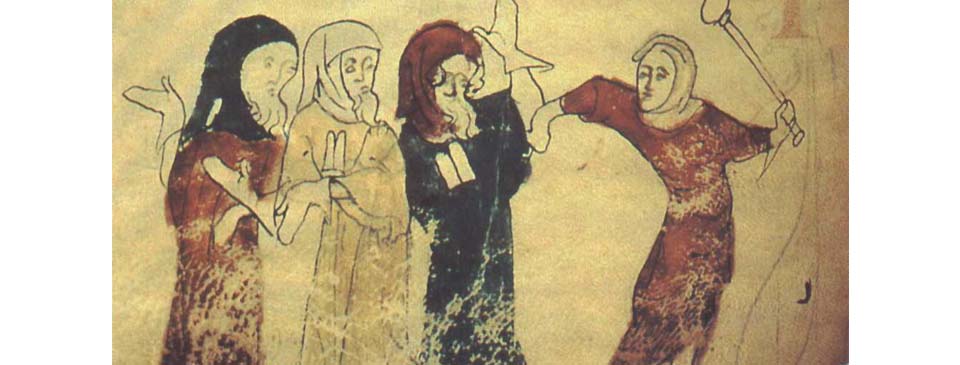
All Jews were forced by Edward I to leave England today in 1290 or face death. Read here about the Jews of medieval London and their expulsion from the country. https://t.co/AHlpavaL70
The foundation stone of the original Blackfriars Bridge was laid today in 1760 by the Lord Mayor of London, Sir Thomas Chitty. Remarkably, it was the first work of a young (and then unknown) Scotsman. Read here about the creation of the bridge https://t.co/NLAL7icCKe
The coronation of Henry VII took place today at Westminster Abbey in 1485. To help legitimize his right to the crown Henry commissioned the abbey's incredible Lady Chapel. Read here about Westminster Abbey in the Tudor period https://t.co/6p17f9yGJf
These almshouses at Highgate were founded in the mid-17thC by merchant Sir John Wollaston for 6 men and 6 women of the parish of Hornsey. Rebuilt in 1722 by Sir Edward Pauncefort for 12 women, with a school added for girls. Now merged into larger sheltered homes for the elderly.
Today in 1647 the Putney debates began between Oliver Cromwell and the army commanders and the rank and file of the New Model Army. Read here about London and Parliament following the defeat and imprisonment of Charles I https://t.co/LVEGLtYImN
By the 19thC the churchyards of the City were overflowing, bodies buried on top of others. Land owned by the 2nd Duke of Wellington at Manor Park was purchased and the City of London Cemetery opened for new burials. Many remains from City churchyards have also been reinterred.
The St. Katharine Docks were opened today in 1828. To create them 11,000 people were displaced from their homes and an ancient and historic church destroyed. Read here about the creation of the St. Katharine Docks https://t.co/zEX6C3c26v
The opulent Dudley House is one of the last surviving grand houses on Park Lane. It was rebuilt for the Earl of Dudley in the 1820s, replacing the former house of the Earls of Dudley that was acquired by the family in the 1740s. It remains as a private residence.
This wall survives from the notorious Marshalsea Prison at Borough in South London, which closed in 1842. The father of Charles Dickens was imprisoned there in 1824 and it features in two of his books, David Copperfield and Little Dorrit.
The East India Docks were opened at Blackwall in East London in 1806 for ships bringing tea, spices, silk and other goods from the Far East. Read the history of the East India Docks here https://t.co/haFQ8Bd7eg
@CharlieIOD Possibly, but it was only developed in the same year he died. It was originally named Orange Street and was one of several later renamed in his honour, including nearby Dorrit Street.
Fulham Palace, beside the Thames in West London, was the home of the Bishops of London for almost 1,300 years. Read the history of the palace here https://t.co/VqAgJMPYk1
David Garrick, the most famous actor of his time, made his London stage debut today in 1741 at Goodman’s Field Theatre playing his celebrated role of Richard III. Read here about the life of David Garrick https://t.co/RmlPhBjfB8
Bedford Square, east of Tottenham Court Road, was laid out in the 1770s on land owned by the Duke of Bedford to provide residences for London's upper middle class. The last house was completed in 1784. It remains as one of the capital's best-preserved and scenic garden squares.