Sharing a FB post
Steve Kuštro
An Open Letter to Croatia
There comes a point in life when staying silent becomes harder than speaking the truth.
For years I have watched the relationship between Croatia and the Croatian diaspora slowly drift apart. Every election brings the same speeches about unity, patriotism and how Croats around the world are an important part of the nation. Every anniversary celebrates our shared history. Every politician proudly talks about Croatian identity.
Then the speeches end, the cameras disappear, and many of us in the diaspora are once again reminded that we are expected to remain on the outside looking in.
That is something I can no longer stay silent about.
I was raised in Australia, but I have never spent a single day thinking of myself as anything other than Croatian. That isn't something written on a passport. It isn't decided by where I was born or where I built my career. It was taught to me by my parents and grandparents. It lived in our home, in our language, around our dinner table, in our church, in our community and in every Croatian flag that proudly flew at our gatherings.
Croatia was never simply a country on a map. It was part of who we were.
Growing up, many of us understood there could be consequences for openly expressing that identity. Families whispered about phone calls that they believed were being listened to. Letters sometimes arrived already opened. People were cautious about what they said and who they said it to. Whether every fear was justified or not, the feeling of being watched was real for many in our communities, and it left a lasting impression.
Yet none of that changed who we were.
It only strengthened our resolve.
While distance separated us from the homeland, it never separated the homeland from our hearts.
When Croatia needed support, the diaspora answered.
Not because anyone forced us to.
Because we believed it was our duty.
We raised money. We organised community events. We spoke to neighbours, politicians and anyone willing to listen. We defended Croatia's name when others misunderstood it. We carried our history with pride, and we taught our children that being Croatian was something to cherish, never something to hide.
We did those things because we believed we belonged.
That belief has never changed.
What has changed is the feeling that our contribution is too often forgotten.
Too often we are spoken to as though we are visitors in our own homeland. Too often the diaspora is remembered only when investment is needed, when votes are needed, or when another photograph is required with Croatian communities overseas.
Respect cannot work like that.
You cannot celebrate the diaspora one day and dismiss it the next.
You cannot speak about national unity while making those who have spent generations preserving Croatian identity feel like outsiders.
The Croatian diaspora is not an inconvenience to be managed.
It is part of Croatia itself.
Our story is woven into the story of the nation. Our sacrifices, our traditions, our work and our commitment helped preserve Croatian identity across the world. That is not a favour we did for Croatia. It was simply what families like mine believed was the right thing to do.
And we would do it all again.
What disappoints me most is not criticism. Every democracy should welcome disagreement.
What disappoints me is indifference.
The assumption that those of us who built lives in Australia, Canada, Germany, Sweden, the United States and elsewhere somehow care less simply because we live beyond Croatia's borders.
Nothing could be further from the truth.
Love for a homeland is not measured in kilometres.
It is measured in commitment.
It is measured by what you pass on to your children.
It is measured by what you refuse to forget.
It is measured by what remains in your heart after decades abroad.
That is why I am writing this letter.
Not because I want to divide Croats.
Because I want us to remember that we are one people.
One history.
One future.
And there is one final thing that I believe many people in Croatia have not yet realised.
The Croatian diaspora is changing.
The generation that left Croatia after the war is growing older.
Their children and grandchildren are now professionals, business owners, artists, engineers, doctors, builders, entrepreneurs and community leaders.
Many are now looking back towards Croatia.
Not simply for holidays.
Not simply to retire.
But to invest.
To build businesses.
To restore family homes.
To reconnect with their heritage.
To raise their own children knowing where they came from.
We are returning.
Not because anyone invited us.
Because Croatia has always been our home.
We are returning with knowledge.
We are returning with experience.
We are returning with ideas.
We are returning with investment.
Most importantly, we are returning with the same love for Croatia that our parents carried before us.
We are not coming to ask permission to belong.
We already belong.
We always have.
The Croatian diaspora has waited long enough to be heard.
Now we intend to speak.
Not with anger.
Not with bitterness.
But with confidence.
Because our place in Croatia's story has already been written.
Now we intend to help write its future.
We are returning.
And this time, we will not simply watch from afar. We will help shape the Croatia that future generations inherit.
Because we never stopped believing this was our homeland.
Now we are coming home.
— Steve Kustro
"Imagine a scenario where everything sucked and you were miserable."
"Will this help me at all?"
"No it just makes you MORE miserable with no discernible purpose!"
Football is the largest shared ritual left in Western civilization. Not the most refined. The most real.
1. When God died and the Church emptied, what filled the void for the masses wasn’t philosophy – it was football. The stadium became the cathedral. The club colors the liturgy. The season the liturgical calendar. The derby the holy war. Millions of people who cannot name a single philosopher know exactly what they felt when their team won the championship. That feeling is not trivial. It is the survival of something ancient and necessary – tribal solidarity, collective identity, the experience of belonging to something larger than yourself.
2. The club is inherited like a religion. Father to son, grandfather to grandson, the colors worn like a flag across generations. This is Aristotle’s political animal finding its natural habitat – the community of strangers bound by something they didn’t choose and cannot fully explain. You support your club the way you love your country: not because it is the best, but because it is yours. That irrational loyalty is not a bug. It is the mechanism by which civilizations transmit identity across time.
3. The pitch is the last space in Western civilization where results cannot be managed, narrated, or captured by ideology. The ball goes in or it doesn’t. No diversity statement wins a championship. No committee changes it. This is why people trust it with a depth they trust almost nothing else – it is the last remaining public meritocracy, operating in real time, with no possibility of spin. We would be well advised to apply such meritocracy to the more important areas of life.
4. But bread and circuses is the oldest formula in politics, and it works as reliably now as it did in Rome. The crowd cheering in the arena is the crowd not asking questions in the Senate. Football is simultaneously the most authentic community left in Western civilization and the most efficient distraction machine ever built. A population that knows every transfer fee and no political philosophy is a population that has been given exactly enough meaning to stop looking for the rest.
5. The capture is now complete at the top. The clubs that once belonged to communities now belong to sovereign wealth funds, American hedge funds, and oligarchs using sporting prestige to launder geopolitical reputation. Players have no loyalty to the cities whose shirts they wear – they are assets, transferred between portfolios. The World Cup is hosted by states that criminalize the lifestyle of millions of fans who follow it. The financial architecture has been engineered to concentrate power at the top and extract value from the bottom – from the supporter who buys the shirt, pays the subscription, and hands over his genuine emotion to an entity that regards it as a revenue stream.
6. The system cannot change the game – it is too visible, too meritocratic, too honest. So it buys the clubs instead. This is the Machiavellian move applied to sport: when you cannot win on the pitch, acquire the pitch. When the institution is too legitimate to attack, capture it from above and hollow it out from within while leaving the form intact. The stadiums are full. The game is real. The ownership structure is indistinguishable from the forces hollowing out every other institution in Western civilization.
7. The tension is this: football is both the last authentic mass community in Western civilization and a machine being used to pacify it. The solidarity in the stands is real and the distraction it provides is real and the financial capture at the top is real – all simultaneously. The answer is not to abandon it. It is to see it clearly – to love the game, defend the local club, resist the financialization, and understand that the passion you feel in the stadium is a civilizational resource worth protecting. The cathedral still stands. The congregation still comes. The question is who owns the building – and what they plan to do with it.
"claude fable just proved the jacobian conjecture is false"
"incredible this changes everything"
"do you know what the jacobian conjecture is?"
"no, do you?"
"no"
I'm planning to tell my babies as much as I can about what matters in life, values, what's true and worthwhile, and what makes you happy, because I don't remember my parents telling me any of that. Instead they said I should do and be whatever I wanted to be. So instead of telling me what was true and worthwhile about human life, they were asking me. And I was a child. In hindsight that was a stupid mistake to make but they were caught up in the bullshit of the times so you can't hold it too much against them. It's obvious to us now sure, but one of the things I had to learn the hard way is that you shouldn't hold on to grudges, because you are just holding onto something that pains you, and the pain stops of you just stop holding on to it. People hold on to it because pain is easier than uncertainty, and to stop holding on to the pain is to embrace uncertainty. It's not a great choice, and it's not easy, but there is a right answer, and it's the same right answer for everyone, no perspectivism or diversity needed. Just as there is to "what is good and true and worthwhile in life"
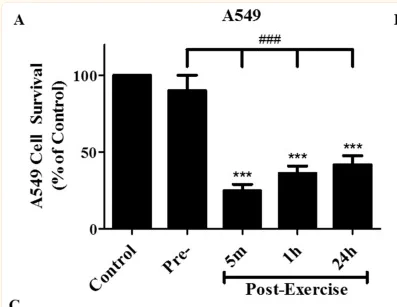
Exercise kills cancer.
When blood serum from men who performed a bout of high-intensity exercise was added to cancer cell culture, the cells died. No effect on normal cells.
Every time you exercise with intensity, you're inhibiting cancer.
People-pleasing is genuinely one of the dumbest ways you can go through life for a variety of reasons.
For starters, most people have no clue what they even truly want, so you can't "please" them.
In fact, if you give them what they say they want, they'll often get angry at you because they didn't really want it.
Then 33% of people will dislike you by default for a variety of reasons you can not control.
You can not change this. Forget about it.
33% of people will dislike you due to projections, biases etc.
And of course, it's IMPOSSIBLE by default since everyone has different wants, needs, goals, motives etc
So just:
A) Play the social game to a healthy extent (in order to not get fired etc)
B) Just focus on your goals, needs, wants and do healthy compromises when needed
C) If it's pathological, realize basic concepts such as that approval is not love and so on
On the one hand, holy based replacing subversive lazy teachers
on the other hand, holy dystopia the government programmed teacherbots will probably have more subversive programming than the fleshies
This post is for young men. As a 57 year old guy who has dated a lot of beautiful women over the past 40 years, here are my top 3 tips when it comes to choosing a woman:
- The #1 most important quality in a woman is the capacity to let go. Choose a girl you can emotionally reset instantly with a hug, a kiss on the forehead, or sex. The quicker you can flip her from a bad mood to neutral/happy, the easier she will be to deal with in a long term relationship. The opposite of this is girls who carry around resentment. Their inability to be in the present moment with you without replaying past hurts in their minds will gradually kill the relationship. The worst thing in the world is being with a woman who resents you. But always remember that many women resent by nature. If she can shift or let go or forgive quickly, the relationship will have a ground of peace
- Choose orgasmic women. There's a massive correlation between how orgasmic a woman is and how easy to deal with she is in general. You can look at this through many lenses, from the amount of tension/stress she carries, to Reichs theories of armoring and orgiastic potential, to anything else. It doesn't matter really, it's just true. If she struggles to orgasm, she will also struggle to receive or appreciate you in all ways. Also, the lack of regular deep orgasms means her nervous system remains stuck and never truly resets deeply. A lot of men put this burden on themselves. But the truth is you can do exactly the same thing with 2 different girls. The first can have 3 intense orgasms just from penetration and the second can have zero. Don't struggle and become responsible for something that was never your problem. Pick a girl whose body can receive you and her mind will too
- Choose infinitely flexible women. She should be happy to live with you anywhere, in almost any living situation. The important thing is that she identifies, at the deepest level, that you are her home. Not a place, not a specific environment. You. The more she grasps this intuitively, the less she will be fixated on less important attachments and materialistic nonsense in her mind, and again, the easier she will be to deal with, the less hard you will need to work to satisfy her arbitrary mental expectations, and consequently the faster you can make her the mother of your children. There's nothing more romantic than a girl telling you "I don't care where in the world we are, I just want to be with you"
Women with these 3 qualities are usually great and marryable. And you'll know it pretty fast. Likewise, the lack of these qualities signals great danger
Good luck!
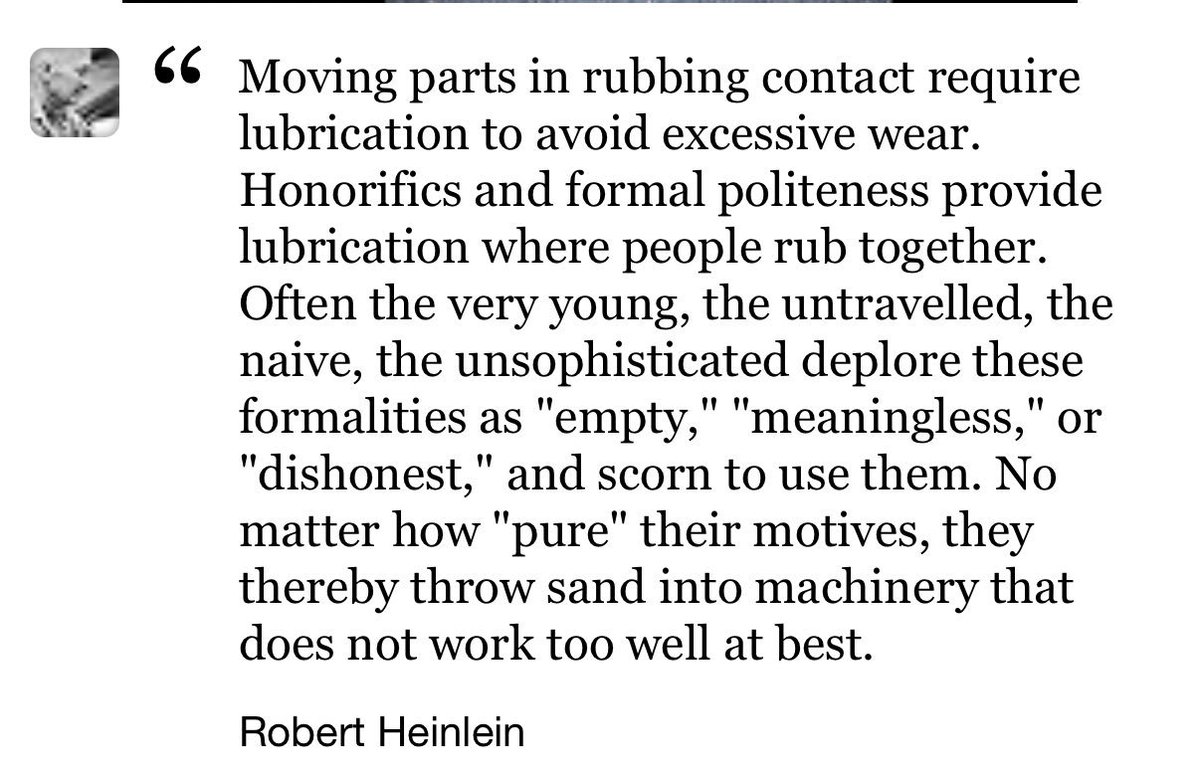
Autistic people are cooked in modern times, by being infinitely "accepting" no one knows how to act. Manners and social norms used to help with this. The idea that there was a "normal" that could be emulated and even aspired to, was a Godsend to the awkward and strange.
What was the alternative? Bretton Woods was doomed to failure the moment it was signed. The French economist Jacques Rueff predicted this a decade before it happened.
You cannot have a fixed convertibility of gold into dollars and a Eurodollar credit creation system at the same time. Eventually more dollars will be loaned into existence than there are gold reserves to back them up.
What else could Nixon have done? Had he not taken the US off the gold standard in 1971, the entire country would have run out of gold reserves entirely in a matter of months.
Blaming Nixon for destroying the purchasing power of the dollar is like looking at a surgeon who just amputated someone’s gangrene leg and then blaming him for turning the patient into a cripple.