Challenges that feel impossible to tackle within a single human lifetime become conceivable when you have a longer timescale to work with.
Today is a day to take the long view.
Join our community of long-term thinking, 02026 is going to be a good one. https://t.co/WZ7cPt9H6i
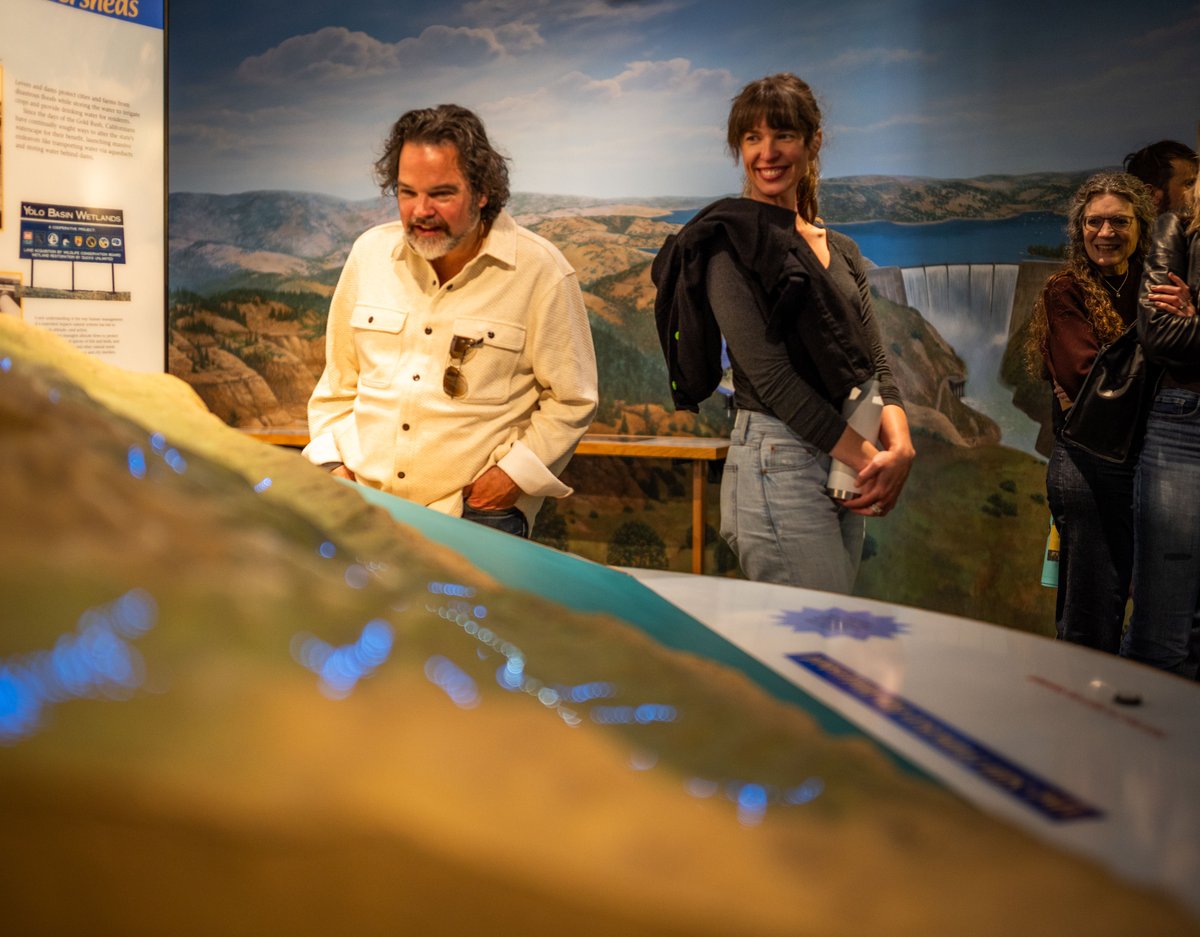
In the 01940s, the Reber Plan proposed damming San Francisco Bay to turn it into two vast freshwater lakes. The Army Corps of Engineers built the Bay Model in 01956 to test the effects of the proposal. Before computer modeling, there was only one way to simulate a hydrological system as enormous and complex as the Bay Area: build it.
The Long Now team recently visited the model, which remained an active research tool until 02000, and got to experience the “miniature” up close (it’s 1.5 acres!). It is housed in a cavernous warehouse on the Sausalito waterfront, and its tides still run on a compressed clock, with a full “day” passing every 15 minutes.
The Reber Plan was ultimately abandoned after the model showed it would completely devastate the ecosystems and estuaries. The Bay Model is a remarkable artifact from an era of slide rules and analog science. A reminder of what it looks like to test our largest decisions with patience before committing future generations to the consequences.
Learn more about this Bay Area hidden gem: https://t.co/gqUL0TkCYh
Amazing photos thanks to Cayla Sharp
Is a living thing a machine? Biologist Michael Levin’s answer: no — and also yes.
A rich exploration of how our metaphors are failing us, by our upcoming Entangled Intelligences speaker Michael Levin. Read it in @noemamag here: https://t.co/ZlxquCG6mU
Thank you to everyone who came out last night for an incredibly heartfelt and generative conversation between @baratunde and @blaiseaguera on the interdependence of humans, intelligence, and technology. Thank you to our host, @denisehearn_ , our Director of Strategic Initiatives, and to our audience for all the thoughtful and provocative questions.
If you missed it, the full episode will publish next week on YouTube. Members get two free tickets to all Long Now Talks like this. Join us! https://t.co/M4PnZ3AT4S
What kind of Clock is an LLM?
I wrote about this in Spring, but since then my questions has deepened and become Cartesian - I think therefore I am, but how does an LLM assess claims made by it's own infrastructure?
excited to dig into this with @longnow over the next year :)
I'm absolutely thrilled to have written this article for Long Now. It's about AI and time: how we got here, and what we can do now, when all of the pace layers are disrupted at once by an influx of new minds.
I wrote this over the summer. At the time, it seemed maybe too weird, like people wouldn't believe or understand what I was saying. And of course, everything changes so fast that it's hard to imagine writing something about AI that far in advance and have it still make sense. But I think the events of the last few months have only made it more relevant.
The Long Now Foundation has been an inspiration to me for a decade now, and has changed my life in countless ways. I'm incredibly grateful and honored to be among so many of my heroes and friends and colleagues represented in this issue of Pace Layers and Long Now Ideas. I wouldn't be here in San Francisco, here on Twitter, or here in the field of artificial intelligence if not for this community.
The conversation about AI has been fractious. It's very hard to think about how to fit this sudden, disruptive, technological change into the 10,000-year view. I hope I provide some insights, or at least some new angles for the conversation. It's scary to go on the record, especially about something that will affect everyone, and affect the rest of history. If I'm wrong, I'm wrong forever!
Please read and enjoy, and post quotes and screenshots, and buy Pace Layers Issue 3 so you can have a permanent hard copy. I have always wanted to be a part of the 10,000-year library, so I have to be serious for once and try to stand for something. Let me know what you think.
In 02025, @deepfates helped throw a funeral for an AI. The power went out mid-ceremony, and the crowd hummed it back to life.
In “Attention is All You Need,” deepfates tells the story of that night, their backstory on a hippie commune with Whole Earth Catalogs on the shelf, and how they got here: in San Francisco on the eve of another technological disruption.
Civilization runs on shared human attention, they argue, and AI has just made attention cheap, endless, and on tap. So what happens to the slow pace layers — culture, governance, nature — when everything starts to speed up? And what could we finally accomplish if we had enough attention to spare?
Read the essay online here: https://t.co/SEQar6DcIm
Or, hold it in your hands: pre-order Pace Layers, Long Now’s annual print journal, launching this November. New annual subscribers also get a free copy of Issue 2, while supplies last.
Artwork by @caseycripe
[Tomorrow 10/22] In-person tickets are sold out, but you can still tune in via the livestream: https://t.co/a19nfFy5o6
“On Interdependence” a conversation with @blaiseaguera and @baratunde on how AI symbiosis and Indigenous principles will shape our collective survival over the next 10,000 years.
More info here: https://t.co/XmODsjDj2a
What if a clock told us not what time it is, but how the world is becoming? Beneath our feet, billions of organisms keep time through metabolism, decay and renewal.
Thrilled that my project One Billion Clocks, a kinetic sculpture of soil’s living rhythms, was selected for Long Now Labs by the @longnow !
Announcing our first Long Now Labs awardees in partnership with the Protocol Institute. We received 370+ exceptional submissions — and we’re thrilled to unveil the three awardees chosen to develop their concepts into prototypes. The awardees for Book of Time are:
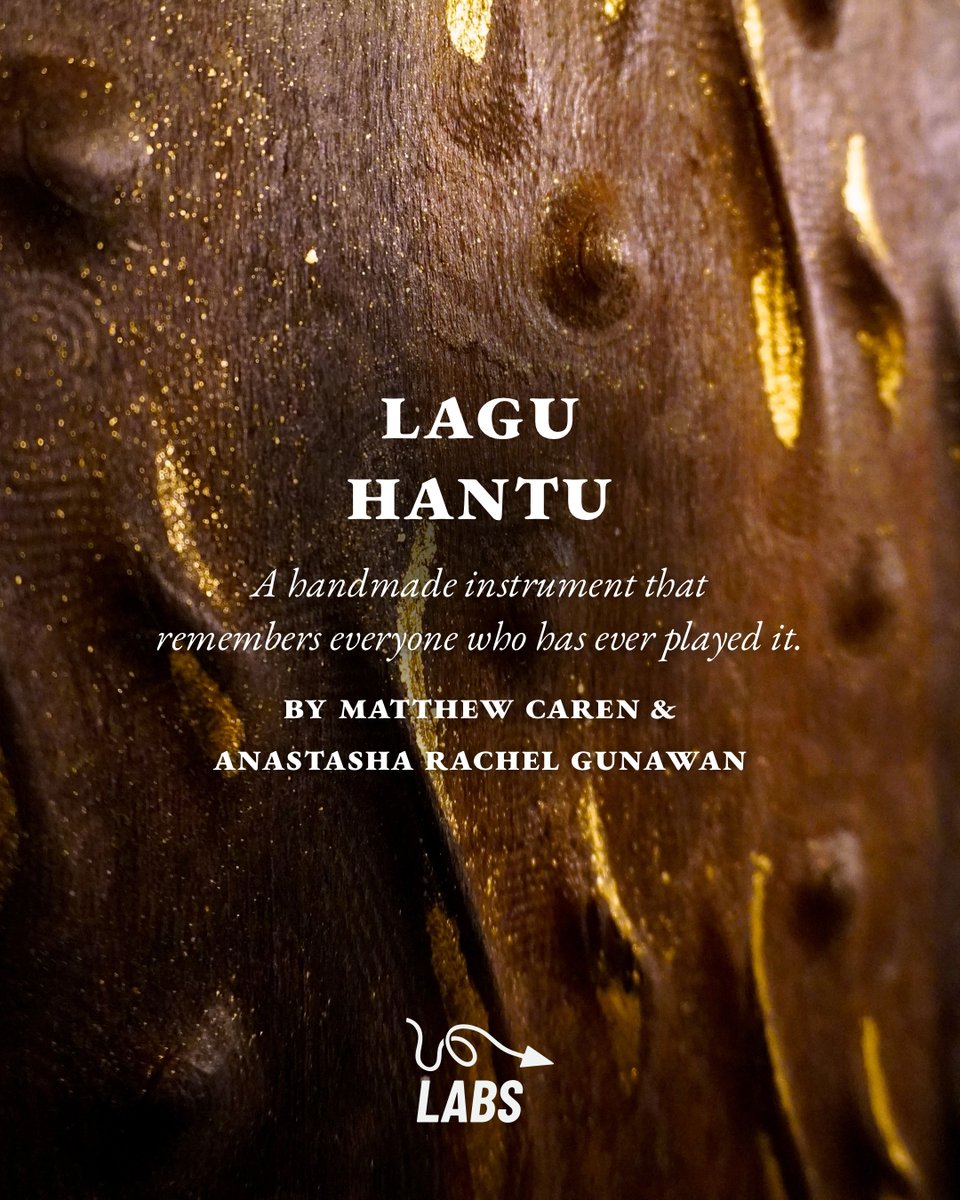
▪️Matthew Caren and Anastasha Rachel Gunawan for “Lagu Hantu,” a handmade instrument installation that remembers everyone who has ever played it.
▪️Eirini Malliaraki (@irinimalliaraki) with “One Billion Clocks” a kinetic sculpture that tracks the metabolic time of soil
▪️Sarah Friend (@isthisanart_) for “Thermodynamic Clock for LLMs” which will test whether giving models access to different experiences of time will alter their behavior
Over the coming year, each team will develop its concept into a working prototype with $25,000 in funding and support from Long Now. Their work will appear alongside 27 selected submissions in the Book of Time anthology, coming in spring 02027.
For our second Lab, Epistemic Cycles, UC Berkeley scholar Nina Begus (@ninabegus) will serve as Lab Lead. She’ll convene an interdisciplinary working group to build an atlas of information ruptures (from writing to generative AI) and of how societies have repaired them.
Our third Lab, Interspecies Protocols, launches in 02027.
Thank you to everyone who applied, to our partners at the Protocol Institute, and to our review panel. Read the full description of these incredible projects on Ideas here: https://t.co/MirRxs0Pam
Friends in San Francisco: Join me at @longnow on October 22 for a conversation on interdependence with @baratunde.
We'll explore cooperation as the core governing principle of nature and synthetic minds, why intelligence is inherently collective, and what this means for our shared future.
Get tickets here: https://t.co/r8kreGvqeD
Don’t miss @Sara_Imari on stage at Entangled Intelligences on Nov 10. Her warm, conversational delivery of cosmic topics is unmatched. Watch this excerpt from her 02025 Long Now Talk, where she casually blows your mind with Assembly Theory ->
Get on the waitlist for the in-person event, or tune-in via livestream: https://t.co/XVx2K2sBnW
Watch her full 02025 Talk here: https://t.co/eFUbok3Dfs
How do we create a future with tech that actually serves humanity and the planet? On Oct 22, join
@baratunde (creator of How to Citizen & Life With Machines) alongside Google CTO of Technology & Society @blaiseaguera for "On Interdependence": a 10,000-year look at civic action, Indigenous wisdom, and human survival.
Last few tickets are here: https://t.co/M7HGQNB30Q
We tend to believe that civilizational change is driven entirely by the invention of superior tools…but consider the washing machine. The technology was introduced in the 01910s but wasn’t widely adopted until the 01950s. Why?
In the early 20th century, laundering was entangled with class signaling, racist labor structures, and plumbing limitations. A fascinating exploration from JSTOR illustrates how the faster pace layers of commerce and infrastructure push culture to evolve: https://t.co/AZ0tU9SMEv