Today is the last day of our @MSCActions @LongPopITN project🇪🇺😢But after 4.5 years,we are very proud of having trained a new generation of scientists specialised in #data mining, longitudinal & historical registers,& #BigData, in the fields of #demography, #sociology & #health🥳
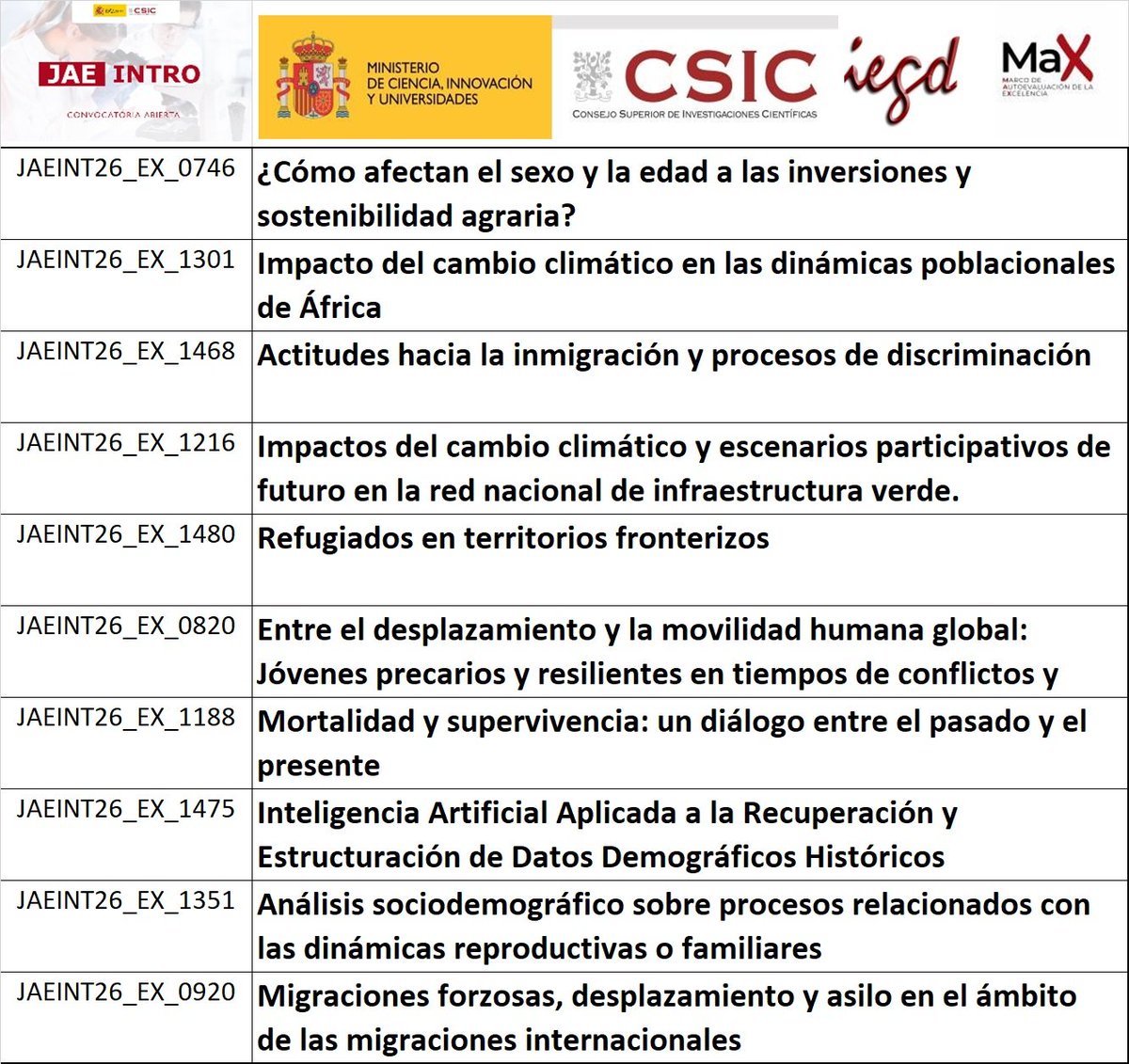
🎓 Becas JAE INTRO CSIC 2026
ÚLTIMO DÍA HOY 🗓️11 de abril
¿Te interesa la #economía ,la #geografía o la #demografía ?
Para estudiantes de grado y máster 👨🔬👩🔬
💰 600 €/mes (7 meses, 20 h/semana)
🛡️ Seguro + 📄 certificado CSIC
🔗 https://t.co/381SAxI8sf
📢 OFERTAS DE EMPLEO – #CSIC
El Instituto de Economía, Geografía y Demografía (IEGD) busca incorporar 1 perfil (M3) en el programa MaX #IEGD:
🔹 Comunicación científica
📩 [email protected]
Fecha límite: 22 de abril
📍 Madrid
🔁 Agradecemos difusión
#ResearchJobs
👇
ℹ️ ¿Qué es la #Encuesta de Condiciones de Vida?#ECV
¿Qué información recoge?
🗨️¿Cómo se pueden consultar los resultados?
Te lo contamos en esta nueva Píldora💊de #Explica del @es_INE
👇
https://t.co/W6EFoypgQ9
#INE
#demography#mortality
You can download #Openacces the paper here 👇
Individual-Level Data on Causes of Death in Madrid From 1905 to 1927
by Diego Ramiro Fariñas, Stanislao Mazzoni, Mélanie Bourguignon, Begoña Villuendas Hijosa and Michel Oris.
https://t.co/PMPioaX1qW
📢 New publication👇
Individual-Level Data on Causes of Death in #Madrid From 1905 to 1927
We present the Madrid database on causes of death,unique in the Mediterranean context,which currently covers the entire city for the period 1905–1927 & includes 366542 individual notices
📢 OFERTAS DE EMPLEO – CSIC
ÚLTIMOS DÍAS
Fecha límite: 6 de abril.
El Instituto de Economía, Geografía y Demografía (IEGD) busca incorporar 1 perfil (M3) Titulado Superior en el programa MaX #IEGD en :
🔹 Gestión y apoyo estratégico
👇 Detalles
🎓 Becas JAE INTRO CSIC 2026
ÚLTIMOS DÍAS 🗓️Hasta 11 de abril
¿Te interesa la #economía ,la #geografía o la #demografía ?
Para estudiantes de grado y máster 👨🔬👩🔬
💰 600 €/mes (7 meses, 20 h/semana)
🛡️ Seguro + 📄 certificado CSIC
🔗 https://t.co/381SAxI8sf
The 2nd #EOSC Siesta All Hands Meeting is a two-day internal working event taking place at the @IEGD_CSIC within the @CCHS_CSIC . The meeting combines technical discussions on #data privacy, security and impact.
Know more about the project here 👇 https://t.co/jSoWkU1Fti
Puedes leer la nota de prensa del @CSIC aquí 👉 https://t.co/RqLlilaPRV
Y descargar el informe en abierto de la colección ‘Ciencia para las Políticas Públicas’ #Science4Policy sobre #Neuroenvejecimiento e Inteligencia Artificial en Biomedicina aquí 👇https://t.co/ebUy31pAsh
2/2
📚 El #CSIC presenta once nuevos informes de la colección ‘Ciencia para las Políticas Públicas’ #Science4Policy
🔬 Abordan retos científicos y sociales como el Neuroenvejecimiento e Inteligencia Artificial en Biomedicina donde hemos participado desde #Demografia@IEGD_CSIC
1/2
This underscores the need for a spatiotemporal approach to consumption.
It’s not just about where spending concentrates, but when: peak times, nighttime activity, dominant sectors, and weekend shifts — key insights for urban and commercial planning.
4/5
Results show:
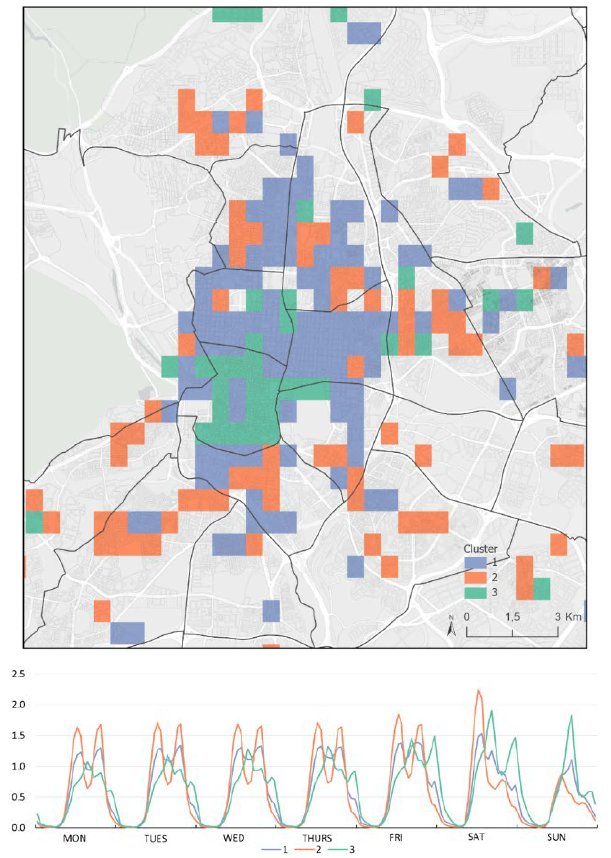
1️⃣ Distinct spatial patterns depending on the time of the week.
2️⃣ Differences between tourists and residents.
3️⃣ Commercial sectors with their own dynamics.
4️⃣ Different types of spaces based on weekly consumption rhythms and dominant commercial sector.
3/5
In this study, we analyze millions of anonymized bank card transactions to examine patterns of:
🕒 Temporal
📍 Spatial
🔄 Spatiotemporal
It also distinguishes between consumer profiles (tourists and residents) and spending categories.
2/5
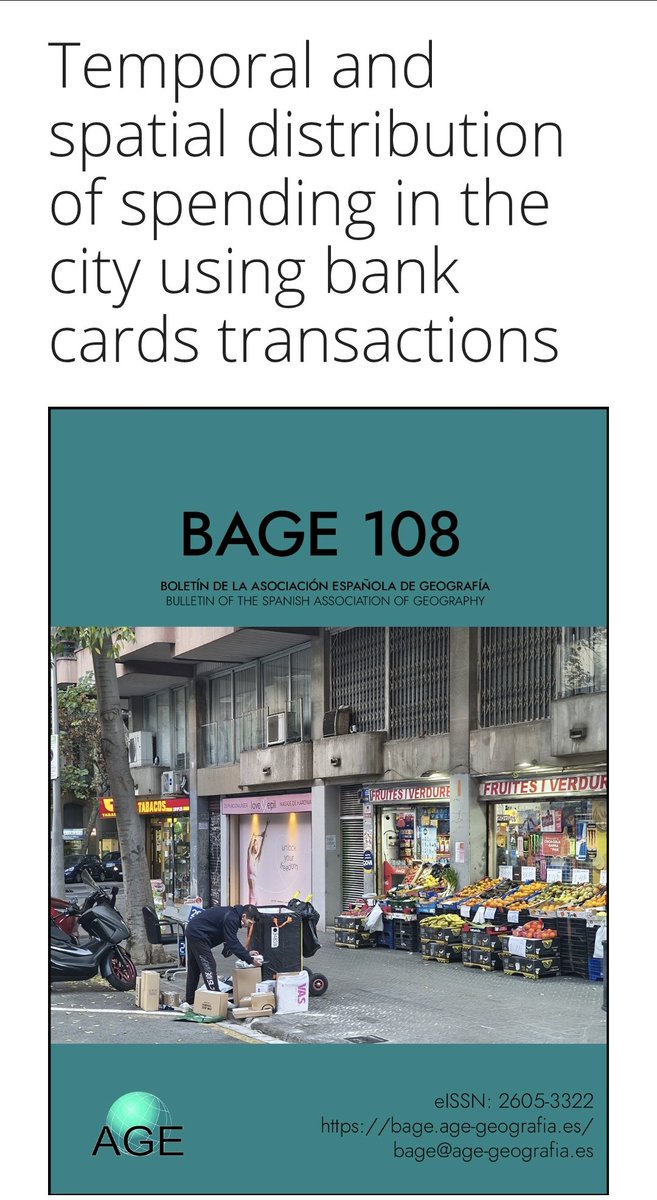
📢New publication in Boletín de la Asociación de Geógrafos Españoles @AGE_Oficial
How does consumption change throughout the day and across the week in #Madrid?
1/5
�� Published in Scientific Reports @SciReports @NaturePortfolio you can read it #OpenAccess here 👇 https://t.co/b418xXM43I
This research offers a uniquely comprehensive historical perspective
on how #urban and #climatic transformations interact over 130 years.
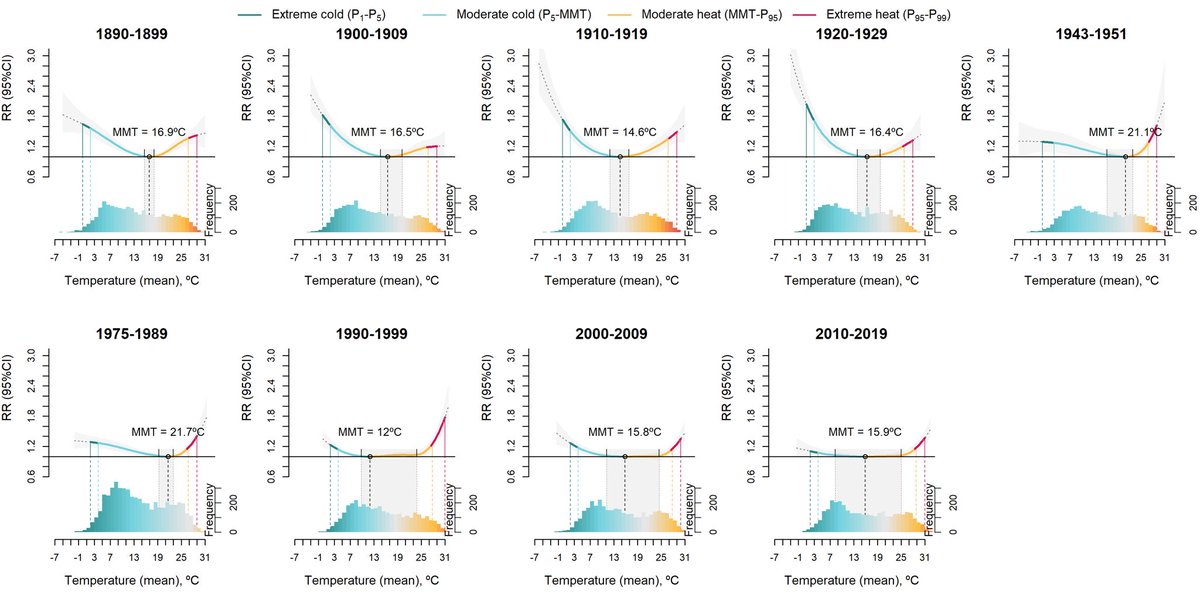
⚖️ Ultimately, climate change presents a dual impact:
• ✔️ A significant reduction in cold-related mortality.
• ⚠️ A persistent, stabilizing risk from extreme heat.
👵 Age is a critical factor.
People 60 and older remain the most susceptible to both heat and cold exposure. As Madrid's population continues to age, this demographic shift heavily shapes current vulnerability.
In fact, since the early 2000s, the extreme heat-attributable mortality fraction has remained stubbornly stable at approximately 1%, with even a slight increase in recent years.