Data centers can bring investment and tax revenue to Western communities. They also place large new claims on power, water and infrastructure.
The latest from Lookout West asks how communities can tell whether a proposed project is a good deal.
#datacenters#economics#energy
In 1938, Fortune magazine asked artist Charles Sheeler to capture modern energy production. He ended up with this painting of the Hoover Dam, "evoking the disorienting impact of this monumental new landscape of hydroelectric power" - Amon Carter Museum of
American Art.
⚡️Western grid at a glance. Three big projects—SunZia, TransWest Express, and Gateway West—aim to move more power across the region, but run straight through the West's hardest politics: land access, local impacts, cultural and wildlife concerns, and who pays (and benefits).
Without agreement on shared water cuts, “it’s hard for me to be optimistic,” said Anne Castle, GWC senior fellow @ColoLaw “The only way around it is for the states to agree how to divvy up the river in an equitable way.”
https://t.co/Vm2nDK9LcK
#ColoradoRiver#waterlaw
Water, the silent architect of empires out West. From casinos in Vegas to almond orchards in California. Yet today, as reservoirs like Lake Mead and Powell hover at perilously low levels, the region faces a reckoning. Full essay out now at Lookout West (link in bio).
💡Most Western states are paying less in real (2024$) terms for the average residential electricity + natural gas bill than in 2014. Drivers: lower kWh per household (efficiency) + low nat. gas $ in 2024. CA is the exception, with bills pushed up by wildfire/ grid cost pressures
⚡️⚡️Western states vary in electricity generation: In WA over 60% is hydro; WY 60% is coal; NV is 50% nat gas. In 2025, about 30% of total for the West was from nat gas followed by wind & solar at ~26%. That's a big change from 20 yrs ago when 33% was coal and 26% nat gas.
Alexandre Hogue capturing Western energy during the New Deal era—pipelines and a land reshaped.
Pipeline (1939), Hooking On at Central Power (1940), Pecos Escarpment (c. 1940).
The Colorado River serves ~40 million people, so this steep recent decline highlights how drought is squeezing the whole system. This week we're wading into water on Lookout West. New essay drops Friday.
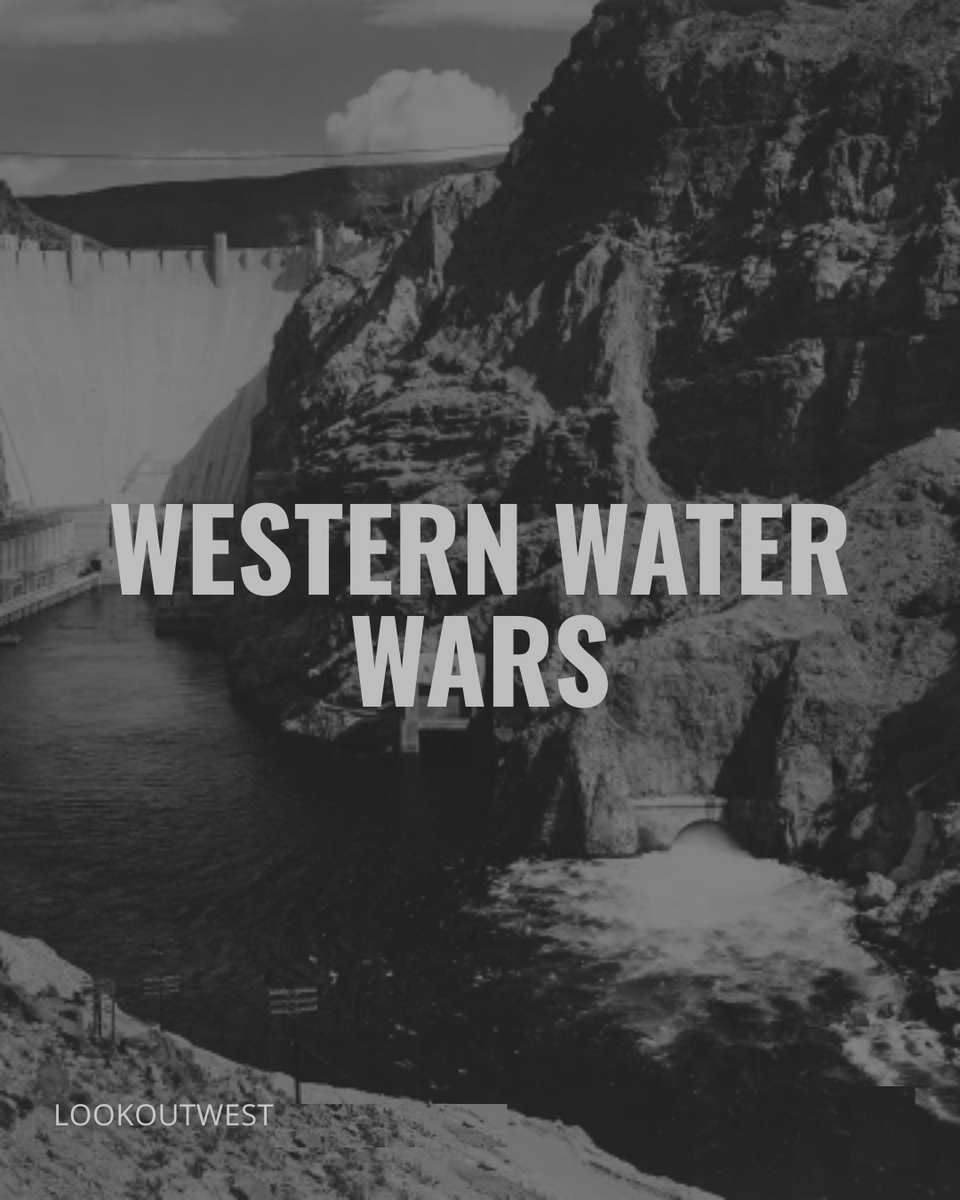
Lake Mead is at historic lows – around 1,050 ft (lowest level since filling in the 1930s) and just 37% full. That’s basically the cutoff for Hoover Dam’s hydropower, so any further drop threatens power generation and water supply.