Wild part? If Satoshi’s ~1M BTC stays untouched, it could be locked or burned to prevent exploits.
Bottom line: Crypto adapts. Quantum is a threat, but not the end.
CZ says crypto will survive quantum computing, but Satoshi’s Bitcoin might not 👀
According to CZ, the fix is simple in theory: upgrade to post-quantum cryptography. No need to panic.
@ki_young_ju (CryptoQuant CEO) says we’re still in a clear BTC bear cycle.Hundreds of billions flowed in, but market cap is flat.
That means selling pressure > new money. Real recovery?
Might need BTC to tap $55K first.Or months of boring sideways between $60K–$70K.ETF inflows slowing.
Institutions rotating to Nasdaq & gold.Altseason?
Not looking good short term.This cycle feels different. Bitcoin #BTC #Crypto
Strategy has acquired 2,486 BTC for ~$168.4 million at ~$67,710 per bitcoin. As of 2/16/2026, we hodl 717,131 $BTC acquired for ~$54.52 billion at ~$76,027 per bitcoin. $MSTR $STRC https://t.co/wvxRYZlQ3Y
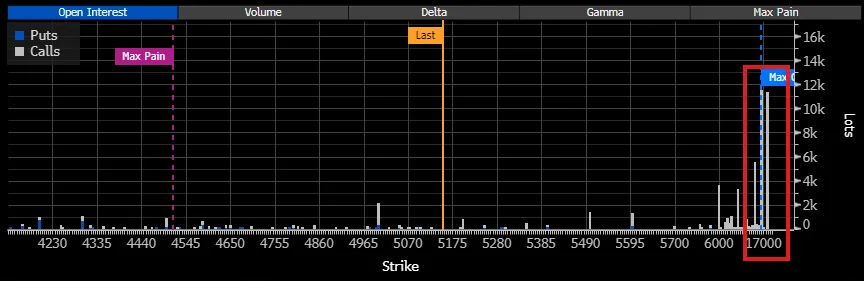
GOLD $20,000 CALLS SURGE DESPITE RECORD SELLOFF
Deep out-of-the-money bullish bets on gold are building even after a historic correction.
After COMEX gold futures briefly topped $5,600 an ounce in late January before suffering their largest one-day drop in decades, traders began accumulating December $15,000/$20,000 call spreads. The position has since grown to roughly 11,000 contracts, even with prices consolidating near $5,000.
Aakash Doshi of State Street Investment Management said the size of the trade is striking given its distance from current prices, likening it to a “cheap lottery ticket.” Gold has doubled since early 2024, fueled by speculative flows, geopolitical tensions, concerns about the Federal Reserve’s independence, and diversification away from currencies and sovereign bonds.
For the spread to expire in the money, prices would need to nearly triple by December. The structure limits upside but reduces upfront cost, allowing traders to exit on a sharp rally or hold to expiry if gold surpasses $15,000.
While spot prices remain far below those levels, the trades have lifted implied volatility for far-upside calls. Despite a recent easing in call skew, realized volatility remains elevated, leaving room for large price swings after January’s 11% plunge and October’s sharp correction to $4,000.