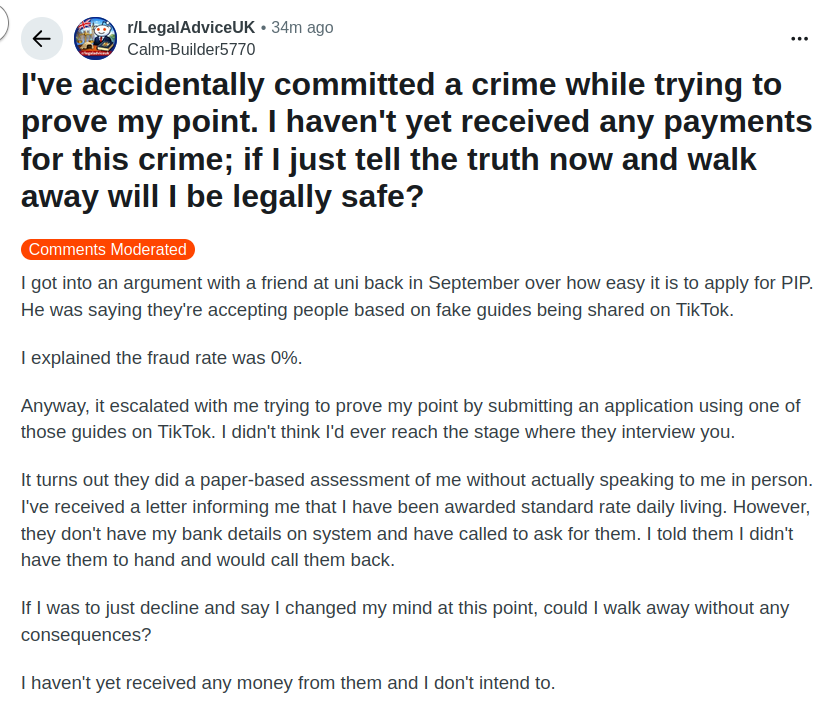
British politics for the past decade:
1. New Prime Minister arrives.
2. Same policies on immigration, economy, eco bs, crime as before.
3. Same civil service dysfunction & public discontents.
4. Forced out.
5. New Prime Minister arrives.
6. Repeat
Systematic change, not soap opera, is needed
@Halalcoholism To please leftists, I guess Western teams (football, olympics etc) will need to do land acknowledgements AND people acknowledgements too, apologising for 'stealing' immigrants. 🤦♂️
Since the Haber Bosch process, ALL large scale famine has been the result of government malice, recklessness or incompetence.
To end starvation, what is needed is better institutions, more accountable government, and fewer wars. Blaming the rich is cheap and easy.
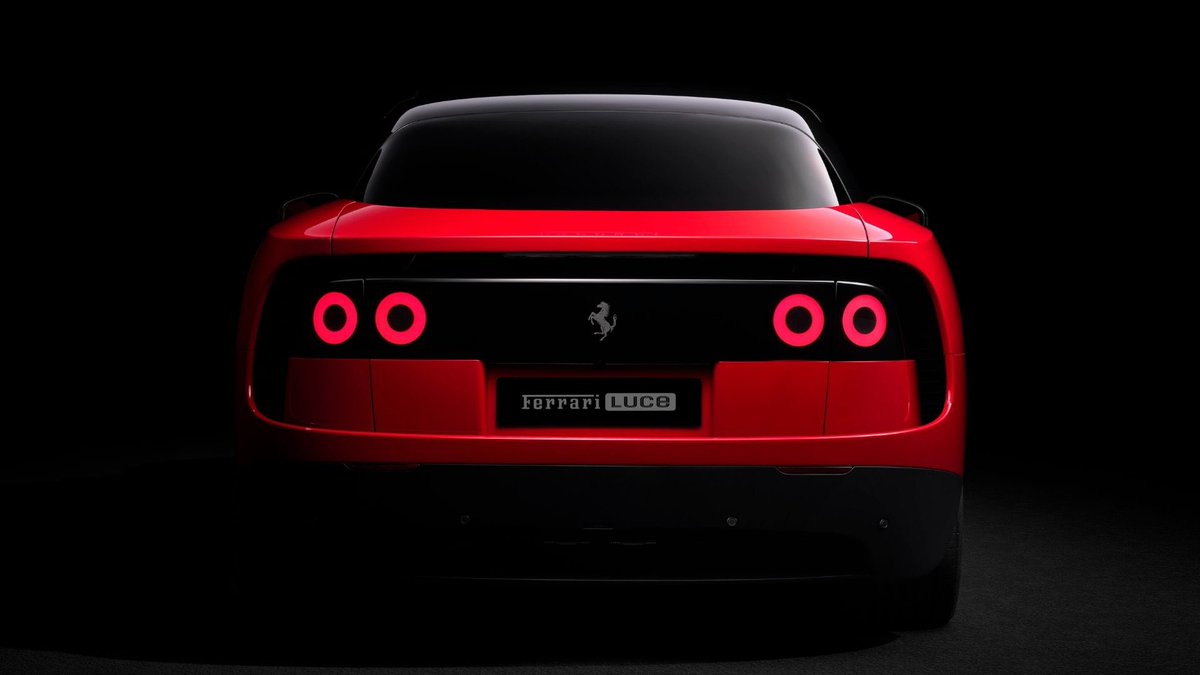
@rorysutherland Its exterior looks like its designed for toddlers: a toy car with no edges (on it) to hurt themselves on. A Ferrari should have style and beauty - especially a luxury cruiser. The Luce very much doesn't.
A couple of years ago, I started a campaign to try and get the UK government to encourage @SpaceX to launch Starship from our territory. This was during the Tory government which wasn’t so overly hostile.
It didn’t go well.
The idea was to expand the existing spaceport program to be able to handle larger vehicles. The problem was, people just heard “spaceport” and thought “we already have one of those”. I also am, to be honest, not much of a campaigner which is the main reason it didn’t get traction.
However, one thing that surprised me was the vicious, sneering attacks from both the left and the right. I was told I was a “moron” for suggesting it because rockets can only be launched near the equator. That’s nonsense of course, but it’s been repeated at me multiple times now. One journalist claims to have found some anonymous source in industry who denounced the idea, which is taken as it being “widely ridiculed” when, in fact, I suspect most people hadn’t heard about it due to the aforementioned lack of campaigning skills.
The UK, as it stands, is going to be left horrifically behind in space because the chattering classes considered it an inherently ridiculous exercise, and harsh mockery (rather than physics, engineering or economics) determines the psychological boundaries of what we consider possible in the UK.
This is a big problem, and it doesn’t just extend to space
The Luce's style isn't brave, its bland and ill proportioned. It looks like its been designed by a committee at Playmobil. It looks like a cross-over that wants you fully desensitised from the driving experience - an absolute sin for a Ferrari.
Truly innovative cars are generational; cars like mini change the way we think and they count on revolutions in architecture and technology to enable them.
When I was at Nissan and responsible for the LEAF, we consciously developed a vehicle which utilised the assets and advantages of an EV, but fitted within a relatively conventional design to acclimatise the consumer to a generational change. Nevertheless, I always felt and still feel that car companies needed to be braver and explore the addition design degrees of freedom that an EV platform avails - that thinking, love it or hate it, led to the Nissan BladeGlider
I’m many times on record, calling for car companies to be braver. And so I applaud the new @Ferrari Luce EV direction for challenging the norm and yes it is… going to take some getting used to. One can say the same about the Jaguar Type 00 and the Bentley EXP 15; the Mercedes-AMG GT 4dr and the Cybertruck.
A car’s style is a personal choice; but the more car companies that experiment, the more our image of what a car should look like will evolve. In that sense, I have to congratulate Ferrari for their foresight and bravery and hope that fortune favours the bold.
@rorysutherland It's justifiable grief. It's designed by a mediation-obsessed (probably) silicon valley nerd who is too frightened to express or invoke emotions. Hence a soulless iDonkey. A Ferrari should invoke wild passion and not look like it was made by Playmobil! 😅
Doing some reading into the attempts to pretend that current levels of immigration are nothing new. This bizarre BBC educational resource keeps referring to 'mass immigration' in the 19th century. The whole point of the idea of 'mass immigration' is that it's historically unprecedented, which it is. Using this term anachronistically is a clear attempt to mislead.
None of the examples they give are examples of mass immigration. Several are not even examples of immigration at all!
The UK housing crisis is not going well.
In order to alleviate its acute housing affordability crisis, London has been set a target of building 88,000 new homes per year over the next decade.
Last year construction started on just 5,891 – 94% below target, a 75% year-on-year decline, the steepest drop in the country, the lowest tally since records began almost 40 years ago and the lowest figure for any major city in the developed world this century.
British supermarkets are a genuine example of a world-leading sector, both in the breadth of their offering to consumers and in the razor-thin margins they operate on. So, of course, it’s been incumbent on every govt to wage war on them.
So why does "indigenous vs. colonizer" almost always mean Europeans, and almost never Bantu, Turks, Arabs, Slavs, or Han Chinese?
A few reasons, in descending order of how much they actually explain:
1. Recency and documentation. European expansion happened in the era of the printing press, photography, census records, and treaties. The Bantu expansion left no paperwork. The Arab conquests are 1,300 years old and mythologized as religious destiny rather than conquest. When the receipts exist, the case is easier to make, and Europeans left receipts.
2. The winners wrote the framework. Modern human-rights language, postcolonial theory, and the very category of "indigenous peoples" were built in Western universities after WWII, primarily to process European guilt over European empires. The tool was designed for one job. Asking it to evaluate the Arab conquest of Egypt or the Turkic conquest of Anatolia is like asking a tax form to diagnose a disease. It wasn't built for that.
3. Christendom is critique-able; other civilizations aren't. You can write a bestseller attacking Western Christian civilization from inside a Western university and win awards for it. Try writing the equivalent book about Arab-Islamic conquest from inside Cairo or Istanbul. The asymmetry isn't about history. It's about which societies tolerate self-criticism and which punish it. So the critical literature piles up on one side and barely exists on the other.
4. The Soviet inheritance. Cold War-era anti-colonial framing was deliberately shaped by Moscow to delegitimize the West while giving its own empire and its allies' conquests, a pass. That framework outlived the USSR and still structures a lot of academic and activist vocabulary today.
5. Race makes it legible. European colonizers usually looked different from the colonized. Turkic conquerors of Anatolia, Arab conquerors of the Levant, and Bantu expansionists in Africa generally didn't look dramatically different from the populations they absorbed. The visual contrast made European empire easier to narrate as racial, and once a story has a clean visual, it travels.
6. And finally, Jews. The framework's selective application reaches its most absurd point when a people indigenous to a specific land, with continuous presence, language, religion, and archaeological record tying them to it for three thousand years, get labeled "colonial settlers", while the actual seventh-century conquerors who Arabized the region get labeled "indigenous." At that point the framework isn't describing reality. It's laundering a conclusion.
The label isn't tracking who got there first. It's tracking who it's currently fashionable to blame.
@post_liberal Also: Video games. I'm surprised these get no mention. I think YouTube is underplayed (social media too?). All directly compete with reading time - & I'd say much more so than podcasts. Podcasts are a 'cheat' but probably not also a time thief like a YT vid.
@post_liberal 🐘's in the room the article doesn't mention: the feminisation/progressivisation of the publishing industry. I wouldn't be surprised if they've lost sense what male readers actually want... which isn't <insert subject here> viewed through a progressive lens.