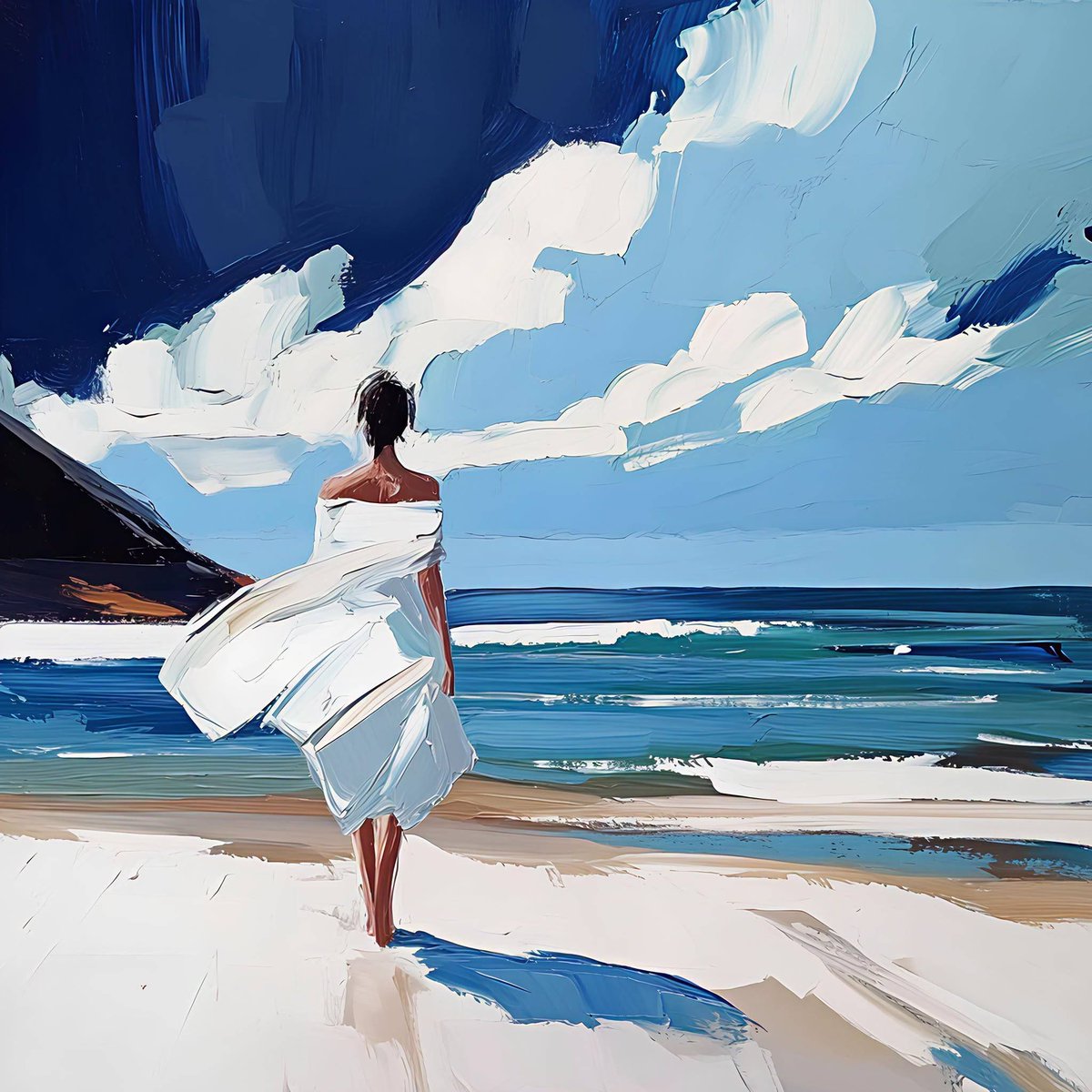
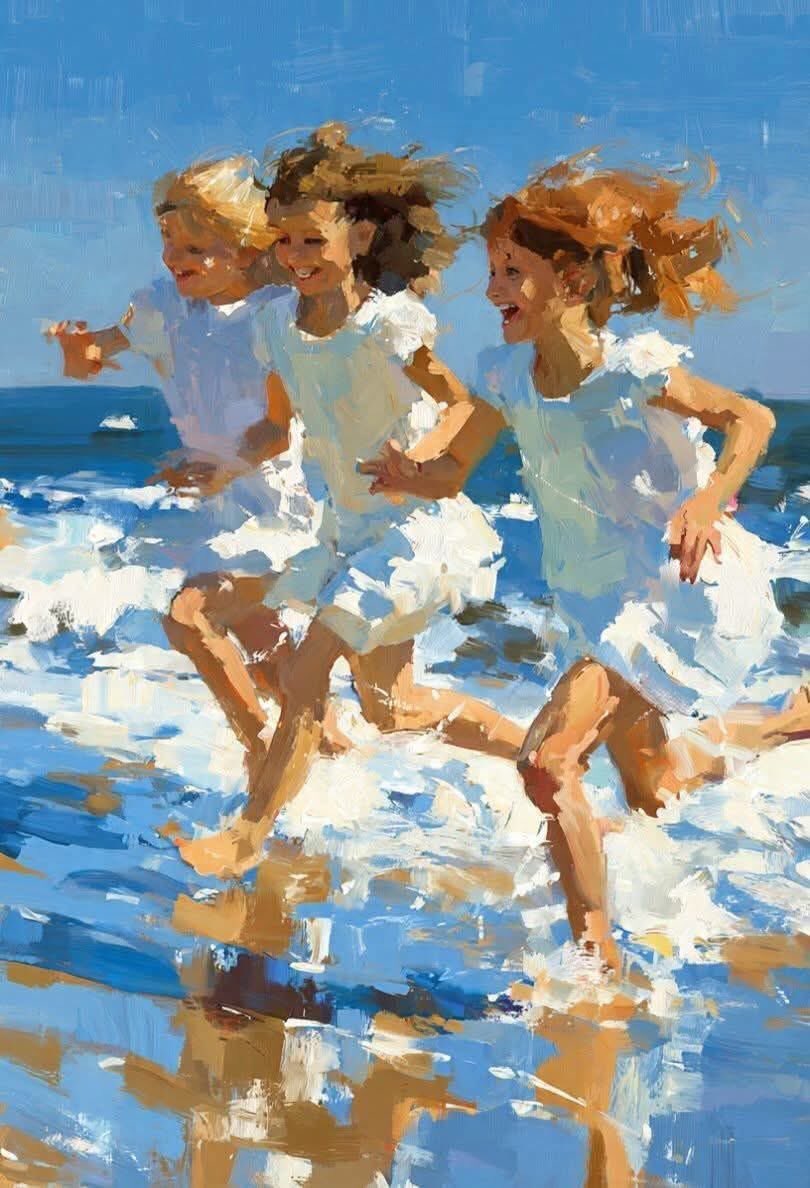
Sergiu Ciochină no solo pinta la luz, la hace bailar. Sus paisajes están llenos de energía, donde las sombras coloridas y las texturas nos recuerdan la belleza de la vida.
Me gusta muchísimo.
👇🏻Ver otro post.
Me resisto a que el verano termine.
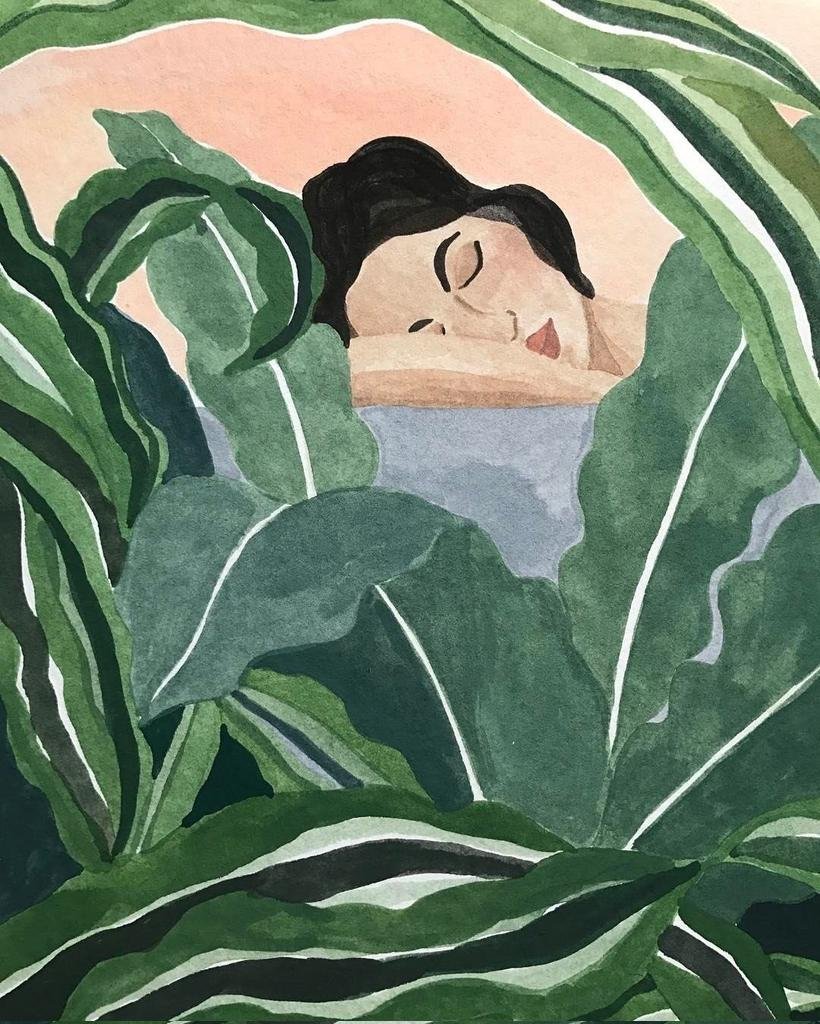
Así que vuelvo a pasear por la luminosa y alegre obra de la ilustradora australiana Angela McKay, Ohkiistdio. Sus acuarelas y gouaches rebosan una energía vital que contagia buen humor al instante.
👇🏻 Abro hilo.
Hoy profundizo en el trabajo de Elena Wuest, artista afincada en Alemania y nacida en Kazajistán (1977). Su obra no solo ilumina, transmite emoción.
Creo que te gustará.
👇🏻Abro hilo.
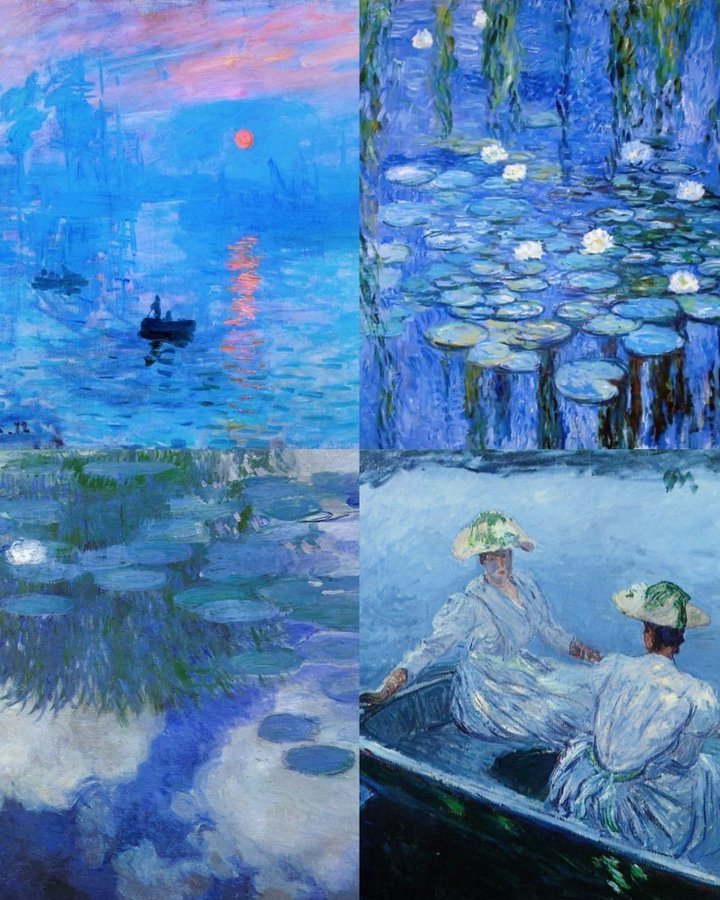
Elena Degenhardt no pinta solo el mar, es como si pintara su estado anímico. Utiliza la técnica del pastel para capturar la luz suspendida en la superficie y el pulso sereno del agua.
¡Me encanta!
👇Ver otro tuit al hilo.
El alma de la fiesta: desde su infancia ya apuntaba maneras, tenía el don de atraer a la gente siendo tal y como era. Una especie de imán o un extraño magnetismo hacía que todos buscaran estar a su lado. Alegre, ocurrente, siempre con la sonrisa en la boca y el halago más
Look at this crucifixion. There are no nails. There is no blood, no wound, no crown of thorns. And you are not looking up at Christ, the way every crucifixion in history has asked you to. You are looking down at him, from above, as if you were God...
The painting is Christ of Saint John of the Cross, made by Salvador Dalí in 1951, and it hangs in the Kelvingrove Art Gallery in Glasgow. It began, as so much of Dalí's work did, with a dream.
He had been struck by a small, almost crude drawing made in the sixteenth century by the Spanish mystic Saint John of the Cross. While imprisoned in Toledo, the friar had a vision of the crucifixion seen from an impossible angle, from above, looking down on the bowed head and outstretched arms, and he sketched it quickly. Nothing like it existed in the entire tradition of Christian art. Centuries later, Dalí saw a reproduction, and it stayed with him.
Then, in 1950, he had what he called a "cosmic dream."
In his own words, written beneath his studies for the painting: "I saw this image in color and which in my dream represented the nucleus of the atom. This nucleus later took on a metaphysical sense; I considered it the very unity of the universe, the Christ."
In the dream he saw Christ hovering above the bay of Port Lligat, the little Spanish fishing village where he lived, and a voice said to him: "Dalí, you must paint this Christ."
He began the next morning.
At first he intended to include the wounds, but near the end, he dreamed again, and this time he saw Christ with none of it. No nails. No blood. No thorns. He erased suffering from the cross entirely.
To get the body right, he hired a Hollywood stuntman and had him suspended from an overhead gantry in the studio, so he could study exactly how a real human body hangs in the air, how gravity pulls at it. The result is a figure of impossible calm, floating in a dark sky above an ordinary harbor where two fishermen go about their day, unaware of what is happening above them.
Dalí painted the moment as it might be seen from outside of time, from above the world, where the horror has been lifted away and what remains is the shape of the thing itself: a man, suspended between the sky and the sea, at the center of everything.
Saint John of the Cross, whose small drawing began all this, once wrote a line that could serve as the caption to this painting: "In the evening of life, we will be judged on love alone."
I started my newsletter because the past is full of masterpieces like this one, and so few people ever stop to show us why they matter. Every week I try to. If that is something you'd like to be part of, you can join through the link in my bio, and if you'd like to support my work, a paid subscription is what makes it possible.
Thanks for reading.
“Sabes que todo lo mejor vendrá con los cambios pero tienes miedo al cerrar la puerta porque ya habías aprendido a manejar las antiguas desgracias, suele pasar, no es nada extraño, un héroe sin miedo es un héroe muerto.”
"Héroes", Ray Loriga
📷Edward Hopper
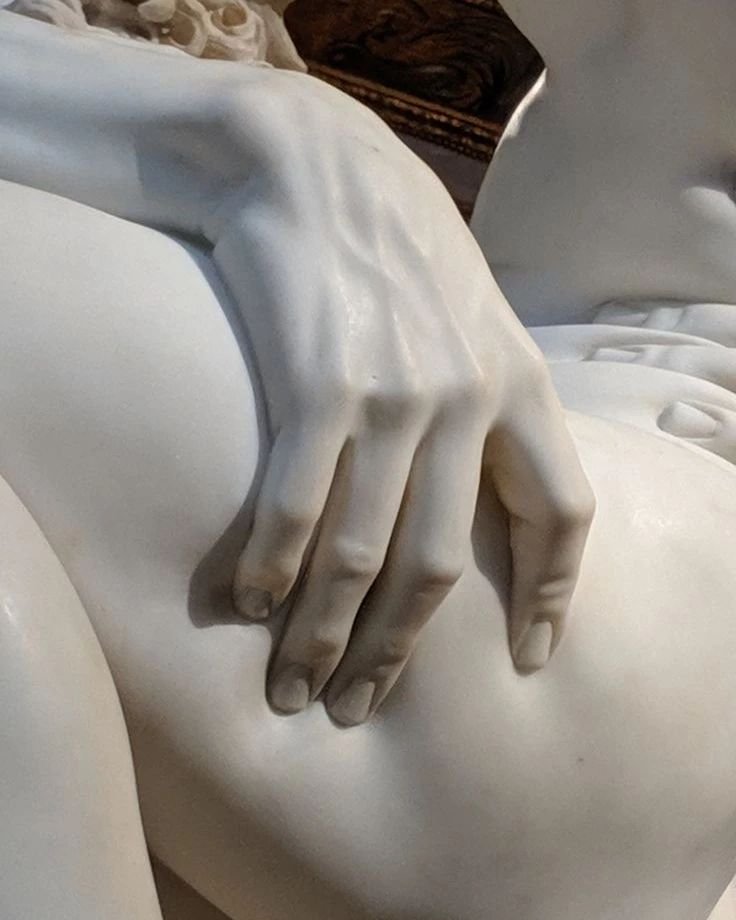
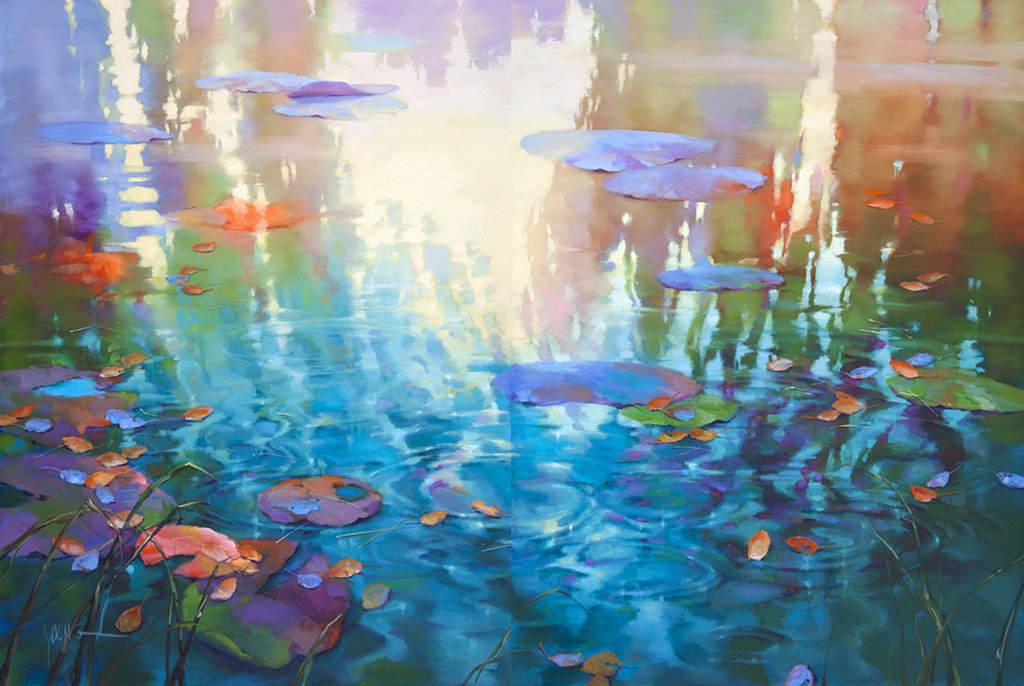
El universo de la artista estadounidense Donna Young es una amalgama preciosa de lirismo y color.
Sus figuras abstractas, desprovistas de estructuras rígidas, parecen fundirse de forma mística con la fluidez del agua y los reflejos de la naturaleza.
👇🏻Abro hilo.