Learn how those with Traditional or local knowledge and lived or professional experience bring value to the #PeerReview process in this CSP Blog post ft. @LosetoLisa, co-EiC of @ArcticScienceJ ➡️ https://t.co/aBysRyx4Be #PeerReviewWeek
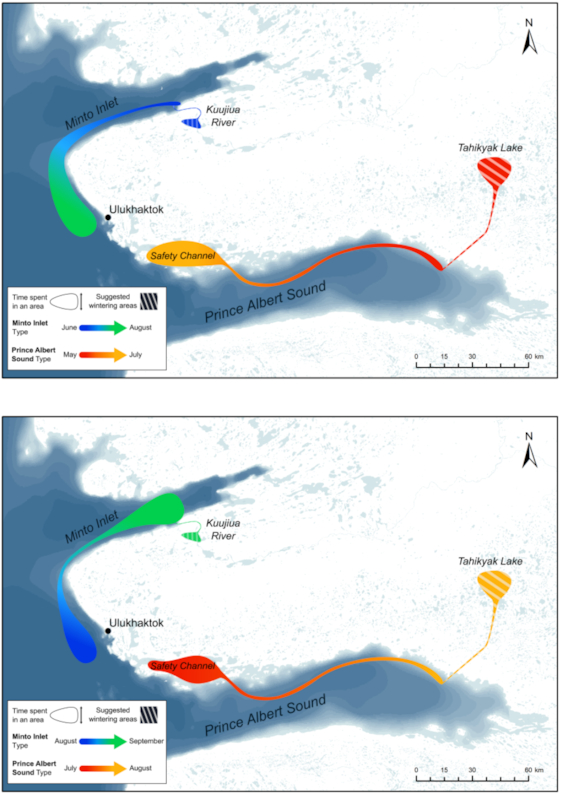
New in @cjfas➡️ @JPWHollins@NEHmarine @HarriPW @LosetoLisa found that distinct freshwater migratory pathways in #Arctic char coincide with separate patterns of marine spatial habitat-use across a large coastal landscape. https://t.co/zS9242nmbB #FishSci
Its #PeerReviewWeek22 and we want to highlight #Indigenous participation in peer review publications and the editorial process: https://t.co/1syub3eshr @LosetoLisa
Check out this study on behavioral responses of tagged beluga whales to ships in the Pacific Arctic, including many researchers working on AN projects @jackie_dawson@LosetoLisa, @wdhalliday, Shannon Mcphee, Luke Storrie and Nigel Hussey. Learn more here; https://t.co/gbU6opQaIw
For better science, increase Indigenous participation in publishing. As co-editor-in-chief of the journal Arctic Science, Lisa Loseto is looking at ways to increase Indigenous representation in scientific publishing. Read more here: https://t.co/evdDqHhnpz
@PeteShoniker@LiveItearth We believe they may be similar to humans, the oldest whale aged (that I'm aware of) was in its 80s! Most I've encountered are in their 20s
@PeteShoniker@LiveItearth Its interesting we see different populations have different size ranges. The eastern beaufort sea belugas are some of the longest, and those in Hudson bay are a bit smaller...and maybe rounder. I've measured whales close to 5metres...(16 feet), and hunters speak of 18foot whales
@Mrsmills62@LiveItearth All animals have unique adaptations to their environment and home. Belugas have think blubber to keep them warm, no dorsal fin to get stuck in ice (or lose heat from), and the have great ways to search for food with ecolocation...and other adaptations we havent full explored
@vida_ferris Interestingly...it seems while baby belugas are in their mommy's (uterus) they grow 'baby' teeth, but they never erupt our come out of their gums...instead they are kept within jaw and eventually are re-abosbed.
@vida_ferris They swim and do spend a lot of time diving, and time at the surface to breathe...so they actively move like we would swimming to different depths...but of course are adapted to do maneuver in water
@sd58kengard @LiveItearth A lot of animals in the arctic are white and we believe it has to do with hiding from your predators by looking like the environment around you...
@sd58kengard @LiveItearth We've been wondering the same thing!! We think its a complex story of avoiding predators or competition for food, heading to places where your family visits, so part of a long history of travelling...similar to always visiting family cabins...