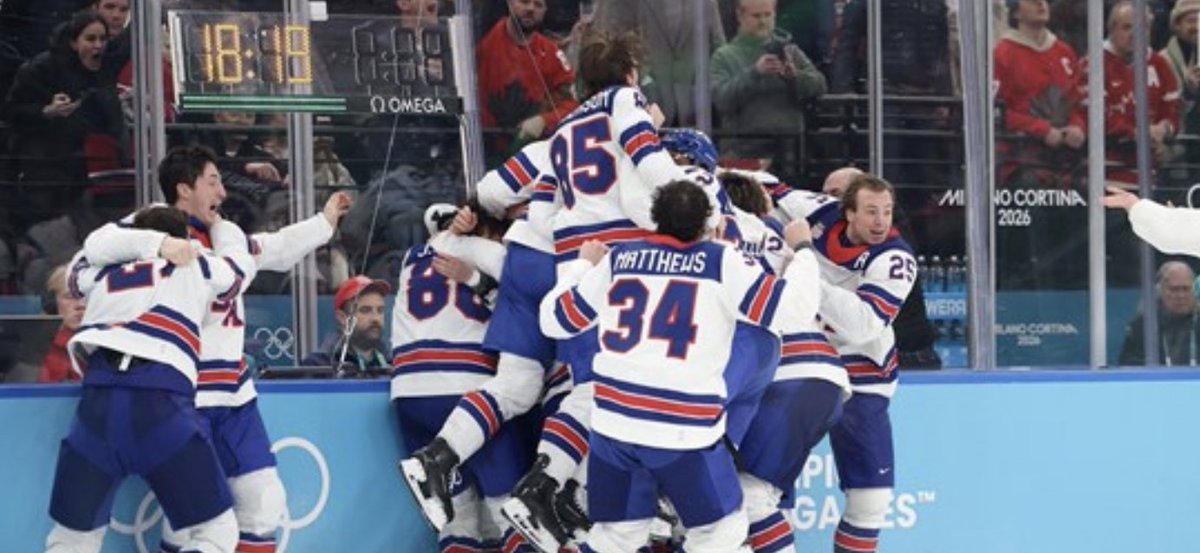
Team USA just won its first Olympic hockey gold in 46 years.
On February 22. The exact anniversary of the Miracle on Ice.
Forget the storybook narrative for a second.
What happened today is a masterclass in what performance science teaches us about pressure, identity, and legacy.
Consider the pressure this team was under.
They walked into today carrying 46 years of near misses.
The US hadn't won Olympic gold since 1980.
They lost the gold medal game in 2002 and 2010...both times to Canada. Last year at the 4 Nations tournament, Canada beat them in overtime. That loss was still raw.
The 1980 hero, Mike Eruzione, was in the building. He told the players before the game: "It's just a hockey game."
It wasn't. And everyone knew it.
Canada outshot the US 41-26.
They dominated the second and third periods.
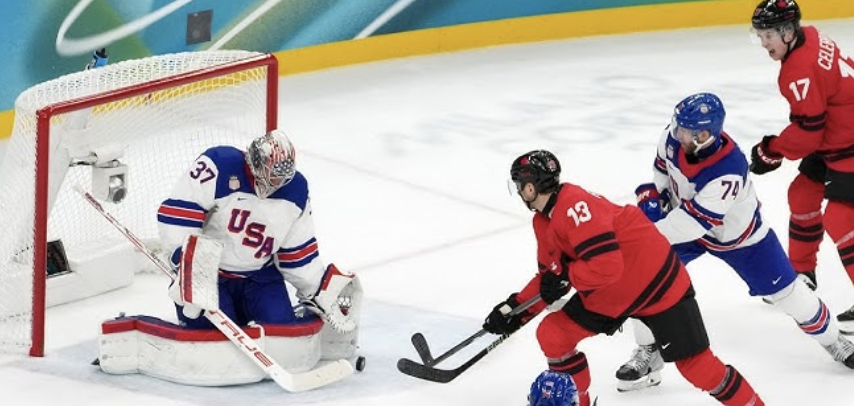
Nathan MacKinnon missed an open net. Macklin Celebrini had a breakaway and couldn't convert. Devon Toews had Hellebuyck beaten and somehow the puck stayed out. Then Charlie McAvoy cleared a puck off the goal line with his glove.
This was not a dominant performance. It was a team surviving enormous pressure and refusing to break. That distinction matters.
How does a team perform under that kind of weight? It starts with the environment the coach creates.
Mike Sullivan is now the only American-born coach to win multiple Stanley Cups AND Olympic gold.
When he took over the Pittsburgh Penguins in 2015, the team was loaded with talent — Crosby, Malkin, Letang — and completely broken. His description: "There was a dark cloud over the locker room."
His first move wasn't a new system or a motivational speech. It was a reframe.
He told the team: "There are certain things in life we can control and certain things we can't. We needed to focus on the things that we could control and not dedicate any cognitive resources or worry to things we couldn't control."
The team adopted a two-word motto: "Just play."
Six months later, they won the Stanley Cup. Tonight, he helped USA do it again on the biggest stage in the world.
Sullivan builds what he calls a "safe zone for learning."
His video review sessions are explicitly NOT about blame.
"We don't want a player walking into our video room on eggshells worried about 'Am I going to be in the film? Is Coach going to yell at me?' It's a game of mistakes. Our responsibility is to learn from them."
His guiding principle from his college coach:
"Before players want to know what you know, they want to know that you care."
It's the difference between compliance and buy-in. Buy-in wins championships.
Research backs up Sullivan.
Fear-based environments don't produce peak performance. Especially when pressure is already high...
They produce anxiety, risk-aversion, and choking.
When people feel psychologically safe — when they know mistakes won't be weaponized against them — they take smarter risks, recover faster from errors, and perform better under pressure.
We could see it in how Sullivan framed this moment in the weeks before the game.
"What an incredible opportunity we have in front of us."
Not a burden or expectation...Opportunity.
He took the unusual step for a hockey team and kept the team in the Olympic Village instead of a hotel.
His reasoning: "The Village is part of the experience."
The Hughes brothers roomed together. The Tkachuk brothers roomed together.
He didn't try to ignore or isolate them from the pressure. He was embedding them in it, together.
And then there's the guy who scored the goal.
Jack Hughes came into the Olympics injured, underperforming, slotted on the fourth line.
Sullivan moved him up mid-tournament because, as he put it, "We thought by moving him and getting him more ice time, he could impact the game more."
Hughes's response: "I believe in myself more than anyone. Wherever I was slotted coming into this thing, I knew I was going to play well."
A coach who believed in him when results said otherwise. A player who believed in himself when the lineup said otherwise.
Then two teeth got cracked in half by a high stick in the third period. And he scored the golden goal anyway.
Everyone's going to remember this as the night the US ended a 46-year drought.
On the anniversary. In overtime. Against Canada.
But the real lesson is quieter than that.
The environment you create determines the performance you get. A safe zone for learning. A focus on controllables. Relationships built on care, not fear. Pressure reframed as opportunity.
That's what it looks like when a team is ready, with the right environment and support to tackle the ghosts of history.
They built a culture where a team could survive 41 shots and a kid with two broken teeth could score the biggest goal of his life.
The 1980 Miracle was about belief overcoming talent. Today was different.
Today was talent, preparation, identity, and 46 years of accumulated hunger arriving at the same moment.
-Steve
Connor Hellebuyck made 41 saves in the gold medal game for team USA. Canada outshot the US by 15.
Without Hellebuyck, the US gets blown out.
But a decade ago, not a single major junior league in North America thought he was worth drafting.
The story of how he got from there to here tells you everything about what resilience actually looks like.
Hellebuyck came out of Walled Lake Northern High School in Commerce, Michigan.
They weren't a hockey factory, and he was basically a nobody as a prospect.
He went undrafted by both the the two main junior leagues that feed college and pro hockey.
No one wanted him.
So as an 18 year old, he drove 12 hours by himself from Michigan to Minnesota for an open tryout.
He got one shot...for the Odessa Jackalopes. So he moved to Texas...
His former GM and goalie coach Joe Clark remembers: "We had like eight goalies at tryouts, no one knew anything about him. Connor stood out. He made the team and he was a no-brainer for us as a staff. But he really had no resume whatsoever before that."
Hellebuyck led the league in games, minutes, and total saves. Won Rookie of the Year and Goaltender of the Year.
All in a city where football is religion and few know hockey even exists
Even with his performance, his next opportunities were few and far between...
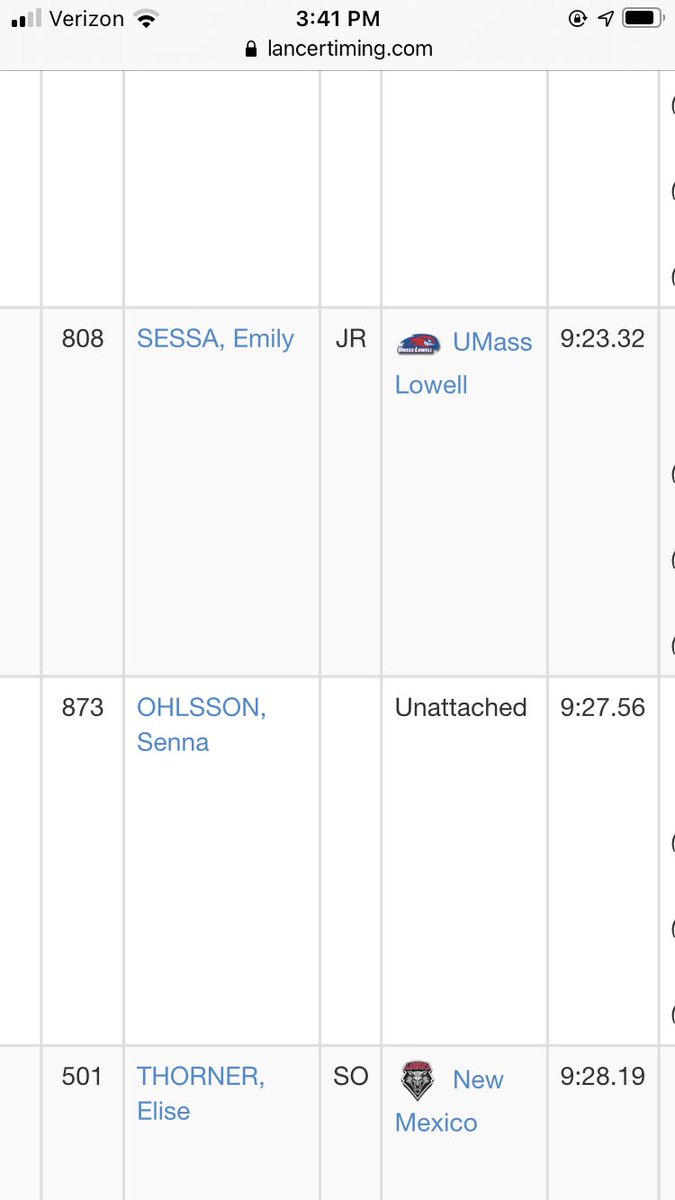
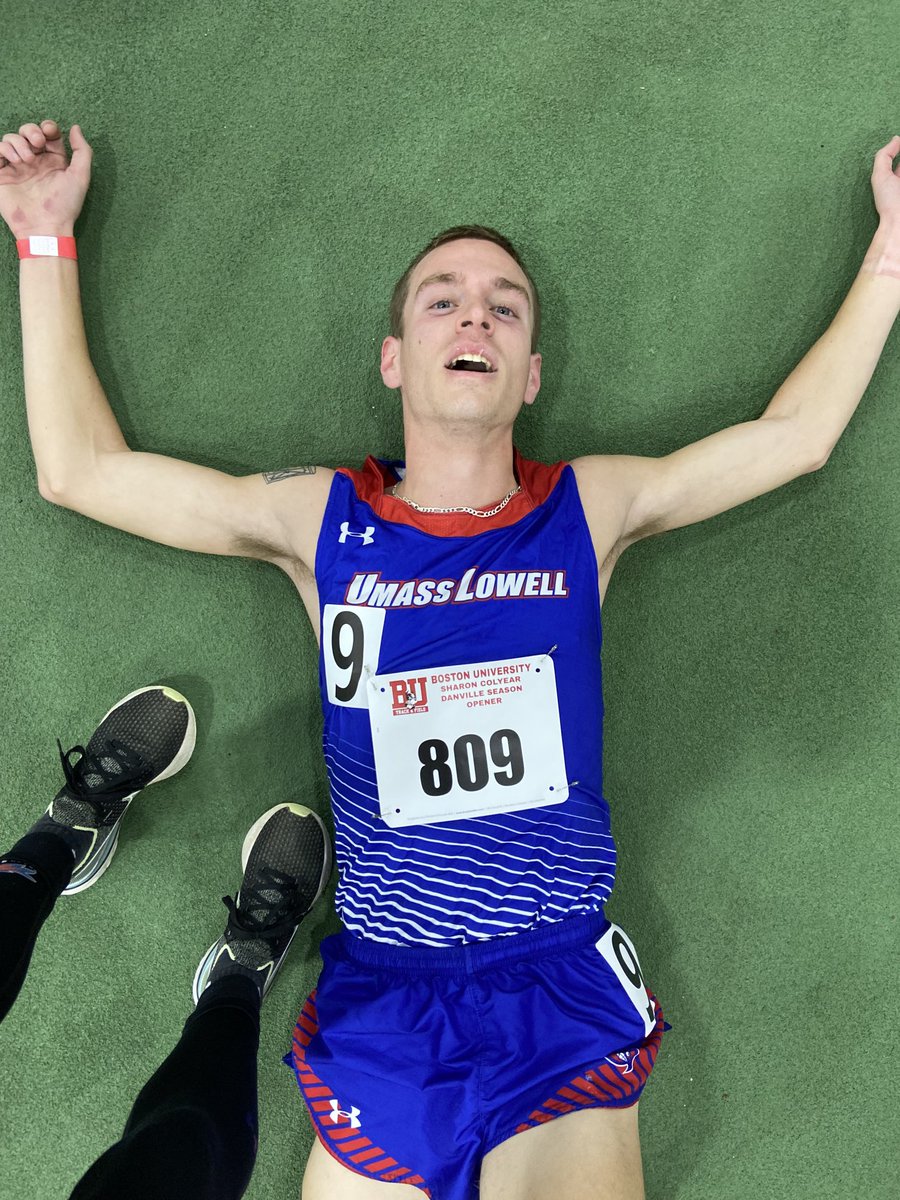
UMass Lowell was the only school to offer him a spot. His first college start went so poorly that he got pulled and benched for over a month.
Most players spiral in that moment: "I'm not good enough, the stage is too big, I don't belong here."
Hellebuyck called Joe Clark and said, "The game is not as fast as I just made it out to be."
Clark couldn't believe it. He'd just gotten pulled and his takeaway was that he'd been over-prepared. That he expected the game to be faster.
It gave a clue into how he saw failure, and why he's so resilient.
When something bad happens, we have a choice: how are we going to integrate this into our story.
Story one: I got pulled because I'm not ready or good enough.
Story two: I got pulled because I was putting too much pressure on myself and expecting the game to be better than it was.
Hellebuyck chose the latter.
"I was more ready, more prepared than I had given myself credit for."
By the end of the season, he'd backstopped UMass Lowell to its first Frozen Four in program history.
The numbers after that benching are absurd. In two college seasons, he had a 38-12-2 record, .946 save percentage, and 12 shutouts.
He won the inaugural Mike Richter Award as the best goalie in college hockey.
All from a kid who couldn't get drafted by a junior league three years earlier.
"All the hardships that I had to go through early in my career were lessons learned. That's all I use them for. I didn't let them knock me down. I just kind of created a version of myself where I was just going to continue to adapt."
Even after college dominance, it wasn't smooth.
He was drafted in the 5th round, 130th overall by the Winnipeg Jets. He worked his way up from the AHL to becoming the starter in 2017.
He's now won three Vezina Trophies. The Hart Trophy as league MVP. And according to most measure, he's the best regular-season goalie of his generation.
But the one knock that wouldn't go away? He couldn't win in the playoffs. Whent he lights shined brightest, the media and fans said he struggled. Last spring, he got pulled three times in the first round of the playoffs against St. Louis.
Just like before, others were trying to write his story: great in the regular season, can't show up when it matters.
And once again, he showed that resilience is about ignoring what others write, and penning your own narrative.
Canada threw 41 shots at him. He stopped all but one. Star Connor McDavid had a breakaway in the second period that he denied. Devon Toews had a wide-open rebound with Hellebuyck out of position. He got his stick on it.
He played out of his mind. Or as the hockey saying goes, he was standing on his head.
"Those critics, they can keep writing. But they don't understand goaltending. They don't understand my game. I know what I'm putting forward. I know what I'm building. These are the moments that prove it — not that I need to."
We often get resilience wrong. We think you either have it or don't. That it's about toughening it out. It's what I kept coming across while researching my book toughness, Do Hard Things.
But Hellebuyck's story gives us the nuance:
It's a skill built through repeated encounters with failure...but only if you process those failures correctly.
Every stop in his career told him he wasn't enough. Undrafted. Benched. Cut from camp. Pulled in the playoffs.
But at each stop, he chose the same interpretation: this is information, not my identity.
Most people let setbacks become self-definitions. Hellebuyck let them become data points.
And the guy who processes failure as calibration rather than catastrophe is the guy you want when 41 shots are coming at him in a gold medal game.
Hellebuyck described his own story today the way he always has: "I would probably say the underdog story. Constantly going and being an underdog and just making it work, persevering and getting through."
He drove 12 hours alone to a tryout in Minnesota when no one wanted him. His only shot was in the Friday Night Lights town of Texas. He got pulled from his first college start and decided the problem was that he'd overestimated the difficulty, not underestimated his own ability.
He got pulled three times in last year's playoffs and showed up to the Olympics as the best goalie in the tournament.
Write your own story. And tell it well.
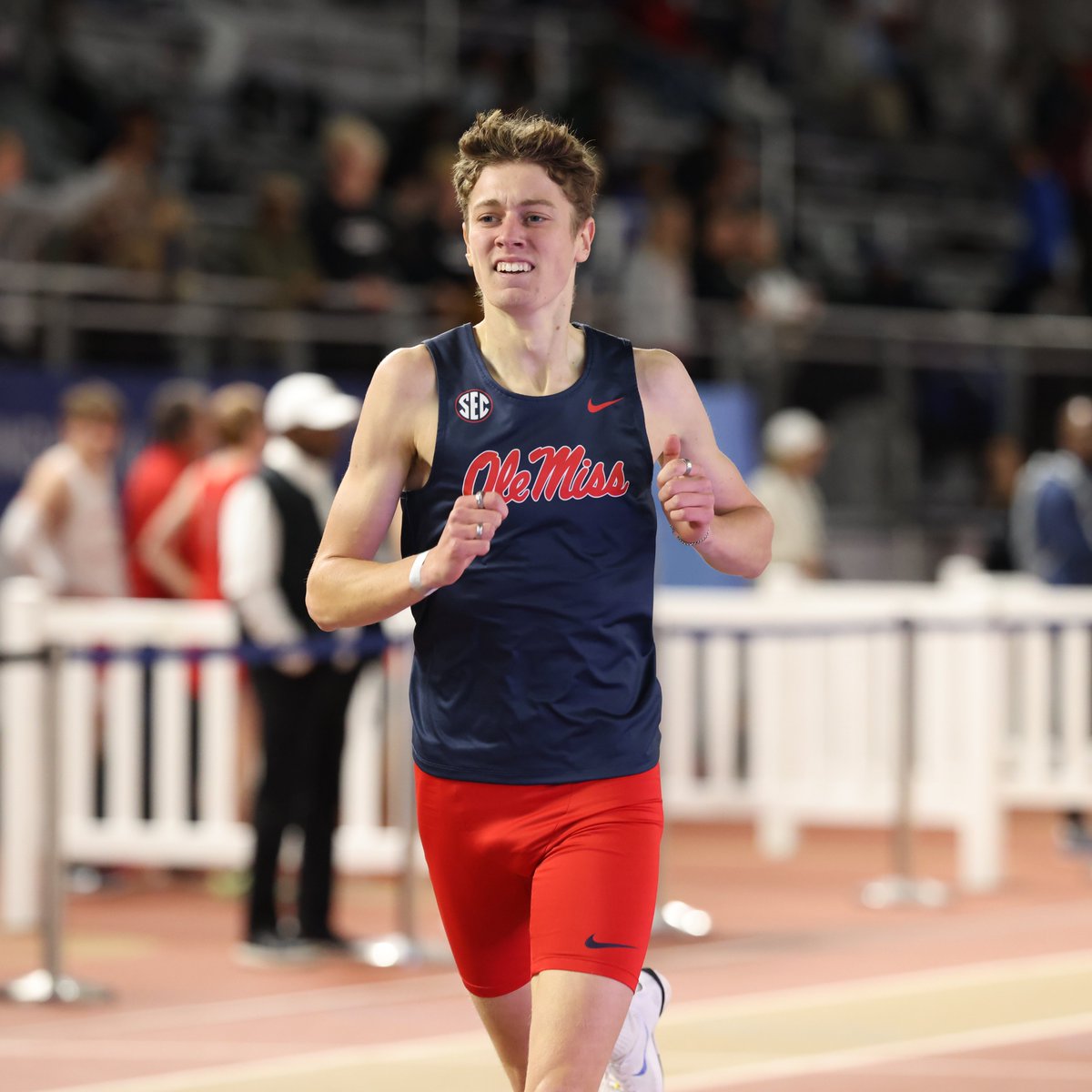
𝟴𝟬𝟬-𝗠𝗲𝘁𝗲𝗿 | In 7th at the bell. One lap to go as a Rebel. And Marcus Dropik dug DEEP 🥹
Dropik crossed the line in 4th place at 1:49.00 (55.44 final 400) to score some crucial points for the Rebel men 🔥
#HottyToddy x #SECTF
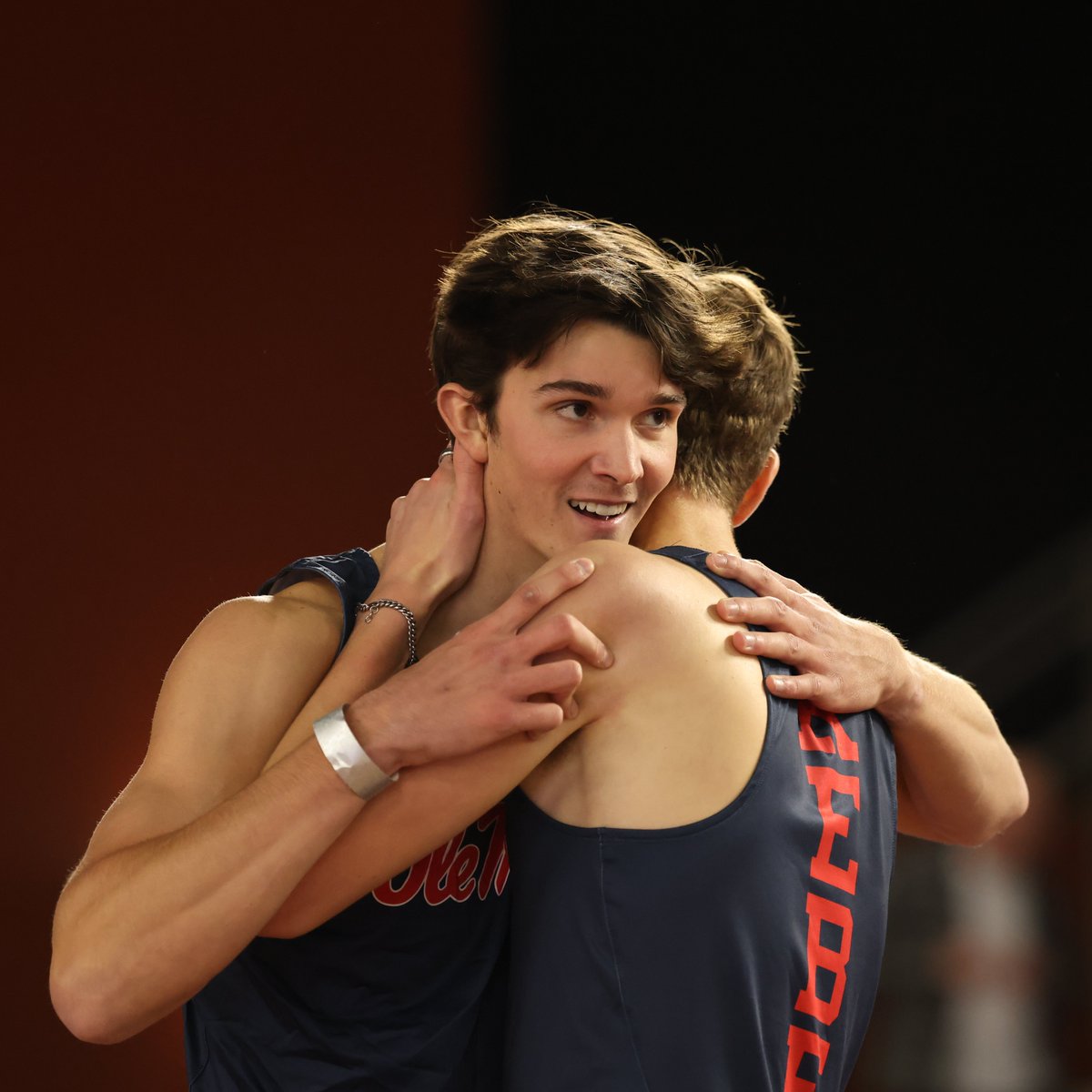
𝗠𝗲𝗻'𝘀 𝟴𝟬𝟬-𝗠𝗲𝘁𝗲𝗿 | 1-2 punch for the Rebs in the 800, including a strong debut by freshman Max Armstrong 🤩
1. Max Armstrong – 1:49.65 (No. 14 OM History)
2. Jonathan Stock – 1:51.79 (Indoor PR)
#HottyToddy
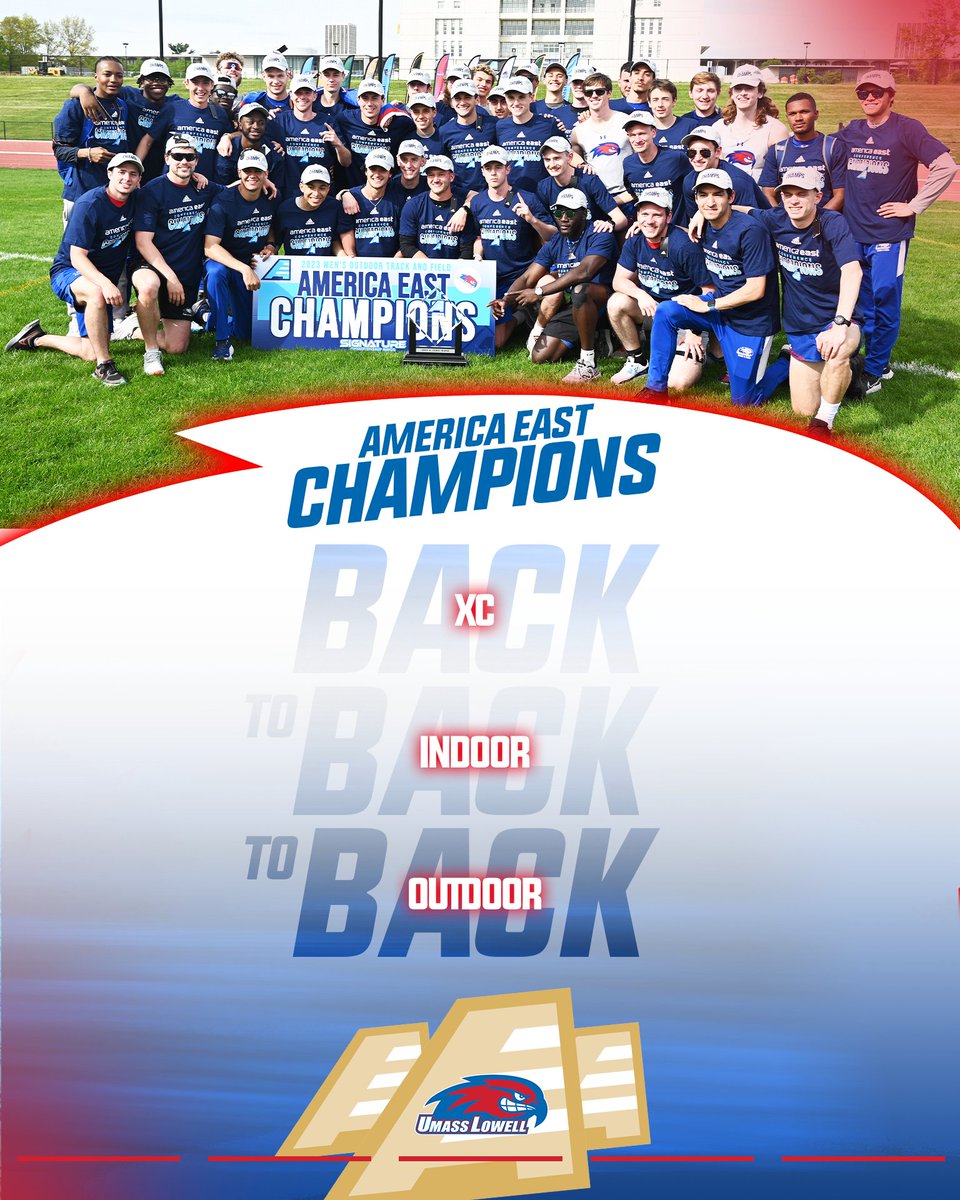
𝗧𝗥𝗜𝗣𝗟𝗘 𝗖𝗥𝗢𝗪𝗡 𝗖𝗢𝗠𝗣𝗟𝗘𝗧𝗘👑👑👑
The men claim their first @AmericaEast Outdoor Championship in school history to complete the triple crown, winning the XC, indoor and outdoor titles!🏆
#UnitedInBlue | #AEChamps
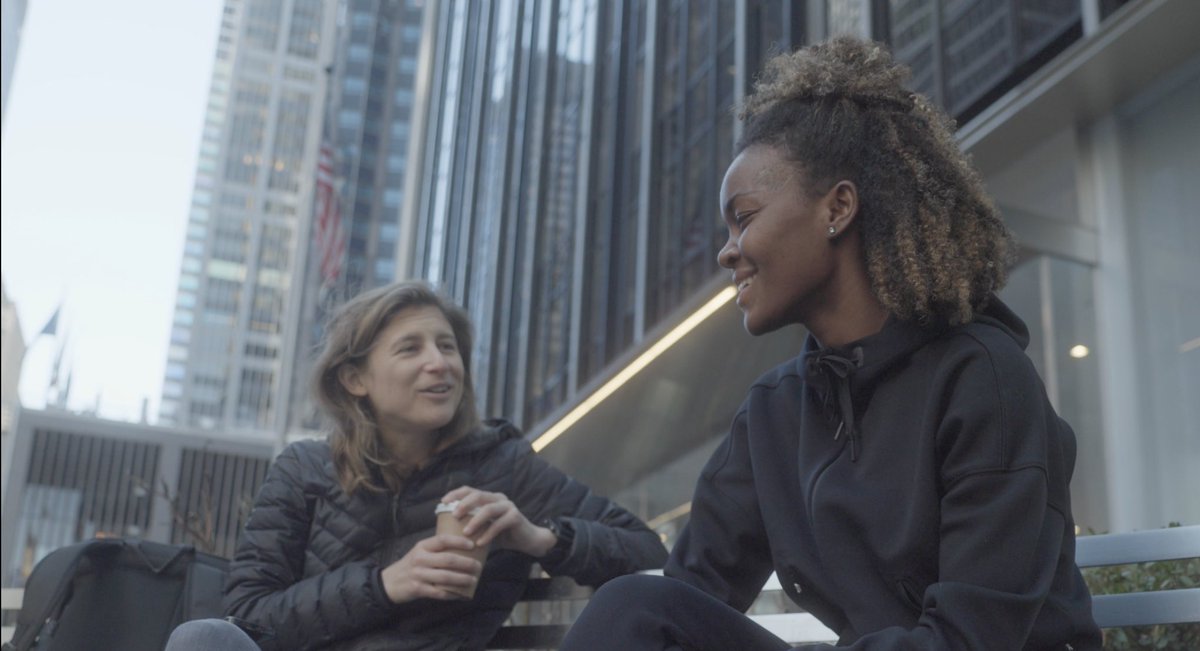
“Most people who know Italian middle-distance runner Sintayehu Vissa simply call her ‘Sinta’.…
But her full name, Sintayehu, in Amharic, loosely means: “I have seen many things”.”
@hborenstein23 profiles @SintayehuVissa for @WorldAthletics ⤵️
🗞️ https://t.co/HOLygm7hqE