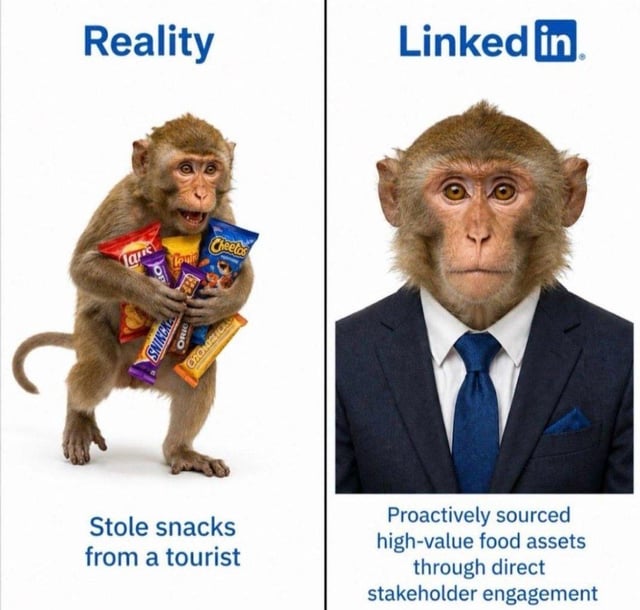
Scrutinize your ability to acquire and obtain. The ethos of it begins in asking.
Ask for that connection, ask for that job, ask for that hangout, ask for forgiveness, ask for the promotion, ask for an extension - just ask.
😭 Here lies the ruins of a country destroyed by greed... 😭😭 Kisumu would have been a super-city by now... think of the very many people would have been employed if Kicomi was running as envisioned 😭😭
Years ago, when China sprayed a green compound onto bare rocky mine slopes, hordes of online critics rushed to mock: “China’s masking environmental ruin just to fool inspectors,” “The Chinese are experts at staging fake facades.” 🙄
But the internet is merely an echo chamber for rumor-mongers; the real world, by contrast, is a vast stage for those who roll up their sleeves and get things done. Now the narrative has done a complete 180. 🔄
That much-maligned “green paint” is in fact SPF high-performance soilless hydroseeding technology. There is zero actual paint in the mixture. It’s made of shredded pine fiber, locally suited seeds, and biodegradable nutrients. The green tint? Purely a visual marker for workers to spot gaps during spraying. 🎨
The results? Seeds germinate in 3 to 5 days. Barren, lifeless mine wastelands now burst with thick, thriving grass and trees. 🌿🌳
Lies can fuel fleeting online hysteria, yet they will never bury the everlasting vitality forged by persistent labor. 💪🇨🇳
"They came to us and requested to host Ebola Patients. We gave them some 375 million dollars and they were so happy. Ebola is very dangerous."~ President Donald Trump.
Video credits : Unknown.
So now that the dust has settled on Utumishi and lesbians are no longer a problem, let me ask this: How does a nation that has never taught its adults discipline through the consequences for their actions expect the same adults to instill discipline in their kids?
One day, Kiraitu Murungi, then Minister for Justice and Constitutional Affairs, and President Mwai Kibaki were driving around and some boys showed up in the road and asked them to give them some little cash.
Kiraitu dipped his hand in his pocket and before he could extract the money, Kibaki asked him:
'Bwana Waziri, what are you trying to do?'
Embarrassed, he answered that he was getting some 'chai' for the young men by the roadside.
Kibaki then asked:
'Why should these people be given money?
What have they done? Don't they have farms to till or cows to feed?
Who invited them to come and stare at our motorcade?
Surely, must we just be paying people for standing by the roadside?'
Upon ascending to power, Kibaki never participated in any harambee because he believed that it was better to grow the economy than to dish hand-outs.
When a delegation from Nyeri went to him to ask for favours in terms of funding after the 2002 polls, the president told them, without blinking an eyelid, that banks in Kenya have things called loans which one could apply for and that State House was not licensed by Central Bank to offer credit.
Reading Jaramogi’s account of the lead up to independence, I realise Kenyatta never really seemed driven by any coherent ideology or political philosophy. Yeye alikuwa tu anataka kuingiza kichwa ndani, hiyo ingine watajua huko mbele. His overriding objective appears to have been getting into power first, with the rest to be figured out later.
Oginga Odinga, on the other hand, comes across as the revolutionary who did much of the groundwork and kept pushing for total independence. But when Odinga pressed for a cleaner break from colonial structures, Kenyatta had other ideas. As Jaramogi recounts in Not Yet Uhuru, Kenyatta argued that even if they accepted a constitution they did not want, they could always change it later once they had government. In other words: power first, principles later.
Jaramogi also recounts that when the first cabinet was being formed, objections were reportedly raised by the Governor, senior colonial police officials, and even some KANU members who considered him too militant. Kenyatta ultimately removed him as an obstacle to the arrangement. Even when the colonial government was pushing for a coalition government with KADU, a minority party, Kenyatta agreed. It increasingly appears that he was willing to remove every possible obstacle to his ascendancy to power.
The picture that emerges is of a leader less concerned with the terms of independence than with inheriting the state. If collaboration with colonial interests was the price of becoming the man at the helm, it seems he was prepared to pay it. I also remember that he distanced himself from the Mau Mau and publicly denounced the struggle.
Normalize being very direct, very straight to the point and very assertive. A surprising amount of tension in adult life exist because people avoid saying what they actually mean.
one reason i want the diet of kenyans improved is so that we can all grow to normal sizes and realize passo and 14 seater matatus are not going to work for mass transit.
The Chinese socialist project from Mao to Xi: one continuous revolution.
The standard Western story about modern China is that Mao has been quietly buried by the Communist Party, that Deng Xiaoping repudiated his legacy, and that the China that emerged after 1978 is no longer really socialist. By implication, China’s success is the success of capitalism, not of the revolution.
So why do ordinary Chinese people still travel in their millions to Shaoshan – the village in Hunan where Mao was born, now one of the most-visited tourist sites in China – to pay their respects to the founder of the People’s Republic? Stand there among the crowds and the Western story falls apart on contact.
In this video I draw on a recent trip to Shaoshan, and on the hard development data from the Mao era, to answer that question: the Mao era and the reform era are not opposed phases of Chinese history. They are two stages of a single revolutionary project, and the Chinese people know it.
Between 1949 and 1976, life expectancy in China rose by 32 years – the fastest improvement ever recorded by any country in human history. Adult illiteracy fell from over 80 per cent to 33 per cent by 1978. Land was redistributed. Women were emancipated. A complete industrial base was built from near-zero. The treaty ports were abolished. The country was unified after a century of fragmentation. This is the China the post-Mao leadership inherited – not the impoverished backwater of Western myth.
Without Mao, no Deng. Without 1949, no 1978. As the late Egyptian Marxist Samir Amin put it, the take-off of the post-1978 period “would not have been possible without the economic, political and social foundations that had been built up in the preceding period.” It is also exactly how the Communist Party of China understands its own history, in Xi Jinping’s doctrine of “the two cannot negates.”
https://t.co/JI59ayrl8I