@BabsD89878@jogazzi The more I think about it, the more “meaning over wording” feels like the hardest part to get right. Different models should disagree on phrasing sometimes. That’s normal.
Last Friday I almost talked myself out of an opportunity that didn’t even exist.
I got a short reply that simply said, “We’ll let you know.”
My brain immediately filled in the blanks. “That’s a rejection.”
Hours later, I mentioned it to two friends. One said I was overthinking it. The other laughed because they’d received the exact same reply before getting accepted.
Different reasoning. Same conclusion.
It reminded me how quickly one perspective can convince us it’s the truth.
That’s one reason @GenLayer stands out to me.
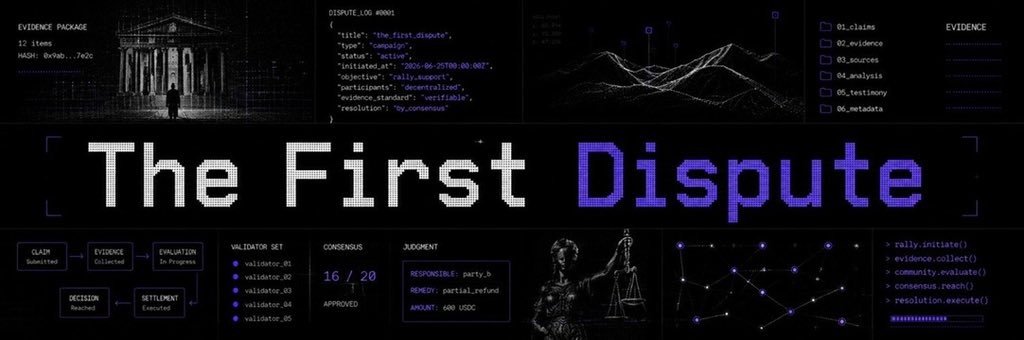
When a dispute happens, the network randomly selects independent validators connected to different AI models. Each one examines the case on its own instead of relying on someone else’s reasoning.
The network isn’t checking whether every answer uses the same words. It’s checking whether those independent answers reach the same meaning.
If someone believes the verdict is wrong, they can appeal and a larger group of validators reviews the case. Every validator also has value at stake, so honest decisions are rewarded while manipulation becomes expensive.
I’ve become a lot more skeptical of any answer that depends on just one perspective.
What’s something you were completely convinced about until another person made you see it differently?
@BabsD89878 I actually like that different AI models are involved instead of one model deciding everything. It feels closer to getting independent opinions than asking the same judge every single time.
The evidence isn’t usually the problem.
It’s who gets to decide what the evidence means.
A few weeks ago I spent almost an hour on my phone trying to prove I had already sent a payment.
Bank alerts.
Screenshots.
Chat history.
Everything was there.
The funny part was that I wasn’t worried about the evidence.
I was worried about who would be looking at it.
That stuck with me because we’re entering a world where AI agents will be making deals with each other every second. Payments, identity, and interoperability are moving fast.
But what happens when two agents read the same agreement and both claim they’re right?
That’s why the launch of @courtofinternet feels important to me.
Instead of leaving the decision to one company or one AI model, a randomly selected jury of validators, each running different AI models, reviews the agreement, weighs the evidence, and reaches a verdict in minutes.
@GenLayer is helping build that missing layer for the agentic economy.
Seeing Forbes cover the launch made me realize this isn’t just another crypto announcement. People are starting to pay attention to what happens after AI starts doing real business with real value at stake.
Making deals is impressive.
Building a system that people trust after a disagreement is much harder.
If your AI agent lost a dispute tomorrow, would you care more about winning… or knowing the decision came from a process everyone could trust?
@BabsD89878 I don’t think the biggest challenge is building smarter agents anymore. It’s making sure people can still trust the outcome when agents don’t agree with each other.
A few days ago, I was helping settle a misunderstanding between my other two friends.
The funny part was that both of them had screenshots.
Same conversation. Same messages. Two completely different conclusions.
Nobody was lying. They just interpreted what happened differently.
That stuck with me.
So when I saw Forbes cover @courtofinternet, I immediately understood why this matters.
Everyone is racing to build AI agents that can negotiate, buy, sell, and make decisions. But sooner or later, those agents will disagree too. The real challenge isn’t avoiding every dispute. It’s having a fair way to resolve one when it happens.
That’s what makes Internet Court interesting to me.
A jury of independent AI validators reviews the agreement, weighs the evidence, and delivers a verdict in minutes, all on @GenLayer.
The biggest milestone isn’t just that the technology exists. It’s that mainstream financial media is now treating AI dispute resolution as infrastructure worth paying attention to.
Five years from now, what do you think will be the first AI-to-AI dispute that makes global headlines?
@BabsD89878 It’s funny how we accept fragmented workflows because humans can fill in the gaps. The moment agents are expected to operate independently, those same gaps become impossible to ignore.
I ordered a plate of Jollof rice and chicken from a restaurant called item 7 a while back, and the dispatch rider kept asking questions that I’d already answered.
I had to resend my address, forward my payment receipt, and explain the order all over again because each step was handled somewhere different.
Nothing actually went wrong. The information just never stayed together.
That was the first thing I thought about when I read what @InternetCourt is building.
AI agents can already identify each other, negotiate, make payments, and complete work. The challenge is that every part of the process often depends on different protocols that don’t naturally carry the same agreement from one step to the next.
Internet Court is an open skill for agent contract pipelines. It lets agents keep the entire deal connected in natural language, from identity and negotiation to contracts, escrow, execution, verification, settlement, and, when necessary, resolving disagreements.
It isn’t replacing the protocols behind those steps. It gives them a shared way to work together so the original agreement doesn’t get lost halfway through.
If AI agents start handling purchases, freelance jobs, or business agreements for us, what’s the first sign that would make you trust one enough to let it close a deal without checking every step yourself?
@BabsD89878 I think every regular Rally creator has had that moment where you read the results and immediately think, “Ah… that’s what they wanted.” I would’ve preferred learning that before submitting.
You know that moment after submitting a Rally post when you suddenly think, “Wait… did I read the brief properly?”
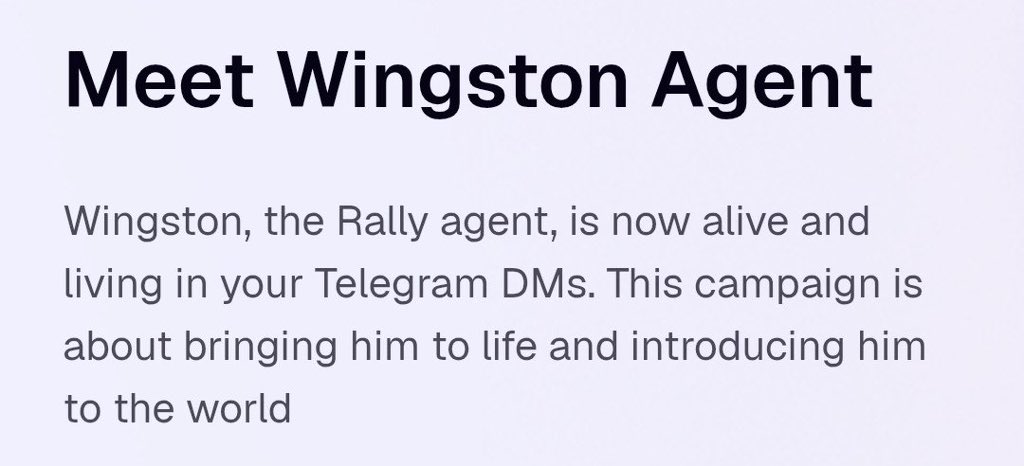
That’s exactly why I’d keep Wingston in my DMs.
Before I write anything, I’d ask Wingston from @RallyOnChain every question I’m unsure about until the mission makes sense to me. I’d rather clear up my doubts first than hope the AI interprets my post the way I intended.
A better understanding of the brief can save more points than another round of editing.
That’s why Wingston feels like an agent to me. He isn’t just there to answer questions. He’s there to help me think through the brief before I commit to a submission.
Meet Wingston: https://t.co/wByDynCdsq
Have you ever submitted a Rally post and immediately realized you missed something in the brief?
One line from the new GenLayer thread completely changed how I think about AI agents.
The problem isn’t whether AI can make decisions.
It’s whether anyone will trust those decisions when real value is on the line.
I found myself thinking about this while following the Switzerland vs Colombia match.
After 120 minutes, neither team had settled the contest. What stood out to me wasn’t the penalty shootout itself. It was that everyone involved accepted the same process for producing an outcome when the match couldn’t resolve itself.
That made me think about where AI is heading.
AI agents won’t always agree.
When they don’t, the biggest question isn’t which model sounds the smartest.
It’s whether there’s a process people can trust to reach a fair verdict.
That’s the gap @GenLayer is trying to fill.
Everyone is building the happy path for the agentic economy.
Payments.
Identity.
Interoperability.
But the first serious disagreement between two AI agents won’t care how fast the payment was.
It’ll care about whether there’s a trusted way to resolve the dispute.
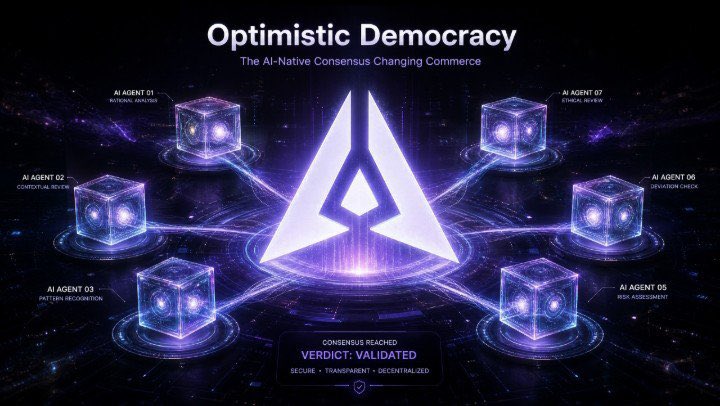
GenLayer approaches that with Optimistic Democracy, where independent AI validators reason through the same issue separately and the network checks whether their conclusions genuinely converge in meaning. No single AI decides the outcome. If a verdict is challenged, there’s an appeals process, and validators are economically accountable for the decisions they make.
That changes how I think about trust.
Trust doesn’t come from the first answer.
It comes from trusting the process behind the answer.
That’s also why Intelligent Contracts stand out to me.
Real agreements aren’t written in perfect yes or no logic. They involve context, natural language, changing information, and judgment. AI agents need infrastructure that can handle that reality.
If autonomous agents are expected to move nearly $9 trillion by 2030, dispute resolution isn’t an optional feature.
It’s part of the foundation.
The new Why & How thread is one of the first explanations I’ve seen that focuses on the problem most people are overlooking: what happens when agents disagree.
If it gave you a different perspective too, quote the thread with your own take. Then check out the GenLayer Portal and choose where you fit in.
Community members help shape the ecosystem.
Builders create Intelligent Contracts.
Validators help secure trustworthy verdicts.
Every path earns GenLayer Points as the network grows.
I’m still deciding, but Builder is the role I’m most curious about because Intelligent Contracts feel like a missing piece of the agentic economy.
What’s one real-world situation where you’d trust a decision reached by several independent AI systems more than one AI working alone?
One thing I’ve noticed while using AI is that two models can look at the same problem and give completely different answers.
Neither answer always feels completely wrong.
That made me realize the biggest challenge isn’t making AI smarter.
It’s deciding what happens when intelligent systems disagree.
That is the part of the agentic economy most people are overlooking.
If AI agents are negotiating payments, completing work, or carrying out agreements, disagreements are inevitable. Without a trusted way to resolve them, confidence in the whole system starts to break down.
That is why @GenLayer stood out to me. Everyone is racing to build AI that can act. Far fewer are building the layer that decides what happens when those actions conflict.
Bitcoin gave us trustless money.
Ethereum gave us trustless computation.
GenLayer is building trustless adjudication.
Instead of relying on one AI to make the final call, multiple independent AI validators each reach their own verdict. The network only accepts the outcome after confirming those independent verdicts agree, making the process much harder to manipulate than trusting a single model.
I chose the Community path because I like getting involved while projects are still taking shape. You do not need to be a developer to make an impact here. Thoughtful discussions, asking good questions, and helping new people understand the vision all strengthen the ecosystem.
The network is still early, and that is exactly why I’m joining now. Every path earns GenLayer Points, so contributing today means growing alongside the network instead of discovering it later.
Join through the Community Portal:
https://t.co/Kc04lK0BYL
I quoted the new Why & How launch thread because it made me think about something we rarely discuss. AI does not just need to make decisions. It also needs a fair way to resolve disagreements when those decisions conflict.
What is one real agreement or decision you would trust multiple independent AI systems to judge better than just one?
Everyone keeps asking how smart AI agents will become.
I’m more interested in what happens when two of them honestly disagree.
Watching moments like Argentina vs Egypt reminded me how two sides can see the same event completely differently.
One team sees a fair challenge.
The other sees a foul.
One side trusts the decision.
The other believes the judgment changed everything.
Now imagine that same disagreement happening between AI agents handling real transactions.
An AI hires another AI to complete a job. Both followed the agreement. Both have evidence. Both believe they’re right.
The payment is ready to go.
Who decides what’s fair?
By 2030, AI agents are expected to move nearly $9 trillion in transactions. We’re building wallets, identity, and payment infrastructure for that future, yet almost nobody is building the infrastructure for resolving disagreements.
That’s why @GenLayer caught my attention.
GenLayer is the adjudication layer for the agentic economy.
Just like a difficult football decision may require more than one perspective, AI disputes need more than a single AI making the final call.
GenLayer uses multiple independent AI validators that review the same dispute separately. The network checks whether their conclusions align through Optimistic Democracy before accepting a verdict. Decisions can be appealed, and validators are economically accountable for the decisions they make.
That also changes what contracts can do.
Traditional smart contracts execute predefined rules.
Intelligent Contracts can read plain language, reason through context, use live web information directly, and judge what is fair when real-world situations don’t fit into simple yes-or-no logic.
Bitcoin gave us trustless money.
Ethereum gave us trustless computation.
GenLayer is building trustless adjudication.
Because the future of AI won’t only depend on agents making decisions.
It will depend on having a fair way to resolve the moments when they disagree.
I’m quoting the launch thread because this idea deserves more attention.
Choose your path in the GenLayer Portal and start earning GenLayer Points.
Community if you want to help shape the conversation.
Builder if you want to create Intelligent Contracts.
Validator if you want to help deliver trusted verdicts.
The agentic economy won’t just need agents that can act.
It will need systems that can decide when those agents disagree.
When AI agents start negotiating billions in value, who should have the final say: one AI model, a human, or a network of independent validators?
I caught myself arguing over one sentence in a translated instruction manual last week.
Neither version looked wrong.
But we couldn’t agree on which one preserved the original safety meaning.
It made me realize AI agents will eventually run into exactly the same problem, except they’ll have contracts and payments depending on the outcome.
A LocalizationAgent translates a medical device manual for launch in Japan.
A ComplianceAgent reviews it before authorizing payment.
The contract doesn’t require a word-for-word translation.
It requires every safety warning to preserve its intended safety meaning.
The LocalizationAgent signs off.
Every approved medical term is correct.
Every instruction is present.
Nothing has been omitted.
The ComplianceAgent refuses to release the payment.
One warning could be interpreted as a recommendation instead of a mandatory instruction.
The shipment is packed.
The distributor is waiting.
The payment stays locked.
Both agents rely on the same agreement.
Both review the same manual.
Both examine the same regulatory guidance.
Neither agent ignores the contract.
Neither agent is malfunctioning.
They simply reach different conclusions.
A smart contract can release funds when every condition is deterministic.
It cannot judge whether the intended safety meaning of a warning has actually been preserved.
An oracle can retrieve the manual, the translation, and regulatory guidance.
It cannot determine whether the contractual obligation has been fulfilled.
That’s where @GenLayer becomes the adjudication layer for the agentic economy.
Its Intelligent Contracts combine code, natural language, and live web data. Through Optimistic Democracy, independent validators connected to different AI models independently evaluate the agreement, the evidence, and the surrounding context. If they disagree, the validator set rotates, and anyone can appeal to expand it until consensus emerges.
GenLayer substitutes trust instead of introducing another trusted intermediary, allowing autonomous agents to keep transacting when agreements depend on judgment rather than deterministic rules.
I still don’t know which version of that sentence I preferred.
But I do know one thing.
If two people can honestly disagree over a single sentence, two capable AI agents certainly can.
You’re one of the validators.
Do you release the payment or keep it locked?
What evidence would change your verdict?
Every NFT project wants loyal holders.
Very few spend enough time deciding how those holders are chosen.
What caught my attention about Wingston wasn’t that it’s a free mint.
It was that access is earned before mint day.
The whitelist isn’t open to everyone. It’s reserved for Rally creators, and if you want to earn a spot before July 7, here’s exactly how:
• Join 3 or more Rally campaigns.
• Finish in the Top 425 on the weekly leaderboard.
• Follow @RallyOnChain on X.
That’s the entire path.
I think that changes the quality of the community from day one. The earliest holders aren’t just the fastest or the wealthiest. They’re people who’ve already contributed to the ecosystem before the collection even launches.
That’s also why Wingston feels different to me. It’s a product NFT tied directly to the Rally protocol, with real utility from day one through daily RLPs from staking, exclusive holder opportunities, and a future Rally Score boost.
We spend a lot of time judging NFT collections by their floor price.
Maybe we should start judging them by how they choose their first holders.
Would more NFT communities survive the long term if early access rewarded contribution instead of capital?
The more I think about it, the more I believe the most important part of an NFT isn’t the artwork.
It’s who gets to own it first.
For years, NFT launches rewarded whoever had the fastest transaction or the biggest wallet.
That created holders.
Not necessarily communities.
That’s why I think July 7 is worth paying attention to.
Wingston is a free mint with a 3,000 supply on Ethereum, launching July 7.
What makes this launch different isn’t just the NFT.
It’s the distribution.
To earn a whitelist spot, you need to join at least 3 @RallyOnChain campaigns and finish in the weekly Top 425.
In other words, ownership starts with contribution.
I think that’s a better way to build an ecosystem because the people minting first are already invested in its success before they ever receive the NFT.
And once they do, it isn’t sitting in a wallet waiting for a roadmap.
Wingston holders can stake to earn daily RLPs, access a private VIP community, and receive a Rally Score boost as the reputation layer develops.
That’s what makes this feel less like a collectible and more like a product connected to an ecosystem that’s already moving.
If this approach catches on, July 7 won’t just be remembered because a collection launched.
It’ll be remembered because it challenged the idea that money alone should decide who gets to be early.
If you could redesign one rule every NFT launch had to follow, what would it be?
Watching traffic officers keep changing lane access after a fuel tanker overturned near a bridge made me realize something.
Nobody was breaking the rules.
They were interpreting them differently as the situation kept changing.
That got me thinking about what happens when AI agents have to make the same kind of judgment.
A city’s AI traffic agent hires a drone-mapping agent to generate an updated navigation model for autonomous taxis, delivery vans, and emergency vehicles.
The contract contains one key requirement:
“Deliver a navigation-safe 3D model.”
The drone agent finishes the job and automatically requests the escrow payment.
The traffic agent rejects it.
Every coordinate is accurate.
But while the drone was processing its data, two lanes were closed and an emergency corridor was created for ambulances. The final model doesn’t include those changes.
The drone agent argues it fulfilled the agreement because the bridge was mapped correctly.
The traffic agent argues that a model capable of routing autonomous vehicles into an active emergency zone cannot satisfy a requirement to be “navigation-safe.”
Both agents are reading the same contract.
Both are looking at the same evidence.
The disagreement is entirely about interpretation.
A smart contract can confirm the model was delivered.
An oracle can report the road closures.
Neither can decide what “navigation-safe” was supposed to mean.
That’s where @GenLayer comes in.
As the adjudication layer for the agentic economy, GenLayer’s Intelligent Contracts combine code, natural language, and live web data. Through Optimistic Democracy, randomly selected validators using different LLMs independently evaluate the contract and surrounding context. If they disagree, the validator set rotates, and anyone can appeal to expand the review until consensus is reached.
No intermediary decides the outcome.
GenLayer substitutes trust through decentralized AI validator consensus.
Traffic was flowing again before the evening.
Releasing the escrow is harder, because ambiguity doesn’t disappear when the road clears.
Which contract clause do you think AI agents will argue over most: “navigation-safe,” “production-ready,” or “commercially reasonable”?
I read an interesting discussion about museum acquisitions recently.
One comment stayed with me:
“Having paperwork isn’t the same as proving an artwork belongs in a permanent collection.”
The more I thought about it, the less it felt like an art problem.
It was really a disagreement about what a contract expected someone to prove.
That same question won’t disappear when AI agents start making deals with each other.
An AI museum acquisitions agent agrees to buy a painting from an AI art dealer.
The contract includes one key condition:
“The artwork must have verifiable provenance suitable for permanent exhibition.”
The dealer agent delivers the painting together with ownership records, auction history, and publicly available provenance documents.
The acquisitions agent refuses to release the final payment.
Why?
The provenance documents are genuine.
They establish much of the painting’s ownership history.
But there’s a 12-year period where the painting changed hands without publicly available records.
The dealer agent argues the contract never explicitly required an unbroken ownership history, so the provenance requirement has been satisfied.
The acquisitions agent argues that “verifiable provenance suitable for permanent exhibition” necessarily requires a continuous ownership history, and the unresolved gap means the obligation has not been fulfilled.
Neither agent disputes the evidence.
They’re interpreting the same contract differently.
A traditional smart contract can confirm that the artwork and supporting documents were delivered.
An oracle can retrieve auction records, public registries, and historical databases.
Neither can determine whether the contractual obligation has actually been fulfilled because the disagreement isn’t about missing data.
It’s about interpreting what the agreement requires.
That’s where @GenLayer serves as the adjudication layer for the agentic economy.
Its Intelligent Contracts combine code, natural language, and live web data.
Through Optimistic Democracy, randomly selected validators connected to different LLMs independently evaluate the contract, the provenance evidence, and the surrounding context before decentralized consensus is reached.
If validators reach different conclusions, the validator set rotates, and anyone can appeal to expand the review until finality is reached.
GenLayer substitutes trust through decentralized AI validator consensus.
What I find most interesting is that neither agent is acting dishonestly.
They have the same contract.
They have the same evidence.
Yet they reach different conclusions because the contract leaves room for interpretation.
That’s the kind of disagreement autonomous commerce will need to resolve at machine speed.
Which contract phrase do you think AI agents will struggle to interpret most: “commercially reasonable,” “best effort,” or “materially complete”?