If you’re still against the Gove reforms you need to be checked in the head.
Without them England would have undoubtedly taken the path of the other parts of the country - that didn’t implement them.
It’s as clear as day for all with eyes to see.
I need UK 10 year gilt yields translated into play language. @grok can you map % yields on to “fucked” “proper fucked” “utterly fucked” and “time to buy tinned goods”
Emma, when that mini-Budget was announced, you were Managing Director of TheCityUK, which welcomed it, saying it took ‘bold action to create the conditions for economic growth’.
You weren’t an MP, but your Labour colleagues at the time were calling for even MORE spending.
And as my successor as City Minister, you cheered as Rachel Reeves torched jobs, hurt farmers, attacked independent education and damaged businesses.
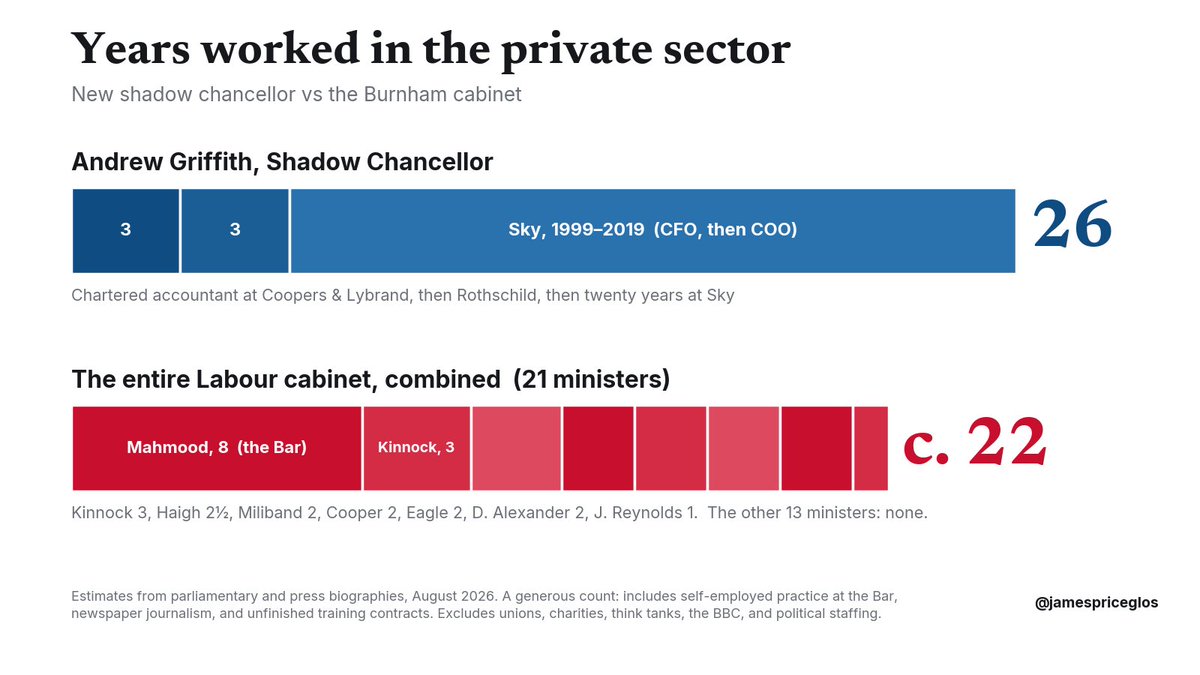
The lesson for is that all decisions must be forensically costed, with detailed ‘how-to’ plans to back them up. As a private sector finance director for 11 years, that is second nature to me and will be how the new Conservative Economic Unit will operate.
Cllr Paul Swaddle: Want to know how the council spends public money? We've launched a new Transparency Hub where residents can easily access council spending and financial information in one place. It's part of our commitment to being open about how… https://t.co/1E2haaAUPx
Cllr Tim Barnes @voteTimBarnes on @BBCLondonNews asked if he feels bullied by the Mayor over the Soho licensing row: "Not sure I'd necessarily call it bullying. I don't feel bullied. I feel exhausted by having to explain that a policy that was put forward as being true isn't true, never has been."
Full story: https://t.co/4dJAsUxd3U #WestminsterMatters #Westminster #CityThatWorksForAll
On @LBC this morning: The Mayor, soon to be Lord Khan, is now accusing Conservatives of playing politics on licensing, claiming we're chasing a small number of vocal residents at the expense of London's wider interests.
Cllr Tim Barnes' response: it's the Mayor undermining support for London's nightlife, not us.
There is no ban, there never was, there never will be. #Westminster
@citywestminster is famous for its fantastic bars & clubs - and we're consulting on how we can ensure as many people as possible enjoy our nightlife in safety. Ignore nonsense headlines about us banning "vertical" drinking - we love our visitors whether they are standing or sitting!
Take part in the consultation: https://t.co/9Tao1PUoaL
"Ölkəmizdə çevik iş vaxtı rejiminin tətbiqi üçün ilk növbədə beynəlxalq təcrübə ətraflı öyrənilməli, hüquqi baza formalaşdırılmalı, müvafiq normativ-hüquqi aktlar qəbul edilməli və proses mərhələli şəkildə həyata keçirilməlidir"
Ətraflı⤵️
https://t.co/ZLkDBBkmqG
Today, Conservative peers voted for Lord True's business of the House motion which would have enabled a debate on the new Prime Minister's policies and plan for government.
Having changed the programme in the House of Commons to avoid the Prime Minister facing scrutiny this week, Labour and the Liberal Democrats joined forces to block Parliamentary scrutiny in the House of Lords, helping Andy Burnham shirk accountability.
The Conservatives will always stand up for Parliament’s right to hold the Government to account.
🔥 Jeremy Hunt gave Zack Polanski a few home truths to his face on last night’s Peston.
The former Conservative Chancellor went straight for Zack Polanski when asked about a potential wealth tax:
Peston: “How worried would you be that if one of his earlier acts were a wealth tax that actually that would drive quite a lot of investment offshore?”
Hunt: “I would be extremely worried and I think Zack’s views are totally economically illiterate.”
Hunt then laid out exactly why it would be “incredibly damaging” — killing investment, driving wealth offshore, and hammering growth.
Polanski just sat there stone-faced the whole time 😂
Finally someone said it to his face. Hunt speaking for millions who actually understand how economies work.
Westminster is facing a £100m funding hit over the next four years, as Labour’s new funding formula takes money away from areas like ours. That means tough choices, possible service cuts and pressure to raise council tax. Paul Fisher says residents must have a say before any decisions are made. Full story: https://t.co/5CdQzxIdMw
Since you mentioned the 1980s, @andyburnham, here’s a reminder of what was achieved:
• Top rate of income tax: 83% → 40%
• Savings income taxed at up to 98% in 1979 — surcharge abolished
• Basic rate: 33% → 25%
• Inflation: 21.9% peak (1980) → 2.4% (1986)
• Days lost to strikes: 29.5 million (1979) → 1.9 million (1990)
• Real take-home pay for the average earner: up by a third
• Right to Buy: over a million council tenants became homeowners
• Home ownership: 55% → 67%
• Individual shareholders: 3 million → 11 million — one in four adults
• Foreign holidays: roughly doubled
• Homes with a telephone: two-thirds → nearly nine in ten
• Pensioners’ average incomes: up around 30% in real terms
• Infant mortality: down almost 40%
• Real GDP: up by almost a third
• GDP per head outgrew France, Germany and Italy in the 1980s
• Manufacturing productivity: slowest growth in the G7 in the 1970s → fastest in the 1980s
• Self-employed: 1.9 million → 3.5 million
• Nissan to Sunderland, Toyota to Derby, Honda to Swindon
• Britain became a net oil exporter
• London restored as the world’s financial capital in 1986
• Budget surpluses three years running — Britain repaid debt, 1987–90
• National debt: 47% of GDP → 28%
• State spending: ~45% of GDP → ~39%
• The civil service: 732,000 → 565,000
• Corporation tax: 52% → 35%; the small firms’ rate: 42% → 25%
• Personal tax allowances: up more than 25% in real terms
• Higher rates of income tax: nine → one
• Death duties: fourteen rates → one
• Exchange controls scrapped after 40 years
• 40+ nationalised businesses privatised — 600,000 employees moved to the private sector
• The 33 big state industries: took ~£500m from taxpayers in 1980 → paid £8.4bn to the Exchequer by 1987
• British Steel: world-record loss-maker (1980/81) → £733m profit (1989/90)
• BT, 1984: the largest share offer the world had ever seen
• “Tell Sid” broke the record again in 1986
• British Airways: nationalised loss-maker → profitable, private, “the world’s favourite airline”
• The Channel Tunnel launched and entirely privately financed
Over to you.