Big and small, fast and slow: our planet is random yet predictable. Physicist and author of: The weather and climate: Emergent laws and multifractal cascades.
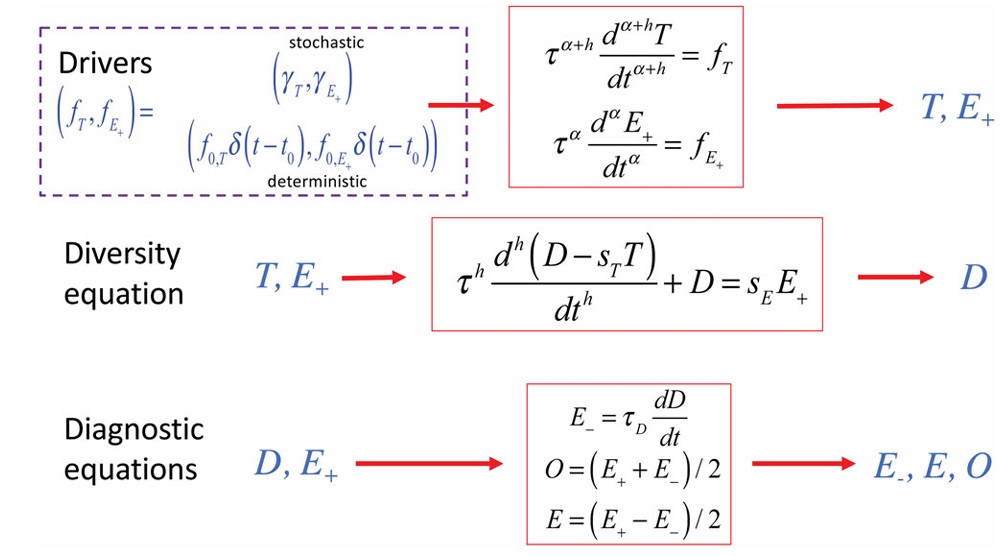
I'm glad to share our most recent article with @LovejoyShaun in the @PaleoSoc journal "Paleobiology" presenting so called Fractional MacroEvolution Model (FMEM), which reflects key features of macroevolution - scaling and long memory
https://t.co/4zmCUNbxDn
1/n
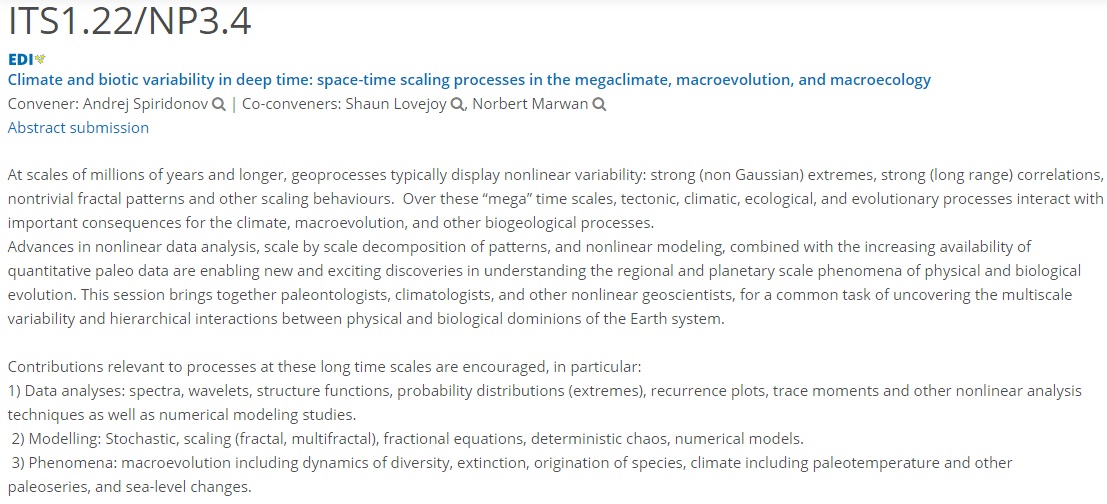
Please consider submitting your abstract to our interdisciplinary session #EGU24@EuroGeosciences@LovejoyShaun
ITS1.22/NP3.4
Climate and biotic variability in deep time: space-time scaling processes in the megaclimate, macroevolution, and macroecology
https://t.co/e2Wso0Bb1B
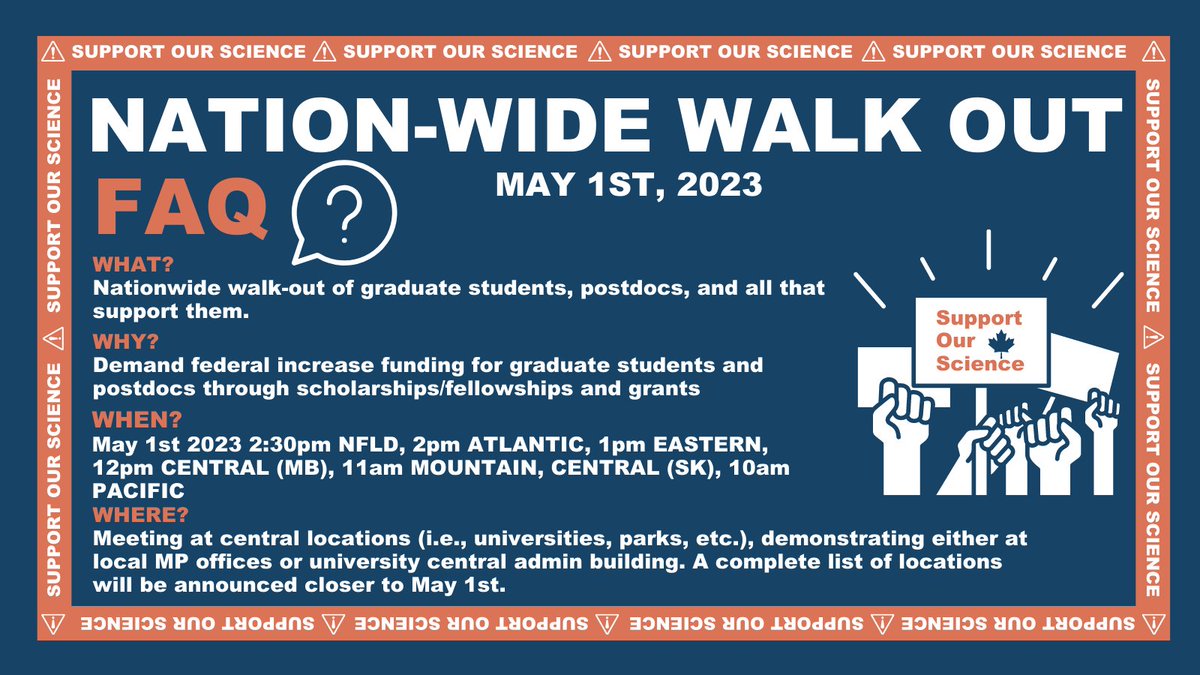
Support our Science! Scientific research in Canada is steeply declining. Budgets have stagnated for decades and so have student and postdoc scholarships and support. Join the pan-Canada protest on May 1, the Montreal event details are here: https://t.co/LncSiDekwT
Life or Climate? Which is dominant? My new Nature paper (https://t.co/p10u0NKzox) with Andrej Spiridinov answers this question using the paleobiology data base combined with new Nonlinear Geophysics data analysis techniques. Apologies to supporters of the Gaia hypothesis.
Happy to share our new study with Shaun Lovejoy @LovejoyShaun on the scaling of macroevolutionary processes and their relation to the megaclimate, published today @Nature https://t.co/szXkJQv8Vs 1/n
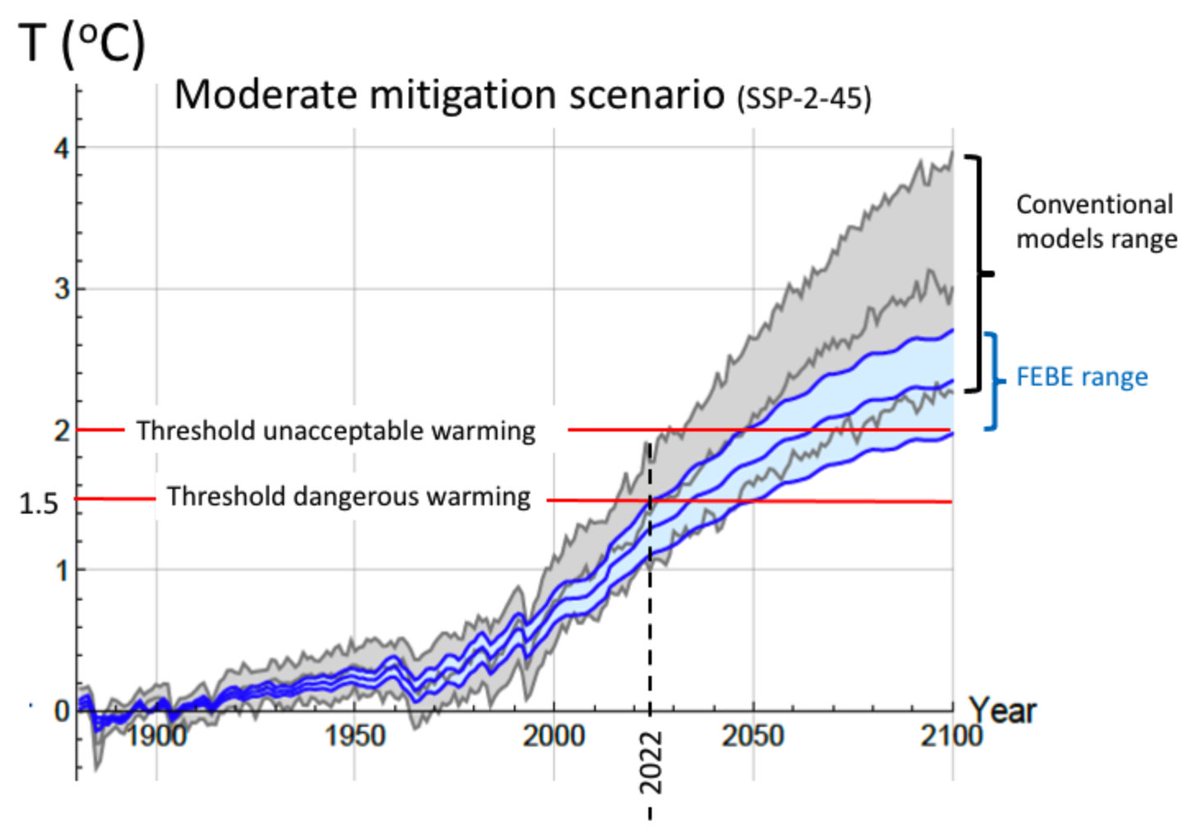
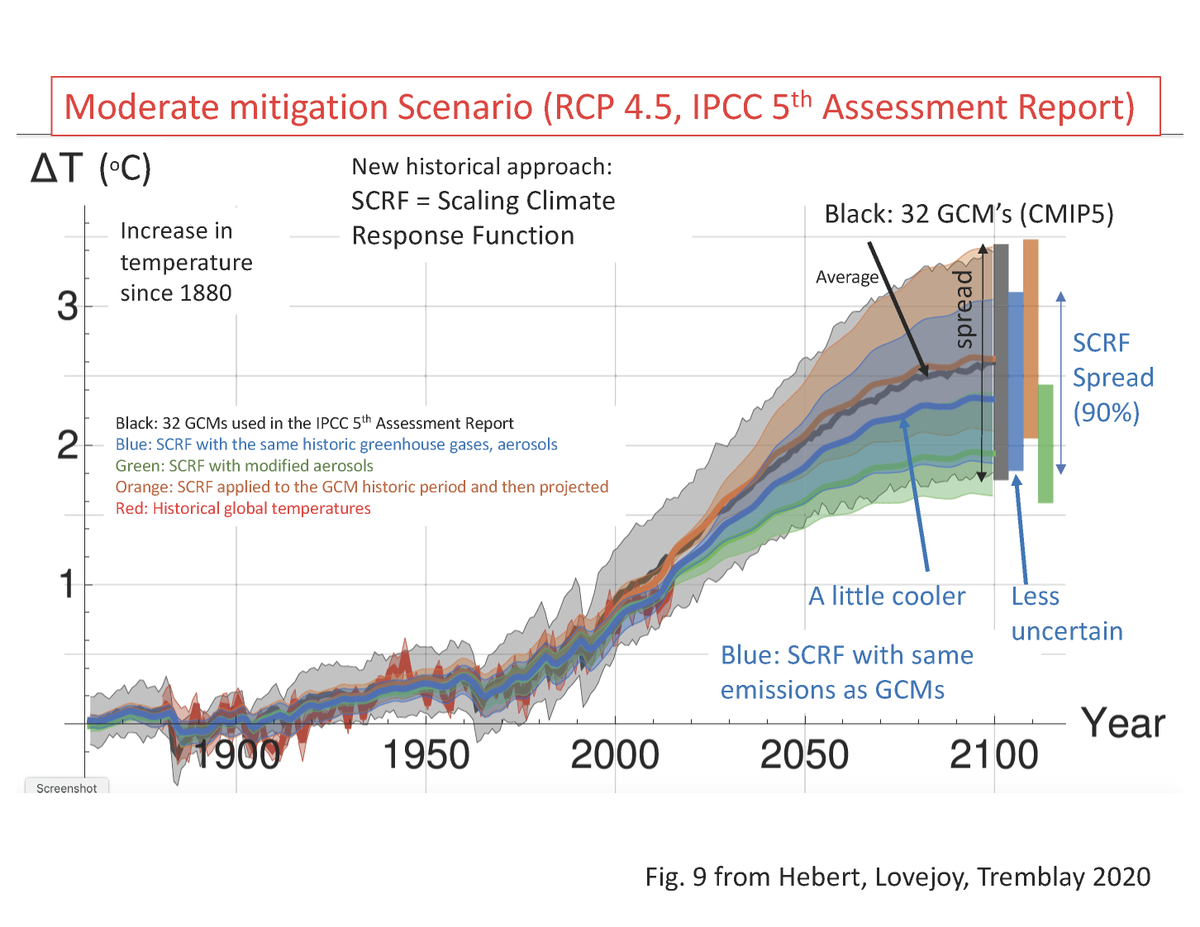
New paper based on the Fractional Energy Balance Equation (FEBE) gives a slightly smaller warming but a much smaller range of outcomes in 2100 (compare the General Circulation Model (GCM) outcomes in grey with the FEBE outcomes in blue). https://t.co/tgbHcIs9Bo
@AndrejSpiridon4 Mitchell's summary spectrum was an "educated guess" before reliable data. Today, there's no excuse for a scheme without empirical support. Below (red) is a quantitative estimate of the empirical spectrum: it's quite different. They're still in denial about the "background".
A new way of projecting temperatures to 2100: a tiny bit cooler but with a lot more confidence! In the news: https://t.co/92Q5SDfSi6, https://t.co/ODIQkOfaCO, the full story: https://t.co/Lupg3zzWaf.
Using a new approach, #McGill researchers find that the threshold for dangerous #climatechange will likely be crossed between 2027 and 2042 – a much narrower window than the IPCC’s estimate of between now and 2052.
https://t.co/hC9BblKGcI
Export Development Canada is considering handing over millions in public money to the #CoastalGaslink Pipeline -- the project opposed by Wet'suwet'en hereditary chiefs. Tell @Mairead_Lavery, @mary_ng, & @JustinTrudeau to say no to the deal. https://t.co/uqztrGqhdW
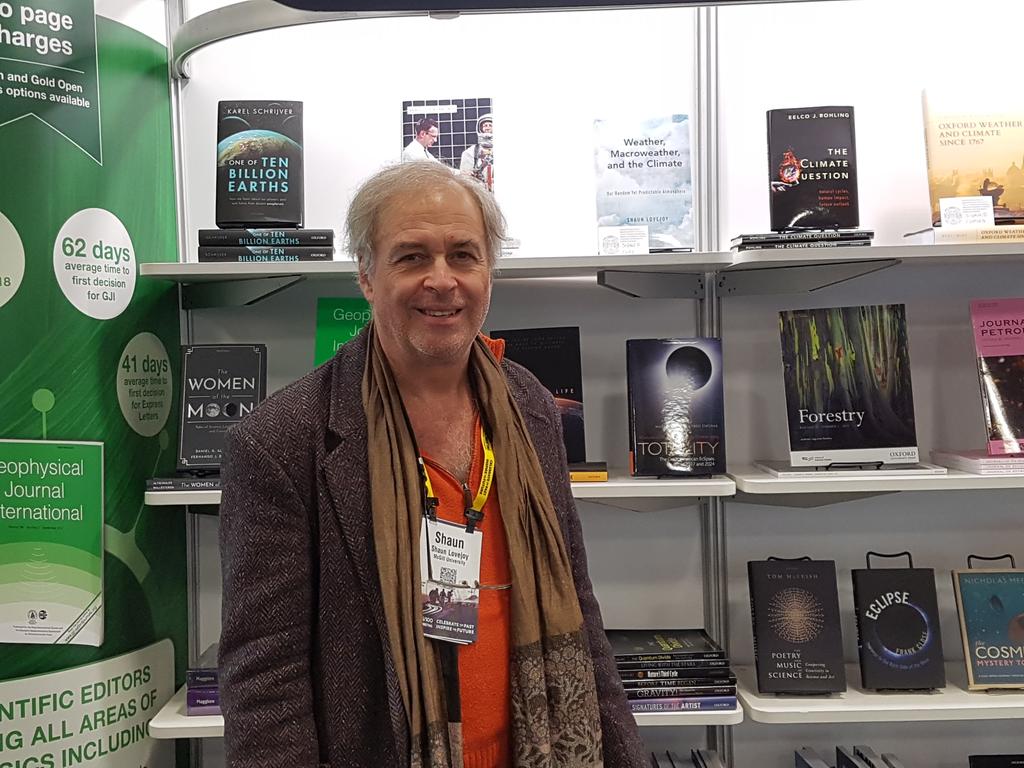
Voyage through weather, macroweather and the climate: atmospheric science and nonlinear gaophysics for experts and nonspecialists alike at #AGU19 found at the @oupacademic booth
How Big is a cloud? "At first sight strange, this question grows upon acquaintance..." A Freaky Friday presentation at McGill University, Dec. 6, 2019, now on You Tube... https://t.co/a4NeDXm8uP
“I got into the field in a way that would be virtually impossible today… no university department would ever hire someone that didn’t fit into a conventional niche”: Tommaso Alberti interviews me on Nonlinear geoscience. https://t.co/Dn4NmmH7L5
Just finished reading the new book by @LovejoyShaun on how #scaling and nonlinear ideas are revolutionizing #weather and #climate#modeling and our understanding of the
Great read!
https://t.co/nPB6hQJ1Ib
Devastating report on Canada’s lack of funding for atmospheric climate science https://t.co/E8HJUJImtN. Funding is for cooling systems forest carbon sinks and - now - for “climate awareness”. It seems that rationality and science are not needed, only emotional engagement.
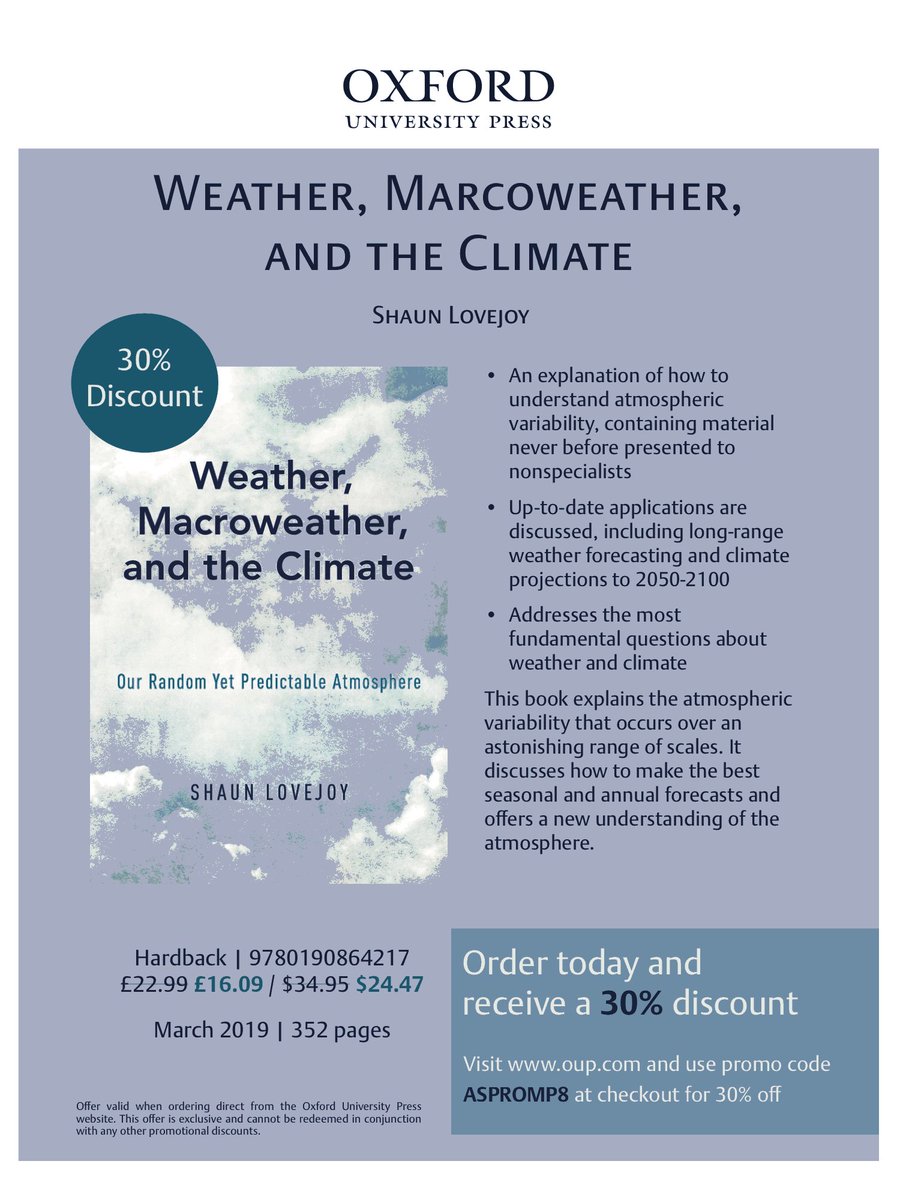
See the atmosphere and climate in a new way! My new nonspecialist book: “Weather, macroweather and the climate: our random yet predictable atmosphere” was officially published today in Europe! For a 30% discount: https://t.co/UplCkIrk4V