This is a superb important piece about the distortion and denial of Jewish and Israeli history by Yossi Klein Halevi, author of the great Letters to My Palestinian Neighbor.
After all history is everything in this conflict but it has to be the real history, not an invented one.
The war against the Jewish story
"How has it come to this?" writes Yossi Klein Halevi. "How is it possible that Israel, rather than radical Islamism, would become the villain on liberal campuses? That thousands of students would be chanting “from the river to the sea” even as the Hamas massacre revealed that slogan’s genocidal implications? That the most passionate outbreak of student activism since the 1960s would be devoted to delegitimizing the Jewish people’s story of triumph over annihilation?
This moment didn’t happen in a vacuum. The anti-Zionist forces in academia have been preparing the ground for decades, systematically dismantling the moral basis of each stage of Zionist and Israeli history.
The attack began on the very origins of Zionism, which was transformed from a story of a dispossessed people re-indigenizing in its ancient homeland into one more sordid expression of European colonialism. (Europe’s post-Holocaust gift to the Jews: leaving us with the bill for its sins.)
Next, the birth of Israel in 1948 was reduced to the Nakba, or catastrophe, a Palestinian narrative of total innocence that ignores the ethnic cleansing of Jews from every place where Arab armies were victorious and the subsequent uprooting of the entire Jewish population of the Muslim world. Post-1967 Israel was cast as an apartheid state – turning Zionism, a multi-faceted movement representing Jews across the political and religious spectrum into a racist ideology and reducing an agonizingly complex national conflict into a medieval passion play about Jewish perfidy.
And now, with the Gaza War, we have come to the genocide canard, the endpoint in the process of delegitimization.
To turn Israel into the world’s arch-criminal requires three forms of erasure. The first is of the connection between the land of Israel and the people of Israel. In the anti-Zionist telling of the conflict, a 4,000-year connection that has been the heart of Jewish identity and faith is irrelevant, if not contrived outright by Zionists.
The second is the erasure of the relentless war against Israel, placing its actions under a microscope while downplaying or entirely ignoring the aggression of its enemies. There is never any context to Israel’s actions. Only by erasing Hamas’s atrocities can Israel be turned into the villain of this war.
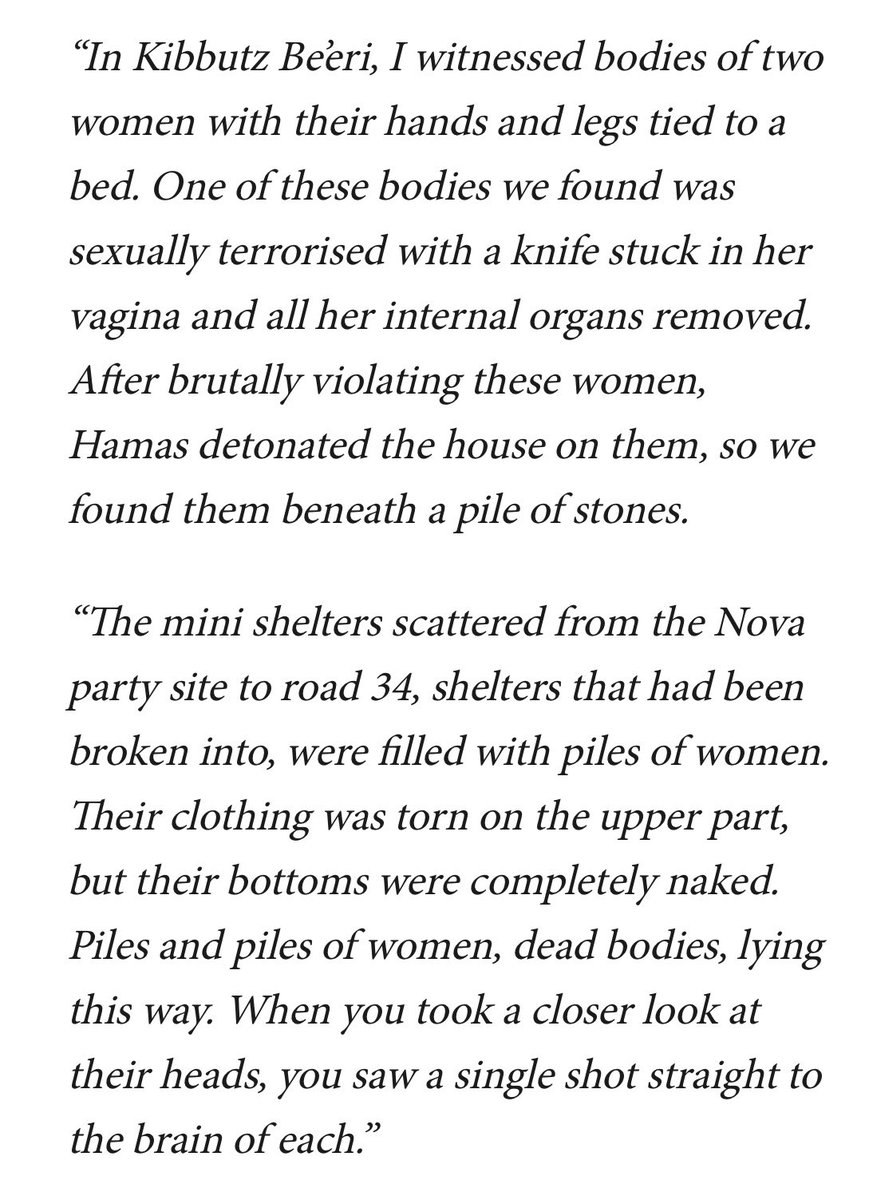
In focusing on Israel’s actions and dismissing those of Hamas, campus protesters are providing cover for October 7 denialism. This is a new version of the Holocaust denialism prevalent in parts of the Muslim world: The atrocities didn’t happen, you deserved them and we’re going to do it again (and again).
On a recent trip to New York, walking along Broadway on the Upper West Side, I saw dozens of defaced posters of kidnapped Israelis. Rather than tear down the posters, the vandals had blacked out the Israeli faces – a literal defacement. And a useful metaphor for the anti-Zionist assault on our being.
The third form of erasure is dismissing the history of peace offers presented or accepted by Israel and uniformly rejected by the Palestinian side. No offer – an independent Palestinian state on the West Bank and Gaza, the re-division of Jerusalem, the uprooting of dozens of settlements – was ever sufficient. It is hard to think of another national movement representing a stateless people that rejected more offers of self-determination than the Palestinian leadership.
The ease with which anti-Zionists have managed to portray the Jewish state as genocidal, a successor to Nazi Germany, marks a historic failure of Holocaust education in the West.
This moment requires a fundamental rethinking of the goals and methodology of Holocaust education. By over-emphasizing the necessary universal lessons of the Holocaust, many educators too easily equated antisemitism with generic racism. The intention was noble: to render the Holocaust relevant to a new generation. But in the process, the essential lesson of the Holocaust – the uniqueness not only of the event itself but of the hatred that made it possible – was often lost.
Antisemitism is not merely the hatred of Jews as other but the symbolization of The Jew – that is, turning the Jews into the symbol for whatever a given civilization defines as its most loathsome qualities. For Christianity until the Holocaust, The Jew was Christ-killer; for Marxism, the ultimate capitalist; for Nazism, the defiler of race. And now, in the era of anti-racism, the Jewish state is the embodiment of racism.
Holocaust education was intended, in large part, to protect the Jewish people from a recurrence of the antisemitism that reduces Jews to symbols. Yet the movement to turn Israel into the world’s criminal nation emerges from a generation that was raised with Holocaust consciousness, both in formal education and the arts. And this latest expression of the antisemitism of symbols is justified by some anti-Zionists as honoring “the lessons of the Holocaust.”
Unlike the Iranian regime, which clumsily tries to deny the historicity of the Holocaust, anti-Zionists in the West intuitively understand that coopting and inverting the Holocaust is a far more effective way of neutralizing its impact.
Many, perhaps most, of the campus protesters are likely not antisemitic. They may have Jewish friends or be Jewish themselves. But that is irrelevant: They are enabling an antisemitic moment.
What is under assault is the integrity of the mid-20th century Jewish story, of a people rejecting the self-pity of victimhood and fulfilling its most improbable dream: renewing itself, in its broken old age, in the land of its youth. The shift from the lowest point Jews have known to the reclamation of power and self-confidence is one of the most astonishing feats of survival not only in Jewish but world history. It is that story that is being distorted and trivialized and demonized on liberal campuses.
I recently completed a lecture tour of some of the most Jewishly problematic campuses, from Columbia to Berkeley. In meetings with Jewish students, I was repeatedly told about a pervasive atmosphere of hostility toward Israel, even among many otherwise apolitical students. While the protests are an immediate threat to Jewish well-being on campus, the far deeper problem is the impact of the anti-Zionist campaign, linking the name “Israel” with racism and genocide. The vulgar protesters are a small minority, but they are shaping the attitudes of a whole generation.
By focusing only on the immediate threat of the protests, we risk repeating the mistake we’ve made over the last decades of failing to adequately confront the systematic assault on our story.
We are losing a generation, but we haven’t yet lost. Like other radical movements, anti-Zionism could go too far in its righteous rage, potentially alienating the majority. Perhaps that process has already begun.
The challenge of our generation is to defend the story we inherited from the survivor generation. We need to tell that story with moral credibility, in all its complexity, frankly owning our flaws even as we celebrate our successes, acknowledging the Palestinian narrative even as we insist on the integrity of our own.
We desperately need new strategies to counter the anti-Zionist assault. A good beginning would be the creation of a brain trust, composed of community activists, rabbis, journalists, historians, public relations experts, that would devise both immediate responses to the current crisis and a long-term strategy, emulating the decades-long patient work of the anti-Zionists.
The Jews are a story we tell ourselves about who we think we are; without our story, there is no Judaism. It is long past time to mount a credible defense of our mid-20th century story, which continues to sustain us as a people."
https://t.co/CJ1Z4PmFKU
There are 13,000 UNRWA staff in Gaza.
That’s one UN staff for every 114 refugees in Gaza. Compare that to the largest refugee camp in the world, Cox Bazar with only 1,550 UN staff serving 1.24 million refugees. That’s one UN staff for every 800 refugees. In comparison, there are 7 times more UN staff serving refugees in the Gaza Strip.
There are more UN staff in the Gaza Strip than the total employees of the World Bank with more than 10,000 employees in over 120 offices worldwide?
There are more UN staff in Gaza than in Geneva (8,500 UN staff) or New York (6,400 UN staff)? Gaza has twice as many UN Staff than in New York.
UNRWA leverages the UN brand to appear to casual observers as a team of relatively unbiased international aid workers, when in fact they're a $ 1 billion/year Palestinian business, run by Palestinians and staffed by Palestinians.
They need Palestinian refugees to exist. If Palestinians got their state, there would be no more "refugees," and the business and flow of aid money would end. It's in their best interests to perpetuate the conflict and leave Palestinian statehood up in the air. UNRWA schools literally taught a whole generation of Gazans to hate their neighbors and make unrealistic demands so that the core issue of sovereignty is never addressed.
Its sole achievements are radicalizing Palestinian children and keeping Palestinians refugees for generations. As you have read in the news recently, they also kept some of the hostages.
UNRWA should have been disbanded decades ago, all they do is perpetuate the conflict and keep Palestinians poor and uneducated.
FUNDING FAILURES
Financial support has been a key factor in the recent history of the Palestinian territories, significantly impacting their social, economic, and political spheres. The flow of this aid, along with its application, and misapplication, conveys the governance issues, international relations, and the everyday lives of Palestinian citizens. This has led to criticism, with some describing it as fostering a "welfare state" situation.
The Genesis of Aid to the Palestinian Territories
The history of financial aid to the Palestinians is linked to the broader Arab-Israeli conflict and the resultant geopolitical dynamics. Following the 1948 Arab-Israeli War and the establishment of the state of Israel, a substantial number of Arabs living in the land became refugees. The United Nations Relief and Works Agency for Palestine Refugees in the Near East (UNRWA) was established in 1949, marking the onset of organized international aid for Palestinians.
In the ensuing decades, financial aid has ebbed and flowed, deeply influenced by the shifts of Middle Eastern politics. After the 1967 Six-Day War and Israel’s territory gains of the West Bank and Gaza Strip, international aid efforts intensified, aiming to support the livelihoods of Palestinians and to prepare the territories for eventual self-governance.
Sources and Scales of Aid
The sources of financial aid to the Palestinian territories are diverse, spanning from state actors to non-governmental organizations. Prominent among these are the United States, the European Union, and Arab countries, alongside international bodies like the World Bank and the International Monetary Fund.
The European Union has been one of the most consistent contributors, providing around €300 million annually in recent years. This figure includes both direct budget support to the Palestinian Authority and humanitarian aid delivered through UN agencies and NGOs.
The United States has historically been a major donor, with cumulative aid reaching billions of dollars. For instance, from 1993 to 2013, the U.S. committed over $5 billion in bilateral economic aid and funding through USAID.
Arab countries, particularly from the Gulf region, have pledged support at various donor conferences, with commitments often reaching hundreds of millions of dollars. For example, between 2011 and 2013, Saudi Arabia contributed over $500 million, while Qatar pledged $150 million in 2012 to support various sectors in Gaza.
These figures demonstrate the significant scale of aid aimed fostering development within the Palestinian territories.
Mismanagement and Corruption
Despite the inflow of funds, almost nothing was shown for it. Corruption within the Palestinian territories has been documented in various reports and studies.
Mismanagement of international aid took various forms, from inefficient allocation and utilization to outright embezzlement. There have been instances where aid earmarked for infrastructure projects, such as roads, schools, or hospitals, was either partially completed or not started at all, with the allocated funds unaccounted for. International donor agencies often rely on local authorities for the execution of these projects, which can lead to mismanagement due to inadequate oversight or capacity.
The issue is not limited to petty corruption but extends to high-level political corruption, where funds are diverted for personal gain. For example, in 2003, a report by the Palestinian Legislative Council revealed that $700 million from the public budget had been embezzled.
A 2012 report by the European Court of Auditors found that European financial assistance to the Palestinian territories had been used ineffectively and that mechanisms to prevent corruption were insufficient. This has led to increased scrutiny and calls for greater transparency and accountability in the administration of aid.
The contrast between the opulent lifestyle of some Palestinian leaders and the impoverished conditions of the Palestinian populace is a stark illustration of this disparity. There are Palestinian elites owning luxurious properties abroad, including mansions in wealthy Gulf states like Qatar. These reports often detail lavish expenditures, such as expensive cars and overseas trips, which stand in comparison to the economic hardships faced by many Palestinians, who endure high unemployment rates and limited access to basic services.
Arafat's Empire
Yasser Arafat's financial dealings reveal an outrageous level of financial corruption. Over his four decades as the Palestinian leader, Arafat controlled a financial empire that included investments in diverse global ventures such as airlines, banana plantations, high-tech companies, and real estate, with money hidden in bank accounts worldwide. This empire was reportedly worth $3 billion to $5 billion in 1996, according to Jaweed al-Ghussein, a former PLO finance minister.
The sources of these funds were varied, including Arab payments to the PLO in the 1970s and 1980s, and Western aid to the Palestinian Authority after interim peace deals with Israel in the 1990s. Arafat's approach to managing these funds was characterized by a lack of transparency and accountability. He registered investments and bank accounts in the names of loyalists, both to secure their support and to shield these holdings from scrutiny and seizure. This secretive management style meant that only Arafat had the full picture of the PLO's finances, and it's unclear whether he left any comprehensive records or a will outlining these assets.
Despite Arafat's frugal personal lifestyle, he required large sums to maintain loyalties and finance a vast patronage system. This system was not only a means to consolidate power but also a way to divert funds from their intended purposes. For instance, under the Oslo Accords, Israel collected sales taxes on behalf of the Palestinians and transferred them to accounts controlled by Arafat. This arrangement, initially intended to support the peace process, raised concerns as substantial amounts were reportedly diverted to other uses, including secret investment accounts.
Moreover, Arafat's wife, Suha Arafat, reportedly received $100,000 a month from the Palestinian budget and lived lavishly in Paris. This personal use of funds stood in stark contrast to the economic hardships faced by many Palestinians. Reports also mentions a money-laundering probe into transfers of $11.4 million into Suha Arafat's accounts.
The PLO's investments, often registered under the names of Arafat's associates, ranged from an airline in the Maldives to a Greek shipping company and a diamond mine in Africa. However, the fate of these investments was uncertain, with some companies going bankrupt and others allegedly being mismanaged or embezzled by Arafat's cronies.
Martyr Fund
The 'martyr fund', officially known as the "Palestinian Authority Martyrs Fund", has been one of the most contentious aspects of Palestinian aid utilization. The martyr fund allocates over $300 million annually, incentivizes violence by providing financial rewards to individuals who carry out attacks against Israeli targets.
These payments are made on a sliding scale, where families of individuals who have carried out more severe acts receive more substantial payments. This practice has led to significant backlash from some donor countries, with calls to reevaluate or condition aid to ensure that it is not indirectly supporting terrorism that could be seen as encouraging conflict.
Hamas supplies
The economic landscape in Gaza is marked by high unemployment and widespread poverty. Yet, despite these economic hardships, Hamas appears to maintain a consistent supply of missiles and weaponry.
This situation raises questions about resource allocation by Hamas and highlights discrepancies in the management of funds and materials within the Gaza Strip. The continued availability of armaments for Hamas and its extensive tunnel system, in contrast to the territory's struggling economy, clearly demonstrate a diversion of resources that could otherwise contribute to the economic development and well-being of the civilian population.
International Response and Oversight
In response to these issues, some donor countries have tightened their aid mechanisms, imposing stricter conditions and requiring more rigorous oversight. For example, the Taylor Force Act, passed by the United States in 2018, stopped aid to the Palestinian Authority unless it ceased payments to individuals who committed acts of terrorism and to their families.
Another instance, with Saudi Arabia, having contributed over $5 billion to Palestinian causes, began decreasing its aid in 2016 and ceased it entirely in 2021, citing the need for reforms and responsible governance. This shift reflects a growing recognition of the PA's corruption, including instances such as the purchase of a $50 million jet for President Mahmoud Abbas amid funding cuts.
The Paradox of Plenty
The paradox of financial aid to the Palestinian territories is the apparent lack of corresponding development in infrastructure and the economy. Despite the billions of dollars received, the territories continue to grapple with high unemployment rates, ailing infrastructure, and a stagnant economy. Critics point to a flawed aid model that prioritizes immediate relief over long-term development, creating a dependency that undermines self-sufficiency.
Moreover, the unacceptance of Palestinian political leaders to make peace and the willingness to continue their "resistance" make it arduous to maintain, let alone advance, infrastructural projects. The Gaza Strip, in particular, has seen numerous military engagements that have decimated its already fragile infrastructure and deterred potential foreign investment because of its leaders relentless pursuit of conflict.
Towards a More Effective Utilization of Aid
Ending with a constructive suggestion, one might propose that an alternative approach to the delivery of aid could involve countries like Egypt or the UAE, with no known sympathies with terror groups in the Palestinians territories, taking a more active role in the infrastructure projects.
Instead of disbursing funds that could be subject to mismanagement or misuse, these countries could delegate specialist teams to oversee and execute the development projects directly. This hands-on involvement would ensure that the aid is effectively utilized for its intended purpose, potentially increasing the transparency and efficiency of the development efforts.
Direct engagement in infrastructure development by these countries could also foster stronger bilateral relations and offer a model for other forms of international cooperation in aid delivery. This could be a significant step towards building resilience and self-sufficiency within the Palestinian territories, where the tangible outcomes of international financial aid are not yet evident in the public infrastructure or economic development.
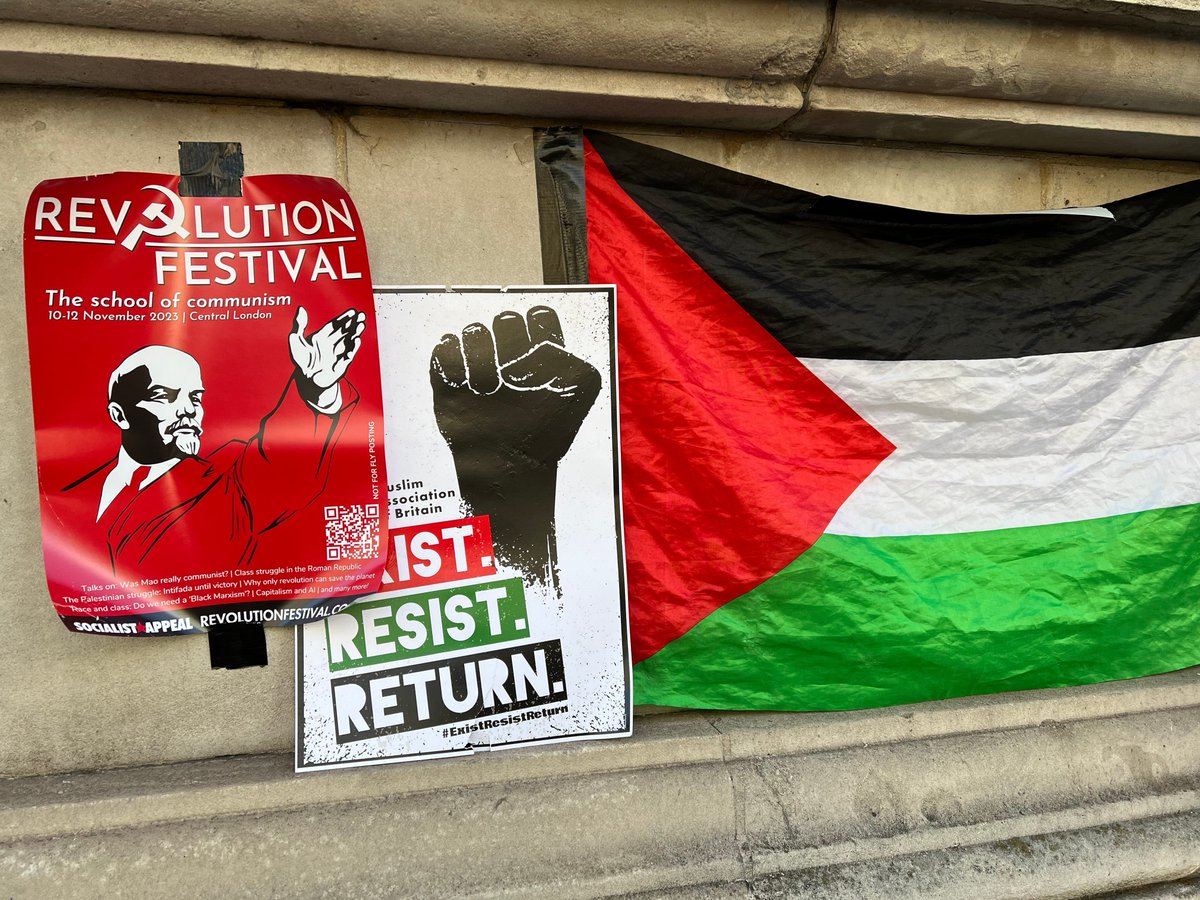
PALESTINIAN MARXISM
The Palestinian cause, with its history of conflict and struggle for self-determination, intersects significantly with Marxist ideology.
Marxism, an economic and political ideology conceived by Karl Marx and Friedrich Engels, advocates for the overthrow of capitalist systems and frames societal structures as a struggle between the oppressor (bourgeoisie) and the oppressed (proletariat), aiming to establish a classless society with communal ownership of production. It evolved to influence global liberation movements.
Marxism's adaptation across different regions, notably in post-colonial nations, has been utilized as a lens to interpret and respond to imperial and colonial influences. This ideological shift from economic class struggle to broader anti-imperialist resistance is crucial to understanding Marxism's role in the Palestinian cause.
During the mid-20th century, Marxism became a beacon for various anti-colonial movements across Asia, Africa, and Latin America. In these regions, Marxist ideology was used to fit the context of national liberation struggles.
For the Palestinian movement, Marxism offered not just an economic critique but a comprehensive framework for resistance. Its narrative of struggling against oppressive structures appealed to those confronting what they saw as an occupation and colonization by Israeli forces. This ideological adoption was part of a larger trend where liberation movements worldwide sought to align themselves with socialist principles as a means to oppose Western imperialism and forge a new identity rooted in self-governance and independence.
Palestinian Factions and Marxist Influence
Within the Palestinian liberation movement, factions such as the Popular Front for the Liberation of Palestine (PFLP) explicitly embraced Marxist ideology. The PFLP, a secular, Marxist-Leninist organization, saw the Palestinian struggle through the lens of international class struggle and anti-imperialism. This secular and socialist orientation, which contrasts with religiously oriented factions like Hamas, emphasizes the diversity within the Palestinian movement and the influence of global leftist ideologies.
Islamic Marxism, a unique blend of Islamic thought and Marxist principles, also found resonance within some Palestinian factions. Groups like the Muslim Brotherhood in Egypt initially displayed an inclination towards socialist principles, blended with Islamic teachings. This ideological stance, while distinct from orthodox Marxism, shared the anti-imperialist and anti-colonial ethos that characterized Marxist liberation movements. The integration of Islamic values into socialist frameworks reflected the attempt to contextualize Marxist ideology within the socio-political realities of the Arab world.
This blending of ideologies paved the way for extremist factions to emerge, adopting a hybrid ideology that combined elements of Marxist resistance with radical Islamic teachings. These factions justified their terrorist acts as part of a broader struggle against perceived oppression and imperialism, aligning with Marxist principles of overthrowing oppressor systems. Such justifications were used to legitimize violent actions, which they deemed necessary in the fight against Western influence and local regimes perceived as puppets of imperialist powers.
Palestinian Identity
The contours of Palestinian national identity as recognized today have been sculpted by Yasser Arafat's leadership and the infusion of Marxist ideology. Arafat's role at the helm of the Palestine Liberation Organization (PLO) was pivotal in unifying various Palestinian factions, previously fragmented by differing goals and methods. This unification process was undergirded by Marxist philosophy, emphasizing class struggle and resistance against perceived oppression. Such an ideology provided a common platform that transcended the traditional religious and factional divides within Palestinian society.
However, this shaping of identity under Marxist precepts, while unifying in one aspect, has embedded certain critical issues in the fabric of Palestinian nationalism. The adoption of a Marxist narrative transformed the Palestinian struggle into a broader fight against oppression, pivoting around continual resistance as its core. This reframing was instrumental in creating a sense of unity, but it also entrenched a combative stance as the cornerstone of Palestinian identity.
This constant emphasis on resistance, influenced by Marxist ideology, has had profound implications. It fostered a reactive identity, one that primarily defines itself in opposition to external factors, particularly the Israeli state. In doing so, it risked oversimplifying the complex socio-political dynamics of the region into a binary struggle. Moreover, this identity, steeped in a narrative of perpetual struggle, has hindered the development of alternative visions for the future of Palestinian society that are not predicated on conflict.
The International Left's Support
The international left's support for the Palestinian cause is partly rooted in this Marxist-influenced narrative of liberation and resistance. Leftist groups worldwide, particularly those influenced by socialist and communist ideologies, have historically viewed the Palestinian struggle as part of a broader fight against Western imperialism and colonialism. This viewpoint has led to widespread support among leftist organizations and individuals for Palestinian self-determination and opposition to Israeli policies.
This support overlooks all of the complexities of the Israel-Palestine conflict, neglecting important historical facts and reducing it to a simplistic binary of oppressor vs. oppressed. This reductionist view is a product of the Marxist heritage in liberation movements, which frames conflicts in terms of global power dynamics and class struggle.
"Decolonize" Narratives
The "decolonize" narratives, heavily influenced by Marxist and postcolonial theories, similarly frames conflicts in terms of moral binaries, creating an environment where resistance against perceived oppressors is seen as a justifiable and necessary means of achieving liberation. The rhetoric of decolonization, with its emphasis on dismantling existing power structures, justifies extreme measures in pursuit of liberation goals.
The logic inherent decolonization narratives — that oppressed groups have the right to resist by any means necessary, including violence — raises concerns about potential genocidal outcomes. This logic, when taken to extremes, escalates to violence and societal upheaval, reminiscent of historical genocides where one group sought to completely eliminate another based on perceived oppression.
An example of "decolonization" rhetoric by explicit genocidal aims, such as those initially outlined in Hamas' charter calling for the complete eradication of Israel, often escape critical scrutiny under the broad banner of resistance. Such radical objectives are dismissed or even legitimized by some, under the argument that they are a form of resistance against oppression. The lack of widespread condemnation for explicitly violent and genocidal rhetoric reflects a concerning aspect of how decolonization narratives are simply covers for extreme and destructive agendas
Peace Prospects
The crystallization of Palestinian identity, influenced by Marxist narratives of liberation and resistance, poses inherent challenges to achieving peace and coexistence with Israel. This identity, shaped in opposition to perceived oppression, tends to solidify confrontational attitudes, making reconciliation a complex endeavor. The focus on a continuous struggle for liberation completely limits the space for compromise, as any form of concession is seen as a betrayal of the foundational principles of their cause. Additionally, such a narrative justifies extreme actions in the name of resistance, which complicates efforts to build trust and engage in peaceful negotiations.
With Palestinian identity so deeply intertwined with a narrative of unyielding resistance and opposition, it begs the question: Is the pursuit of peace a lost cause, doomed by an ideology that views compromise as betrayal?
One of the biggest and lesser known stories of Nov 29 is that the lands allocated to a Jewish state (two color map) were essentially those the Zionists reclaimed from malaria through land purchase, science and education (blue map).
Moreover, the sudden and extremely rapid increase of the Arab population in the 1920’s and 1930’s in this barely populated backwater region (this was the highest population increase rate in the world in 1931/2) was only in part due to immigration spurred by Zionist development of the land. The major share of the massive Arab population increase was thanks to Malaria eradication, which was the work of the Galician born famed microbiologist and ardent Zionist Dr. Israel Kligler (credit to the great historical work of Anton Alexander).
With this knowledge it remains even a greater tragedy that the now much more numerous Arabs of the land directed their efforts towards brutally fighting Zionism rather than choosing to live side by side with an emerging Jewish state.
In the shadow of the Oct 7 massacre we mark once more the Nov 29 moment when the Jews said yes to the UNGA plan of partition (having prioritized having a state, even if tiny and mostly desert and lands reclaimed from malaria and no Zion and no Judea) and the Arabs said no and proceeded to wage a brutal war to the present day (having prioritized - still - the goal of the Jews not having a state at all and of any size).
(Note on map titles: for twenty centuries, before a camoaign of denial was underway, it was well understood that the name “Palestine” merely denoted the geographic region where the Land of Israel was and was therefore deeply associated with Jews and the their continuous connection to the land. Hence the League of Nation in establishing the mandate recognized the “historical connection of the Jewish people with Palestine" as the "grounds for reconstituting their national home in that country” and which is why the Palestine Philharmonic Orchestra of Jewish musicians became the Israeli Philharmonic Orchestra…)
”When Hamas attacked Israel, people went out to celebrate. When Israel started attacking Gaza, the entire Arab and Muslim communities went out on the streets everywhere to say "We need a ceasefire." I immediately thought, ”Why do you care about Arabs getting killed now? When you were completely silent and did not say a single word when hundreds of thousands of Yemenis were getting killed?"
The main reason is the perpetrators being Jewish. Because in the Arab and Muslim world, there is absolutely nothing more disgusting than to be Jewish or homosexual. The only thing I ever learned about Jews and Israelis is to hate them.
In mosques, I heard that Jews and Israelis need to be murdered. This is the consensus recitation by the Imams. We normalize the language of hatred and violence towards Jews and Israelis. I remember as a child questioning this and thinking to myself, ”But why?”
So, I wanted to come here and listen to the Jews and the people. It is such a beautiful country, and the people are so kind and loving.
As I see it, the reason for this Arabic hypocrisy of silence when Arabs are killed by other Arabs, and loud revolutions when Gaza is attacked, is anti-semitism.
A hatred towards Jews that we learn since birth.
Blame the Jews. Blame the others – and direct your anger and resentment towards the Jews and the Westerners, instead of looking internally and trying to better yourselves."
I wish anti-Israel Arabs and Muslims could walk around the streets of Jerusalem and Tel Aviv and experience the beauty of this community. Even during these tragic times, I have been treated with nothing but kindness and respect. These people do not deserve to live their lives hiding in bomb shelters or fearing to be killed for being Jewish or Israeli.
I’ve been very involved in domestic abuse work, and to hear and see the reaction from this sector in relation to torture against women and girls on October 7th is so so so disappointing.
Many many years ago, I learnt Hebrew out of curiosity, and in a bid to penetrate into a world that I once thought was evil and conspiring against Arabs and Muslims. Once in, I was surprised how wrong I was, how wrong almost every Arab and Muslim around me was.
These days, I watch Hebrew networks (and Arabic ones). There is a lot of Israeli pain over those who were killed on 10/7, agony of those who survived, and anxiety over those who are held hostage by Hamas. A lot of tears, now mixing with tears over fallen soldiers fighting in Gaza.
The thing about all this Israeli pain is that it is almost exclusively in Hebrew. The world does not see Israelis hurt, does not hear them cry. The world sees Israel as fighter jets raining death to punish those who killed them from 15000 feet above ground. The world only sees and hears pain coming from Gaza, and the world always takes the side of the underdog, even when the underdog is guilty. One billion Muslims certainly have a much louder voice than 20 million Jews, and the world will always blame Israel, even when Palestinians started the carnage.
And that's exactly why Israelis are fighting the fight of their lives. They understand that the world is an unfair place, and that they cannot rely on non-existent international justice or biased global opinion.
I wish I had a magic wand to make fellow Arabs, and the rest of the world, see what I see. There will never be peace without justice, and using our numbers (Muslims) to impose our narrative is one way to try to beat Israel, but not the way to peace. My voice will dissent. I want peace, and peace is incumbent on winning the trust of those we want to live in peace with, not keeping on instigating the world against them.
There is no Semitic race or ethnicity. There are Semitic languages that include Aramaic, Amharic, Arabic and Hebrew.
Antisemitism is racial profiling and persecution of Jews in Europe in the nineteenth century, and globally thereafter. Jew hatred, antisemitism, doesn't include hatred of Arabs. When Arabs hate Jews, they are antisemitic, even if their mother tongue is semitic.
Please understand this and put to rest that "We Arabs are Semites and therefore can't be antisemitic." Yes we can be!
Antisemitism is the hatred of Jews for being Jews. Disagreeing with Judaism or policies of the Israeli government is ok. Disagreeing with the existence of the internationally recognized state of Israel is antisemitism. Blaming Jews for imagined conspiracies, such as Jews control the US government, or all world governments, or global finance or banks, or media, or Hollywood are all untrue and known antisemitic tropes.
The Jews are not a secret cult that controls governments, finance or media, and don't run the world and conspire against non-Jews. Jews are like everybody else, they come in all sizes and shapes, agree and disagree on everything. They share a culture, common past experience, and most importantly, the suffering of unfair bias and hatred against them.
So please, stop trying to discredit antisemitism. It is real. The Jews lost six million in the Holocaust. On a per capita basis, that might be the biggest loss of any group throughout history. The Holocaust is the biggest dark spot on human history. Recognize it, and tell your Jewish friends that you understand the anxiety that they have inherited from their ancestors, as well as the anxiety that they suffer today because of similar Jew hatred.
And no, Islamophobia is not equal to antisemitism. There are over 1 billion Muslims globally and less than 20 million Jews. A muslim never feels like a minority even if living on the moon. Jews always do, unless they are in Israel.
We cannot realize peace until everyone feels safe. As long as the antisemitism injustice continues, there will be no peace, not because the Jews will be forced to defend themselves, but because all of us non-Jews continue to peddle the same hatred and pass it on to generations after us.
Today, my younger brother Jagtar turns 35.
He's spent over 4 years in an Indian prison facing a death sentence.
While thousands of us campaign for his freedom, we’re collecting messages for his birthday.
Join me in writing a message.
https://t.co/LUBNld8ZCK
#FreeJaggiNow