This is so interesting because there's a measurable impact from newer/older balls on rates of aces, holds, unreturned, double faults, 1st serve in %, rally length et al. So if balls are changed more often, in theory things like serve dominance may increase (from existing all time highs btw). Impact will likely be small (double faults also rise with newer balls, 1st serve in % decreases modestly, & hold rate changes are smaller). Probably only detectable for season-aggregated unreturned/ace rates and multi-season aggregates for hold rates. But it's probably easy to underestimate 2nd & 3rd order effects supposedly small tweaks like this can have on the way the game is played. Tennis is already massively short point and serve dominant, and changes like this nudge it slightly further in that direction
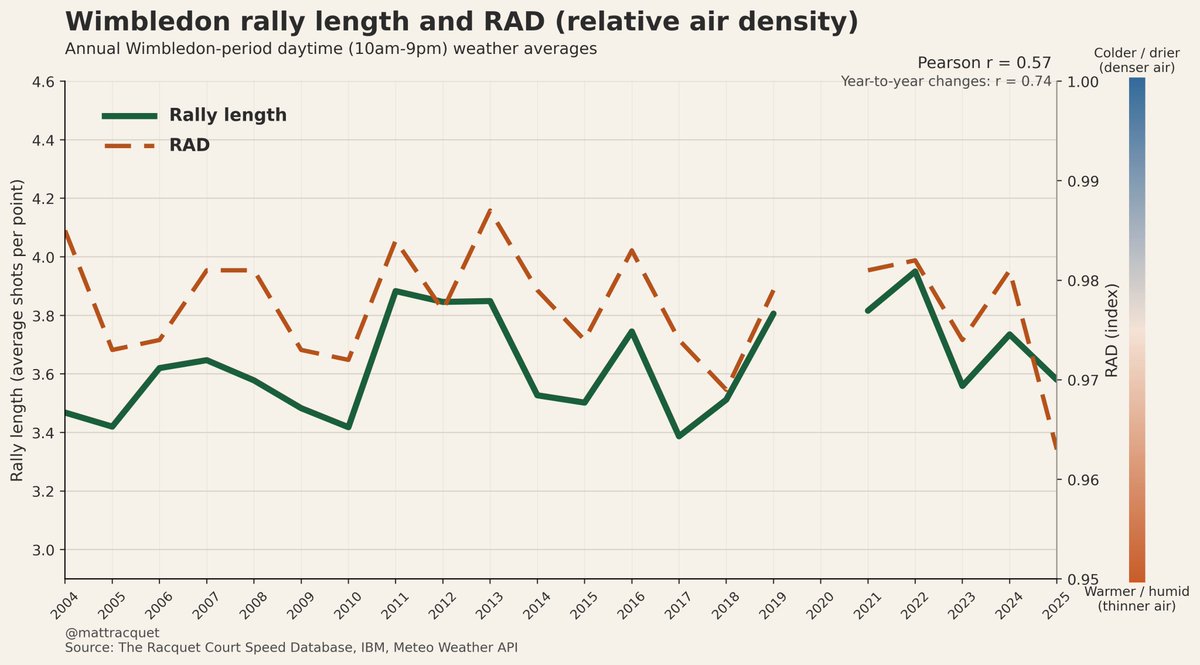
People love to say Wimbledon keeps getting slower despite consistent grass length (8mm) since 1995, seed type (ryegrass) since 2001, ball pressure since 1995
Average men's rally lengths (IBM) are actually stable over 20+yrs and year to year variation aligns closely with weather
This is crazy:
Over the course of their entire rivalry so far (15 matches), only *six* points separate Carlos Alcaraz and Jannik Sinner 🤯
Alcaraz - 1,579 points
Sinner - 1,573 points
(@_SportsBall_)
Carlos Alcaraz with a beautiful quote from his Netflix Documentary:
"I want to sit at the table with the Big Three.. but from what I've experienced, I'd choose happiness over massive success."
"Because happiness is already success." 🥹
(via @Netflix)
🧯🧊🔥Now Accepting Investors into Frozen Puck Labs 🔥🧊🧯
Click the Link Below to Invest Today:
https://t.co/PMEyx5w1Fl
Up to 200% Bonus Shares for Early Investors.
Help us build the next gaming 🎮empire dedicated to honoring and giving back to our first responder heroes!
Dear ‘X’. Please only send me content from good, honest, well meaning, and positive people, not the hateful nonsense something or somebody else has decided to waste my heartbeats with.









![WarriorsMuse's tweet photo. Greatest “Fuck it, I’m Steph Curry” moments [PART 3]
One vs every team.
A thread: https://t.co/ECGIkAi88V](https://pbs.twimg.com/media/GVmJ6ZeWcAAt78j.jpg)


