Some personal news 🥂
I’m happy to share that I’m starting a new position as an Agriculture and Food Reporter at POLITICO Europe!
If anyone in Brussels would like to grab a coffee to talk all things agri-food, you can catch me here or via [email protected]
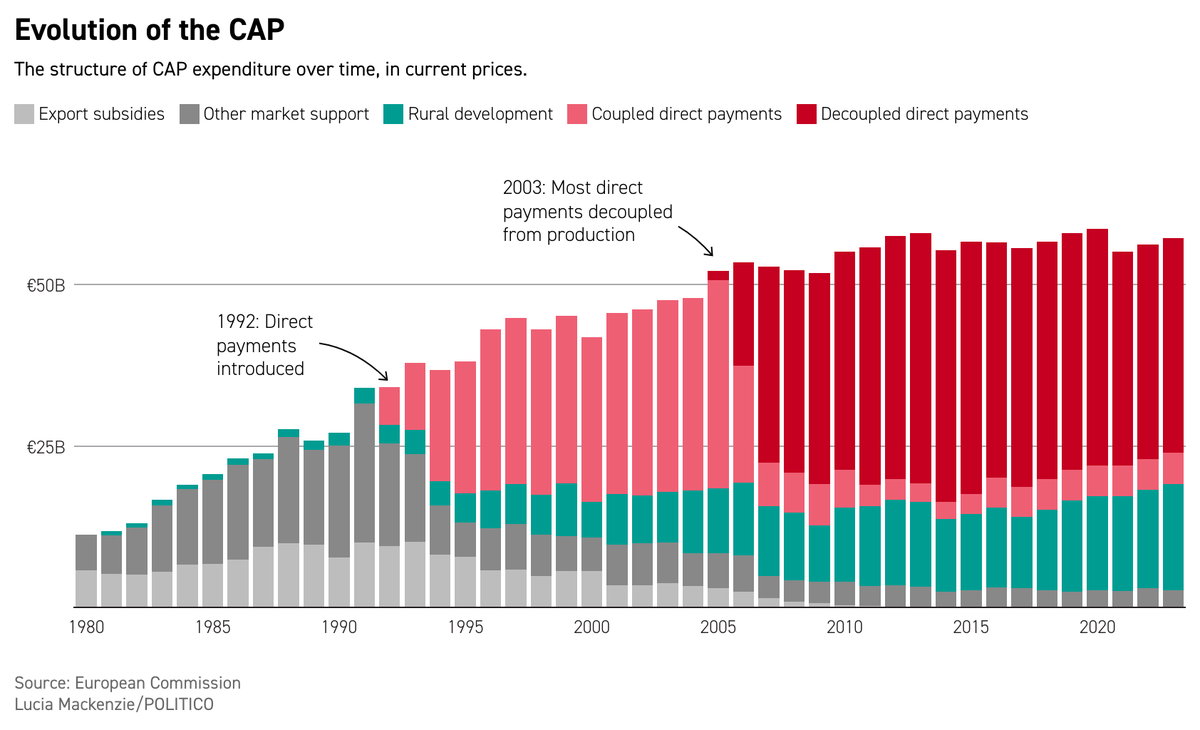
How big of a deal is the CAP really?
In the run up to next week's budget announcement, we thought it was time to take a step back and look at how the money was divvied up last time.
Here is how the EU spends almost a third of its budget on agriculture 👇
https://t.co/RflHNY99TP
While a majority of Germany's West voted for Friedrich Merz’s conservatives this past Sunday, the far-right AfD saw big success in the East: https://t.co/ts6C0s80S7
Here’s how the AfD share of list votes has changed from 2021 to 2025 across the country 👇
Things are looking dicey:
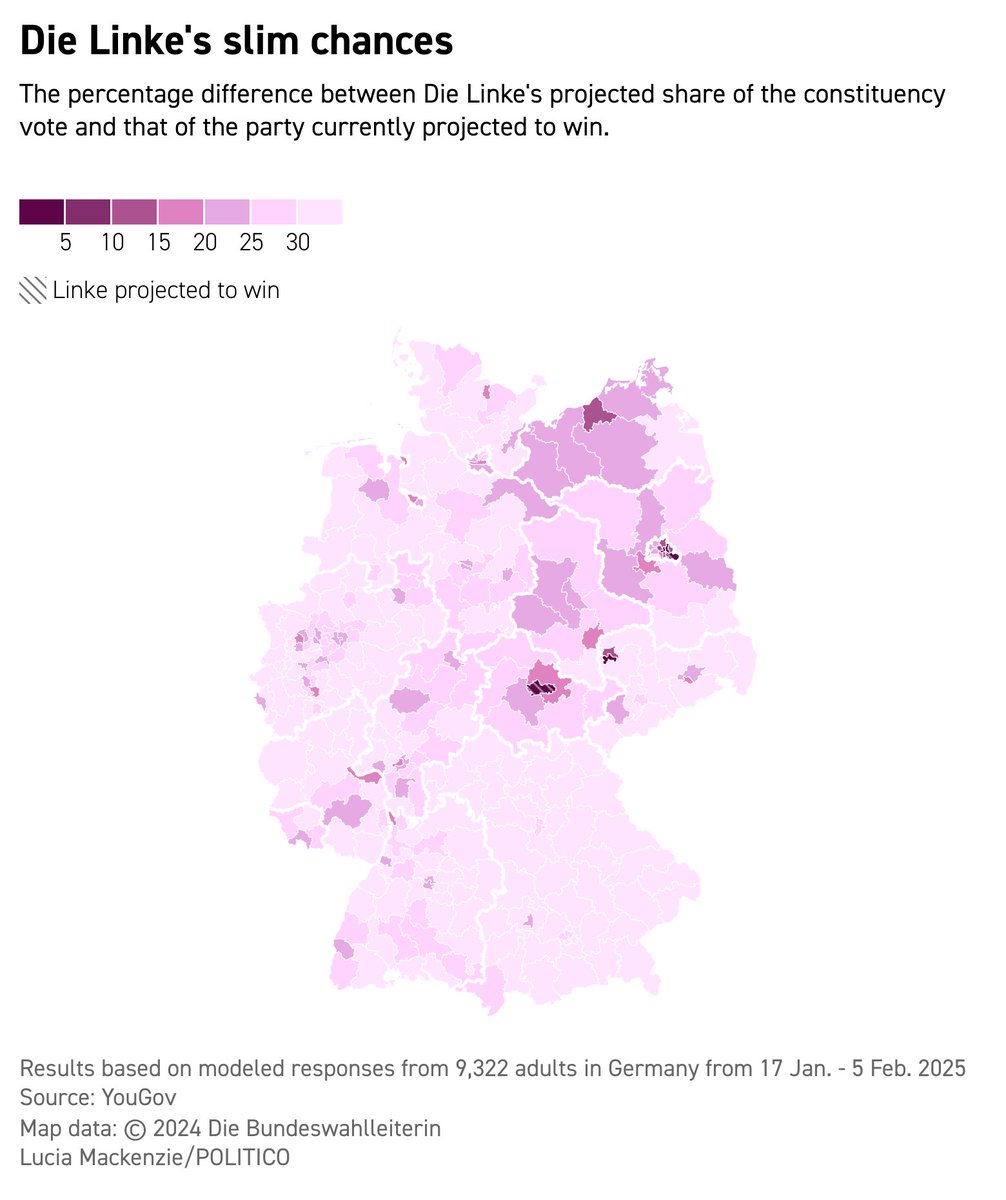
📈 Die Linke are polling at 7%. But they are still trying to win at least 3 constituencies outright, which would save them from the 5% cut off if necessary.
🧨 BSW are playing with fire, polling right around 5%.
📉 The FDP seem stuck at 4%
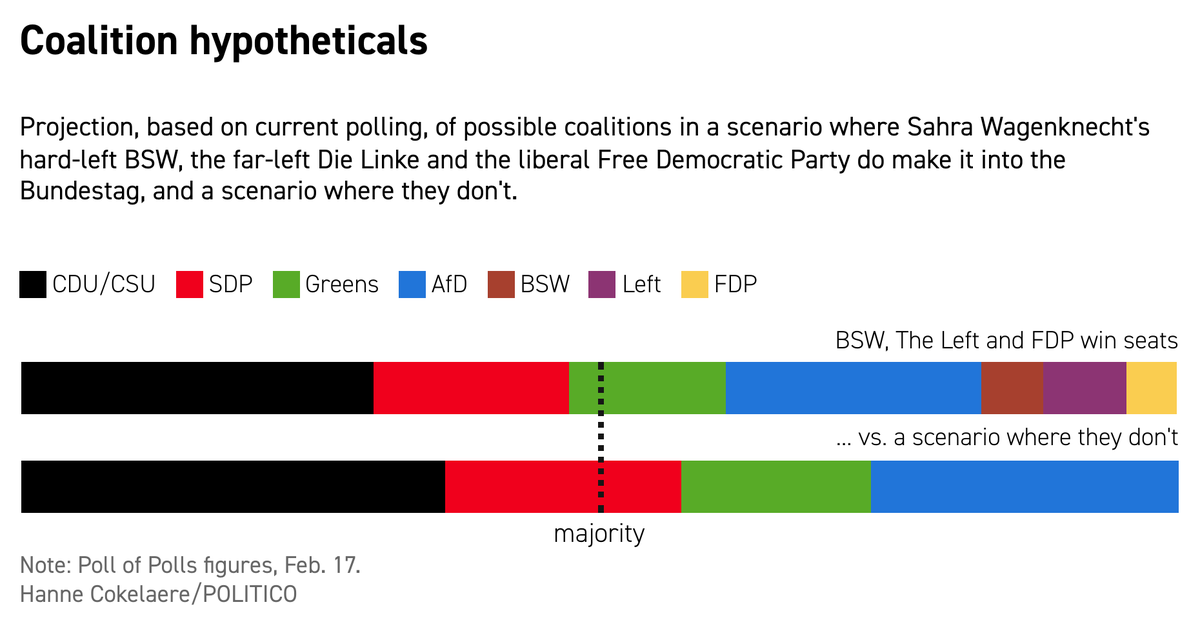
Merz’s dream coalition hinges on the implosion of his smaller rivals:
@hclae and I did the math to figure out which parties could crash and burn to his benefit.
🎨 by Natália Delgado
https://t.co/Jwy2EpwQYE
Die Linke, the BSW, and the FDP are trailing in the polls.
If they fail to get 5% of the vote, they could be shut out of the Bundestag entirely ❌
This would be good news for Merz - giving him the option of a two party coalition, and a couple partners to choose from.
Germany’s eastern constituencies are among the most volatile in the country, frequently changing hands and ousting incumbents.
This makes former East Germany a key region to watch ahead of next week’s election.
Here’s everything you need to know 👇 https://t.co/SiemBWZa9w
The mainstream parties that have long dominated politics in the West are less deeply rooted in the former East Germany.
This leaves the playing field more open for parties like the AfD on the right extreme of the spectrum, but also for far-left parties such as Die Linke.
Ahead of Germany's Feb. 23 snap election, we dug deep into German federal election data since reunification in 1990 to explain why this month’s vote is set to be messier than ever ― and what will happen next.
🔗 https://t.co/Ii7Fl3f2Cn
Finally, it’s distinctly possible that the FDP could be the biggest loser of this election.
The party could go from having been a coalition member to not having any seats in the Bundestag if it fails to meet the 5% threshold.
Read the full story here: https://t.co/GZ2YNItfzL
Germany’s electoral landscape is looking a little messy these days.
While the centre-right looks set to regain its dominant position, several smaller parties are fighting for the role of kingmaker, or simply to stay on the electoral map…
https://t.co/GZ2YNItfzL
Die Linke has had a tough time of it.
In 2021 party won less than 5% of the vote and was narrowly saved from political obscurity by three key wins.
To make matters worse, infighting resulted in Sahra Wagenknecht breaking away from the party and establishing the rival BSW.