Acepyr is building something different, and that deserves support. Every project starts somewhere, and what matters is the willingness to build, learn and improve.
The belief economy has potential. Keep building, keep refining.
gAcepyr.
@acepyr
Acepyr is building something different, and that deserves support. Every project starts somewhere, and what matters is the willingness to build, learn and improve.
The belief economy has potential. Keep building, keep refining.
gAcepyr.
@acepyr
Another collab secured 👀
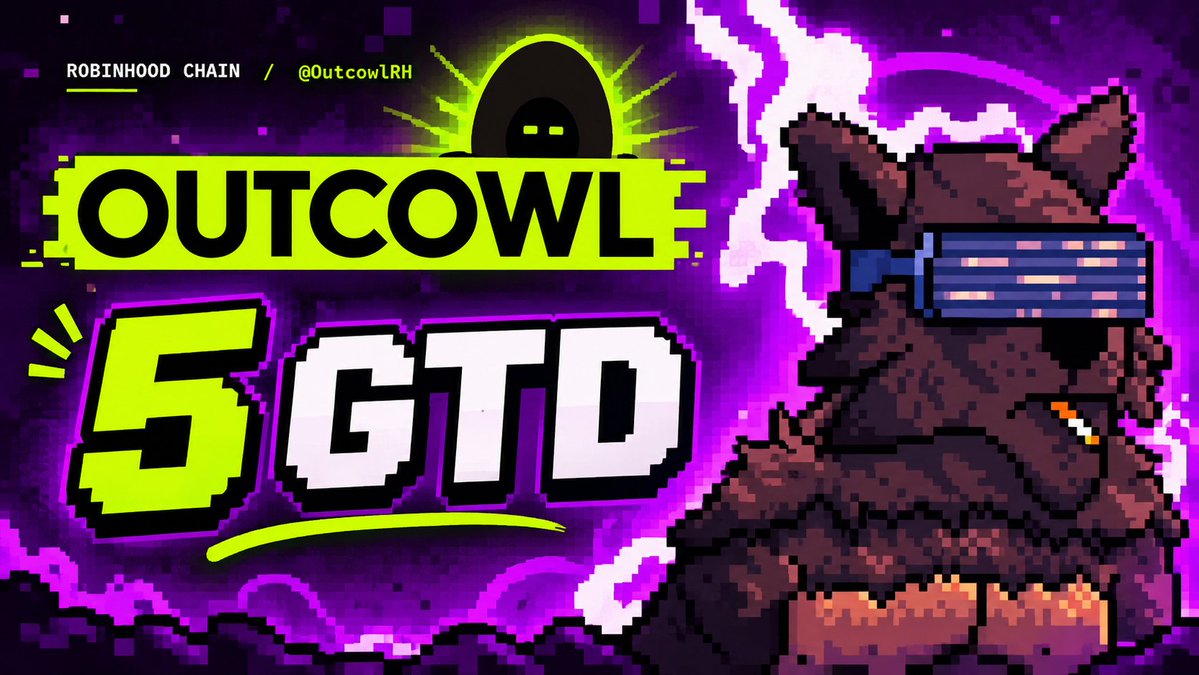
Got 5 GTD from @OutcowlRH 🦉
Follow @OutcowlRH + @SamiluXBT
• Fill out the whitelist form: https://t.co/dxwMy651II
• Repost your giveaway post and comment with your EVM wallet
12 H left
A successful IPO doesn't necessarily mean a company is worth what the market is willing to pay for it.
Anthropic had a remarkable IPO debut.
Shares closed 17% above their $83 offer price, briefly pushing the company's valuation above $2 trillion.
But there's something investors should think about.
At this valuation buyers aren't necessarily paying for what Anthropic is worth today. They're paying for what they believe it could become in the future.
And that's a big difference.
Anthropic has impressive revenue growth strong enterprise demand and a leading position in the AI race.
But rapid growth doesn't automatically translate into sustainable profits.
The company still faces enormous infrastructure costs intense competition and the challenge of turning AI adoption into long term profitability.
Meanwhile the broader AI market continues to face selling pressure.
To me this looks like a market that's starting to distinguish between technological potential and actual business economics.
AI could transform the global economy but that doesn't mean every AI company is worth its current valuation.
What do you think?
Are investors pricing in a revolutionary future for AI or are some valuations already getting ahead of reality?
Another Collab Secured ♥️
6 GTD Free mint on Ethereum
2026 Item
Mint date : TBA
To Enter : follow @SamiluXBT + @drachenfly
Like + RT + Quote
https://t.co/g0vELBozrT
RETWEET this post and Drop your EVM Wallet
WINNERS in 48 H
Every year The Economist releases its "The World Ahead" issue offering a glimpse into what might shape the coming year.
But how accurate have these predictions actually been?
Looking back at previous editions:
- 2020: COVID-19 disrupted almost every major forecast.
- 2021: Several predictions, including the Taliban's return, proved correct.
- 2022: Inflation and energy risks were identified, but the Ukraine war changed everything.
- 2023–2025: Many major political, economic and technological trends were anticipated fairly well.
There's an important lesson here.
The Economist can be useful at identifying major global trends but that doesn't mean it can predict unexpected events or their exact timing.
Looking at the 2027 cover three themes stand out to me:
1. The economic consequences of AI.
2. Growing geopolitical tensions.
3. Rising financial risks and global debt.
I wouldn't treat this cover as a roadmap of what's going to happen.
I'd treat it as a list of risks and opportunities worth paying attention to.
The real question isn't whether every prediction will come true. It's which of these trends will have the biggest impact on our future.
What's your biggest concern for 2027?
GN, Web3 fam!
Another day of building, learning, and exploring the decentralized world comes to an end.
Charts will reset, markets will move, and new opportunities will come.
Keep learning. Keep building. Keep believing.
See you on the other side of the blockchain
#GoodNight
If you believe in crypto's future this is probably the worst time to let fear take control of your decisions.
The market is bleeding. Fear is everywhere and many investors are starting to lose confidence.
But think about it. We've been through this before.
In 2018 Bitcoin crashed more than 80%.
In 2020 COVID triggered panic across global markets sending crypto prices tumbling.
In 2022 Terra/LUNA collapsed FTX went down and the entire market was drowning in fear again.
Every time it felt like things might never recover.
But the market came back. New highs were made new opportunities emerged and crypto kept evolving.
Of course not every project survived and not every asset recovered. That's why knowing what you hold matters.
But if you've done your research and genuinely believe in the long term value of an asset don't let a few weeks or months of fear make you abandon that conviction.
You don't have to buy every dip. You don't have to predict the bottom.
Sometimes the best thing you can do is manage your risk stay patient and avoid making emotional decisions.
We've seen fear take over the market before. The question is will you let it take over your decisions this time?
How are you dealing with this market?