Risk adjusted yield changes the frame.
What is the downside probability?
How does performance shift across volatility regimes?
What is the net return after execution costs?
Higher APY equals better opportunity.
That assumption shaped DeFi for years.
Protocols compete. Users compare. Capital migrates.
But headline yield hides structural risk.
Or strategies overexposed to correlated assets.
Everything works until everything falls together.
Then liquidation cascades compress returns instantly.
10/10 The best end state is boring. You deposit once, choose a policy, and capital runs automatically. If we get there, onchain finance stops being a niche and becomes the default.
1/10 Onchain finance will not win by adding more opportunities. It wins by removing friction. The future is clean intent, automated execution, and visible risk constraints that anyone can audit.
9/10 Builders benefit too. Standardized primitives mean fewer bespoke integrations and fewer footguns. The same way standards scaled the web, vault standards can scale onchain capital.
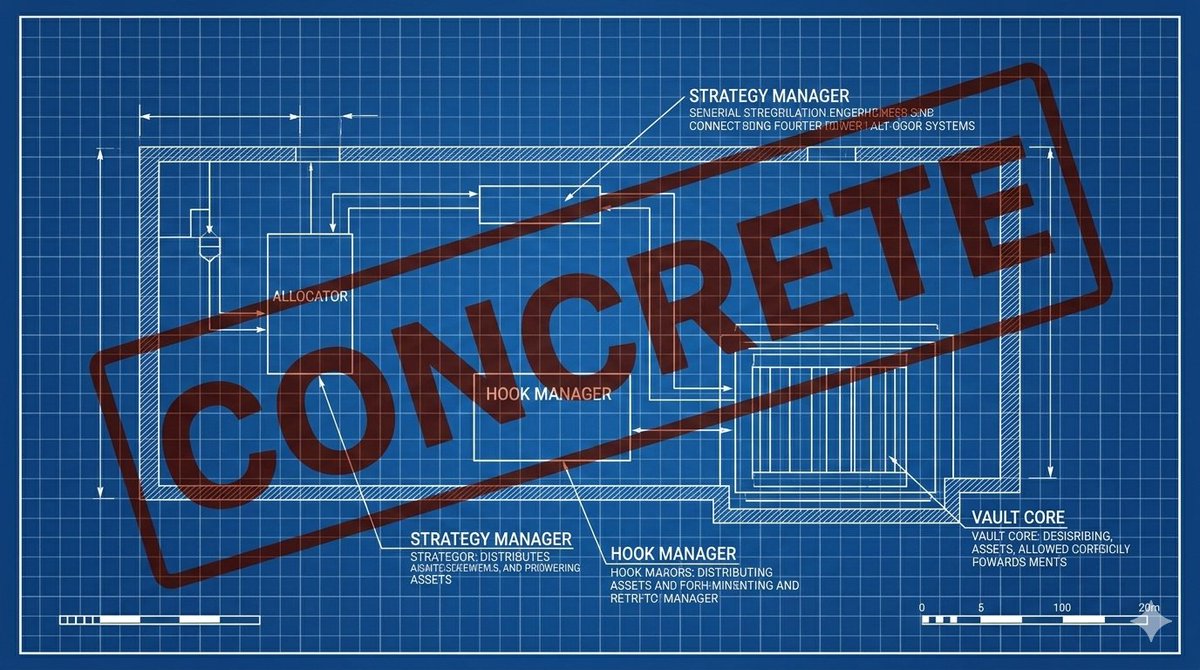
Long-term wealth isn’t built through excitement. It’s built through uninterrupted growth. Concrete vaults make that accessible at https://t.co/8aX0rRfkK2.
Crypto didn’t change finance by offering higher numbers. It changed finance by letting capital compound continuously, on-chain, without asking permission from anyone.