@zriboua 💯
The recent mainstreaming (by prominent politicos on both sides of the aisle) of conspiracy theories, or more accurately conspiracy myths, about “dark” influences and money influencing US foreign policy has to stop. It will lead to hatred and distrust in democratic governance.
Genuinely pumped for this. Since I got back into competitive rowing five years ago, I’ve repeatedly taken inspiration from countless moments in the Rocky franchise 💪💪
His whole life was a million-to-one shot. I Play Rocky, based on the incredible true story, starring Anthony Ippolito - only in theaters this November.
Check Out My Latest Op-ed on the Iran Deal in Today’s @WSJ 👇
“ Victory Over Iran Is Still Possible: The current deal falls well short, but the next 60 days provide an opportunity to achieve America’s goals.” @Mike_Pence WSJ
The Arab Word is Watching a Different War:
Three reasons why it has been difficult to understand the Arab position:
The first is the Arab relationship with Iran. From the vantage point of Brussels or London, Iran presents itself as a resistance movement with a grievance against American hegemony and Israeli occupation, and this presentation maps comfortably onto familiar Western anticolonial frameworks.
What it does not map onto is the lived experience of Arab populations in Lebanon, Iraq, Yemen, Bahrain, Syria, and across the Gulf. In those countries, Iran's presence meant Hezbollah holding the Lebanese state hostage to Tehran's decisions, thirty-five armed factions in Iraq drawing salaries from Iranian funds channeled through the Iraqi national treasury, and Houthi commanders answering to the Islamic Revolutionary Guard Corps while firing on Arab civilians from Yemeni soil. Freedom is not the word any serious Arab observer would use for what Iran brought.
Indeed, the Arab world's quarrel with Iran runs far deeper than American bases or Israeli airstrikes. What drives it is the systematic subversion of Arab sovereignty by a foreign power that uses the language of Islamic solidarity as cover for an imperial project conducted through proxies.
The second dimension is the proxy question itself, where Western analysis fails most comprehensively. Iran goes far beyond supporting armed groups. Parallel state structures get built inside Arab countries, financial systems get captured, and political figures get installed who owe their existence and survival entirely to Tehran.
The Iranians who have administered this project understand it as the export of a revolution, but what Arab populations have experienced is closer to a colonial occupation conducted through intermediaries, and as of now, they’re not mourning the Islamic Republic.
When Westerners treat these proxy networks as instruments of legitimate resistance rather than as mechanisms of subjugation, they endorse an imperial project while believing themselves to be opposing one, and as a matter of fact, make themselves the legitimizing force behind Iran’s war against the Arab world.
The third dimension is the most counterintuitive for a Western audience, and it is the one most consequential for how the current war is understood and misunderstood. For Arab nationalists, including secular nationalists and even those with deep reservations about Israeli policy, Iran represents a greater and more immediate threat than Israel does.
This is a position that Western media are structurally ill-equipped to render intelligible, because Western discourse on the Middle East has been organized for decades around the Israeli-Palestinian conflict as the primary axis of regional injustice.
The result is that when Western governments and Western publics take strong positions against Israel’s actions against Iran’s operations, they believe themselves to be standing with the Arab world. In reality, they are advancing a position that the Arab world does not share and has not asked for, while ignoring the threat that Arab governments and Arab populations actually live with.
The rhetorical use of Israel as a perpetual alibi for Iranian aggression has been one of the Islamic Republic’s most durable tools, and Western opinion has served as the unwitting amplifier of that tool across the entire duration of the Islamic Republic’s existence.
https://t.co/32dwric9G6
After October 7, antisemitic rhetoric surged on Chinese social media platforms.
This is an example of a country with no clear notion of Jew hatred suddenly playing a major role in global disinformation flows to counter Israel and the West, @HoodLudovicL argues.
My recent essay in @TheNatlInterest explores whether the largely one-sided Western media coverage and political pressure actually extended the Gaza conflict. https://t.co/KQvStX5kJE
Proud of our 🥈 at the 60th edition of @HOCR (the Head of the Charles Regatta, the world's largest #rowing event). All those pre-dawn rows and countless hours on the erg paid off! Grateful to my Potomac Boat Club teammates @PBC_potomacstar
… especially given all the gaslighting, mealymouthed equivocating, double standards, straw man fallacies, and moral ambiguity of the past 14 months.
Effectively combating antisemitism requires taking the politics out of the fight – and speaking out unequivocally (2/2)
Joined my colleague Amb. @deborahlipstadt to brief the House Bipartisan Task Force for Combating Antisemitism.
It’s reassuring that most politicians on both sides of the aisle seem committed to calling out and fighting this particularly pernicious form of intolerance… (1/2)
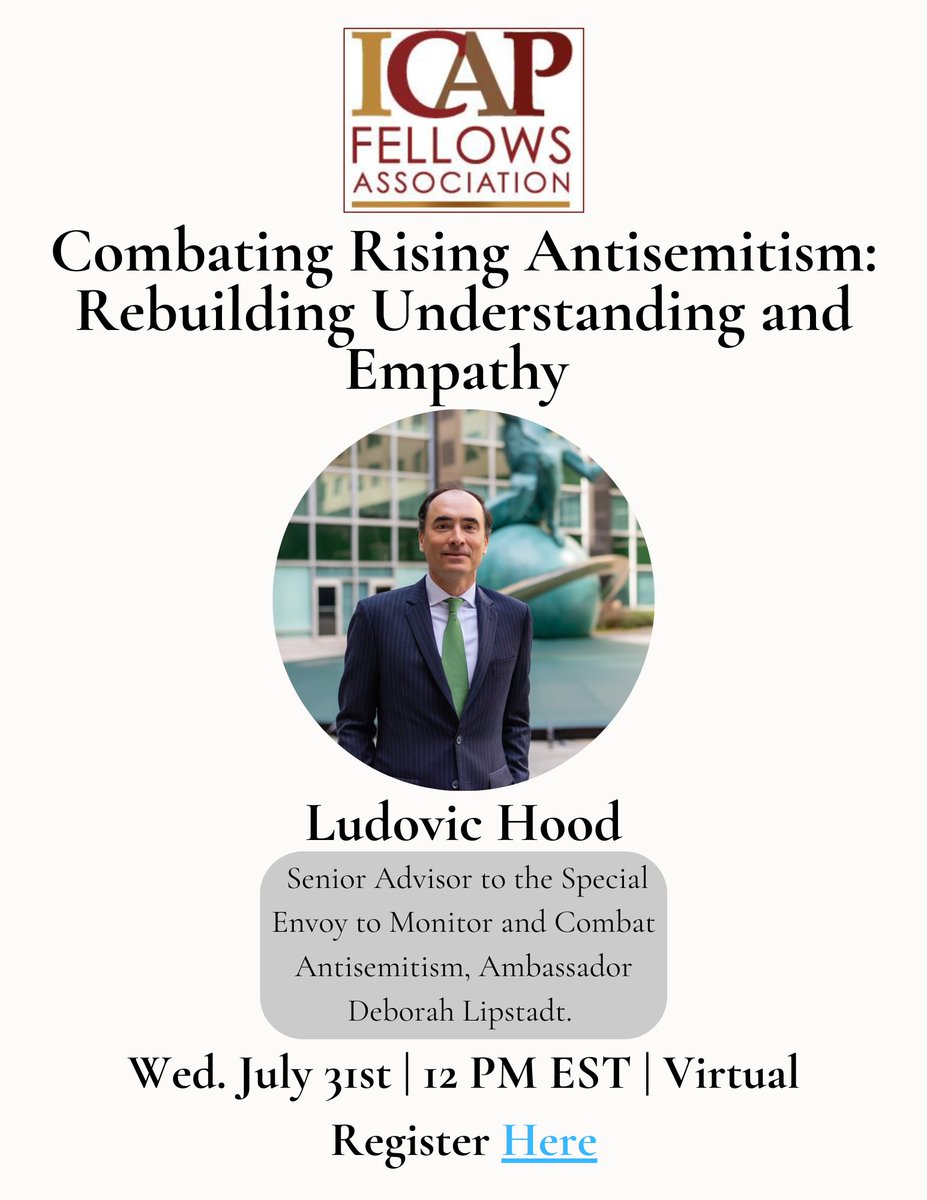
Excited for this upcoming event featuring Ludovic Hood, senior advisor to the Special Envoy to Monitor and Combat Antisemitism. Register here: https://t.co/BypJkaYnPU
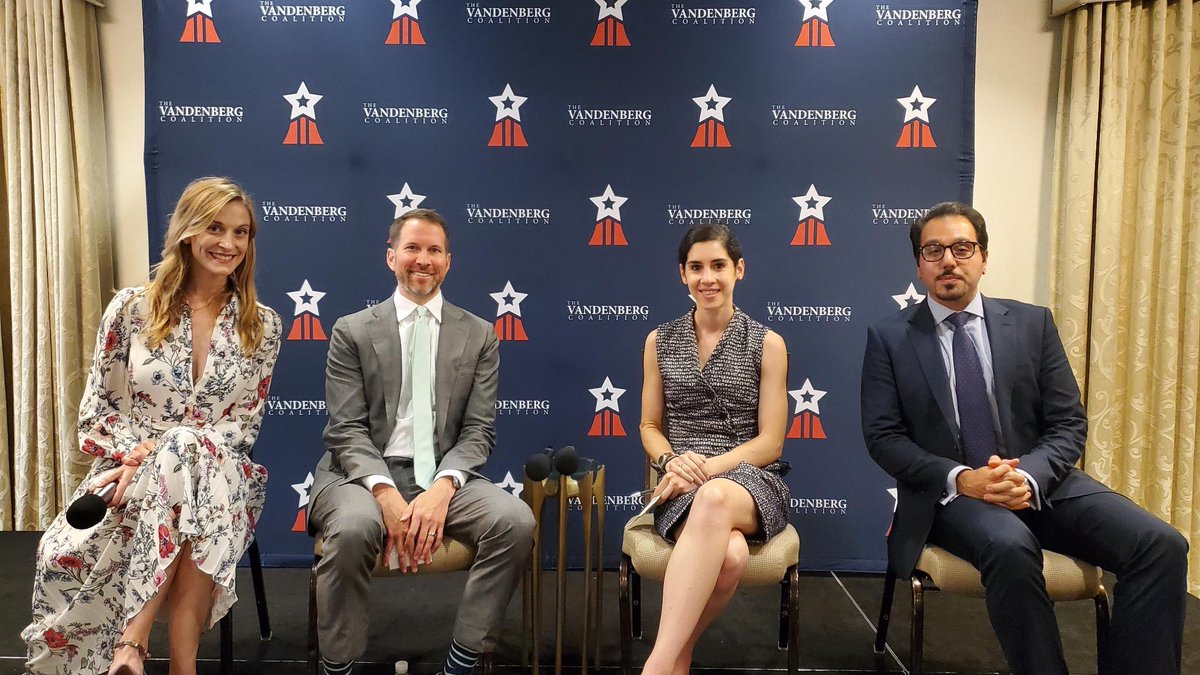
For those who attended last night, thank you for attending our event “A Weapon Against the West: Antisemitism and its anti-American Objectives”.
We were pleased to have opening remarks by State Dept Senior Advisor for Antisemitism Ludo Hood and a panel discussion w/ FDD’s Behnam Ben Taleblu and Emily de La Bruyère, and Bret Schafer of the German Marshall Fund.
Video will be up shortly!
The horrific acts of Antisemitism this week – including a demonstration celebrating the 10/7 attack, vandalism targeting Jewish homes, attacks on Jewish faculty at college campuses, and harassment of subway riders – are abhorrent.
Antisemitism doesn't just threaten Jewish Americans. It threatens all Americans, and our fundamental democratic values.
Antisemitism has disturbingly become more acceptable in some countries. Governments, civil society, and broad coalitions must confront this issue. Despite challenges, we are working with foreign governments and using our embassies as force multipliers to combat this.
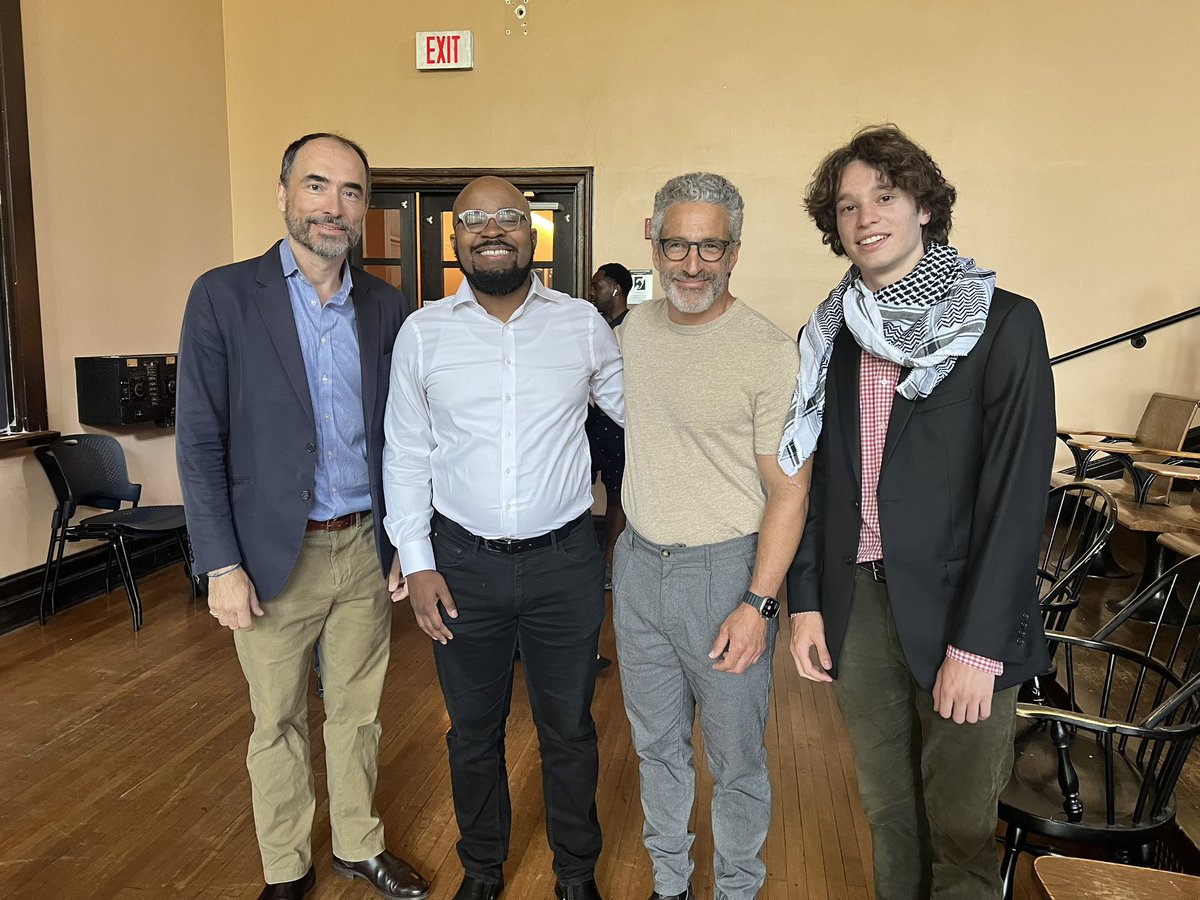
Stimulating panel discussion during #PrincetonReunions exploring antisemitism in liberation movements. I urged the audience to be clear-eyed about discourse and claims that cross the line into prejudice or intimidation. 1/3
I lamented politicized debates about defining antisemitism that detract from dealing with this dangerous surge. And I encouraged weighing both history and the changing political landscape in the Middle East when thinking about the current conflict. 2/3
Proud to be part of the @StateSEAS team that convened an unprecedented gathering of tech companies, researchers and governments designed to stimulate collaborative thinking about effective action to mitigate surging antisemitism on social media.