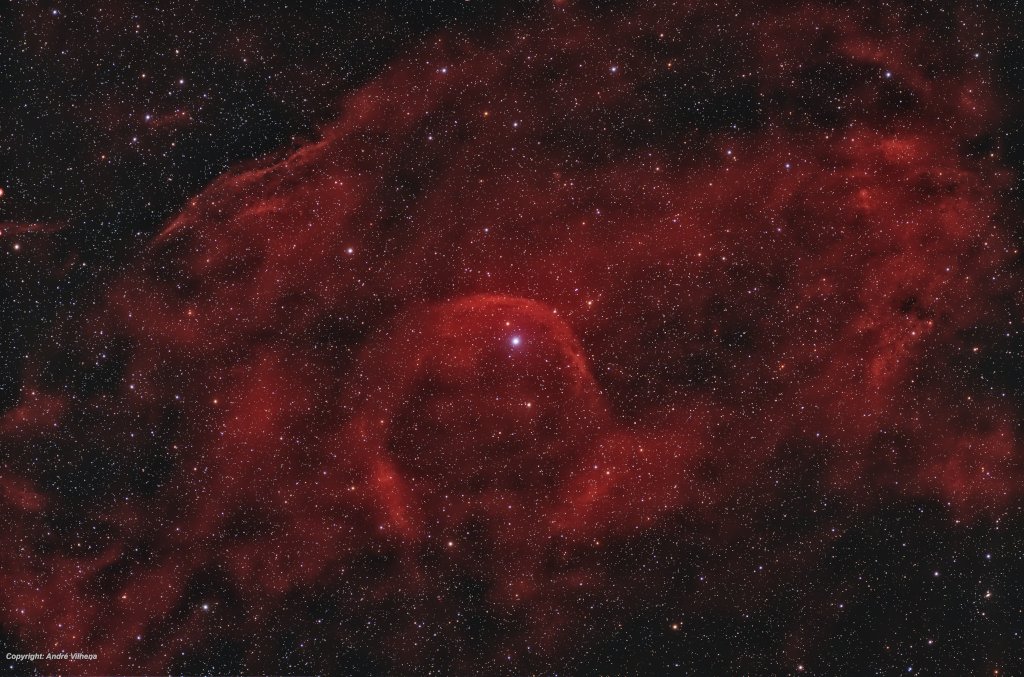
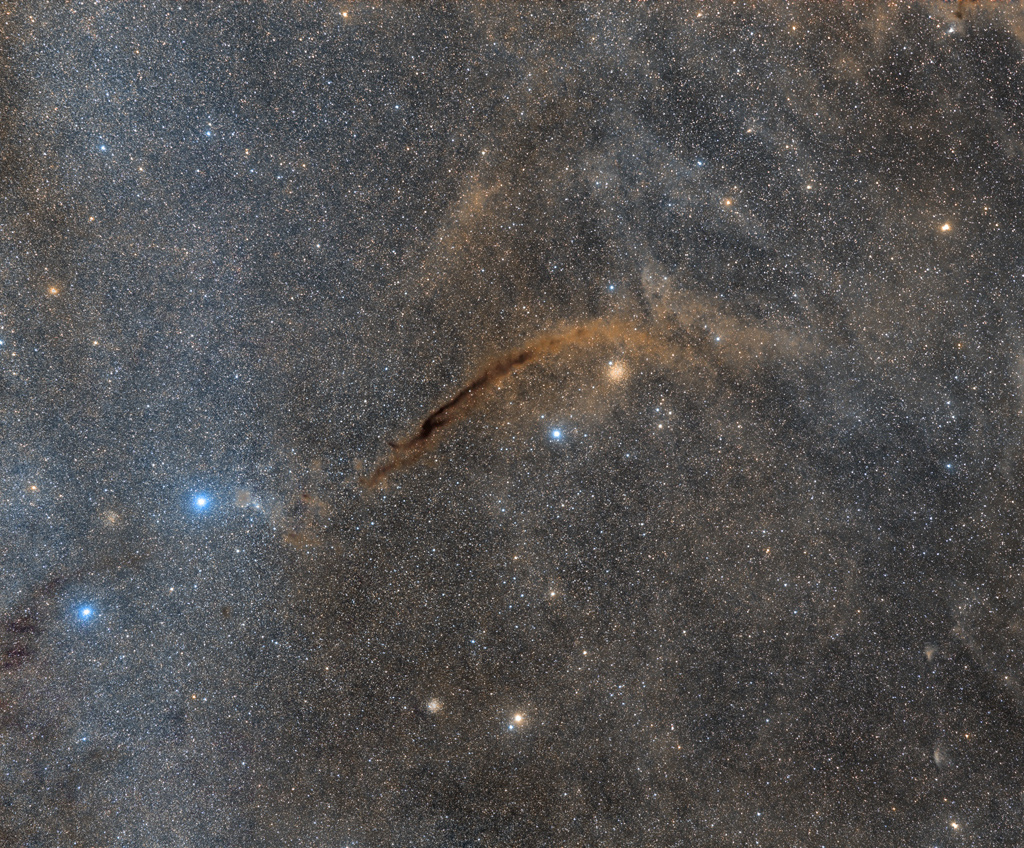
Runaway Star Alpha Camelopardalis
Like a ship plowing through cosmic seas, runaway star Alpha Camelopardalis has produced this graceful arcing bow wave or bow shock.
#space#nasa
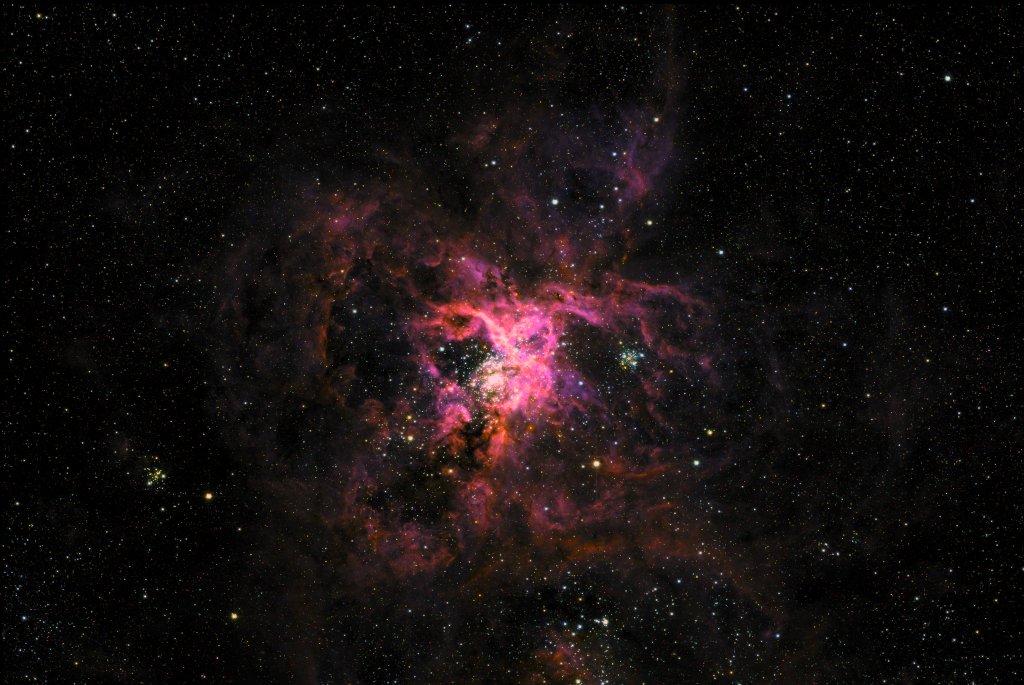
The Tarantula Nebula from SuperBIT
The Tarantula Nebula, also known as 30 Doradus, is more than a thousand light-years in diameter, a giant star forming region within nearby satellite galaxy the Large Magellanic Cl.
#space#nasa
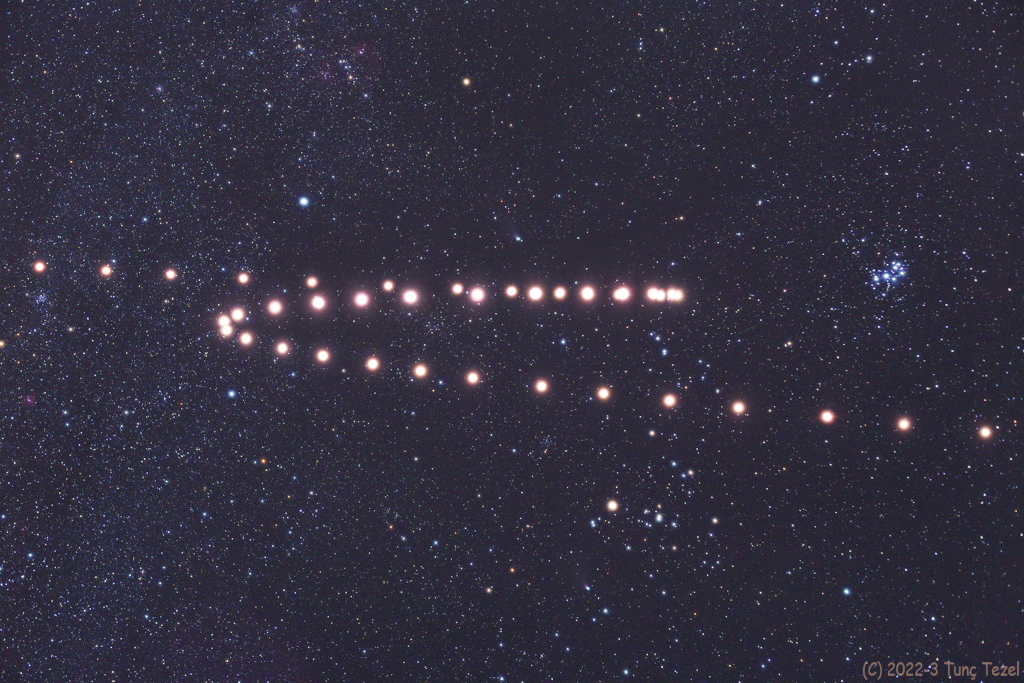
When Z is for Mars
A composite of images captured about a week apart from mid August 2022 through late March 2023, this series traces the retrograde motion of ruddy-colored Mars.
#space#nasa
NGC 206 and the Star Clouds of Andromeda
The large stellar association cataloged as NGC 206 is nestled within the dusty arms of the neighboring Andromeda galaxy along with the galaxy's pinkish star-forming regions.
#space#nasa
NGC 2419: Intergalactic Wanderer
Stars of the globular cluster NGC 2419 are packed into this Hubble Space Telescope field of view toward the mostly stealthy constellation Lynx.
#space#nasa
The Egg Nebula in Polarized Light
Where is the center of the Egg Nebula? Emerging from a cosmic egg, the star in the center of the Egg Nebula is casting away shells of gas and dust as it slowly transforms itself.
#space#nasa
Rubin's Galaxy
In this Hubble Space Telescope image the bright, spiky stars lie in the foreground toward the heroic northern constellation Perseus and well within our own Milky Way galaxy.
#space#nasa
NGC 4372 and the Dark Doodad
The delightful Dark Doodad Nebula drifts through southern skies, a tantalizing target for binoculars toward the small constellation Musca, The Fly.
#space#nasa
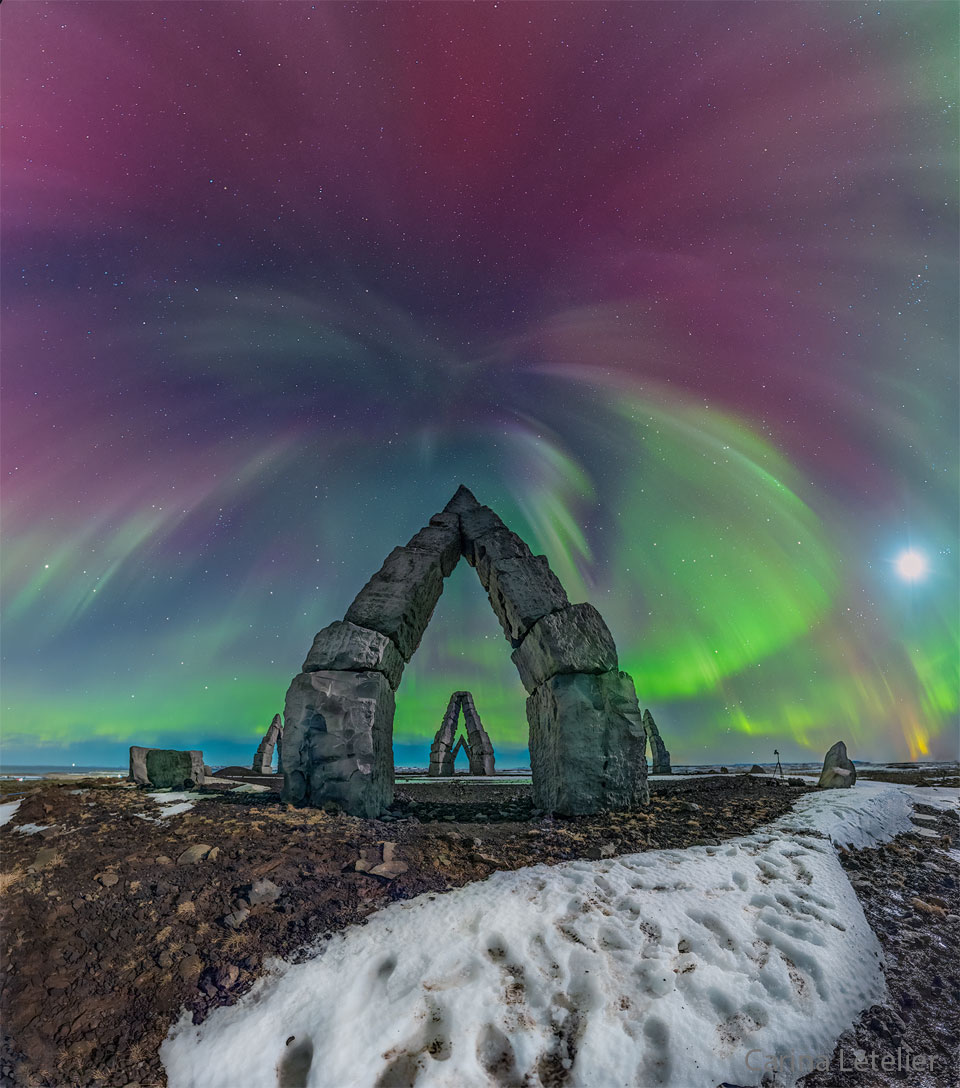
Aurora Over Arctic Henge
Reports of powerful solar flares started a seven-hour quest north to capture modern monuments against an aurora-filled sky.
#space#nasa
A Multiple Green Flash Sunset
Yes, but can your green flash do this? A green flash at sunset is a rare event that many Sun watchers pride themselves on having seen.
#space#nasa
M31: The Andromeda Galaxy
How far can you see? The most distant object easily visible to the unaided eye is M31, the great Andromeda Galaxy, over two million light-years away.
#space#nasa