Venezolano. Politólogo (UAM). Economista (UOC). Estudiante del Máster en Políticas Públicas (Sciences Po) y Máster en Administración Pública (Columbia SIPA).
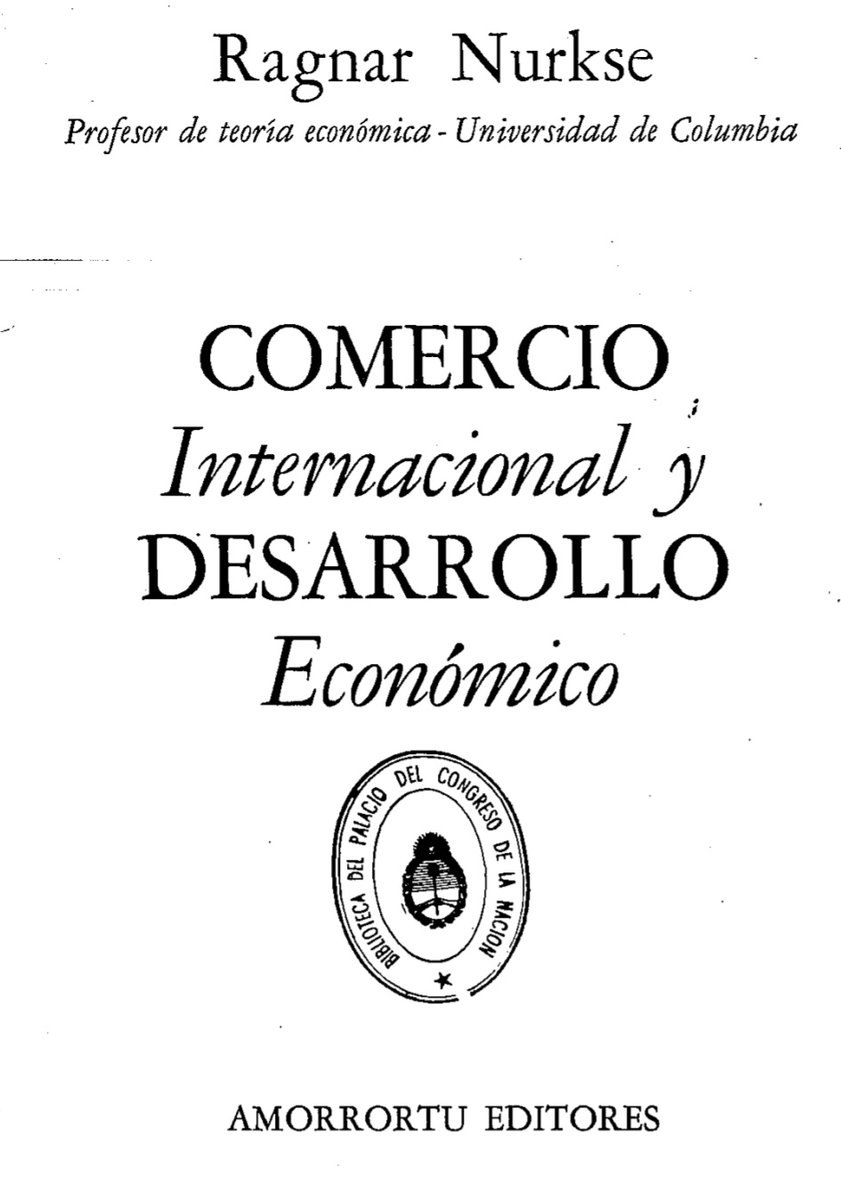
DESARROLLO ECONÓMICO Y COMERCIO INTERNACIONAL.
Me ha suscitado interés este breve compendio de las conferencias del economista Ragnar Nurkse, tituladas "Comercio Internacional y Desarrollo Económico", dictadas en la Sociedad Wicksell de Conferencias, en Ginebra, en el año 1959.
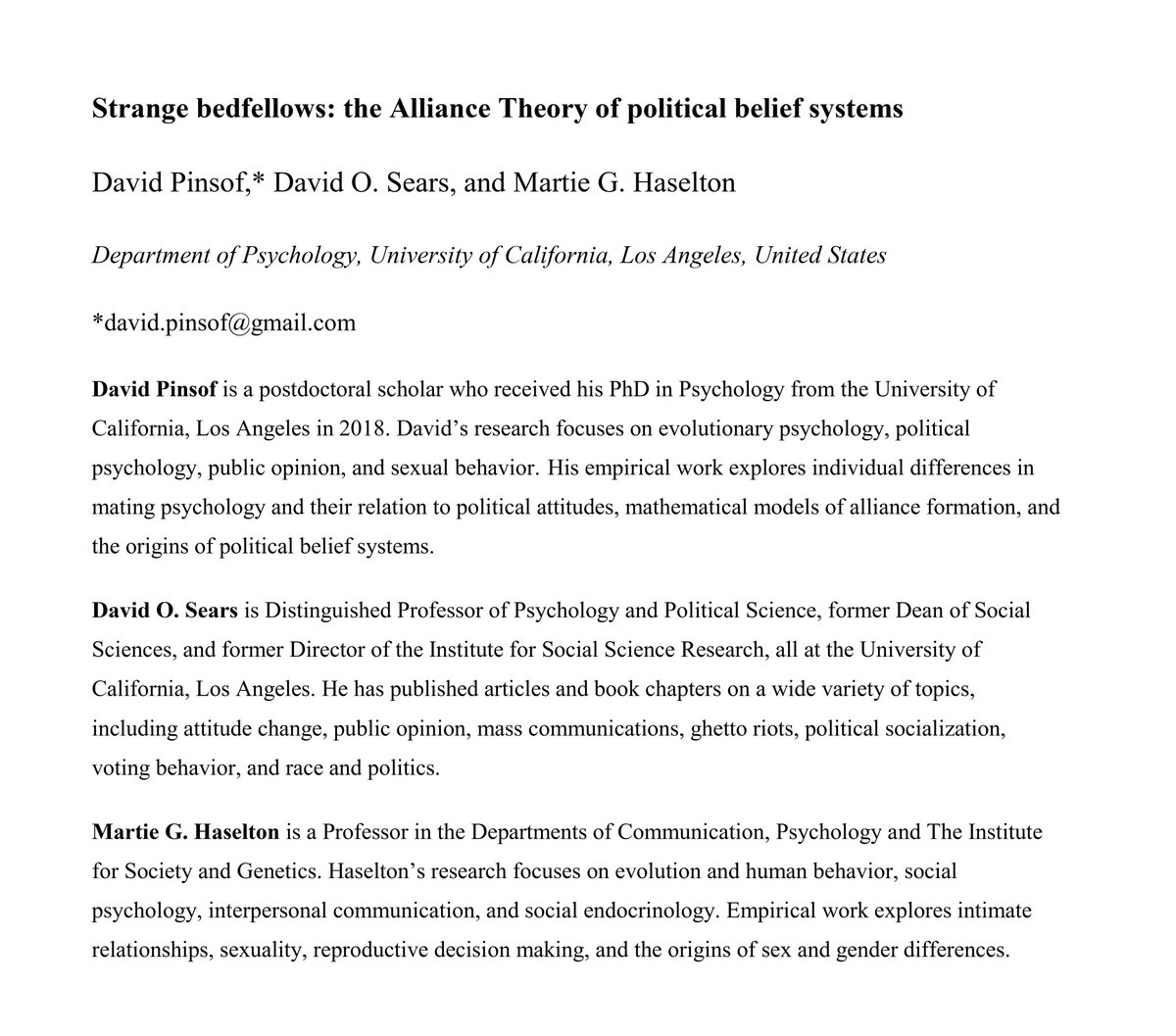
Neden siyasette rasyonel düşünemiyoruz?
Çünkü siyasi görüşlerin temeli felsefi ideallere değil, evrimsel kabile ittifaklarına dayanıyor.
Bu açıklamaya göre siyaset ahlaki bir tartışma değil, ahlak kılığına girmiş çok ortaklı bir çıkar savaşıdır.
I am so happy to see this out, and I hope you will read and enjoy the paper!
It took a while, but I am proud of how it turned out!
We have been working on a package to implement it all: https://t.co/du6vAFXr8k
And I can tell you that much more is coming!
So stay tuned!
Este estudio es muy chulo:
Imaginad que queremos entender por qué Occidente se hizo rico e innovador a lo largo de los siglos. Muchos historiadores y economistas (como Max Weber o Joel Mokyr) llevan tiempo diciendo que la clave no fue solo la tecnología o el dinero, sino la cultura: cómo la gente pensaba sobre la autoridad, el miedo a lo nuevo, la libertad individual y la paciencia para planificar el futuro. El problema es que nadie había conseguido medir esa cultura de forma numérica a lo largo de mil años para meterla en un modelo económico serio.
Radek Stefanski, un economista de la Universidad de St Andrews, se propuso arreglar eso. Cogió más de 23.000 libros del canon occidental (desde la Antigüedad hasta 1920, sacados sobre todo de bibliotecas digitales como Project Gutenberg) y le pidió a una inteligencia artificial avanzada que los leyera uno por uno, no contando palabras sueltas, sino entendiendo el sentido completo. La IA tenía que decidir, en cada pasaje, si el libro defendía, criticaba o simplemente describía seis ideas culturales básicas: si apoyaba la jerarquía y la obediencia, si tenía miedo a lo desconocido, si valoraba la autonomía personal, si premiaba la paciencia a largo plazo, y un par más.
Es importante ver que estos libros no reflejan lo que pensaba la gente corriente de la calle, sino la cultura de las élites letradas: las minorías que sabían leer y escribir, las mismas que gobernaban, enseñaban en las escuelas y universidades, y que luego inventaban e innovaban. Esas puntuaciones las fue acumulando año tras año como si fueran un capital cultural que se hereda y se deprecia muy despacio (casi como el dinero o las máquinas, con una vida media de unos 138 años). Con cuatro de esas medidas construyó lo que llama el “Innovation Wedge” o “cuña de la innovación”: una proporción sencilla que mide cuánta resistencia cultural había a las ideas nuevas. Cuanto más alta es esa cuña, más difícil es que la gente acepte o produzca innovaciones.
Lo que encontró es sorprendente. Entre el año 1000 y 1920 esa resistencia cultural bajó un 51 por ciento. Occidente pasó de ser una sociedad más jerárquica y asustadiza ante lo desconocido a una más individualista y paciente. Y lo más llamativo es el momento: la mayor caída ocurrió entre 1130 y 1230, siglos antes de la imprenta, de la Reforma protestante o de la Revolución Industrial. Es decir, el cambio de mentalidad empezó muy temprano, en plena Edad Media.
Cuando metió esta medida en un modelo económico estándar de cómo se producen las ideas, resultó que la cultura pesaba muchísimo. Si la mentalidad se hubiera quedado congelada como en el año 1000, la productividad de 1920 habría sido solo un 56 por ciento de lo que realmente fue. Y ese ablandamiento cultural explica aproximadamente dos tercios de la primera gran aceleración económica que vivió Europa entre 1500 y 1700.
Stefanski no dice que la cultura sea la única causa ni que resuelva el misterio de una vez por todas (él mismo reconoce que la causalidad puede ir en las dos direcciones). Lo que sí ha conseguido es convertir por primera vez esa “cultura de las élites literarias” en una serie histórica medible, validada con profesores de literatura y con otras bibliotecas independientes. Ahora, en vez de hablar de cultura como algo vago, los economistas pueden meterla en sus cálculos como si fuera un dato más.
(El paper lo tenéis en el hilo)
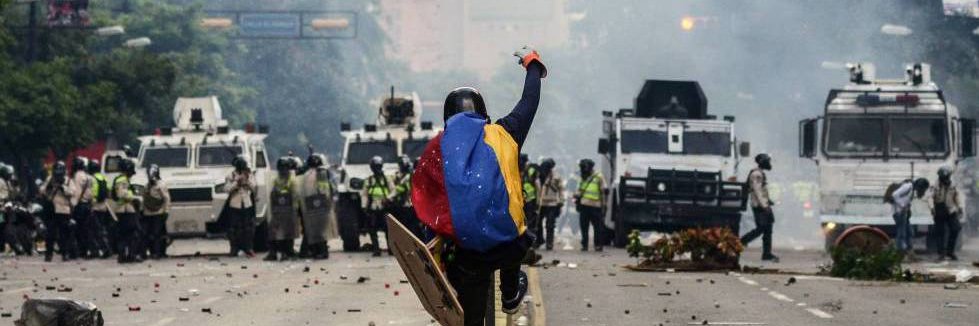
🇻🇪 ¿Cuántos edificios han colapsado en Venezuela?
Los satélites ya han identificado 434 bloques DESTRUIDOS (según @CopernicusEMS). Los dañados serán muchos más: la agencia @UNOCHA contabiliza 9.868 de momento.
Los mostramos uno a uno sobre mapas 👇
La mayor revisión sobre política de vivienda hasta la fecha (1.077 estudios empíricos en 96 países) deja pocas dudas sobre lo que funciona y lo que no.
El control de alquileres es el caso más estudiado y el más concluyente. Sí abarata el piso regulado, pero arrastra una cola de efectos colaterales que casi siempre se omiten: frena la obra nueva, deteriora la calidad del parque porque el casero pierde incentivos para mantenerlo, reduce la movilidad residencial al atrapar al inquilino en un contrato ventajoso y encarece el alquiler en el mercado libre, donde se concentra la demanda que el tope expulsa. El balance para quien busca piso y no tiene uno regulado es negativo.
Las restricciones de uso del suelo aparecen como el gran motor de los precios elevados. Al limitar cuánto y dónde se construye, generan escasez y reducen la elasticidad de la oferta, de modo que cualquier shock de demanda se traduce en más precio y no en más vivienda.
Con una oferta tan rígida, las medidas por el lado de la demanda (ayudas, desgravaciones, crédito barato) terminan capitalizándose en precios y rentas más altas en vez de en más metros o mejor vivienda.
Ninguna intervención es gratis, todas tienen contrapartidas, y la palanca que de verdad mueve la asequibilidad está en liberar oferta, no en intervenir el precio.
Enlace al paper completo 👇https://t.co/mrMiUMSMnl
🇻🇪 | DESASTRE EN VENEZUELA: Cristian Rebolledo, voluntario en la zona de Tanaguarenas, tuvo que sacar sin vida a su hija y sus dos nietos de entre los escombros.
Aun así, decidió seguir ayudando a otras familias en medio de esta tragedia.
Everyone interested in Venezuela's economic dynamics under international sanctions should read the latest from @miguelsantos12 and @JoseMoralesA "From Collective Punishment to Constraints on Authority:
Rethinking the Impact of US Sanctions on Venezuela"
https://t.co/4lLr0umtaL
Madre patria Carmen Navas, me negué a verte, porque cada vez que te escuchaba recordaba a mi madre María Cristina, que murió 7 días después de mi salida de la DGCIM en el 2020, ella me esperó, como tú esperaste a Victor...
Hoy, con el llanto de un hijo huérfano, me dejas el consuelo de saber que has ido al encuentro de por quien tanto luchaste, hoy estas al lado de Víctor, pero el país entero te llora tanto como tu lo lloraste a él.
Carmen Teresa, fuiste y seguirás siendo el símbolo de la lucha de las madres venezolanos que tienen a sus hijos tras las rejas de la miseria y la maldad, eres la madre liberadora de los oprimidos, eres el símbolo del amor de la mujer venezolana.
Carmen, nunca te conocí, pero te amaré toda la vida, por lo que hiciste por tu hijo, por lo que hiciste por Venezuela.
Carmen, Dios tiene un lugar especial que ya has ido a ocupar junto a Víctor. No mueres, dejas una lección de vida, de amor y de búsqueda eterna de justicia.
Patria es Carmen...
Fallece Carmen Navas, madre del preso político venezolano Víctor Hugo Quero. Para más detalles dale clic ⬇️ https://t.co/381XkWHEfm
La muerte de Carmen Navas cierra el círculo de uno de los relatos más tristes en el historial de la defensa de los derechos humanos en Venezuela
🔗 https://t.co/zwr3UsAXZG
La señora Carmen Teresa buscaba a su hijo Víctor Hugo Quero. Tocó puertas. Preguntó. Esperó.
¡Víctor Hugo llevaba nueve meses muerto cuando el régimen se dignó a responderle!
Lo detuvieron el 3 de enero de 2025. Murió el 24 de julio de 2025 en el Hospital Militar Carlos Arvelo. Lo enterraron sin avisarle a ella. Y el Estado llamó a eso "cumplimiento de protocolos".
Lo que aquí pasó, se llama desaparición forzada seguida de ejecución administrativa del olvido.
No hay protocolo ni explicación que justifique el sufrimiento de la señora Carmen Teresa ni de ninguna familia venezolana que hoy sigue buscando a sus desaparecidos.
Venezuela debe responder ante ella, ante ellas, y ante la justicia. Los venezolanos merecemos conocer la verdad.
Después de la discusión de ayer sobre el informe de @Gil_JavierGil y coautores me puse a intentar replicar sus resultados ante la falta de respuestas por su lado.
Por el lado bueno, Javier tenía razón y era posible identificar las viviendas en alquiler, ahora explico por qué no pude inferir cómo se hacía a partir de la metodología del informe. Por el lado malo, he documentado dos decisiones metodológicas que sesgan bastante al alza los resultados, además de resolver en misterio de cuantos "multiarrendadores" eran caseros con dos viviendas alquiladas. Vamos a verlo:
Yesterday I argued that labor repression is a necessary (but not sufficient) condition for industrial policy to work.
This simple statement helps us to understand why many attempts at industrial policy in Latin America (and other regions) failed: they were promoted by governments who wanted to increase the wages of manufacturing workers.
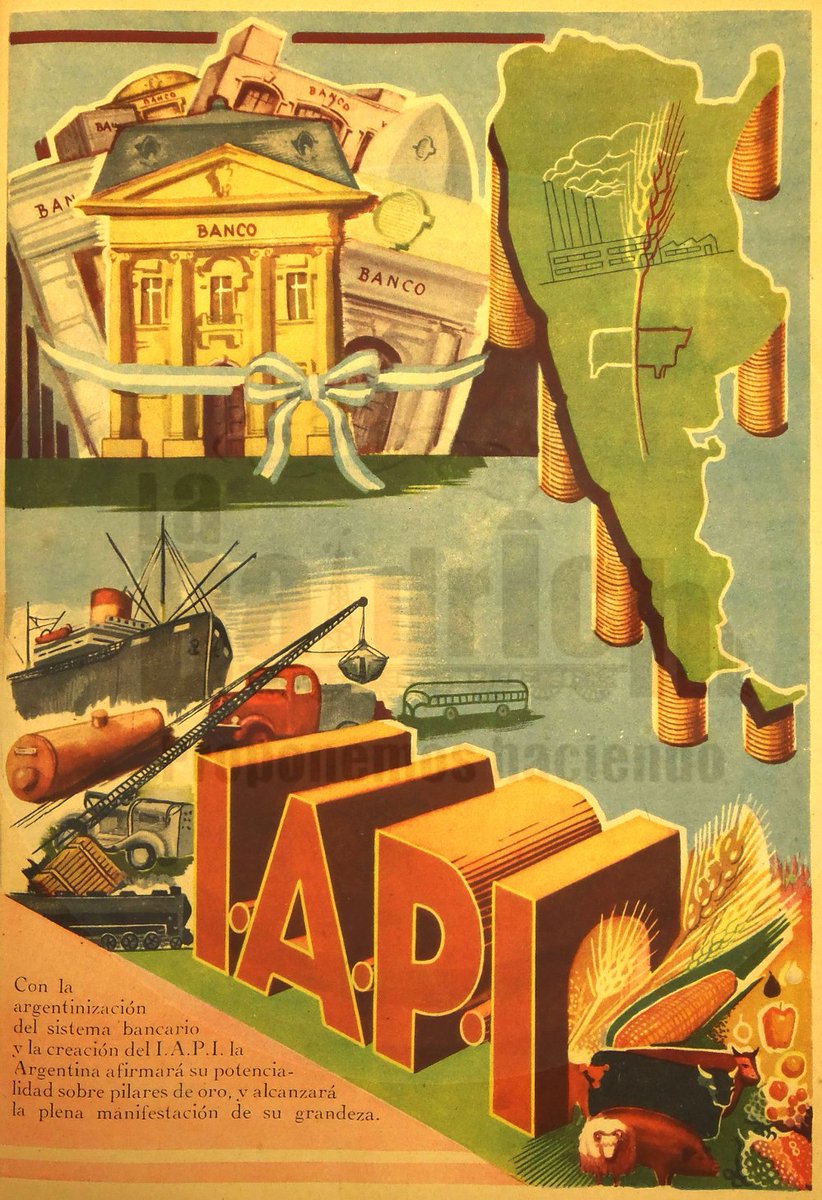
The best example that comes to mind is Argentina under Perón. On October 21, 1946, Perón presented a five-year plan of fast industrialization oriented toward the internal market:
https://t.co/Hj4ug1D1hl
The plan incorporated all the standard elements at the time:
1. Nationalization of the central bank, railroads, utilities, airlines, telecommunications, harbor and navigation companies, and reinsurance.
2. Break with the old export interests.
3. The creation of the Instituto Argentino de Promoción del Intercambio and the introduction of exchange controls.
4. Expansionary fiscal and monetary policy.
5. Price controls (e.g., rent control, electricity, gasoline).
6. Financial repression.
But it did not include labor repression because the political base of Peronismo was urban workers. At its very core, the political-economic project of Peronismo was a logical contradiction.
The result? After a few years of fast growth, the economy peaked in 1949, reached a balance of payments crisis, and the dreams of fast industrialization went nowhere (I am summarizing here a complex set of events). Also, inflation became a chronic problem in Argentina.
You can have a market-oriented growth model, or you can have an East Asian-style growth model. Which of the two would work better for the region is an empirical question, which also depends on your values (is it ok to have an authoritarian government in exchange for faster growth? I would say no, but your answer can be different; I am an economist, not an ethicist).
But what you cannot have is an industrial policy-style growth without labor repression: that does not belong to the set of feasible alternatives. At their very core, a huge chunk of Latin America’s left and nationalist economic thinking was deeply confused. Their inner contradictions left them without a framework to analyze their situation and forced them to embrace infantile dependency theories à la Galeano of “we are poor, the fault is theirs.”
Many readers yesterday asked for more concrete examples of what I have in mind regarding the distinctions between features inherent to modernity and those inherent to “capitalism.”
Imagine we have a functioning socialist commonwealth. For simplicity, I will call it the SC.
Imagine also that this SC aims to provide state-of-the-art medical care to its citizens. This is not about superfluous consumption. It is about the desire to provide good preventive care, adequate treatment, palliative care, and so on.
Soon, you realize that you need the scientific-technological complex that develops advanced mRNA vaccines and, even more importantly, the industrial capacity to produce tens of millions of doses at short notice when a new virus arrives or an old one mutates. These are sophisticated processes that involve coordinating millions of individuals with diverse knowledge, skills, and personalities.
But it does not stop there. You will need to produce thousands of MRIs, scanners, FLASH radiotherapy machines, and all the bewildering array of equipment you find in a top hospital.
And I insist: wanting to be treated with the latest oncological equipment if you get cancer is not frivolity. It is a deep human desire that a good society (any society, really) should attempt to provide.
How are you going to accomplish all this? An SC does not want to use private property, so it relies on some form of public property. But public ownership is not the main issue. The real issue is that the SC would need to organize large bureaucratic organizations. Without them, it cannot develop and deploy vaccines, MRIs, scanners, and the rest. The need to scale is the key mechanism at play, not who owns the property.
And, because of their scale, these large bureaucratic organizations will suffer the type of problems that critics of “capitalism” attribute to “capitalism.” The organization will be impersonal and alienating, and inefficient due to career concerns, asymmetric information, conformity effects, and internal politics.
Moreover, because resource constraints hold in every human endeavor, some claims for medical treatment will be denied. The SC will not have enough resources to satisfy every medical demand (and medical demands are, for all practical purposes, unlimited), every demand for education, every demand for the environment, and every demand for this or that worthwhile cause. Sorry, yes, scarcity will always be with us, with or without AI.
Patients whose requests for medical treatment are denied will be particularly annoyed because the SC is built on the idea that such events cannot happen. At least in a “capitalist” society there is someone to blame (the “capitalist”).
Those who deny the need for large bureaucratic organizations are living in a fantasy world. I am pretty sure the day they are told they have prostate cancer, they will run to their closest large bureaucratic organization for treatment.
Those who deny the problems of large bureaucratic organizations, and how deeply irresoluble those problems are, have not seen how not-for-profits work. I have never seen more acrimonious fights than within not-for-profit organizations, where some shared sense of the common good unites members. The fights are fierce precisely because profits play no role.
I have been reading about these issues for nearly 40 years, and I have seen plenty of proposals to address the problems of large bureaucratic organizations. A favorite among many is “participation” or “more democracy” within the organization. No, sorry, more “participation” or “more democracy” only makes things worse. Yugoslavia taught us that you cannot run a large bureaucratic organization based on democratic participation (well, you only need to know some basic economics; Arrow’s impossibility theorem, anyone?).
Large bureaucratic organizations are essential to modern life, and they are full of problems, with or without “capitalism.”
This is what Weber understood and what Marx, who had an incredibly naïve view of the future, never grasped. Weber saw that bureaucracy is not a feature of “capitalism” but the institutional form modern society uses to coordinate large-scale tasks under rational, impersonal rules. Hospitals, ministries, armies, universities, and, yes, corporations all converge on the same form because it works at scale. The iron cage is not capitalist. It is modernity.
I am very happy to share that our paper, “Ideological Alignment and Evidence-Based Policy Adoption,” is now published in the American Economic Review (#AER). This is a hugely ambitious project that has taken more than four years of work together with an amazing team of co-authors.
We conducted a nationwide #RCT involving over 5,000 real local politicians, as well as national think tanks, newspapers, and a leading global academic institution, to answer a simple but very important question: does the political “colour” of the messenger influence policy implementation?
One of the central challenges of the #evidence-based policy agenda is turning evidence into actual policy. From my experience in politics, this is far from straightforward: evidence has limited value if it does not translate into policies that improve people’s lives. Why is it so difficult to persuade policymakers to adopt policies with strong empirical backing? If the evidence is there, why are these policies so rarely implemented?
🔬 In our study, we address this by sending identical information about an evidence-based policy to local policymakers, introducing variation only in the #messenger of the policy: a non-ideological research institution versus think tanks and newspapers with clear ideological leanings. The policy itself is a recommendation - strongly supported by evidence- that improving a municipality’s Wikipedia page increases tourism.
We find that policy adoption increases by 65% when the information comes from a source perceived as ideologically aligned with the policymaker. In contrast, ideologically opposed institutions have no effect.
Publishing in what is arguably the world’s leading academic journal is a dream for any economist. For me - having stepped away from academia for politics - the joy is even greater.
🙏 I am deeply grateful to all my incredble co-authors for their generosity of offering me the opportunity to share this project with them, and for everything I have learned throughout this process. I also want to thank all the collaborators and RAs that have contributed, as well as across institutions, including https://t.co/jQdIMjTLbI, El Mundo, Alternativas, FAES, and FEMP, as well as the support from the Social Research Call of La Caixa and the Wikimedia Foundation.
https://t.co/k5k9bpaYz1
@IEuniversity@iespega@EnricoLetta@manuelmunizv@Borjamonde@JuanSantalo
Mucha gente no cree que construir abarate la vivienda. La evidencia acumulada dice lo contrario. 4 conclusiones del meta-análisis publicado en Housing Policy Debate (2025):
1⃣Más oferta reduce alquileres o frena su crecimiento a escala metropolitana. En Auckland, la gran reforma urbanística dejó los alquileres un 26-33% por debajo del contrafactual sintético.
2⃣En muchos contextos, la nueva construcción también baja alquileres en el propio barrio donde se construye. Se estima una reducción del 5-7% en viviendas próximas.
3⃣La nueva oferta no ha demostrado generar desplazamiento de hogares de renta baja. El riesgo de desplazamiento cae un 17% cerca de proyectos nuevos.
4⃣Las cadenas de mudanzas liberan vivienda en todos los segmentos: cada 100 unidades nuevas en Helsinki liberaron 66 unidades en la mitad inferior de la distribución de renta.
La percepción política va muy por detrás de la evidencia. El escepticismo ante la oferta tiene coste real.
Enlace al paper 👇
https://t.co/O4I2rwZUa1
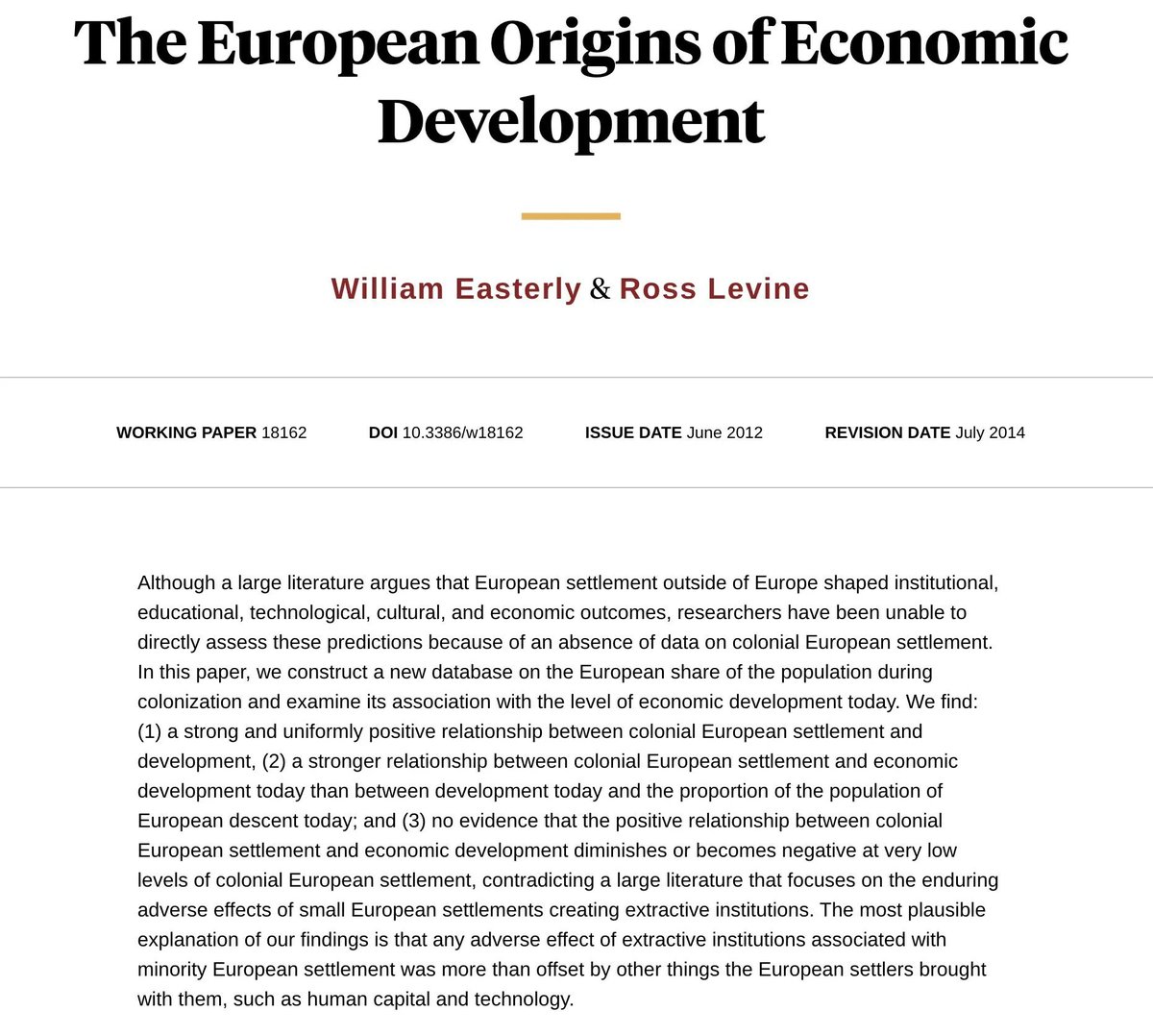
No, Europeans did not, on average, harm the economic prospects of the regions they colonized.
Quite the opposite.
"The most plausible explanation of our findings is that any adverse effect of extractive institutions associated with minority European settlement was more than offset by other things the European settlers brought with them, such as human capital and technology."
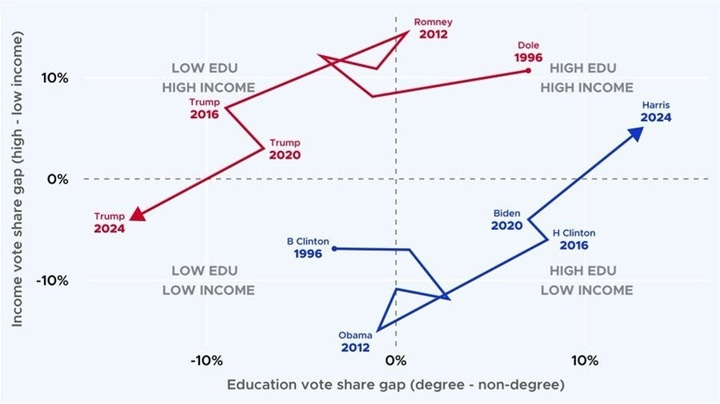
Éste es uno de esos gráficos fascinantes: en 30 años, los demócratas han pasado tendencialmente de ser el partido de las personas con pocos ingresos y bajo nivel educativo a todo lo contrario. Los republicanos, a la inversa. En menos de dos generaciones.