Existen personalidades parásitas, no estan descritas "formalmente" pero aparecen mucho en la clínica pareciendo tener una enfermedad mental su diagnóstico se hace ya mucho a través del tiempo descartando otras causas. Sus características son:
Dependencia crónica necesitan que los demás paguen cuentas, falta de reciprocidad, manipulación usan la culpa y se victimizan para que dudes de tu empatía, baja responsabilidad ya sea evitando el esfuerzo personal, el trabajo estable o crecimiento propio. Agotan emocionalmente a terceros. Egocéntricos con baja autoestima. Algunos tienen tintes sociopáticos con una conducta: pasiva, explotadora y persistente. Ahi los tienes en casa casi siempre con las familia nuclear de base o llegan a casa de terceros y te sientes culpable de poner algún límite con ellos. Difícilmente se curan y tienden a cronificarse.
No hay biomarcador para autismo. Ninguno. El diagnóstico sigue siendo clínico, basado en historia y observación estructurada. En una era obsesionada con pruebas “objetivas”, esto incomoda. Pero también obliga a algo clave: pensar, no solo medir. #AutismAwareness
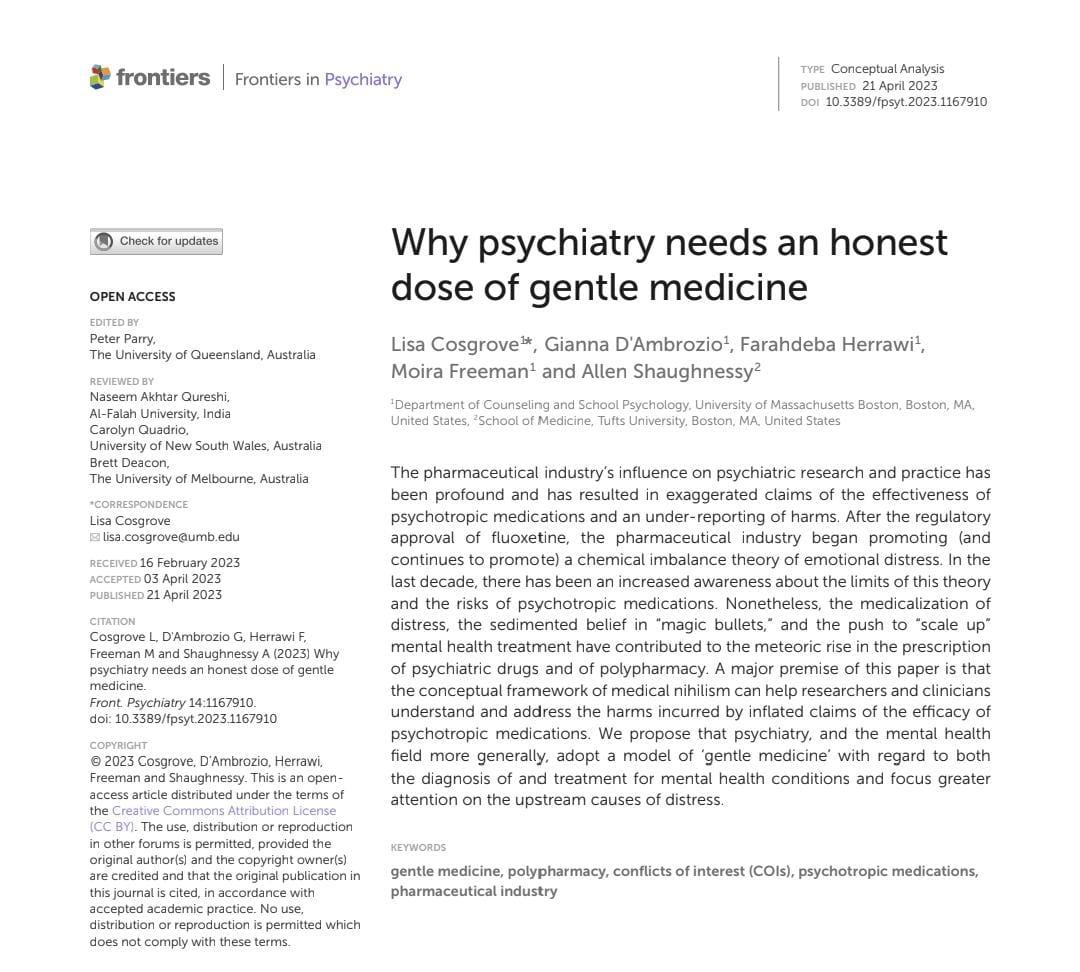
Psychiatry is being told once again to step back. To prescribe less. To hesitate more. To practice “gentle medicine.” That sounds virtuous until you look closely. Six uncomfortable points.
1. Psychiatry is not reckless. It already works under uncertainty every day. The real danger is not overconfidence. It is paralysis disguised as caution.
2. Severe depression, psychosis, bipolar disorder, catatonia and suicidality do not wait for philosophical clarity. Delay kills. Calling delay “gentle” does not make it ethical.
3. Average effect sizes are waved around to dismiss treatment. Real patients are not averages. Many return to work relationships and life because treatment was started on time.
4. Medication harms are loudly discussed. The harm of non-treatment relapse disability suicide is strangely quieter. That imbalance is not neutral. It shapes fear driven practice.
5. The chemical imbalance story is repeatedly used as a moral indictment. It was a public simplification not a clinical doctrine. Psychiatry never practiced cartoon biology.
6. “Gentle medicine” is a luxury concept. In low-resource settings it often translates to no treatment delayed care and abandoned patients.
Psychiatry does not need moral lectures about restraint. It needs the freedom to act decisively when illness demands it.
Less ideology.
Better judgment.
Imagine having depression for no clear reason and also undiagnosed B12 or iron deficiency—treatable causes of depression—only to be told by a therapist that it must be unresolved trauma, because that’s the “universal” explanation for mental illness.
It's 2025, we can do better!