Senior Director @Dell. Exploring how AI becomes organizational capability. Working with builders to shape the future of enterprise AI. Views are my own.
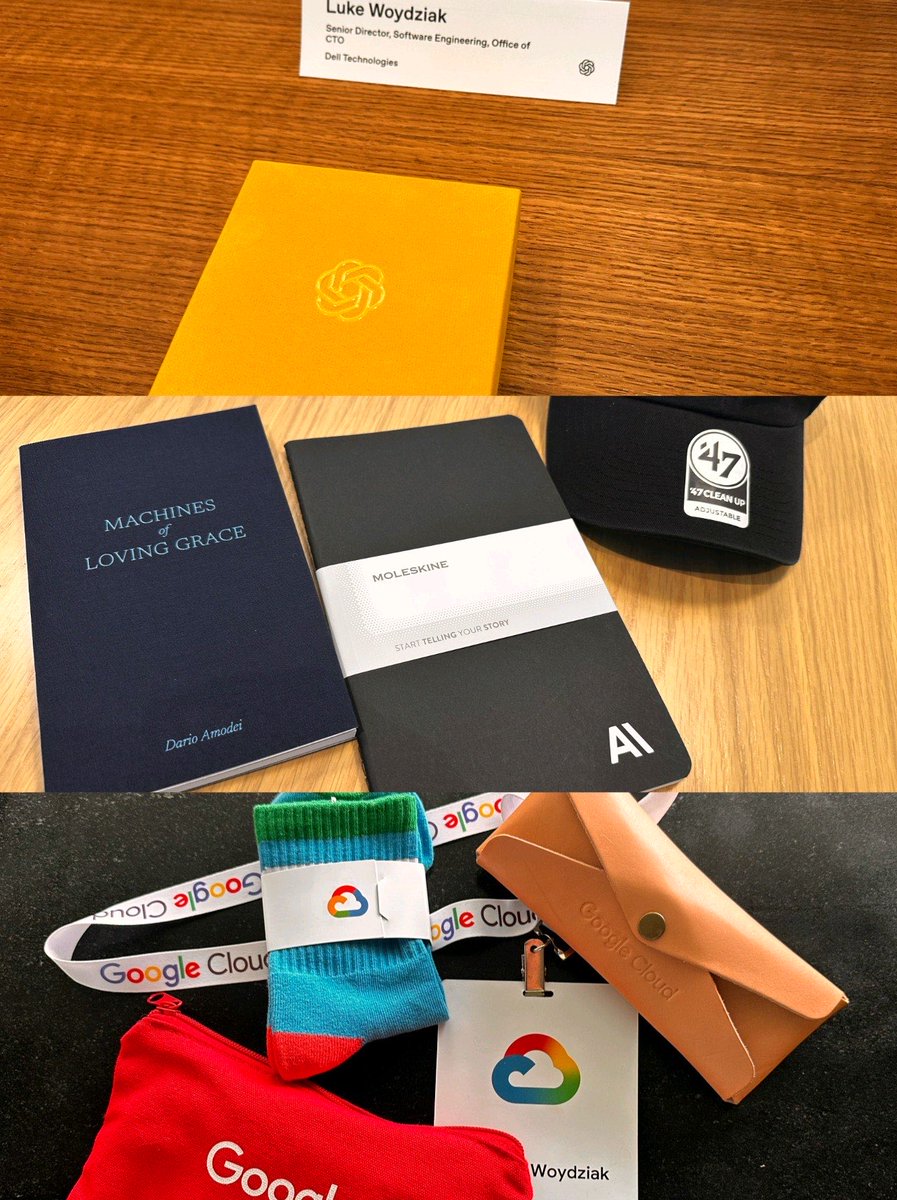
I visited OpenAI, Anthropic, and Google looking for the winner for the Enterprise.
I found three.
That evolved my thinking enterprise AI architecture.
The durable layer should be the capability not the model vendor’s offering.
In a market where the winner keeps changing, optionality becomes architecture.
Building an enterprise-ready agent felt like the hard problem. With the model drift happening, keeping it that way may be an even bigger one.
Imagine the refactoring necessary for 1000s of agents based on a model version when it gets deprecated.
@carlocapocasa Reminds me of an issue I haven’t quite solved yet: useful insights buried in chats. Almost impossible to remember which chat that little insightful note was in.
There’s a lot of fear around AI.
Here’s one area where I think it will enormously help people:
Customized coaching for almost any skill.
Feed it the best books, talks, and examples from people who’ve mastered the craft. Let it synthesize the patterns, generate practice exercises, and critique your work.
It will compress your learning timeline.
@carlocapocasa Yeah it is an incredible tool that way. I like doing the synthesis then building a skill and wrapping a Chat project around the skill. Then each chat in the project can on demand coach me.
“Don’t test quality in” is one of the oldest lessons in software engineering.
Building AI agents just highlighted for me where that advice breaks down.
In one agent, moving quality upstream produced a 72× improvement.
In another, it made performance worse.
Interestingly, difference wasn’t the model it ended up being the determinism of the task.
@mikeboysen My thought was that micro-services came about because org structure was small teams. With agents on dev can cover more ground so design collapses back down, maybe?
Are you asking your AI agents to do too much?
Everyone is trying to give agents bigger and bigger jobs.
I got one to build an entire application by doing the opposite.
The #1 mistake I see novice AI users make has almost nothing to do with prompting.
Natural language makes complex systems easy to specify.
The complexity is still there. It’s just written in English.
Build small incremental prompts as steps. Prove them. Layer on more capability. Prove the stack again.
@carlocapocasa Yeah that’s good, the only issue I found is it’s cumbersome to tie the git commit to the notes in the same git commit. You don’t have the hash until the commit is made and changing the commit changes the hash. So you have to do some weirdness to commit after the commit.
One of the biggest risks of coding agents may be the thing that makes them so valuable:
Speed.
We’ve spent decades saving code while discarding the decisions (context) that created it.
Developers carried much of that missing context in their heads.
Coding agents don’t.
Now context debt can accumulate at machine speed.
@carlocapocasa Agreed, plus it let’s you run analytics on the prompt generation for training and optimization of code agent usage. Great call out on “lack the reasons”. As this matures that will be an area that needs some more thought.
@jgw Yeah, I try to go back to what made my life easier as a developer. Things like design, files touched, decision reasoning and such. Then do something simple to keep those available to the agent for future work.