Salah’s career speaks for itself, but the story is also a reminder of what can happen when clubs combine smart people, good process, and the courage to trust evidence.
A privilege to contribute a small perspective to a much bigger story.
We’ve got a special three-part series on Mohamed Salah’s record-breaking Liverpool career and his legacy.
Here’s part one with @MarkCarey93 on how the shrewd signing of Salah with a data-led approach sparked changes across football.
https://t.co/MbUah1noqQ
After numerous requests for additional time, we’re extending the CASSIS abstract submission deadline by two weeks, to May 31.
Looking forward to seeing your submissions!
Call for Abstracts: The Cascadia Symposium on Statistics in Sports (CASSIS) is now accepting abstracts for oral presentations. Deadline is May 15. More details at https://t.co/1A2TEaLWNx
Call for Abstracts: The Cascadia Symposium on Statistics in Sports (CASSIS) is now accepting abstracts for oral presentations. Deadline is May 15. More details at https://t.co/1A2TEaLWNx
For those working on a research project in sports analytics, the conference's call for abstracts will go out next month (with abstracts typically due in late May).
@ground_guru@PeterPrickett@ToulouseFC To clarify, we specified high-level style of play where aligned with our overall philosophy and backed by data. But we weren’t dogmatic about any of the finer tactical details, esp those w/o empirical backing, and let those shift dynamically w/ squad, coaching, experience, etc.
I rarely speak publicly on technical topics these days, so I really enjoyed recording an episode on Alex Andorra's Bayes podcast recently. For those with a more technical bent in the stats/analytics community, hopefully there are some useful nuggets here. https://t.co/b87i9BVR7M
While watching this 0-0 draw, thought I'd try visualizing some personal golf data. The intersection of golfers and sports analysts couldn't fill a foursome, but perhaps a couple of you are interested. First up, a round at Bandon Dunes from earlier in the summer. 1/5
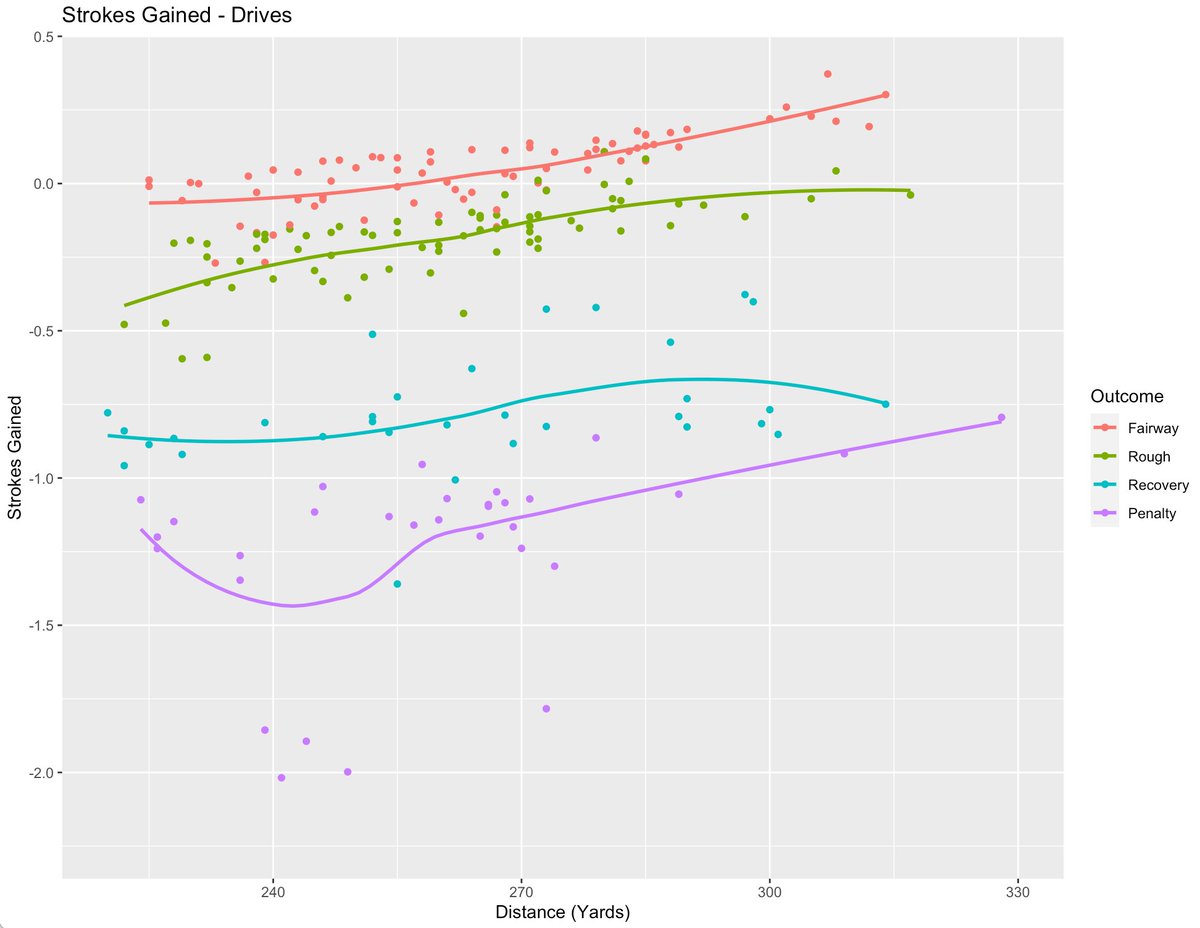
A simple one looking at strokes gained against distance, split by shot type. Pretty remarkable how costly penalties and shots into recovery situations are. Turns out the only thing I'm half-competent at is recovery punch-outs. 4/5
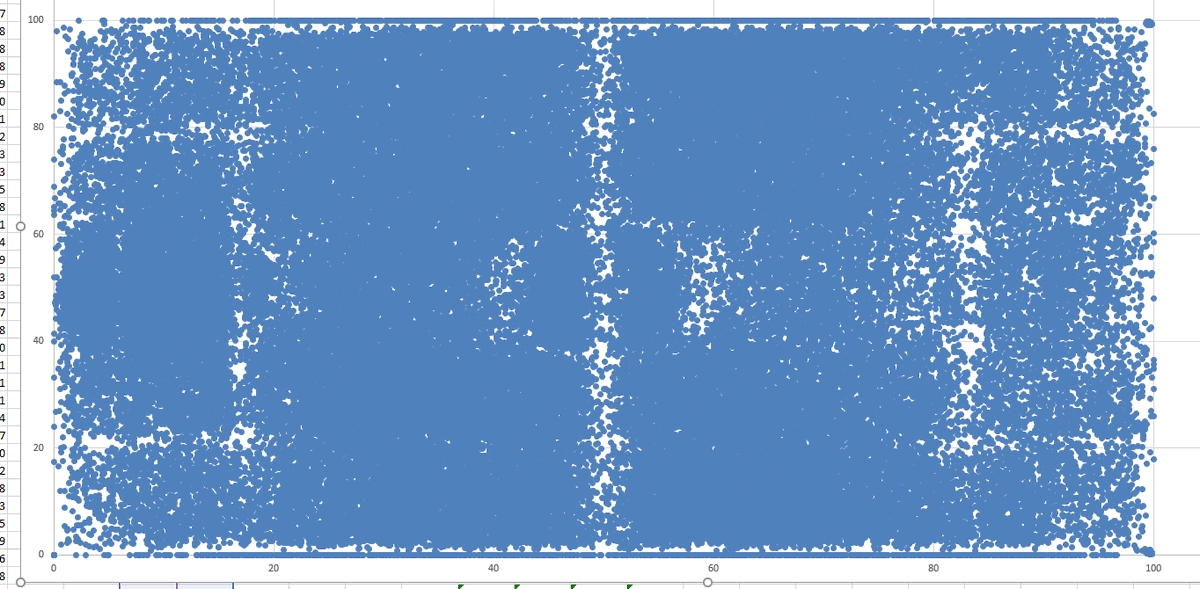
People usually point to collection bias (events never "exactly on the line") and rounding, but there's more. Tagging locations on a 105x68 pitch is really hard: 2-4m errors are normal. But lines provide a reference point, so tagged locations become much more accurate around them.
I was looking at the Premier League event data and noticed that lines are almost visible to naked eye. I think I have seen someone mentioning this before, but it should be a data entry issue, right? No reason for players to avoid lines. Can't find the reference for it.
Sports scientists -- Here's evidence that the scientific literature may be grossly over-estimating the value of acute:chronic workload ratios in predicting injuries:
Talk: https://t.co/fclqWt74UE
Paper: https://t.co/STp7c2UrZr
Code: https://t.co/RUAo7YEJSd