Happy to finally launch my blog! I plan to post every few weeks about statistical topics I find interesting.
I start with a few thoughts on the question: are significant results from low-powered tests less credible?
https://t.co/iPTbIi6DAd
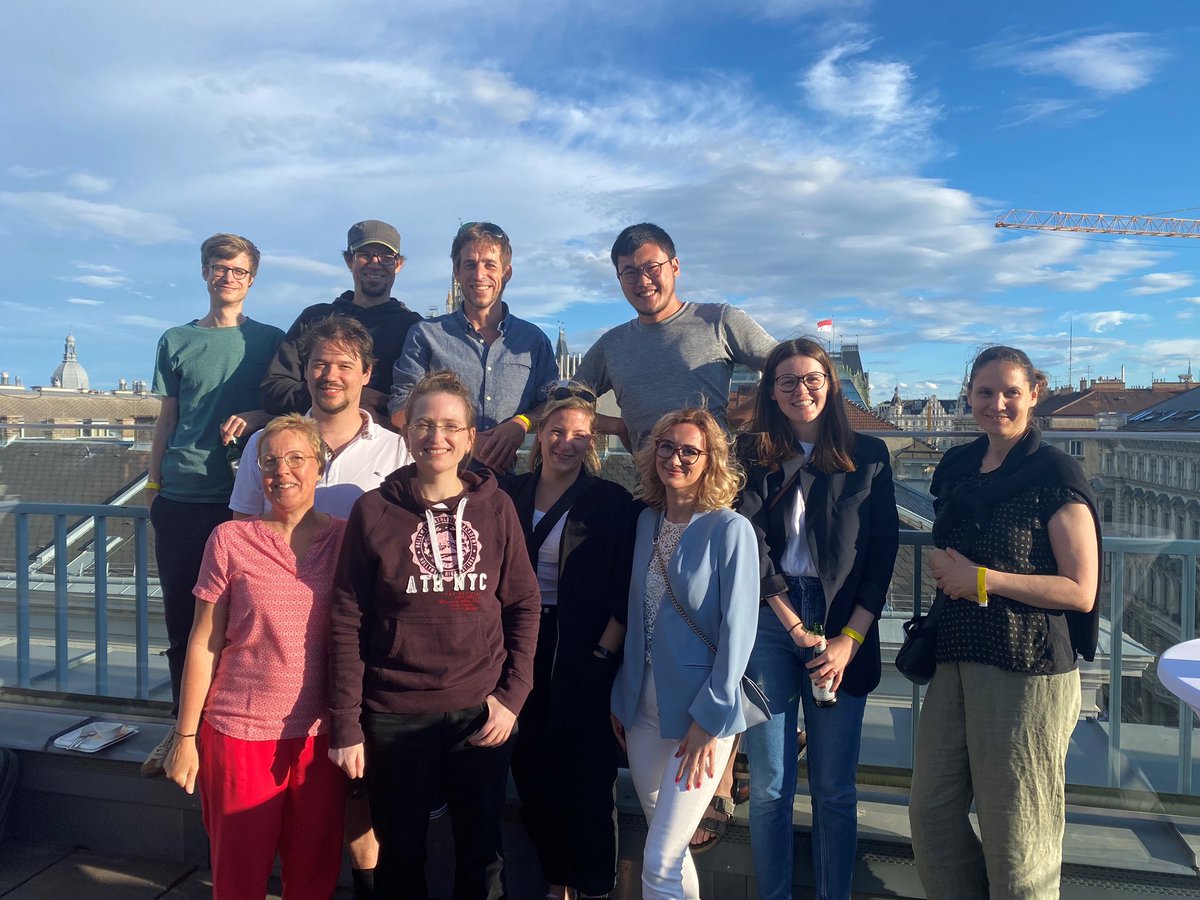
We had SO much fun last evening! 🎉 🥰 We had our first get together after so many months of lockdowns and home-office and it was a blast. 💥 Thank you vaccines for making this possible! 💉
Words I've found useful to explicitly ban in discussion with more junior researchers:
- dumb
- stupid
- trivial
- obvious
I try not to use them and I expect them not to use them either. What else should go on the list?
As a statistician, there’s a big secret that I think the public needs to know. Statisticians don’t all agree on what probability is! Yes we use it in all our work but there’s been many brutal debates and we’re still not 100% sure what it is so we mostly just agree to disagree.
@Douglas04377107 @helenahhartmann@lei_zhang_lz@RealFabianBerg Just tried out a few different things. With the curly braces, it always works like intended, but without it sometimes doesn't work, or does strange things. Not exactly sure what's happening, though
@helenahhartmann@lei_zhang_lz@RealFabianBerg The dot in the bracket behaves exactly like the object on the left-side of the pipe. Maybe your left-side is a vector, and you need its elements to play different roles? Try this:
x = c(1,2,3)
x %>% {pnorm(.[1], mean = .[2], sd = .[3])} # cdf at 1, mean = 2, sd = 3
@helenahhartmann@lei_zhang_lz@RealFabianBerg x = 3
x %>% pnorm() # gives you the value of the normal cdf at x
x %>% {pnorm(0, mean = .)} # gives you the value of the cdf at zero, for a normal distribution with mean x
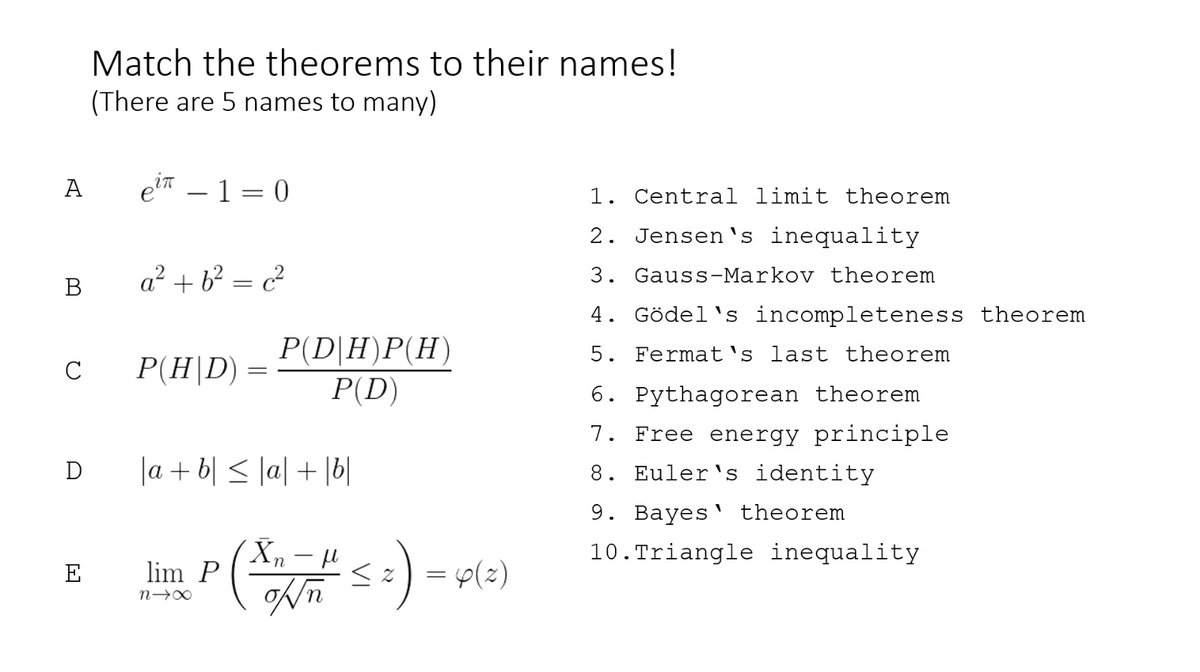
Another successful pub quiz, this time hosted by @LukeLikelihood and with @lei_zhang_lz as the glorious winner! 🥳@GuranCNA#AcademicTwitter, now it's your turn! Can you guess all the book titles/authors that got translated badly and find the correct names of the theorems? ↙️