🚨 GIVEAWAY 🚨
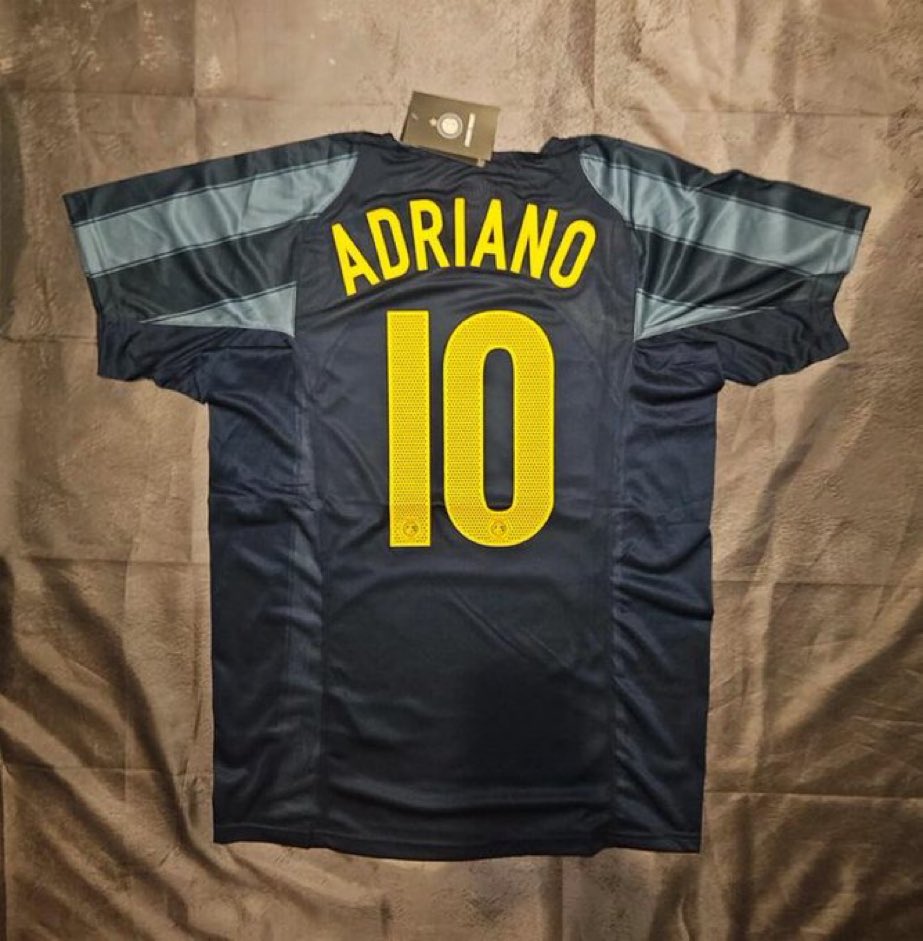
To celebrate the Milan Derby, if Inter wins, we will give away this original classic Adriano #10 shirt from 04/05.
To enter:
1️⃣ Like & RT this post
2️⃣ Follow our page on X @BE_INTER
Good luck! 🖤💙
‼️Winner will be announced on Monday.‼️
In medical school, we are taught a golden rule: "When you hear hoofbeats, think horses, not zebras." It is a reminder to look for the common explanation before the exotic one. But after decades in cardiology, I’ve learned that if a patient is still suffering after the "horses" have been ruled out, a doctor must have the courage—and the curiosity—to go hunting for the zebra.
Sarah was a thirty-four-year-old marathon runner and a devoted mother who came to me after six months of being told she was "fine." She had been bounced from one specialist to another, each one pointing to her normal EKG and standard blood tests as proof that her crushing fatigue and racing heart were simply the result of "new mom stress." By the time she reached my office, she didn't just look tired; she looked invisible, as if the medical system had stopped seeing the woman and only saw the data.
Instead of re-reading the normal test results that had already failed her, I asked Sarah to walk me through her life. We talked about her training and her family, eventually landing on a backpacking trip she took to the Mendoza province of rural Argentina. She described staying in a charming, rustic cottage made of sun-dried mud bricks. She mentioned waking up one morning with a strangely swollen, purple eyelid that she assumed was a simple spider bite.
As she spoke, a memory surfaced from a biography I had read years ago about Charles Darwin. Most people know Darwin for his theories on evolution, but medical historians have long puzzled over the mysterious, debilitating illness that plagued him for decades after he returned from his voyage on the HMS Beagle. Darwin had written in his journals about being bitten by the "great black bug of the Pampas" while sleeping in mud-walled huts in South America. He spent the rest of his life suffering from heart palpitations and exhaustion that the Victorian doctors of his time could never explain.
I realized then that Sarah wasn't suffering from stress; she was likely hosting the same "silent killer" that may have haunted Darwin: Chagas Disease.
The "Kissing Bug" lives in the cracks of those mud-brick walls. It bites its victims—often near the eyes or mouth—while they sleep, passing a parasite called Trypanosoma cruzi into the blood. The danger of Chagas is that the initial symptoms disappear quickly, but the parasite can hide in the body for years, slowly weaving itself into the muscle and electrical "wiring" of the heart.
To confirm this, I moved beyond the standard tests. I ordered a specialized "Strain Rate" ultrasound, which doesn't just look at whether the heart is pumping, but at how the individual muscle fibers are stretching. We saw that while her heart looked strong to the naked eye, the fibers were "stuttering," a sign of early parasite-induced scarring. A specific blood test for the parasite's antibodies confirmed the diagnosis.
Treatment required a difficult, sixty-day course of anti-parasitic medication to stop the infection, paired with a protective heart regimen to keep her electrical system stable while the inflammation settled. Because we caught it before her heart was physically damaged or enlarged, the recovery was a success.
Months later, Sarah returned to my office, her vibrant energy restored. She brought me a leather-bound copy of The Voyage of the Beagle with a note tucked inside. She wrote that while other doctors had looked at her charts, I had looked at her. This case remains a vital reminder for my memoir: in a world of high-tech scans and AI, the most sophisticated diagnostic tool we possess is still the human story. When we truly listen, we don't just find the disease—we find the patient.
Good morning.
"On this day in 1980, the Canadian government and Canadian officials in Iran (who protected the Americans for two months at great risk to themselves), with some assistance from the CIA, rescued six Americans in hiding in Tehran, Iran"
There I fixed it for you.
My Venezuela experience as head of trading in the region for Cargill.
Cargill was/is the leading producer of critical staple ingredients such as flour, pasta, vegetable oil, and rice in VZ. I am not saying I agree with grabbing the dictator, but I did have a front row seat to the damage a kleptocracy did to innocent people.
1. The government took over our "minute rice" facility at gunpoint because we were "gouging" the nation's poor. The government was never able to run the plant. It never ran again. It was returned years later with no equipment inside
2. There are 1000's of generals in the army. They are each given a slice of the economy to loot. The large number of generals made it difficult to organize a coup against the regime.
3. The government opened grocery stores and sold staples below the cost we sold them to the government. In theory they used petro oil money to lower grocery prices. Our regular grocery outlets were forced out of business. When the government demanded we sell them products below cost we simply had to shut down. The populous became ever more dependent on the government handouts. (PS this is the mayor of New York City's proposal.
4. Dollars- We needed dollars to go buy raw materials like wheat from places like the US and Canada. The government would periodically allocate us some dollars that could only be spent for raw materials and freight. Eventually only the local companies that can and would pay bribes got dollar allocations. We had several facilities closed for lack of raw material
5. My employees liked working for Cargill. The office was an armed compound with access to a gym, high speed internet, global communications, and a weekly box of basic staples. Cargill provided a safe and secure environment if only for the working hours.
6. Employees became very close to others inside the apartment building. Going out on the street with a desperate population was not advisable.
7. I needed wood pallets for feed. We tried to export wood pallets to swap for grain. We refused to pay the bribes it would take to export the pallets
8. I once tried to set up a closed loop wheat planting to flour mill supply chain. A. They came and stole all the seed wheat for food. When we tried to ship in seed wheat in containers via US donors there was no way to get it out of the port without it being stolen
9. Livestock- Our feed business completely collapsed. Even if you could raise a pig, you couldn't defend it from being stolen. People with guns were hungry.
10. Employees- In the end my highly skilled team alone with other highly educated people chose to leave. Cargill often found jobs for them in other Latin countries. The regime was more than happy to see the well-educated leave the country. Setting these employees up with high quality stable jobs after fleeing remains one of the best things I ever did in my career. No one remembers millions in trading earnings.
This is a short list. In my opinion the first money spent needs to happen now and it needs to be food. The US is already on the clock. The current regime does not care if it starves the population. The orgy of theft will actually accelerate if they believe their days are numbered. VZ should be an outstanding customer of US grown ag products. Rice, bread wheat, veg oil ect. Feed the people first.
Jeff Kazin
Former head trading Cargill
💡🎁 My Next Holiday Giveaway
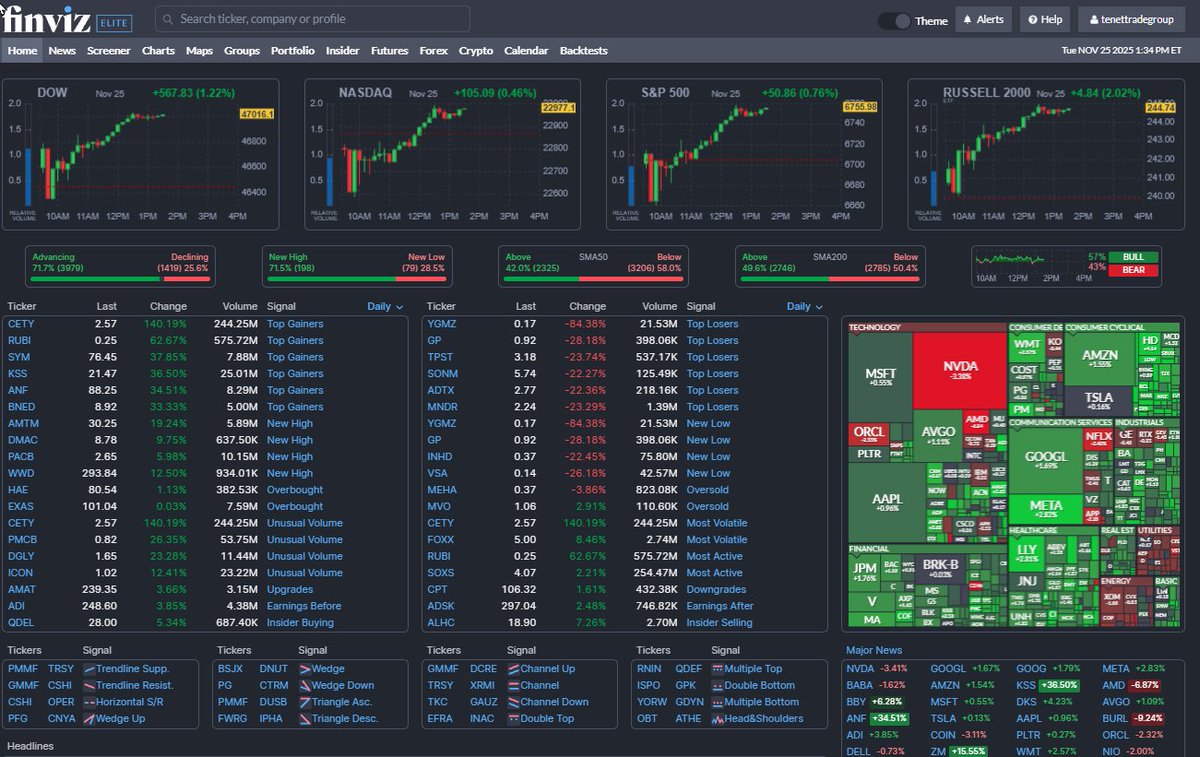
Stock & Options Scanner i use everyday
3 ANNUAL PREMIUM ACCOUNTS ($2000 worth each)
👉 https://t.co/QVsvOT8kLQ
✅RT/LIKE THIS , Follow @BlackBoxStocks
✅Tell me what is lacking in your trading & why?
Results on Saturday
🚨 My Next Giveaway is OG Scanner that i build my Day2 Scans, Market Analysis, Heat map and more.
🎁 2 Accounts of Finviz Elite
🎁 2 Free Community Memberships
✔️Like/Follow/RT @finviz_com
✔️What do you Scan for?
Here is 50% off
https://t.co/Nh0LeTA5kT
Result Nov27
FC Internazionale Milano.
Il mio nome racchiude tutto. Il mio nome parla per me. Il mio nome è la mia storia.
Narrato da Spike Lee.
#ForzaInter#FIFACWC#TakeItToTheWorld
The faint-hearted should not read this. But please, do. And share it.
Three years ago, I translated the story of Christina Jolos — a Mariupol resident who fled while the city was surrounded by russian forces. Her words still haunt me.
1/n
The hypocrisy is staggering.
Video 1: Trump slams the U.S. administration for taking money from Qatar.
Video 2: Trump praises Qatar for giving money to the U.S.
You can’t make this up.
The Election of Pope Leo XIV:
A fractured Bergoglian-wing, organized resistance by conservatives and a united front of U.S. cardinals allowed Robert Prevost to ascend to the papacy.
This thread, based on conversations with Church insiders, details how the conclave transpired.
EXCLUSIVE: We dug up a video of Donald Trump trashing Qatar in 2017 calling them “funders of terrorism.” I’m sure he would hate if this clip changed their mind to give him a $400 million plane - so definitely don’t repost it.
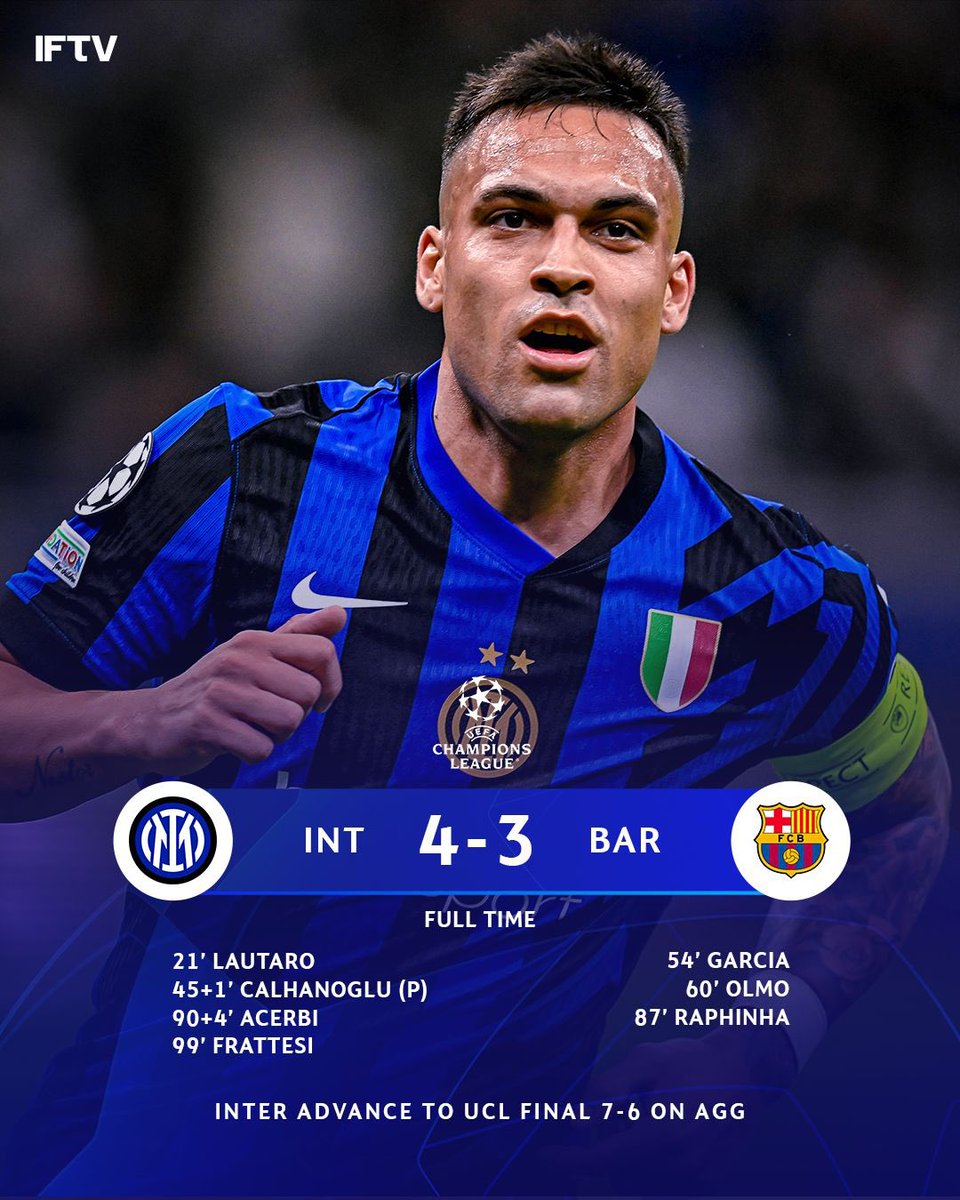
Not just that, but at 3-3 Barella was about to receive a pass that put him 1v1 with the keeper, but Inigo cleared it with his hand. No red card, no VAR check. He denied a clear goalscoring opportunity with his hand and got away with it. In a UCL semi-final.
This is Barca 😂🤷♂️