B.H.E.E.M. — Bharatiya Habitable Expandable Extraterrestrial Habitat.
When we returned from our training in Russia, we began the Indian leg of our astronaut training. This involved learning the systems of the launch vehicle and orbital module, along with extensive physical and spaceflight training.
But there was another, rather different, dimension to our training—academic research.
We were encouraged to pick a subject related to future space exploration, deepen our understanding of it, and, hopefully, contribute something that could be useful for India’s future space programmes.
I decided to look beyond the spacecraft we were training to fly in and think about where humans might live after we land.
My area of research was extraterrestrial habitats—the technologies and concepts that could eventually allow humans to live and work beyond Earth.
That work eventually resulted in B.H.E.E.M at the Aloke lab in @iiscbangalore.
There are enormous challenges to solve before humans can establish a sustained presence on the Moon, Mars, or other extraterrestrial destinations. From radiation and extreme temperatures to life support, energy, construction and the simple question of where do we live?
And that is precisely why we need to start thinking about it today.
If we want humans to live beyond Earth 20 years from now, the work cannot begin 20 years from now. It has to begin today.
The first step towards building a habitat on another world may not be laying its first brick.
It may simply be daring to imagine what that habitat could look like.
Details here ⬇️
https://t.co/WvXnw4g69n
#Shux #space #shubhanshushukla #india #bheem
He was Satyendra Nath Bose, an Indian physicist whose quiet brilliance in the 1920s forever altered our understanding of the quantum world.
In 1924, Bose, then a 30-year-old professor in British India, sent a groundbreaking manuscript directly to Albert Einstein. The paper offered a novel, more elegant derivation of Planck's law for blackbody radiation by treating light quanta (photons) as indistinguishable particles—a radical departure from classical statistical methods. Impressed by its insight, Einstein personally translated the work into German and facilitated its publication in the prestigious Zeitschrift für Physik.
This exchange sparked a brief but profound collaboration. Einstein extended Bose's statistical approach to material atoms, predicting a bizarre new state of matter at ultra-low temperatures: what we now call a Bose-Einstein condensate (BEC), where particles behave as a single quantum wave. Bose's original framework became known as Bose-Einstein statistics, and the class of particles that obey it—those with integer spin, including photons, gluons, W and Z bosons, and the Higgs boson—was later named bosons in his honor by Paul Dirac.
Unlike fermions (matter particles like electrons), which obey the Pauli exclusion principle and cannot occupy the same quantum state, bosons can pile into identical states en masse. This "social" behavior underpins extraordinary macroscopic phenomena: the coherent light of lasers, the zero-resistance flow in superconductors, and the collective quantum coherence in BECs.
Despite the monumental impact—his statistics describe half of all fundamental particles and enabled key advances in quantum field theory, condensed matter physics, and particle physics—Bose remained remarkably unassuming. He continued teaching at universities in Dhaka and Calcutta (now Kolkata), mentored students, pursued ideas in X-ray crystallography, unified field theory, and other areas, and never sought the spotlight. Nominated several times for the Nobel Prize (notably for Bose-Einstein statistics and his later work), he was never awarded it, and his name rarely appears in popular accounts of 20th-century physics.
There's a poignant humility in his story: a man whose legacy literally names one of the two fundamental families of particles in the universe, yet whose personal fame never matched the scale of his contribution. Bose reminds us that true influence often arrives without fanfare. Some breakthroughs echo through textbooks and technologies, while their creators work in the background, content to let the universe carry their ideas forward—even if history's spotlight rarely finds them.
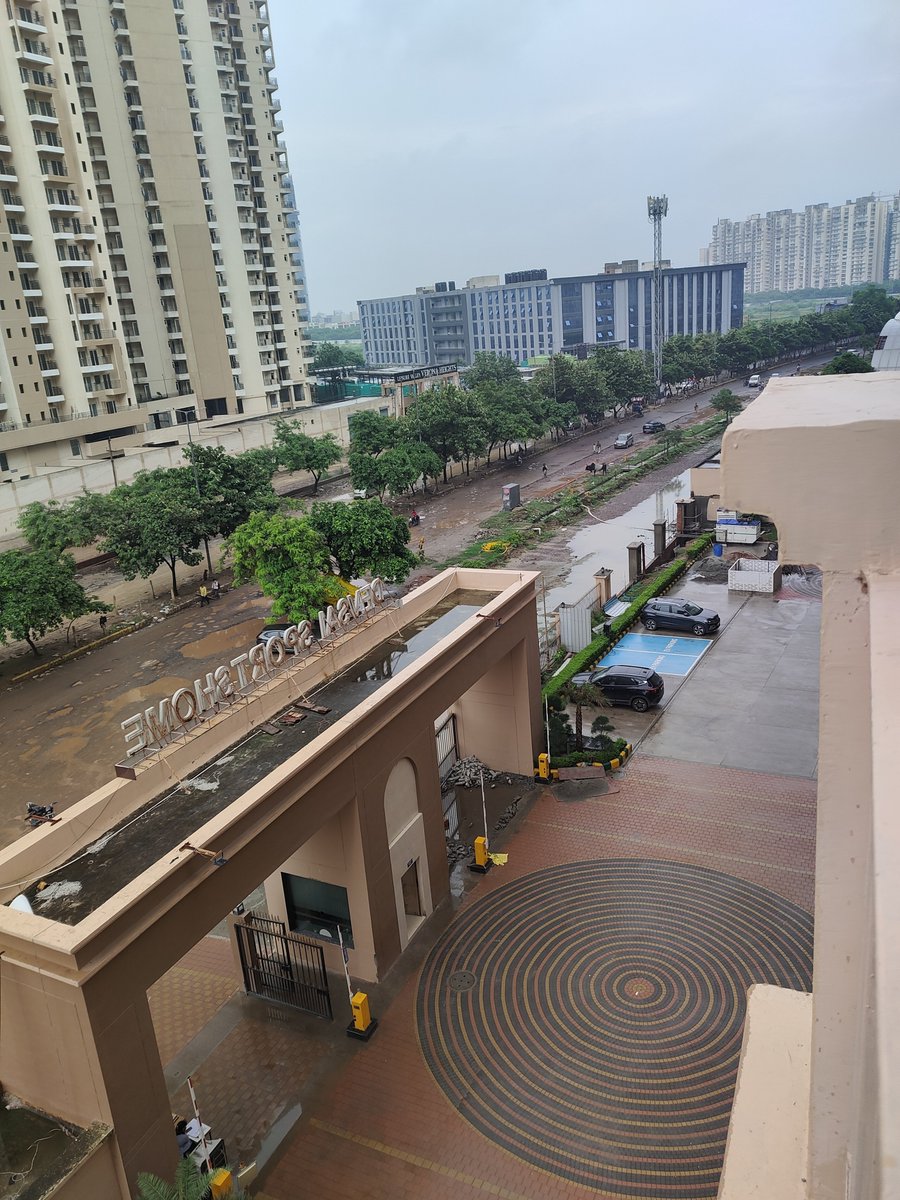
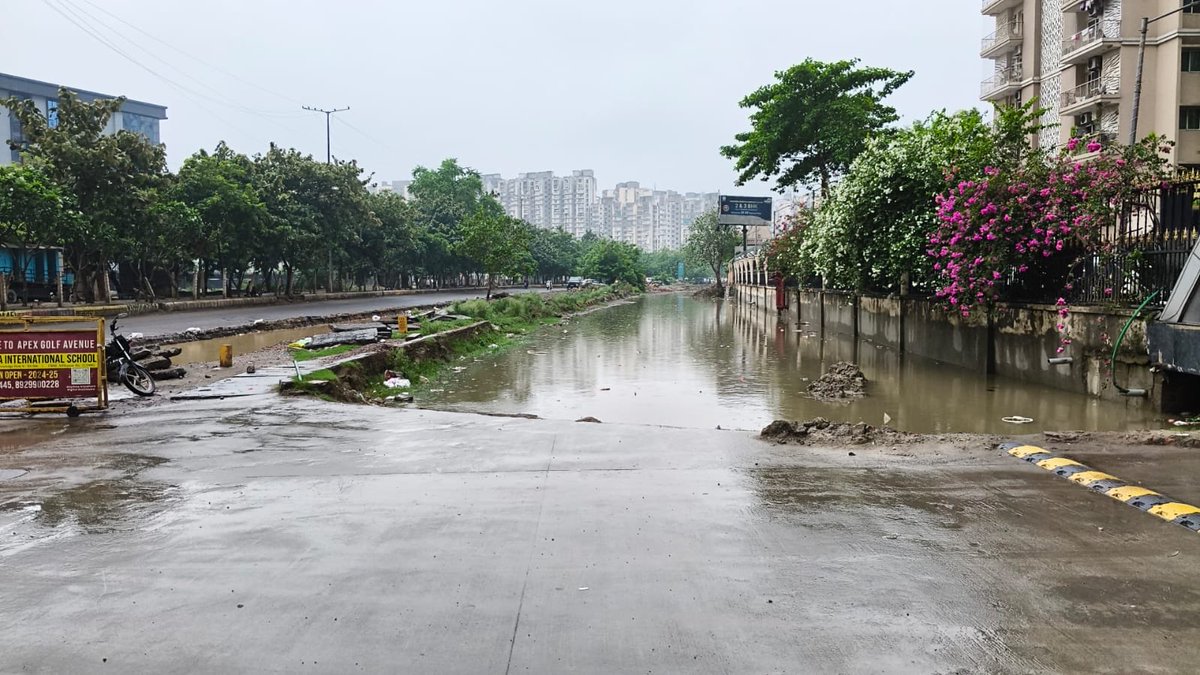
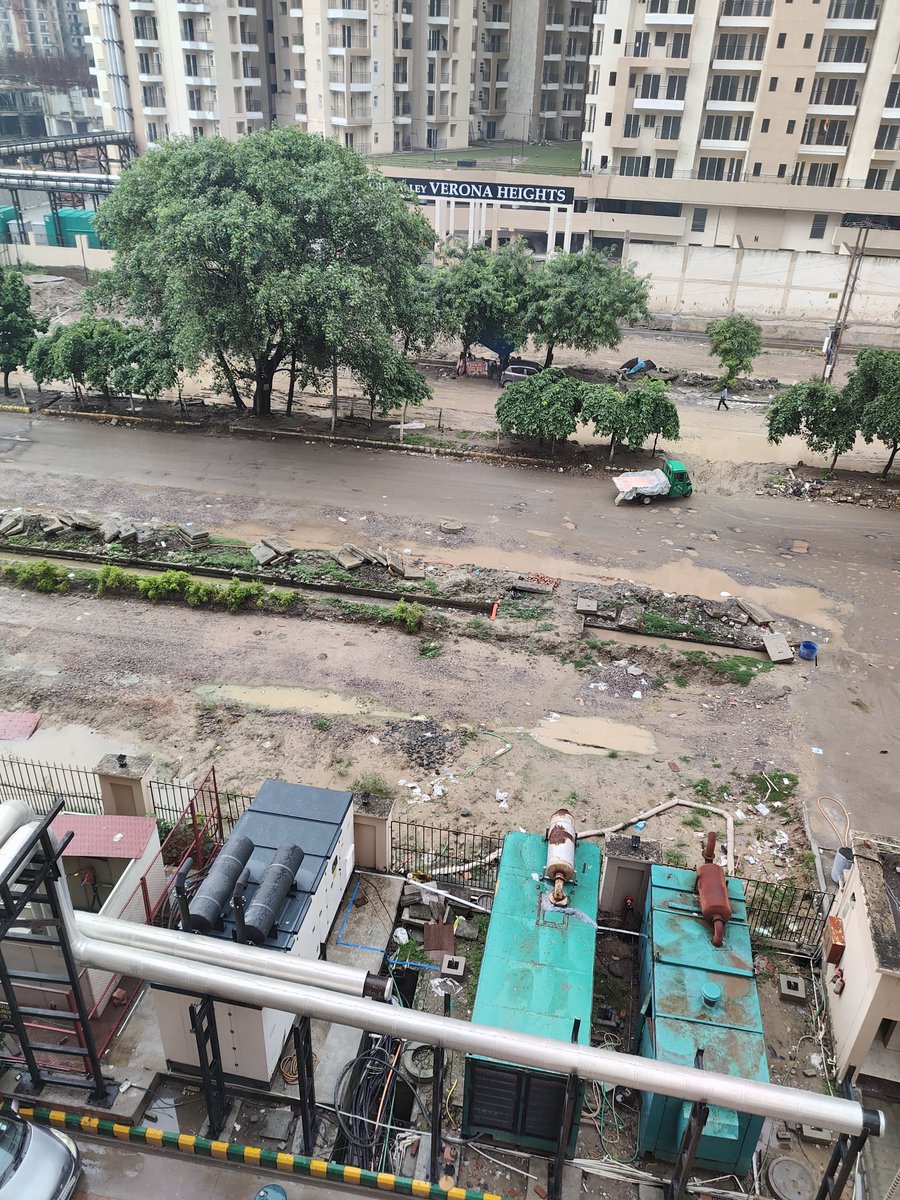
सभी निवासी अतुल मार्ग, (सेक्टर 1 नोएडा एक्सटेंशन )एवं उससे संबंधित सर्विस लेन की अत्यंत जर्जर एवं बदहाल स्थिति के कारण गंभीर समस्याओं का सामना कर रहे हैं। ग्रेटर नोएडा इंडस्ट्रियल प्राधिकरण कृपया संज्ञान ले l
@OfficialGNIDA@DrMaheshFanPage@tejpalnagarMLA
@PUMA is there any responsible person in ur CustCare dept? Why is it that to get something done one has to goto X to find solutions? @Chandil would you be able to sort out a simple product return request?
@PUMA This is really frustrating how you've made delivery agents responsible for quality checks of your products, who have no knowledge about products. Moreover, these lying people everyday mention that they are going to visit to pickup a return only to receive sorry msg by EOD.
@AyushiiDoshiii Your own argument is flawed, the guy had potential which he showed during the selection process. Nothing more to prove, growth comes not by the hours but by the quality of work. You're an advocate, do you charge by the hour or per case or do you work without any remuneration?
@NGTribunal @CMOfficeUP @OfficialGNIDA The road condition is severely damaged with large potholes, waterlogging, and broken divider wires and bars. These issues are causing accidents and pose serious risks to public safety. Kindly take immediate action.
@SunflameIndia Purchased a 4 burner hob in July 23 and till date we have faced issues 5 times with the product. Everytime serviceman comes asks to replace a part. Highly dissatisfied, please take it back and refund my money. @SunflameIndia
@rohini_sgh He only talked about logical steps & how things must be managed. RCA can be done when the event is over. Right now it must be managed optimaly so that this occurrance is not repeated. If you think this is nonsense then it speaks of your mental capacity to understand what he said.
High Resolution Deep Sea Exploration and Imaging at 4500 m depth of Hydrothermal sulphides field at the Central and South West Indian Ridges in Southern Indian Ocean was done successfully, by the team of Scientists [NIOT & NCPOR] led by Dr.N.R.Ramesh, Scientist-G, NIOT during December 2024 expedition onboard Sagar Nidhi.
@narendramodi@PMOIndia@OfficeOfDrJS@DrJitendraSingh@Ravi_MoES@moesgoi@PIB_India
@CarrierMideaInd what will it take for your service team to reach out for a repair request. 3 days and 2 escalations later on the SR, in desparation I am writing hoping someone will get back!
@CarrierIndia






![MoesNiot's tweet photo. High Resolution Deep Sea Exploration and Imaging at 4500 m depth of Hydrothermal sulphides field at the Central and South West Indian Ridges in Southern Indian Ocean was done successfully, by the team of Scientists [NIOT & NCPOR] led by Dr.N.R.Ramesh, Scientist-G, NIOT during December 2024 expedition onboard Sagar Nidhi.
@narendramodi @PMOIndia @OfficeOfDrJS @DrJitendraSingh @Ravi_MoES @moesgoi @PIB_India](https://pbs.twimg.com/media/Ge5hNnSbgAAm8gX.jpg)
![MoesNiot's tweet photo. High Resolution Deep Sea Exploration and Imaging at 4500 m depth of Hydrothermal sulphides field at the Central and South West Indian Ridges in Southern Indian Ocean was done successfully, by the team of Scientists [NIOT & NCPOR] led by Dr.N.R.Ramesh, Scientist-G, NIOT during December 2024 expedition onboard Sagar Nidhi.
@narendramodi @PMOIndia @OfficeOfDrJS @DrJitendraSingh @Ravi_MoES @moesgoi @PIB_India](https://pbs.twimg.com/media/Ge5hNnQbEAABCLS.jpg)
![MoesNiot's tweet photo. High Resolution Deep Sea Exploration and Imaging at 4500 m depth of Hydrothermal sulphides field at the Central and South West Indian Ridges in Southern Indian Ocean was done successfully, by the team of Scientists [NIOT & NCPOR] led by Dr.N.R.Ramesh, Scientist-G, NIOT during December 2024 expedition onboard Sagar Nidhi.
@narendramodi @PMOIndia @OfficeOfDrJS @DrJitendraSingh @Ravi_MoES @moesgoi @PIB_India](https://pbs.twimg.com/media/Ge5hNnPa0AAqpLX.jpg)


![MoesNiot's tweet photo. High Resolution Deep Sea Exploration and Imaging at 4500 m depth of Hydrothermal sulphides field at the Central and South West Indian Ridges in Southern Indian Ocean was done successfully, by the team of Scientists [NIOT & NCPOR] led by Dr.N.R.Ramesh, Scientist-G, NIOT during December 2024 expedition onboard Sagar Nidhi.
@narendramodi @PMOIndia @OfficeOfDrJS @DrJitendraSingh @Ravi_MoES @moesgoi @PIB_India](https://pbs.twimg.com/media/Ge5hPfOagAA8L37.jpg)


