Former Endangered Species Branch Chief with the US Fish and Wildlife Service and writer focusing on the Sixth Mass Extinction, human behavior, and deep time.
Some ecological changes are easy to see.
Wolves returned to Yellowstone and became an international story.
Lake trout arrived in Yellowstone Lake and quietly reorganized an ecosystem.
One became a symbol. The other remained largely invisible.
My latest for Mongabay:
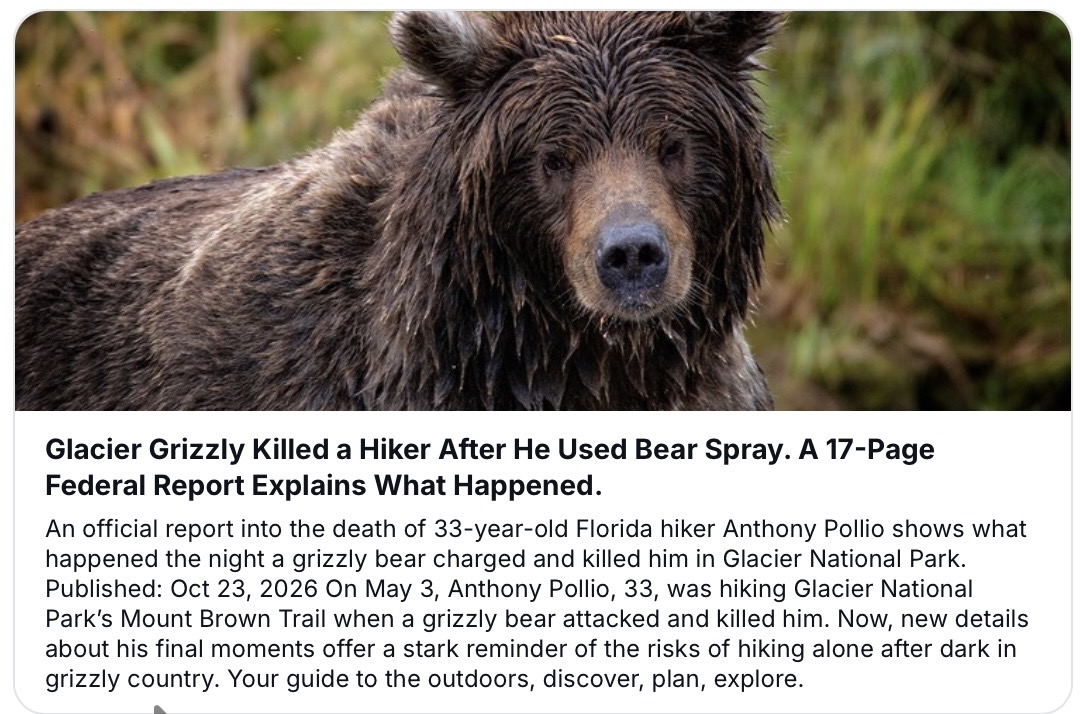
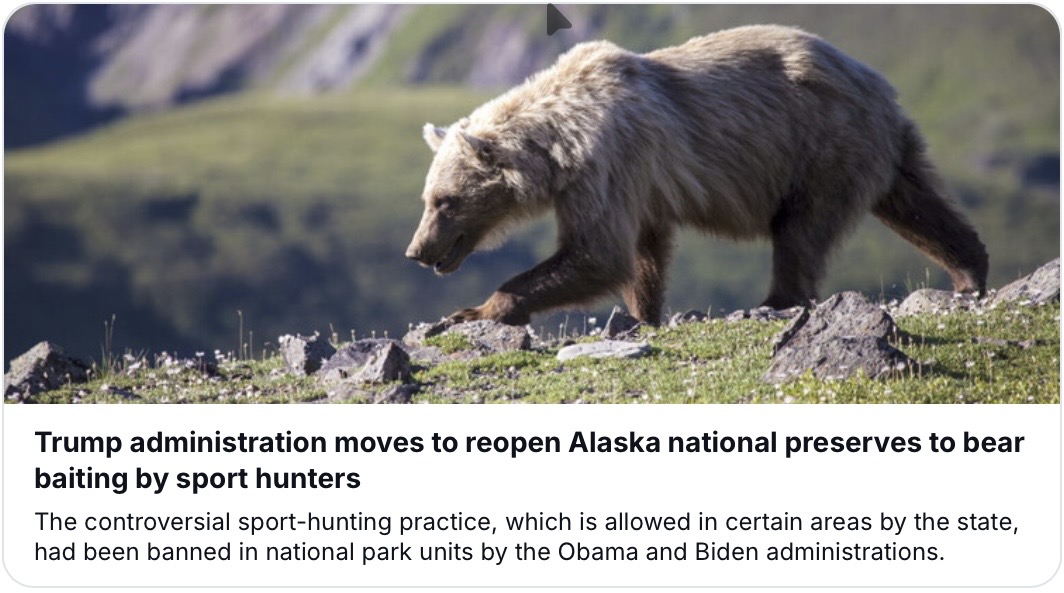
Bear spray doesn’t provide immunity from a grizzly attack. But it might provide a little seasoning for the bear’s next meal. Whether they prefer pepper spray or dry rub is still a topic of much speculation.
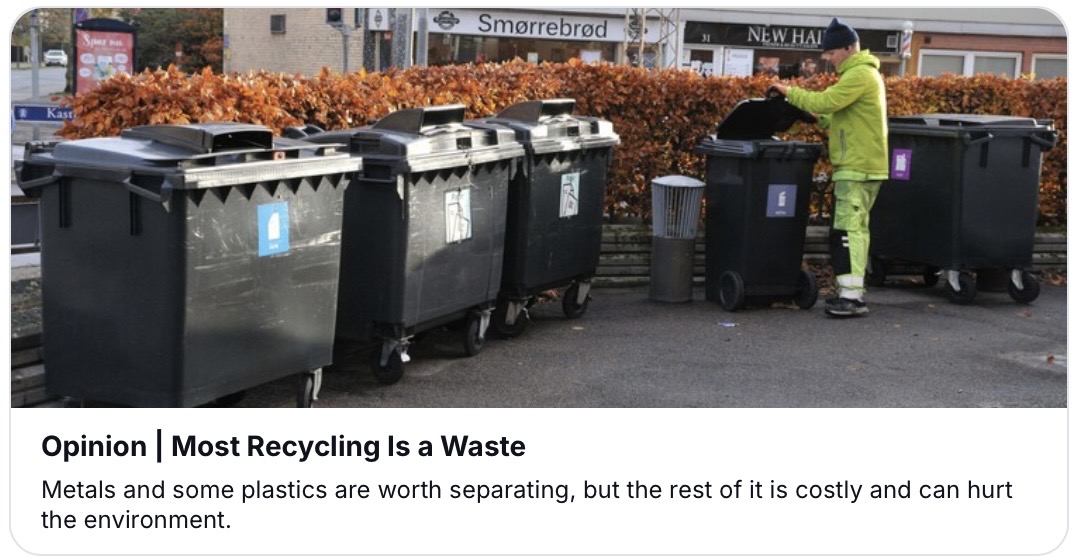
For over three decades, recycling has been a psychological pacifier for environmentalists. I swallowed it, too. We convinced ourselves that managing the waste made producing it sustainable.
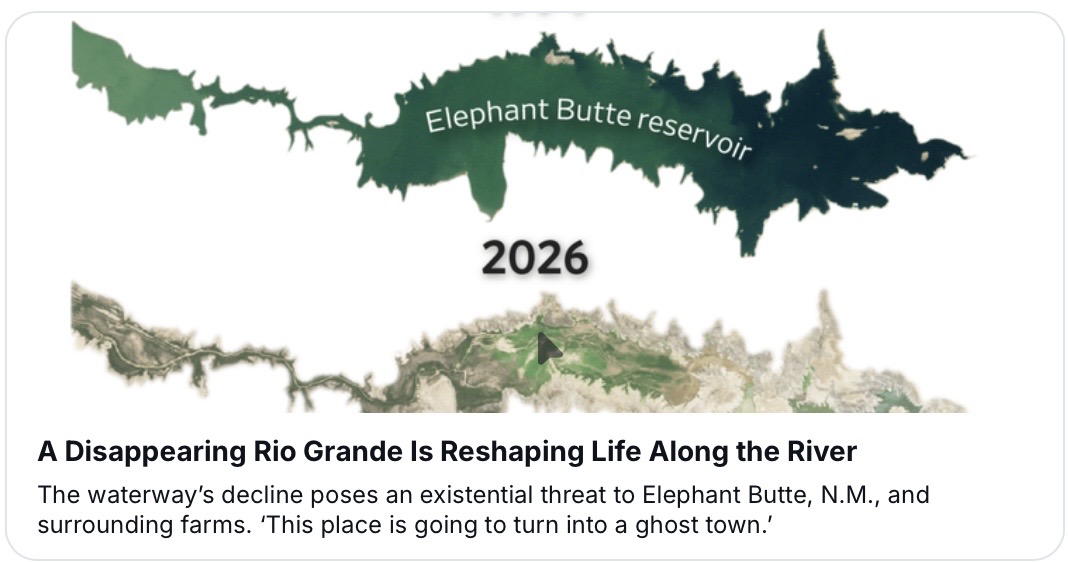
The Wall Street Journal describes the Rio Grande as being on life support after two decades of drought. The river’s ecological collapse began much earlier. The phantom shiner, once native to the Rio Grande, was last documented in 1975 and is now extinct.
The Upper Colorado River Basin is experiencing enormous groundwater losses. Ironically, the article illustrates the problem with a photograph of a stream that appears heavily altered by livestock grazing—one of the basin’s most widespread land uses.
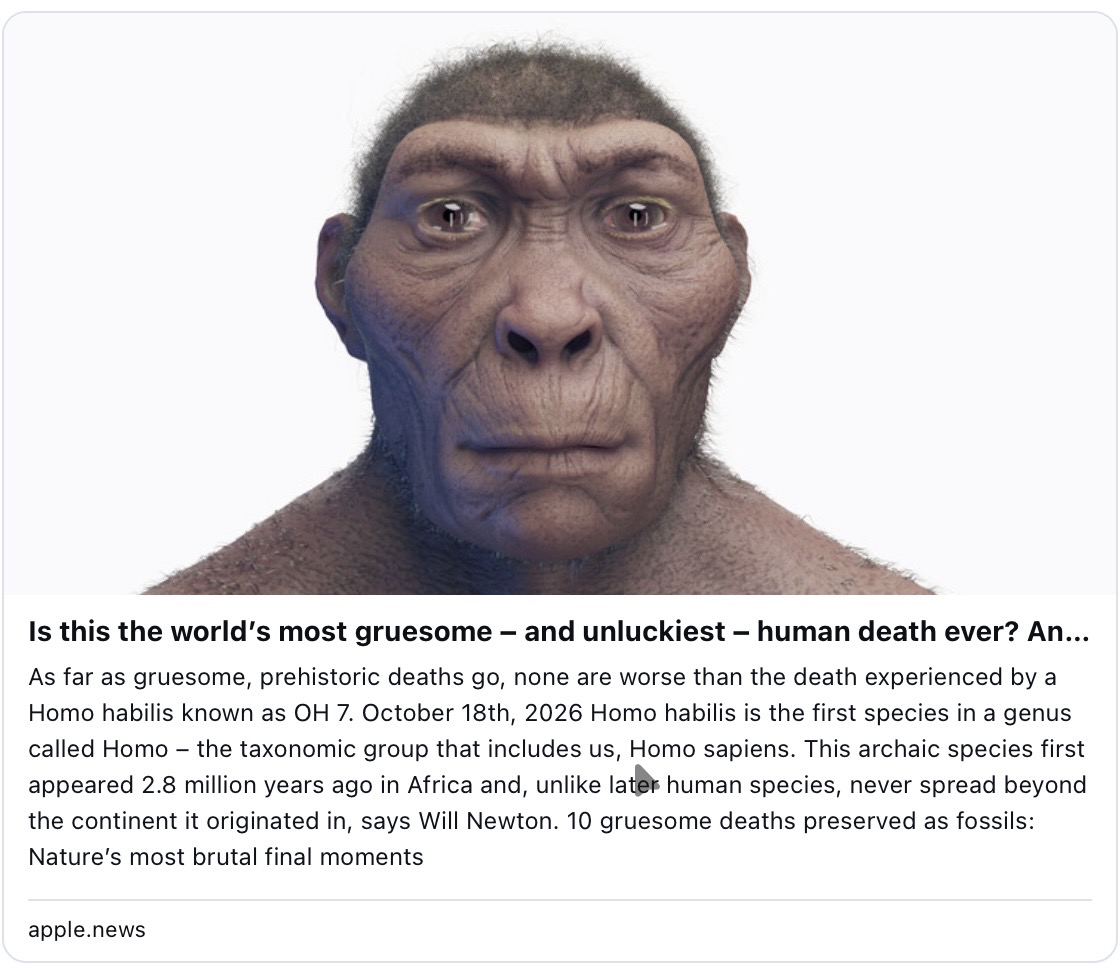
We remain fascinated by the terrifying predators that threatened our ancestors.
The incredible irony is much less fascinating because it requires looking in a mirror.
First, an arms race.
Then, a nuclear arms race.
Then, an AI arms race.
Next up: a geoengineering arms race.
Humanity has an extraordinary talent for turning its solutions into competitions for control.
BBC Wildlife asks which animal is most dangerous to Americans. The answer: deer, implicated in 440 human deaths annually, mostly in vehicle collisions.
American vehicles kill an estimated 365 million vertebrates every year.
Which species is dangerous?
I’m disappearing into a wilderness for a little over two weeks with no connectivity.
I’ve scheduled a few posts while I’m gone, but won’t be around to respond.
I can think of worse ways to spend November.
See you on the other side.
Researchers suggest early humans were drawn to this landscape by its water.
They may have remained because of the biodiversity that water made possible.
Elizabeth Holmes sold investors a technological fantasy.
The renewable-energy industry sells something even more appealing: the belief that we can keep consuming, keep expanding, and still save the planet.
https://t.co/LTIeTJm2Fu
@violin4all We've developed a concept of conservation success that often measures the persistence or return of conspicuous species rather than the recovery of ecological systems.
A new study maps the remaining strongholds of jaguars across the Americas.
Jaguars once ranged throughout Mexico and Central America and into the southwestern United States.
We continually focus on what’s left, not what we’ve lost.
When did making industrial development less destructive become the definition of conservation?
SunZia’s 900+ wind turbines offer an uncomfortable answer.
New Essay—Wind Energy: Conservation or Hot Air?
Communities are fighting to restore their agricultural way of life. Long before agriculture, the valley supported a biodiverse aquatic ecosystem. That loss has disappeared from human memory.