The Iranian navy, which has been destroyed eight times, has apparently closed the Strait of Hormuz again, because the United States, for the seventh time, won the war that wasn’t a war, so now the United States has to open the Strait of Hormuz that was already open before the not-war began.
The not-war began because Iran had uranium that was totally, completely, beautifully obliterated, so they can’t build the nuclear bomb they weren’t building, which is why the United States had to start the not-war it definitely didn’t start.
Now the United States, which has nuclear weapons, is threatening to use nuclear weapons to stop Iran from getting nuclear weapons, because nuclear weapons are far too dangerous for countries with nuclear weapons to allow other countries to have.
If the United States saw the United States doing what the United States does in other countries, the United States would invade the United States to liberate the United States from the tyranny of the United States.
This is just pure unadulterated propaganda by The Economist, as is so often the case with their coverage of China (reminder that, if you read The Economist, the Chinese economy should have collapsed more or less every year for the past 20 years).
I actually come from a country - France - where our minorities did actually get squashed, so I have a pretty decent understanding of what that concretely means.
For instance in France our regional languages (Basque, Alsacien, Corsican, Breton, Occitan, etc.) have ZERO official status, cannot be used in government, and - under French law - were prohibited in classrooms under threat of punishment (kids at school were made to wear a necklace of shame around their neck if they spoke their regional language: https://t.co/n6HeZ8hSKK).
The first line of Article 2 of the French constitution (https://t.co/MEvaIKy8MV) - as amended in 1992 - specifies that French is the exclusive language in France and constitutionally excludes every other language from any official role whatsoever.
There was, in France, an official policy of linguicide. The net result, according to official French statistics (https://t.co/G7QTqkNLK9), is that regional languages like Corsican or Breton went from being spoken in 70%-80% of local families at the end of WW1 down to sub-10% numbers by the end of the 20th century. Even Alsacien, the most resilient regional language, still saw its transmission rate collapse from 70% to 18% in just 2 generations.
That, folks, is "squashing."
Same thing, incidentally, in the UK - The Economist's own country: a reminder that in Wales schools used the "Welsh Not" (https://t.co/Lp0ps5rXq2), a token of shame that a child would need to wear around their neck if they were heard speaking Welsh.
Compare and contrast this with this new Chinese law.
First of all, fact is that if you look at minorities with their own language in China, the immense majority of them still speak it and use it in their daily life.
For instance, a 2017 survey conducted by 国家语委 (the National Language Commission, the authoritative Chinese body on language policy), only 30% of people in Tibet had functional Mandarin proficiency (https://t.co/c345I6oVs0). In other words, Tibetan, not Mandarin, remains the dominant working language of daily life for the overwhelming majority of the population in Tibet.
Same story with Mongolian: according to China's Sixth National Census (2010), 85.25% of ethnic Mongols still used Mongolian in daily life (https://t.co/pBaRmyphOb).
Which means, as a starting point, that China already did a far better job than virtually any Western country at protecting their minority languages. Important context when we're speaking about Western media lecturing China on the topic...
Heck, a good case could be made that they did TOO GOOD a job given that - among some ethnic minorities - most people speak ONLY their regional language, and can't even speak Mandarin, which is actually one of the main points of the new law.
So let's look at this new law (full text here: https://t.co/sVFbcaN5qA).
Does it officially recognize and protect minority languages? Yes, the law literally says "The state respects and protects the learning and use of minority languages and scripts, promotes the regulation, standardization, and digitalization of minority languages."
Does it ban minority languages in schools? No. The new law does tilt education further toward Mandarin - requiring nationally unified textbooks and designating Mandarin as the basic language of instruction - but it does not abolish minority-medium schools (民族语授课学校 in Chinese, literally "minority-language-instruction schools") which can continue to operate with state funding in their respective regions.
Does it ban minority languages from government? No. Article 15 explicitly states that "where relevant laws require documents to be issued in minority languages, both the national common language version and the minority language version shall be provided" (依照有关法律规定需要使用少数民族语言文字发布文书的,应当同时提供国家通用语言文字版本和少数民族语言文字版本).
Does it ban minority languages from public signage? No. The law requires Mandarin to be displayed "prominently" alongside minority scripts in public settings - not instead of them.
Does it undermine autonomous regions? No. Article 8 of the new law explicitly reaffirms "upholding and improving the system of ethnic regional autonomy" (坚持和完善民族区域自治制度). Which means that the 1984 Regional Ethnic Autonomy Law remains in force, with their local regions' legal authority to adopt regulations suited to local ethnic conditions.
So all in all, what you CAN say is that the new law does indeed promote Mandarin and pushes to ensure every Chinese citizen can speak a common national language - which is, frankly, a pretty normal thing for any country to expect.
What you CANNOT say - unless you are writing propaganda rather than journalism - is that this law "squashes" 55 ethnicities. Actual squashing is hanging a wooden clog around a child's neck for speaking his mother tongue. Actual squashing would be making minority languages or culture anticonstitutional.
A law that funds minority-language preservation, preserves minority-medium schools, reaffirms regional autonomy, requires bilingual government documents and operates under a Constitution whose Article 4 guarantees all ethnic groups "the freedom to use and develop their own spoken and written languages and to preserve or reform their own traditions and customs" is not "squashing" anything.
It's a level of minority-language and cultural protection that the French Republic - or the UK - has never offered its own citizens in its entire existence.
At the Canton Fair, a foreign woman with lower-body disabilities stood and walked on her own using a Chinese exoskeleton. Her family was moved to tears.
Technology is for people, not for show.
Guo Xiangying: The “Mountain Keeper” Who Moved Chongqing
In 1974, Guo Xiangying—later the founding director of the Dazu Rock Carvings Museum—was sent to guard the solitary Beishan mountain. For years, he lived without electricity or running water, yet with a brush and unwavering patience, he hand-drew a 23.1-meter scroll capturing every statue on the cliff.
In 1999, at the UNESCO heritage review in Morocco, facing language barriers and skepticism, this very scroll became the “key evidence” that helped the world’s experts truly see Dazu’s artistic depth and scale—securing its place as a World Heritage site.
From lone guardian to museum founder, his role changed, but his devotion to Dazu never did.
#DazuRockCarvings #CulturalHeritage #UNESCO #China #ChongqingSpirit
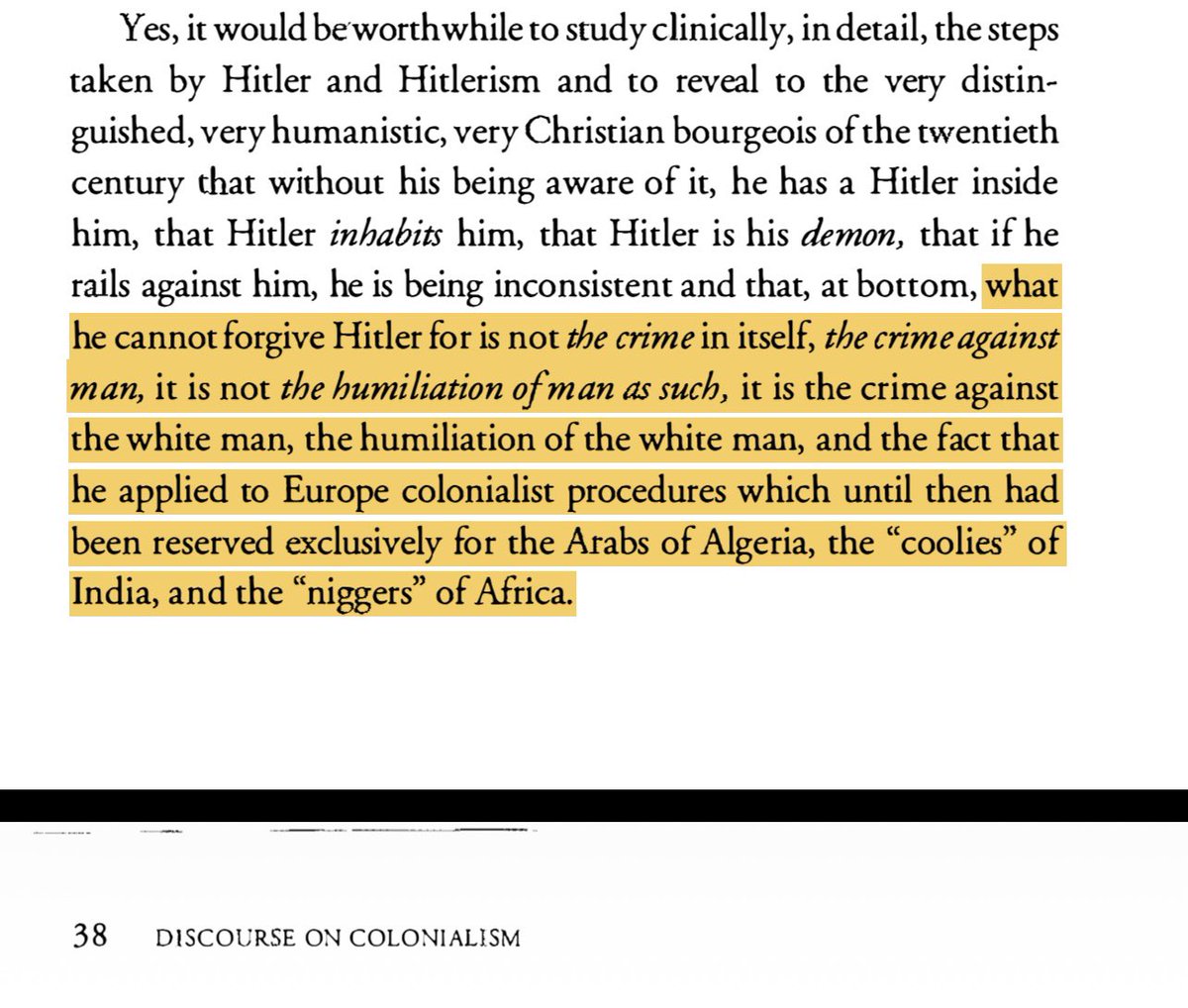
When Mark Carney draws the line at Trump’s threats against Canada, yet stays complicit in the US-Israeli genocide in Gaza, remember this Cesaire quote:
Listen to Vladimir Putin talking about Politics.
Now, Ask yourself why Western Media, and their crooked paymasters are so determined to tell you he's a dangerous madman.
It's because they know truth is just the opposite.
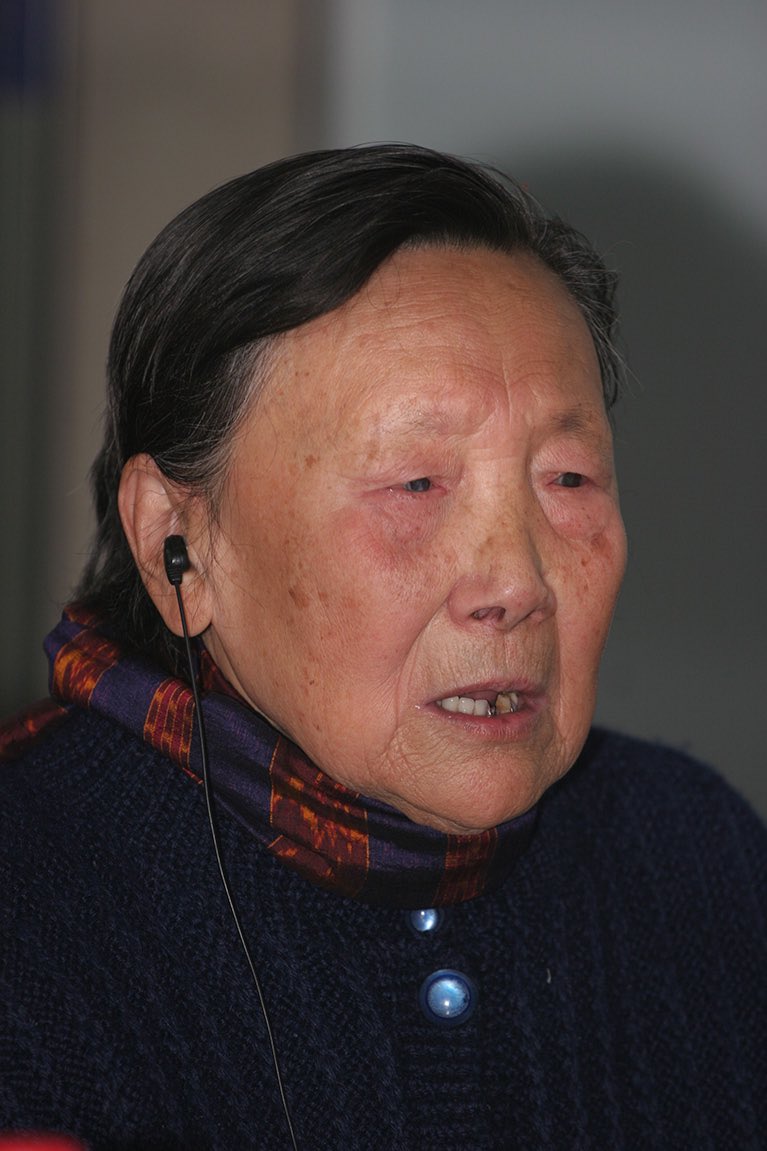
-"𝗜 𝘄𝗶𝗹𝗹 𝗻𝗲𝘃𝗲𝗿 𝗳𝗼𝗿𝗴𝗲𝘁 𝘁𝗵𝗮𝘁 𝘁𝗵𝗲 𝗝𝗮𝗽𝗮𝗻𝗲𝘀𝗲 𝗮𝗿𝗺𝘆 𝗸𝗶𝗹𝗹𝗲𝗱 𝘀𝗲𝘃𝗲𝗻 𝗽𝗲𝗼𝗽𝗹𝗲 𝗼𝗳 𝗺𝘆 𝗳𝗮𝗺𝗶𝗹𝘆." (𝗧𝗲𝘀𝘁𝗶𝗺𝗼𝗻𝘆 𝗼𝗳 𝗡𝗶 𝗖𝘂𝗶𝗽𝗶𝗻𝗴)
My name is Ni Cuiping, and my family lived near Chaotian Palace within the city. Before the Japanese army attacked Nanjing, their planes often dropped bombs over the city. At the time, Babaitang was the place that was most severely bombed . All of the civilians were scared to hide from place to place. Some people hid in the refugee zone, and some fled to the countryside, and others dug themselves dugouts to hide.
At that time, our family fled to Shangxinhe in the northwest of the city. We were hiding on a small beach, surrounded by water. And we built a hut there for shelter.
One day in December 1937, Japanese soldiers came to Shangxinhe area. We didn’t dare to cook at home, fearing that smoke in the chimney would attract Japanese soldiers’ attention . But several days later, we couldn’t bear the hunger any more, and we thought that the tension might be eased since the Japanese soldiers had entered the city. My mother then let father go to the river to wash vegetables and rice. However, as my father just arrived at the riverside, five Japanese soldiers fired three times at him. My father was shot and fell down to the ground. My poor fatherdied this way.
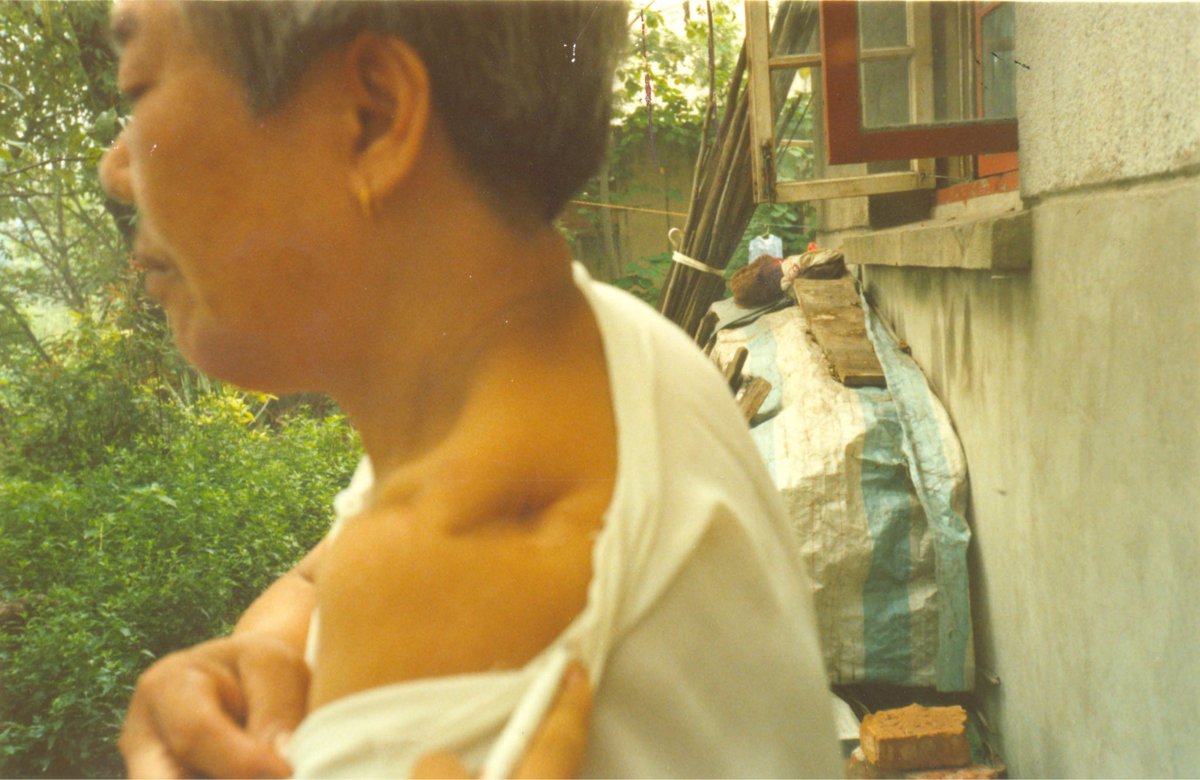
My poor mother, when she heard the gunshot, ran to my father in a hurry, trying to hold him in her arms. The Japanese soldiers shot at my mother and killed her as well. My poor mother died without a word . I was only 11 years old. I ran out and saw my parents lying on the ground . And the Japanese army shot at me and shot me in my shoulder blade. The wound scar can still be seen today. Then I fell down to the ground , bleeding and losing consciousness.
My grandfather was already over 70 years old then. He asked for help to bury my parents. But in the process, they encountered six or seven Japanese soldiers. One of the soldiers hit my grandfather on the head with the gun handle, with his brains bursting forth . My grandfather fell down to the riverside and died miserably. . The people who helped with carrying my parents’ bodies jumped into the river so as to have a narrow escape .
Over 20 days later, my sister-in-law was collecting clothes at home, and she was seen by the Japanese soldiers whoimmediately came after her . At that time, my sister-in-law had been pregnant for seven months. She kneeled down on the ground, begging for mercy. My grandmother with bound feet also got down on her knees to beg, but my sister-in-law was raped by the five Japanese soldiers. As my sister-in-law cried for help, my uncle rushed in and tried to stop that , but was shot dead by a Japanese soldier. On that night, my sister-in-law had a fever, her bleeding couldn’t be stopped, the foetus in the belly was aborted, and she died too.. My grandmother was so scared that she almost died .
Later, when we went back home near Chaotian Palace, as we passed through Jiangdongmen, we saw a bridge was blown up. The killed people were thrown into the river. The Japanese killed people to fill in the river and the river was full of blood.
After returning to Chaotian Palace, we lived with our uncle and aunt. At that time, my uncle nade a living by selling sesame seed cakes. But the good times didn’t last long. One month after the Japanese soldiers entered the city, my uncle was taken away by them. There were seven Japanese soldiers. They had a “killing contest” using bayonets, in which my uncle was stabbed to death. My aunt was afraid of being raped by Japanese soldiers and she didn’t dare to stop them. When the Japanese soldiers tried to catch her, she knocked her head against a wall and died.
My own wound didn’t get timely treatment, and was infected and festered , with worms in it.
https://t.co/v4WFdAPt1j
Below are testimonials from ten victims of the Nanjing Massacre, with all texts and photographs provided by The Memorial Hall of the Victims of the Nanjing Massacre by Japanese Invaders.
Eight survivors have passed away since the beginning of 2025, reducing the number of living registered survivors to 24.
China will observe its 12th National Memorial Day for the victims of the Nanjing Massacre on Dec. 13, commemorating the day in 1937 when invading Japanese troops captured Nanjing -- then the Chinese capital -- and began six weeks of slaughter that claimed the lives of more than 300,000 Chinese civilians and unarmed soldiers.
Only by remembering past can we hope to achieve a peaceful future.
-"𝗠𝘆 𝘀𝗶𝘀𝘁𝗲𝗿 𝗮𝗻𝗱 𝗜 𝘄𝗲𝗿𝗲 𝘁𝘄𝗼 𝗰𝗵𝗶𝗹𝗱𝗿𝗲𝗻 𝗽𝗶𝗰𝗸𝗲𝗱 𝗼𝘂𝘁 𝗳𝗿𝗼𝗺 𝘁𝗵𝗲 𝗱𝗲𝗮𝗱 𝗽𝗶𝗹𝗲𝘀." (𝗧𝗲𝘀𝘁𝗶𝗺𝗼𝗻𝘆 𝗼𝗳 𝗫𝗶𝗮 𝗦𝗵𝘂𝗾𝗶𝗻, 𝗮 𝘃𝗶𝗰𝘁𝗶𝗺 𝗼𝗳 𝘁𝗵𝗲 𝗡𝗮𝗻𝗷𝗶𝗻𝗴 𝗠𝗮𝘀𝘀𝗮𝗰𝗿𝗲)
My name is Xia Shuqin, born in May of 1929, Nanjing. Before the Japanese invasion of Nanjing, my family had nine people, including my grandfather Nie Zuocheng (in his 70s), my grandmother Nie Zhou (in her 70s), father Xia Ting’en (in his 40s), mother Xia Nie (in her 30s), the eldest sister Xia Shufang (16 years old), the second sister Xia Shulan (14 years old), the second younger sister Xia Shuyun (4 years old), the youngest sister Xia Shufen (1 year old) and the 8-year-old me.
We lived in the house of a (Mohammedan) whose last name was Ha at No. 5 of Xinlukou, Chengnan. At that place, except my sister Xia Shuyun and me, the whole family was killed by the Japanese army. My sister and I were two children picked out from the dead piles.
On the morning of December 13, 1937, a group of Japanese soldiers (about 30 people) came to knock on our door. They shot the owner of the house Mr. Ha immediately when he opened the door. Seeing this, my father kneeled down in front of them, begging them not to kill any more people, but was shot dead by them as well.
My mother was scared to hide under the table with the 1-year-old youngest sister, but she was dragged out by the Japanese soldiers. They grabbed my sister away from my mother, throwing her to the ground to kill her. Then they tore away my mother’s clothes and several soldiers gang raped her before killing her with the bayonet. They cruelly stuck a bottle into my mother’s private part.
Later several Japanese soldiers forced into the neighboring room where hides my grandfather, grandmother, and two elder sisters. They tried to rape my elder sisters, but were strongly resisted by grandfather and grandmother, so they killed the two old people brutally.
Then the Japanese soldiers tore away all the clothes of my two elder sisters, they gang raped them before killing them with the bayonet. The soldiers stuck my grandmother’s walking stick into my eldest sister’s private part.
I was hiding in the quilt on the bed. I cried aloud out of scare, then I was stabbed on the back by the Japanese soldiers three times, so I fainted. I didn’t know how long had passed, when I was awakened by the cry of my 4-year-old younger sister, I found we were surrounded by the bodies of my family. We could do nothing but cried loudly, wishing to wake up mother…
We looked for food everywhere. Fortunately, there were some parched rice and rice crust left in the kitchen. We lived on these food and the cold water in the water vat for 14 days, accompanying by the bodies of our families. Later, we were successively adopted by the “Hall of the Old” (a charity institute) and my uncle. My uncle’s family was also very poor. In order to reduce the life burden, since 12, I had to support myself. I once sold vegetables and worked as the servant.
In this way, seven people in my family were killed by Japanese soldiers in a very short time. Whenever I thought about it, I couldn't help crying and I almost cried my eyes out every time.
https://t.co/CXvPktNGuK
I finally got a chance to read this fascinating paper on productivity in China by Weijian Shan, a man who's had an incredible life, starting as a Cultural Revolution worker in the Gobi desert to today one of the world's most respected investors.
One statistic blew my mind. In order to compare productivity in China vs the US, Shan looked at industries that have similar production facilities for similar products in both countries. And, in particular, he looked at Tesla because they "operate gigafactories in California and Shanghai producing identical models," namely "identical Model 3 and Model Y vehicles," making it an apples-to-apples comparison.
When comparing both he arrived at the following numbers:
- In the California gigafactory, in 2024, Tesla produced 21 vehicles per worker
- In the Shanghai gigafactory, in 2024, Tesla produced 50 vehicles per worker
Which means a ratio of 2.4x: the average Tesla worker in China can produce 2.4 times as many cars than the average Californian Tesla worker.
Looking at average salaries of Tesla workers in both countries:
- China: $14,110 per year
- US: $82,500
=> Ratio: 17.1%
Putting it all together, it means that there is, in effect, a 14x labor cost-effectiveness advantage: for every dollar spent on wages in both countries, Tesla gets an incredible 14 times more out of that dollar in China than they get out of the U.S.
To be clear: this 14x figure is labor only, which is but one component of total vehicle production costs, so this alone doesn't make production 14x cheaper overall. But still, labor costs and productivity advantages are embedded throughout the entire supply chain: when your suppliers and your suppliers' suppliers also benefit from that same 14x labor advantage, the cost savings compound. This is why when entire manufacturing ecosystems locate in China, the total cost advantage becomes massive.
It's also especially meaningful given that Tesla, in both countries, is at the cutting-edge of advanced manufacturing practices. What this means is that, even when the most advanced American companies deploy their best technology and cutting-edge production methods, they still achieve only tiny fraction of the output-per-dollar that the same company can achieve in China.
And Tesla isn't an outlier - Shan found similar numbers across the other industries he looked into: shipbuilding, steel, solar panels, and cement.
That's a big reality check on the whole "reindustrialization of the West" effort: closing a 14x labor cost-effectiveness gap require improvements of an order of magnitude that's realistically just unachievable.
🚨🇺🇸🇨🇳 127,000 BTC: The Hack the U.S. Doesn’t Want You to Connect the Dots On
The biggest unsolved crypto heist in history may not be a heist at all, but a state-level “black-eat-black” operation.
In late 2020, something strange happened in the Bitcoin world.
A small but fast-growing mining pool called LuBian was hacked.
Not a small breach, a catastrophic one.
💰 127,272 BTC stolen
💰 Worth $3.5B then
💰 Worth $15B today
Those coins all belonged to Cambodian businessman Chen Zhi (Prince Group).
But here’s where the story goes from “hacker drama” to “geopolitical thriller.”
⏳ The BTC didn’t move for 4 years. FOUR. YEARS.
Any normal hacker would have:
✔ Mixed the coins
✔ Broken them into smaller wallets
✔ Cashed out quietly
✔ Or laundered across chains
But these coins?
They just sat there, frozen, untouched, silent. 🤫
That’s not hacker behaviour.
That’s state actor discipline.
Then, suddenly, in June–July 2024:
💥 The entire 127k BTC was quietly moved again
💥 Consolidated into new wallets
💥 Those new wallets were immediately tagged as U.S. Government–controlled by Arkham, one of the most accurate blockchain intelligence platforms in the world
Coincidence?
Right...
🇺🇸 Then came October 14, 2025.
The U.S. Department of Justice suddenly announced:
🧾 Criminal charges against Chen Zhi
💰 U.S. authorities have “seized” his 12.7万 BTC
Except…
That’s the exact same amount stolen in 2020.
Down to the decimal.
And none of the private keys were ever publicly explained.
Not a word about how the U.S. supposedly obtained control of those wallets.
But the technical forensics now tell the story.
🔍 The Real Attack: A 32-bit PRNG Disaster
LuBian used a fatally flawed wallet-generation system:
❌ 32-bit pseudo-randomness (MT19937)
❌ Not cryptographically secure
❌ Can be brute-forced in 1–2 hours with modern tools
❌ Identical to the “MilkSad” vulnerability exposed in 2023
More than 5,000 LuBian wallets were built using this flawed method.
This made LuBian’s 127k BTC:
➡️ Mathematically accessible
➡️ Efficient to brute-force
➡️ A perfect target for any major intelligence agency
And the U.S. DOJ’s own list of 25 “seized” wallets?
They match perfectly the addresses stolen from LuBian in 2020.
Every. Single. One.
🧩 Put the pieces together:
✔ A mining pool used weak PRNG-based private keys
✔ 127k BTC stolen in a single highly-coordinated sweep
✔ Coins remain frozen for 4 years, unlike any criminal behaviour
✔ Coins suddenly move to wallets later marked “U.S. Government”
✔ U.S. DOJ announces “seizure” of the exact same coins
✔ All 25 addresses match the original hacked LuBian addresses
✔ DOJ gives zero explanation for how they got the keys
That’s not a hack.
That’s a 2020 covert cyber-operation cleaned up in 2025 with a legal rubber stamp.
USA:
Steal first.
Prosecute later.
Call it “justice.”
Then expect the world to applaud.
🐍 The world has seen this American playbook for decades
From PRISM to Pegasus to CIA crypto backdoors in the 1970s (Crypto AG).
The U.S. has always loved one thing:
▶ Control the system, control the keys, control the narrative.
This time?
They didn’t just backdoor communications, they backdoored $15B of someone else’s Bitcoin.
A national-level black-eat-black operation, plain and simple.
And when they were ready, they wrapped it in a press release.
⚠️Whatever your politics: this should terrify everyone in crypto.
Because it proves one thing:
🔹 Even non-custodial wallets aren’t safe
🔹 Weak randomness can kill an entire mining pool
🔹 And if you’re holding billions in digital assets?
The biggest threat isn’t hackers…
…it’s governments.
Not China.
Not North Korea.
Not Russia.
But the country that claims to “protect freedom and property rights.” 🇺🇸
The one that lectures others about “cybersecurity.”
March 19, 2021, the day history changed course.
🇨🇳Chinese top diplomat Yang Jiechi: “🇺🇸U.S. has no qualification to speak to China from a position of strength.”
"We thought too well of the United States. We thought the U.S. would follow by the necessary diplomatic protocol."
Spain’s MEP, Irene Montero:
“Israel just assassinated Yemen’s Prime Minister — and nothing happens.”
“Israel is the only entity that can commit genocide, bomb five countries, kill a prime minister, and still claim to be the victim.”
🇪🇸 🇵🇸
While everyone focuses on the Charlie Kirk story, this deserves at least equal attention: the U.S. military, in collusion with the South Korean government, maintained during decades a system where tens of thousands of women were forced into sexual servitude for U.S. soldiers, many of whom were minors.
This isn't speculation: the South Korean supreme court ruled in 2022 that the government had illegally operated these brothels, in a way where the women were subjected to debt bondage and unable to leave. In fact, as per the New York Times (https://t.co/8fSZFWWwng), "all the women [in this system] were held in debt bondage," so they were all, effectively, sex slaves.
The scale of it was so insane that the economy around these brothels (bars, etc.) was estimated to make up about 25% of South Korea's GDP during the 1960s and 70s (https://t.co/ACboV0Jy86).
Sordid detail: if one of these women developed a STD, she would be placed into quarantine facilities that US soldiers referred to as "Monkey Houses," (pictured below 👇) because of the screams of women demanding to be let out (https://t.co/tsIRpeCgTC). The women also had to wear numbered badges or tags, like commodity products.
More than 100 of these women have now filed a landmark lawsuit against the U.S. military to hold it accountable as “the real culprit” in that state-sponsored sex trade.
The women however, under agreements between the US and South Korea, cannot sue the U.S. military directly - only their own government. So, perversely, even if the court finds the U.S. military was "the real culprit" in this system of sexual slavery, it's South Korean taxpayers who will have to pay for that.
Many people don't know this, but China suffered the second highest number of casualties after the Soviet Union:
Soviet Union: 27 million ☭
China: 20 million 🇨🇳
Britain: 383,600 🇬🇧
America: 416,800 🇺�
Israel announced that it will occupy northern Gaza.
They say they will give nearly a million Palestinians two months to leave and then kill everyone that remains.
BT’s @KeiPritsker explains the plan and Israel’s end goal
The Nanjing Massacre is a heinous crime in human history, with countless innocent Chinese people falling victim to the brutal atrocities of the Japanese invaders. The so-called "bet" of killing 105 and 106 people respectively by two Japanese soldiers, which is worse than animal behavior, is an indelible proof of their inhumanity.
Such cruel acts of exterminating humanity can never be forgiven. Forgiveness would be a betrayal of the millions of victims and a negation of history.
As we mark the 80th anniversary of the victory of the Chinese People's War of Resistance Against Japanese Aggression, we must always remember this history. Only by remembering the past can we cherish the present and strive for a stronger nation, so that such tragedies will never be repeated. We should never forget the suffering, work hard to make our country stronger, and safeguard peace with strength.