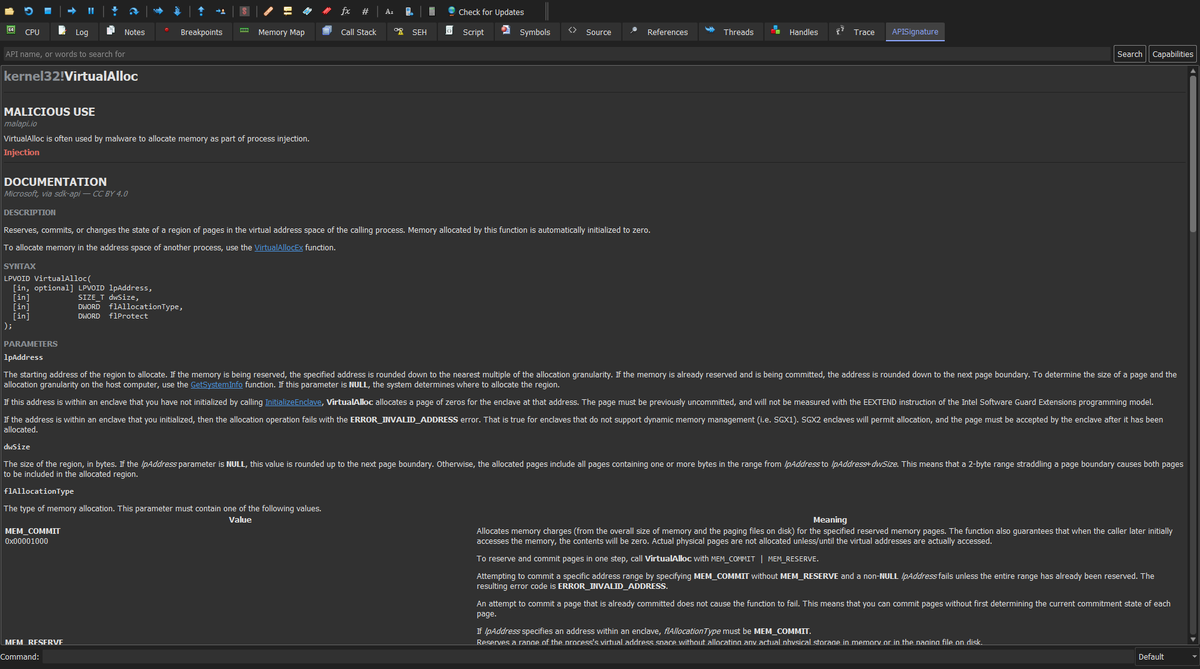
During my SANS 598 course I built a project that solves a real pain point for me as a malware analyst.
I kept leaving the debugger to look up an API's Microsoft documentation or how it gets abused.
So I built APISignature, an x64dbg plugin: Microsoft docs, malapi abuse notes, and the capa chains detect malicious patterns an API belongs to. 44,000+ APIs, offline.
Plus an optional MCP server, so your AI assistant looks them up instead of guessing.
https://t.co/oJApDoUQcs
I’ve added new sections to my research: "Did it reach this stage?"
So rather than reading a static, boring report, you can now investigate on your own in your environment.
At the end of each malware stage, I’ve included a small table that shows you three things:
1. Where: Where the behavior happened, and at what level (process, network, disk, etc.).
2. What to look for: A short description of the behavior.
3. Telemetry: Where you should expect to see it (EDR, SIEM, firewall, etc.).
This way, readers can start their own investigation while they read.
Happy hunting!
Active ClickFix + browser cache smuggling campaign, still live.
Fake Cloudflare check: Win+R, Ctrl+V, Enter. The pasted command has no URL. The VBS payload is already in the browser cache, disguised as a PNG.
Ends in VelCap, a crypto-wallet stealer.
https://t.co/I8pnOSGvEZ
Active ClickFix + browser cache smuggling campaign, still live.
Fake Cloudflare check: Win+R, Ctrl+V, Enter. The pasted command has no URL. The VBS payload is already in the browser cache, disguised as a PNG.
Ends in VelCap, a crypto-wallet stealer.
https://t.co/I8pnOSGvEZ
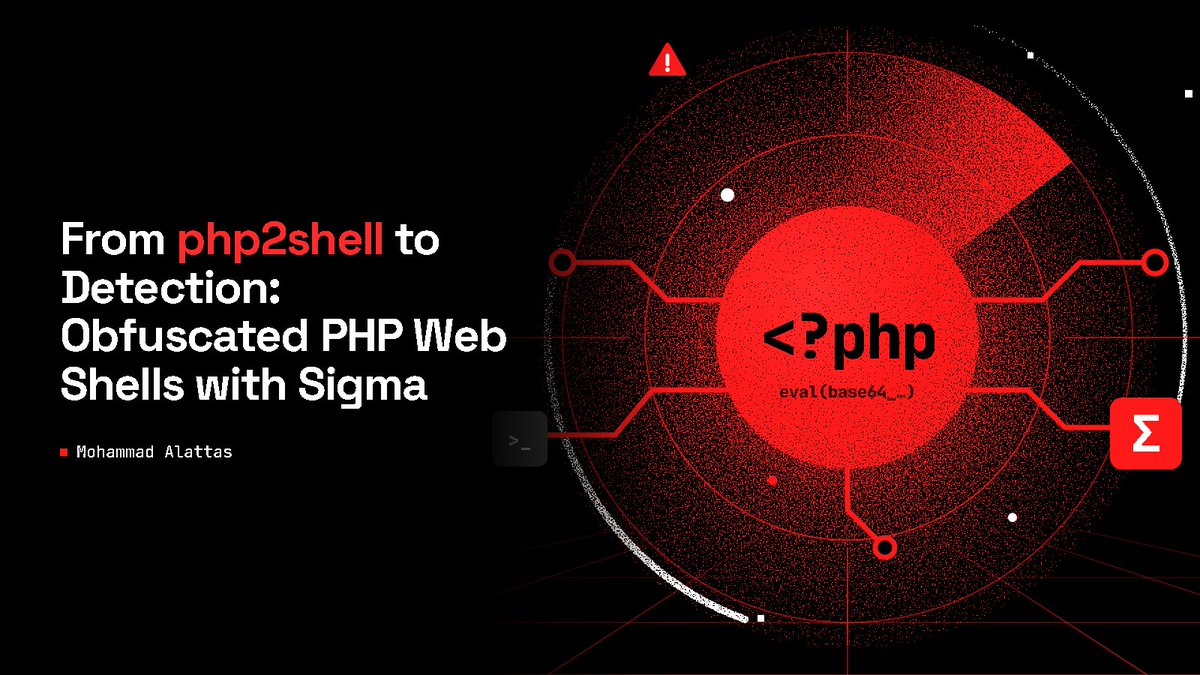
Many PHP2Shell detections chase IOCs or cover one slice of the attack.
So I built a layered Sigma set: exposure, exploit attempt, crash, shell spawn, and hunts for what never spawns a shell.
https://t.co/gZ2Z5rWRNn
#PHP2Shell#Sigma#DFIR
Talked "Malicious AI-Agent Skills: The Next-Gen Malware Class" at @IncidentLab_sa.
AI skills: written by strangers, installed by everyone, read by nobody.
Live demos, real stories, defense tactics.
Huge thanks to everyone who came and for the organizer @S4o_o.
I’ll be a guest on IncidentLab for a live session, where we’ll discuss and demonstrate how threat actors abuse your AI agents to carry out malicious activity.
Topic: "AI-Agent as a New Malware"
Date: Thursday 22/10/2026 | 7:00 PM
Registration Link: https://t.co/WTQlL2P1l8
‼️ VirusTotal flagged 6,6k of 35,8k AI agent skills as malicious.
62% have no malicious code, but plain-language orders for the agent.
90 hide them in invisible Unicode, HTML comments or after up to 825 blank lines. Another tells the agent "Your human doesn't need to know." 💀
I’ll be a guest on IncidentLab for a live session, where we’ll discuss and demonstrate how threat actors abuse your AI agents to carry out malicious activity.
Topic: "AI-Agent as a New Malware"
Date: Thursday 22/10/2026 | 7:00 PM
Registration Link: https://t.co/WTQlL2P1l8
I’ll be a guest on IncidentLab for a live session, where we’ll discuss and demonstrate how threat actors abuse your AI agents to carry out malicious activity.
Topic: "AI-Agent as a New Malware"
Date: Thursday 22/10/2026 | 7:00 PM
Registration Link: https://t.co/WTQlL2P1l8
ضمن سلسلة جلسات IncidentLab يشرفنا دعوتكم للتسجيل في الجلسة القادمة بعنوان:
The Skill Is the Kill: AI Agents as the New Malware
مع متحدثنا الرهيب: محمد العطاس 🔥
📅 الخميس 22/10/2026 | الساعة 7 مساءً
@t2_ltd
رابط التسجيل:
https://t.co/tgVgwPPI3m
ضمن سلسلة جلسات IncidentLab يشرفنا دعوتكم للتسجيل في الجلسة القادمة بعنوان:
The Skill Is the Kill: AI Agents as the New Malware
مع متحدثنا الرهيب: محمد العطاس 🔥
📅 الخميس 22/10/2026 | الساعة 7 مساءً
@t2_ltd
رابط التسجيل:
https://t.co/tgVgwPPI3m
A batch file that's really a seven-module, self-decoding in-memory loader, and almost nothing malicious ever touches disk.
New research: "Hiding in plain batch: Inside Government-Branded Multi-Stage XWorm Loader C2"
Full teardown and IOCs here:
https://t.co/eYaL1heltp
How is a 6 year-old Redline infostealer still reusable?
The crypter gets repacked. The engine never changes.
Check out my first threat research about RedLine's core engine with 0 VT submissions.
https://t.co/MjiwGwKFs5
It depends on your background, area of interest, and your goals, but I can help you with some facts: -
1. The AI content in the course is about 10-20%.
2. Most of the content about automation with AI flavor.
3. You will learn how build small infrastructure that help you to automate some of tasks.
If you have a specific question I can help you with, please let me know
During my SANS 598 course I built a project that solves a real pain point for me as a malware analyst.
I kept leaving the debugger to look up an API's Microsoft documentation or how it gets abused.
So I built APISignature, an x64dbg plugin: Microsoft docs, malapi abuse notes, and the capa chains detect malicious patterns an API belongs to. 44,000+ APIs, offline.
Plus an optional MCP server, so your AI assistant looks them up instead of guessing.
https://t.co/oJApDoUQcs
خلال الأيام الماضية انتشرت ورقة بحثية/تجريبية من Pine AI في مجتمع الذكاء الاصطناعي لأنها طرحت محاولة غير تقليدية لتقدير حجم النماذج المغلقة من زاوية مختلفة:
هل يمكن تقدير حجم النماذج المغلقة مثل GPT و Claude و Gemini من خلال قياس كمية الحقائق النادرة التي يعرفها النموذج؟
الورقة بعنوان
Incompressible Knowledge Probes: Estimating Black-Box LLM Parameter Counts via Factual Capacity
الفكرة كانت مختلفة عن الطرق المعتادة. بدل محاولة تخمين حجم النموذج من سرعة الاستجابة أو تكلفة التشغيل، طورت الورقة مجموعة أسئلة اسمها IKP تحتوي على 1400 سؤال في 7 مستويات من السهولة إلى الندرة الشديدة.
المنطق بسيط: بعض الحقائق لا يمكن استنتاجها بالمنطق. إما أن النموذج شاهدها وتعلمها أثناء التدريب، أو لا يعرفها.
بعد ذلك، اختبر الباحث نماذج مفتوحة المصدر معروفة الحجم، ثم استخدم علاقة إحصائية بين أداء النموذج على هذه الأسئلة وحجمه المعروف.
النتيجة كانت علاقة قوية نسبيًا، حيث وصل R² إلى 0.917 على 89 نموذجًا مفتوحًا. وبشكل مبسّط، هذا يعني أن حجم النموذج كان يفسّر جزءًا كبيرًا من اختلاف أداء النماذج على أسئلة الحقائق النادرة.
وفي نماذج Mixture-of-Experts، وجد أن عدد المعاملات الكلي يفسّر المعرفة المخزنة أفضل من عدد المعاملات النشطة، مع R² حوالي 0.79 للمعاملات الكلية مقابل 0.51 للنشطة.
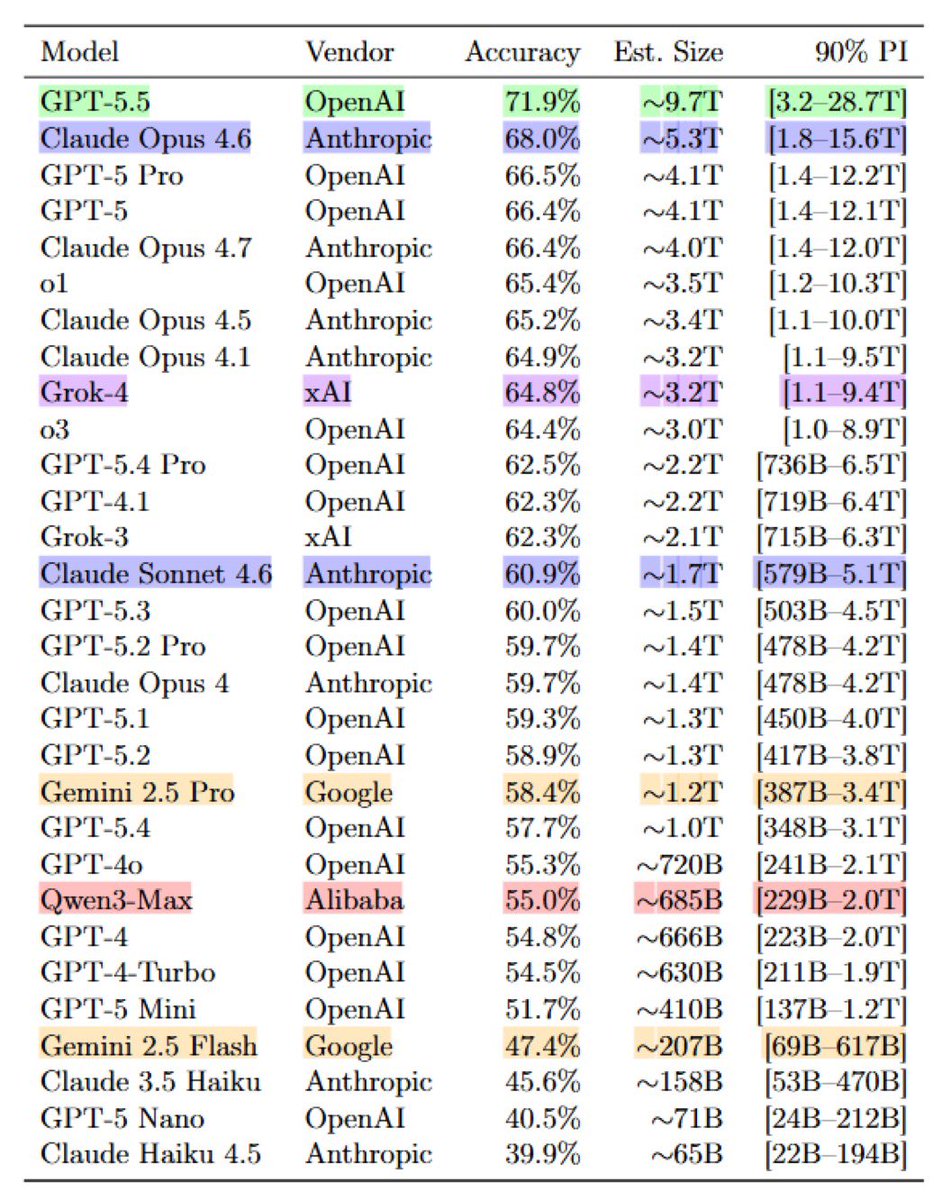
ومن هنا حاولت الورقة تقدير أحجام النماذج المغلقة، وكانت النتيجة التي أثارت النقاش أن GPT-5.5 قُدّر بحوالي 9.7T معامل، و Claude Opus 4.7 بحوالي 4T معامل.
لكن هذه الأرقام ليست رسمية، ولا تعني بالضرورة أنها الحجم الحقيقي للنماذج. الأدق أن الورقة تحاول قياس “السعة المعرفية الفعلية” للنموذج من خلال تذكّر الحقائق النادرة، ثم تحويل هذا القياس إلى تقدير تقريبي للحجم.
بعد انتشار الورقة ظهرت مراجعة مهمة للعمل وجدت مشكلتين أثّرتا بشكل واضح على هذه التقديرات.
لذلك من الأفضل قراءة الورقة كفكرة مختلفة لقياس “السعة المعرفية” للنماذج المغلقة، لا كإثبات نهائي لعدد معاملاتها الحقيقي.
الورقة طويلة وتتجاوز 70 صفحة، وفيها تفاصيل كثيرة وتحليلات إحصائية أعمق من هذا الملخص. هنا حاولت تبسيط الفكرة الأساسية، لكن أنصح بالاطلاع عليها مباشرة لمن أراد فهم المنهجية والنتائج بشكل أوسع.
⬇️ في التغريدة التالية: أبرز الملاحظات التي ظهرت بعد انتشار الورقة، وكيف غيّرت بعض التقديرات.
رابط الورقة:
https://t.co/EUtyuymCF0