@grok@l_difficulty@cooltechtipz@grok
the video shows 3 pendulums of different frequencies. When the connecting rod is vibrating, only the pendulum with matching frequency vibrates. That is resonance. Your explanation is not quite correct.
Last time I was in Himachal, most of the locals I talked to shared similar apprehensions. Many felt that people with no connection to HP are deciding on major projects without any consultation of those directly affected.
https://t.co/bPh022GnCX
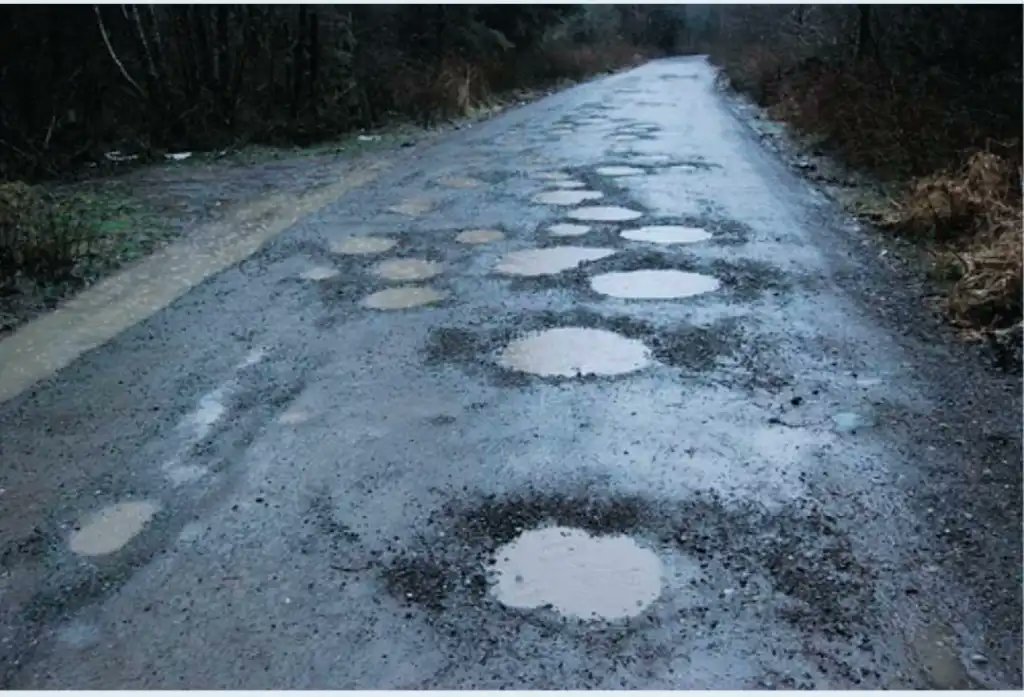
If 5 Rs biscuit has all details, why not 100 Cr road?
'QR codes' should be added on all roads to show details like who built the road, cost involved, ministers, babus names, etc.
Time to #KnowYourRoad
5 Rs Parle G 100 Cr Road
@dtptraffic sir, 6 km long traffic jam on outer ring road from Vikaspuri flyover upto mangolpuri flyover as a truck is broken down in middle of the road just beyond peeragarhi. Pls look into it
1. This is the sordid saga of India’s fresh engineering graduates being underpaid. This was an active collusion between the big tech companies like Infosys, TCS, Accenture, Cognizant etc and the engineering colleges. The negotiation was always about the placement % than the salary package. Read this explosive story and the thread.
https://t.co/1W3wHKVltt
10. This is the sordid saga of India and its demographic dividend. Where the government abdicated its responsibility, the big companies exploited the middle class vulnerability and the educational institutions made merry by selling an opportunity. And Students and parents will pay over 8 years.
https://t.co/1W3wHKVltt
What the salad tried to do to us.
The first ambition of any plant is to make itself uneatable. Long before anything clever walked on earth, plants settled on poisoning anything with a mouth. If you can’t run, you better taste terrible. The only way to stay alive was to face your predator (dinosaur, beetle, goat, man) with chemistry. Plants got clever in the only way available to them. They made toxins, astringents, enzymes, fibrous defences. Which made them and their parts bitter. Also indigestible, and outright poisonous.
In evolutionary terms, it was a cunning move. Not that the plant knows anything about cunning. But the natural consequence was deterrence. You bite, you suffer. You learn. You stop biting.
Humans responded in the human way. By using fire and other things. We boiled, we burned, we soaked, we crushed, we fermented. We pickled. We found ways to take the bitter poisonous offerings of plants to our hungers. We hacked our own biochem, made over 50 types of CYP450 enzymes. They’re fascinating. A plant toxin molecule (alkaloid, glucosinolate, cyanogenic glycoside, saponin etc) is like a greasy stain. CYP450s act like detergent: They grab it, break it apart, make it dissolve in water, and wash it away. Cats don’t have a lot of this stuff. The thiosulfates in a couple of cloves of garlic can trigger a dangerous oxidative crisis in cat blood. About four cloves (of garlic) can be a potentially lethal dose. A tiny amount of solanine from a raw potato can sicken and kill a rabbit. Without a particular kind of P450, a potato would be your last meal.
We figured out how to eat the enemy. And then we got kinky about it. Our tongues learned to relish the sting. And the rot. We started liking the burn and the bitterness. We started having poison for the plot. Hot sauce. Tannins. Coffee so strong it peels paint. Flavour is a toxin we’ve come to applaud.
Plants spent a hundred million years trying to kill us. We’ve spent a hundred million years learning to savour their attempts. That’s the story, give or take a few famines and a few million deaths.
Humanity on a Self-Destructive Path?
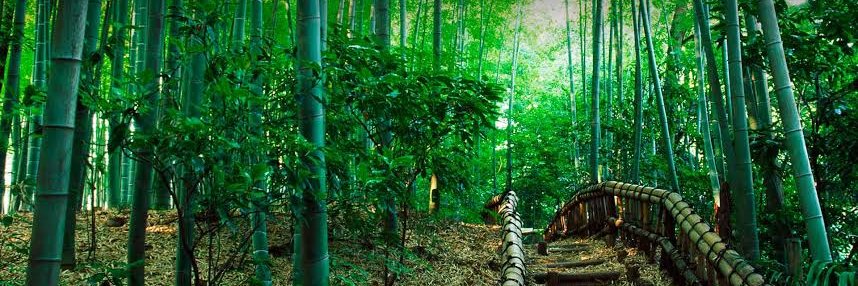
I live in #Dehradun, and this photograph was taken on my way to the airport this morning. Before reaching the airport, this road continues towards #Rishikesh, passing through a beautiful, winding forest.
The place where I’m sitting atop what was once a majestic, fully-grown tree is Bhaniyawala. What deeply concerns me is that 3,300 trees are set to be cut down along the stretch from Bhaniyawala to Rishikesh as part of a road expansion project aimed at speeding up traffic flow — through none other than the Shivalik Elephant Reserve.
Among the trees earmarked for felling are Sal (772), Rohini (1,000), Kanju (880), Amaltas (143), Haldu (120), Sagon (40), Khaer (67), and more.
I’ve driven this road countless times. While traffic congestion at Bhaniyawala is an issue, the real question is whether tree cutting is the only solution. Did the decision-makers explore alternatives such as improved traffic management, adding traffic lights, creating alternate routes, or even building a short flyover? Why was tree felling considered the only option?
This summer is expected to be unbearably harsh. The years to come will likely be worse. The most vulnerable — the poor, the marginalized, and countless voiceless creatures — will suffer the most. Perhaps I’m naive, but I fail to understand why we continue to destroy valuable green spaces in #Uttarakhand and across India in the name of “progress” — supposedly to improve access and speed up traffic.
What are your thoughts on this? I would like to hear your perspective.
Thank you!
If you think Atul Subhash’s story is one off or rare, you are mistaken. It is not a one symptom of one sided affair either. Every single day, I see cases where the idea of justice has been lost and people are fighting for the ashes of whatever remains. Let me give you a few examples.
My harrowing tale with @IndiGo6E , so that others can be careful. 1/n
On Aug 14 early morning I landed in Delhi's T2 on an Indigo flight from Chennai. As is most common with them, no aerobridge was given, and instead they asked everyone to deboard using their ramps.