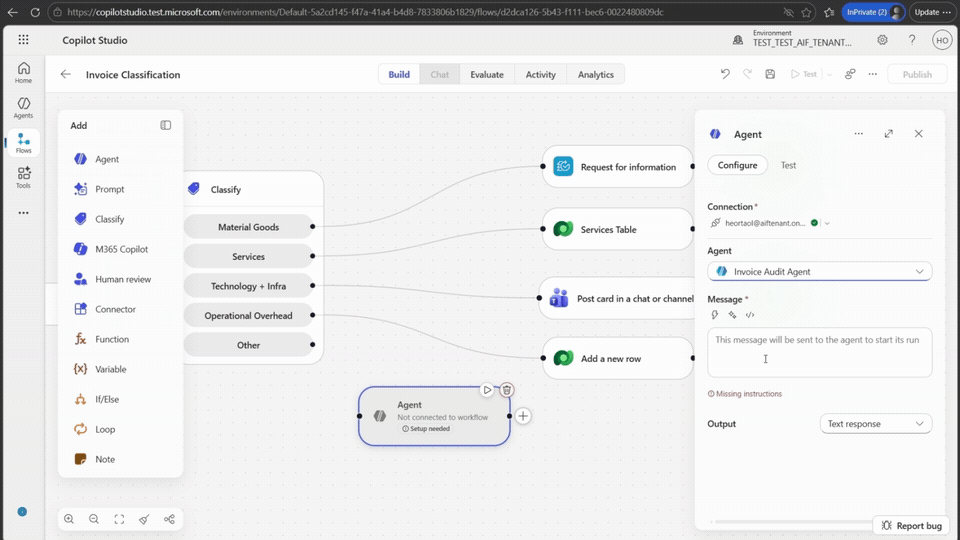
The market is underappreciating that $MSFT already owns the enterprise workflow layer where AI adoption is likely to happen.
Workers already live inside Outlook, Excel, PowerPoint, Teams, GitHub and Azure which gives Microsoft a built-in distribution advantage as AI gets embedded across the enterprise.
Copilot is still early but the numbers are getting more meaningful with over 20M paid seats, paid seat additions up 250% YoY and customers with more than 50K seats quadrupling YoY
Every 10M Copilot seats at ~$30 per user per month represents ~$3.6B of annualized revenue so if Copilot scales to 100M seats over the next several years then it becomes a major software revenue layer on top of Microsoft 365.
$MSFT is trading at a decade-low valuation because the market is focused on the near-term cost of AI while underpricing Microsoft’s role as one of the most important enterprise AI platforms in the world.
The bigger shift is that Microsoft may move from only monetizing users to monetizing work where companies eventually pay not just for employee licenses but for the AI work being performed around each employee.
That creates a ton of upside if Microsoft can monetize agents, tokens, workflows, security, governance and productivity across the enterprise stack in the new AI economy.
Copilot Cowork is now generally available worldwide, now with multi-model support!
Every organization can put long-running agents to work on complex, multi-step tasks, grounded in your organization's unique knowledge and know-how. https://t.co/1fJNjGOs5o
新たに発表された Anthropic 社の Claude Opus 4.8 は、すでに Microsoft 365 Copilot で利用可能🔥
Copilot Cowork(Frontier)をはじめ、Copilot Chat、Excel、PowerPoint、Copilot Studio にも順次展開されています。
▼詳細はこちら
https://t.co/wDsWGt5EaQ
Rule changes for the SpaceX $SPCX IPO:
Index providers waived the profitability requirement and cut the seasoning window from 90 days to 5.
This forces over $30 trillion in passive 401k and retirement money to buy SpaceX at IPO valuations.
Bloomberg Intelligence estimates S&P 500 funds must absorb 19% of SpaceX's float within 6 months.
Russell 1000 and Nasdaq 100 funds will absorb 24%.
The rules built to protect passive investors:
1. S&P 500 has required 12 months of trading and 4 quarters of GAAP profitability since 2002. Both waived.
2. Nasdaq cut its inclusion window from 90 trading days to 15.
3. FTSE Russell cut its to 5.
All three benchmarks are now structured to buy SpaceX at IPO pricing.