Today we announced the Claude-led discovery of a molecular machine that we suspect could represent a new gene editing mechanism. Its precise function, biotechnological utility (if any), or level of significance is not yet clear, but at minimum it is work I would have been proud to do as a PhD student. The work was done mostly, though not entirely, by Claude: our life sciences team suggested a broad area of research, Claude read through the literature and a bunch of genome data and discovered something interesting, then Claude proposed experiments to verify the discovery and our team carried them out.
It’s easy to dismiss this as a one-off or curiosity, but we’ve repeatedly seen a pattern where AI performance in new intellectual domains goes from weak to superhuman in a matter of a few years. In 2023 models struggled to do math at the level of an average high-school student. In 2024 they started to do well on math competitions for the best high-schoolers in the country, in 2025 they started to solve minor open problems, in early 2026 more significant open problems, and in late 2026 they are beginning to solve the top few open problems in all of mathematics. We believe AI for biology is on a similar exponential trend.
The main difference between biology and mathematics, of course, is that math can be done purely theoretically, while biology requires experimentation. Some have used this to draw the conclusion that AI’s utility in biology will be limited. We think this is wrong. As we’ve demonstrated today, humans can collaborate with AI to perform the experiments, validate key results in a few weeks and, if necessary, work with the AI to iterate on what they find. Eventually it may even be possible for Claude itself to safely perform the experiments by autonomously controlling lab equipment, with appropriate safeguards in place, but we aren’t doing that today (our lab is also a BSL1/BSL2 facility that doesn't handle materials dangerous to humans).
More broadly, biomedical advancement has many stages — from fundamental biology discoveries, to translational research, to drug discovery, clinical trials, and finally the actual delivery of medicines and health care to patients. We are also interested in these later stages, but even simply accelerating the first stage of fundamental biological discoveries has the potential to speed up and broaden the entire pipeline. Improving our understanding of biology and sharpening biologists’ tools can drive forward all of the later stages, for example by identifying new drug targets, finding new therapeutic modalities, allowing for more precise measurement, and speeding up the experimental loop which itself further accelerates our understanding of biology. This will not in itself speed up clinical trial times, but if it succeeds it could greatly increase the number of promising candidates that go into the pipeline — an increase in throughput even though latency remains.
In Machines of Loving Grace, I wrote about AI’s potential to “cure most diseases in 5-10 years” — a goal that sounds impossible, but one I believe is just barely possible if AI is applied to every stage of the pipeline. The first step is showing that AI can first help with, and then drive, biological discoveries.
Claude’s discovery is the latest in a line of related prior work that goes back decades, beginning with systems like CRISPR, and continuing with discoveries like the bridge recombinase and VIPR in the past few years. Recently, there has been heightened interest in systems based on reverse transcriptase (RT) enzymes, the enzyme underlying the system Claude identified. And most recently, a Stanford team working independently described a novel RT system with an associated non-coding array that is in some ways similar to the one Claude found, though they are distinct systems that evolved independently from each other. I believe that we’re at the very beginning of finding such systems and developing them into powerful tools for biotechnology.
I’m proud of the resources Anthropic has invested in accelerating the public benefits of AI through the life sciences, and we’re aiming both to grow our life sciences team and to work with other scientists to extend this approach to a broad range of problems. If you have a proposal for a research collaboration or are interested in joining our life sciences team, please reach out.
Hi friends,
Here's a reminder that pee is yellow 🟡 and poop is brown 🟤 because colonic bacteria:
bile ➡️ bilirubin ➡️ urobilinogen ➡️ urobilin 💛
bile ➡️ bilirubin ➡️ stercobilinogen ➡️ stercobilin 💩
That's all.
#GITwitter
Metoprolol tartrate vs metoprolol succinate - yes, there is a difference.
1. Both are forms of metoprolol, a relatively β1-selective beta blocker. The important difference is mainly their formulation and duration of action.
2. Metoprolol tartrate is an immediate-release formulation. Because it wears off more quickly, it is commonly given twice daily.
3. Metoprolol succinate is an extended-release (ER) formulation. It provides more sustained drug levels and is generally taken once daily.
4. Their clinical uses overlap, including hypertension, angina and rate control in certain tachyarrhythmias, but the formulation matters when choosing a regimen.
5. A particularly important distinction is heart failure with reduced ejection fraction (HFrEF): metoprolol succinate ER is one of the beta blockers with established evidence for reducing morbidity and mortality in appropriate patients.
6. I would not treat them as simply interchangeable milligram-for-milligram without considering the formulation, dosing schedule and clinical indication.
7. So I’d keep the basic distinction in mind as: tartrate = immediate release, usually twice daily; succinate = extended release, usually once daily; succinate is the metoprolol formulation used in guideline-directed therapy for HFrEF.
Hypercalcaemia: A Practical Diagnostic Approach
A high-yield, stepwise approach to hypercalcaemia—start by confirming the calcium, then let the PTH guide the differential and urgency of management.
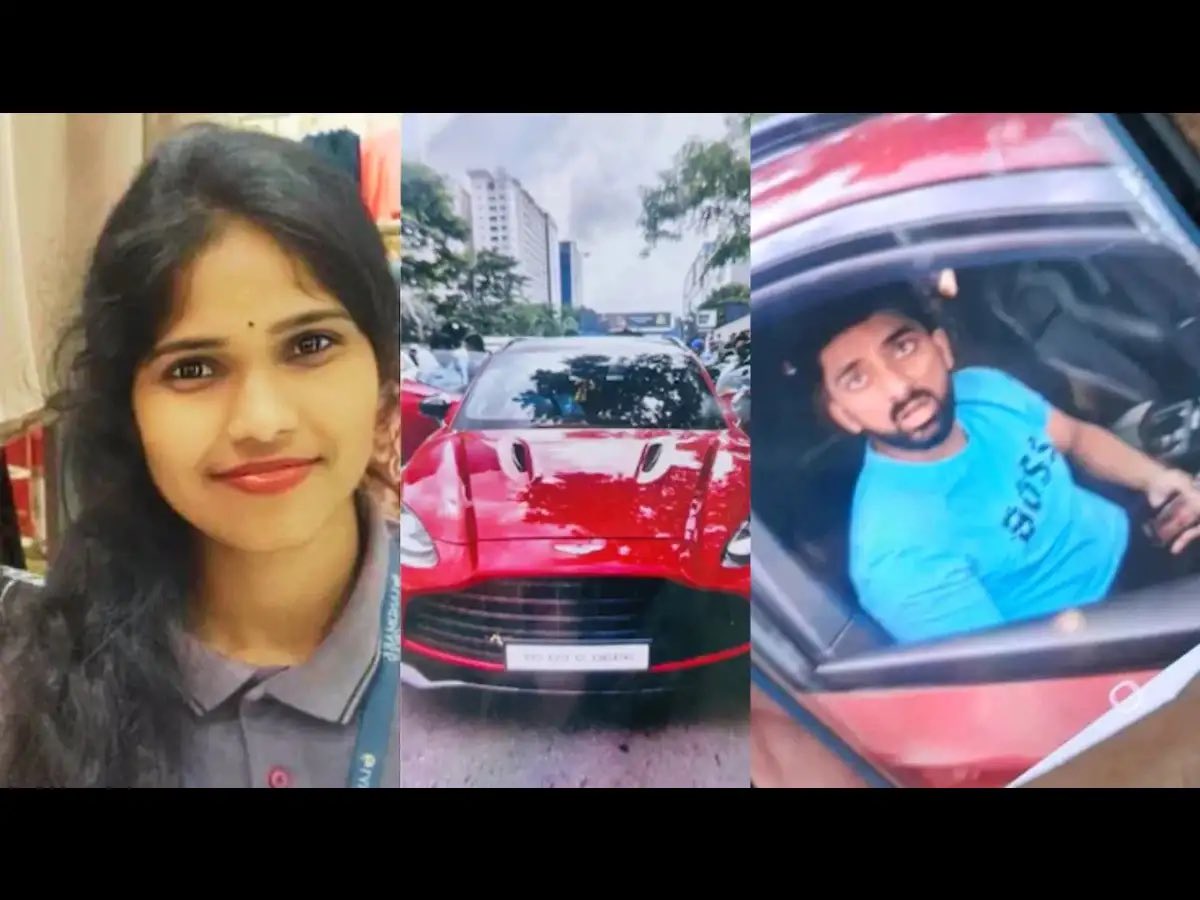
DAY 30: Aston Martin Hit & Run Case
Remember how a 26 year old Lifestyle salesperson Bharati Mukhi from Odisha died in Madhapur, Hyderabad after Janasena MP Lingamaneni Ramesh’s son Lingamaneni Sanjush mowed her down.
It has been THIRTY days since this broad daylight death happened.
Chargesheet yet to be filed.
No arrests.
No CCTV footage.
No nothing.
Here is a video of Lingamaneni family’s Vinayaka Chavithi celebrations yesterday.
Nice happy family. I wish God blesses them well.
Meanwhile, I tracked down the family of Bharati Mukhi to a very remote part of Odisha.
Spoke with Bharati’s elder brother, Rajani Kantha Mukhi who is a farm labourer. Her mother is also a farm labourer but has been bedridden since Bharati’s death. Her youngest brother is studying.
Her brother tells me that they got a call saying she died in a road accident. The police called to tell that they are sending her in an ambulance and you have to pay the charges.
No financial assistance from her company or the Government of Telangana or Government of Odisha or anyone at all.
The family had to borrow money for Bharati’s final rites.
They have no clue what car at what speed or which brat mowed their sister down.
Lingamaneni family ensured everyone in the media is silent. Not a word. But they didn’t have the heart to even help the poor girl’s family somehow.
“Come home and see where and how we live madam. Do you think we would have sent her that far if we could lead our lives somehow? We don’t know where Hyderabad is, we don’t know which rich man’s son killed my sister, we don’t know how to approach a police station or what even is justice. We don’t know what is happening with the case & I cannot travel to Hyderabad”, he told me.
Bharati was their hope at a decent life and now she is gone. It was her mistake to step out on a road to buy lunch.
A lunch she never even ate.
పాపం చనిపోయిన అమ్మాయి కుటుంబం ఎంత బాధ పడుతుందో, కారుతో గుద్దినోడు మాత్రం కుటుంబంతో పండుగలు, పూజలు చేసుకుంటున్నాడు...
హిట్ అండ్ రన్లో యువతి ప్రాణాలు బలిగొని దర్జాగా పండుగ చేసుకుంటున్న జనసేన ఎంపీ లింగమనేని రమేష్ కొడుకు
సంజుష్
నెల రోజులు గడుస్తున్నా సీసీటీవీ ఫుటేజ్ విడుదల చేయకుండా, నిందితుడిపై చర్యలు తీసుకోకుండా చోద్యం చూస్తున్న పోలీసులు