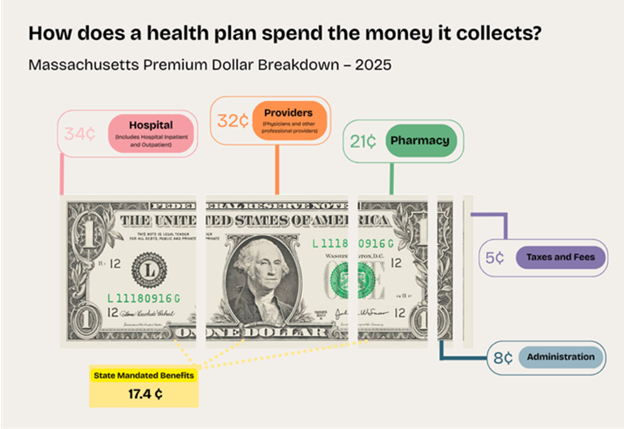
🏥 Health insurance premiums are developed prospectively using historical claims data and projected future medical and pharmacy costs. Premiums reflect anticipated spending on hospital care, physician services, prescription drugs, and other health care services for the coming year.
🏥 Health insurance premiums reflect the prices charged by hospitals, providers, and pharmaceutical manufacturers. Yet health plans remain the entities subject to the most robust financial oversight, reporting requirements, and regulatory review in the health care system.
🏥 Health insurance covers a broad range of services, but benefit designs vary by plan. Coverage may include primary care, specialty care, behavioral health services, prescription drugs, maternity care, emergency services, rehabilitation, and preventive care.
💡 Health insurance premiums and deductibles are not the same thing. A premium is the monthly payment that keeps coverage active, while a deductible is the amount a member pays before insurance begins sharing the cost of most covered services. Understanding the difference matters when choosing coverage.
Choosing between a higher premium and a higher deductible depends on an individual’s health care needs and financial situation. 💭 Plans with lower premiums often have higher deductibles, while plans with higher premiums may reduce upfront costs when accessing care.
💸#DYK? Health plans in Massachusetts are subject to a strict medical loss ratio (MLR), requiring health plans to spend 88% of premium dollars on medical care while limiting the portion of premium dollars that can be spent on administration, marketing, and profit. If a health plan does not meet this threshold, it must issue premium rebates to members.
At its core, cost-sharing is about balance, sharing costs between health plans and members to keep coverage accessible, sustainable & responsive to the needs of Massachusetts residents. It protects affordability while helping control long-term health care spending, benefiting consumers, employers & the broader system. 🌱
Cost-sharing supports affordability for employers offering coverage. Without it, many small businesses could face higher costs, making it harder to provide benefits to employees. 🏢
#DYK? Health plans use cost-sharing alongside tools like provider networks to manage costs. These strategies work together to maintain access while keeping premiums as low as possible. 🔧🏥💰
#DYK? In-network health care typically has lower cost-sharing. This encourages coordinated, high-quality care while helping reduce overall health care spending. 🏥
#DYK? Under the Affordable Care Act, health plans in Massachusetts are required to provide coverage for a broad range of preventive services and plans may not impose cost-sharing, such as copayments, deductibles, or co-insurance, on patients receiving preventive care services. Learn more here: https://t.co/43f3e3ZJwf
#DYK? Most preventive care services are covered at $0 out-of-pocket. That means no copays, no coinsurance, and no deductible, making it easier for members to access essential care. 💳
#DYK? Massachusetts builds on federal protections established under the Affordable Care Act, including annual out-of-pocket maximums that cap total spending, required coverage of essential health benefits, and no-cost coverage of many preventive services delivered in-network.💰🏥
Preventive care is designed to keep people healthy before issues arise, through checkups, screenings, and vaccines. By catching problems early or avoiding them altogether, it helps reduce long-term health care costs. 🩺
Health plans help keep health care affordable for consumers & small businesses: The reduction or removal of vital health plan tools like cost sharing increases the “actuarial value” of a plan, bringing it into a higher metallic tier, raising the premium cost for consumers.
#DYK? Health plans are grouped into four metal tiers that show how costs are shared. For example, a Platinum plan has a higher monthly premium, but you’ll pay less out-of-pocket when you go to the doctor or fill a prescription, while lower-premium plans mean higher costs when you need care.
#DYK? Under the Affordable Care Act, health plans must include an annual out-of-pocket maximum. Once a member reaches that limit, the plan pays 100% of covered in-network services for the rest of the year, protecting against catastrophic costs.
#DYK? Health plans come in different “metal tiers” (like Bronze, Silver, Gold, Platinum), which simply reflect how you split costs with your plan. Plans with higher monthly premiums usually mean you pay less when you get care, giving you options based on what works best for your budget. 🪙
Prescription drug costs are a major driver of health care spending, with some specialty drugs costing thousands per month. Cost-sharing helps manage these costs by encouraging the use of clinically effective, lower-cost alternatives, like generics, when appropriate, which helps control overall spending & premiums. 💊