Medical Artificial Intelligence and Automation Lab
@MAIA_Laboratory
MAIA Lab is an ecosystem facilitating AI research, clinical translation, education, and commercialization of AI in Medicine, focused on personalized oncology.
Exciting news for UTSW! Congrats to Warren on being named inaugural Chief AI Officer. A strong leader in AI and digital health, and great to see a fellow medical physicist in this role. Looking forward to working together to advance AI at UTSW.
Yesterday our Medical Physics & Engineering Division Chief and Vice Chair of Digital Health & AI, Dr. @SteveJiangPhD, joined AI leaders at the @utmbhealth Agentic AI Leadership Roundtable in Houston to discuss real‑world agentic AI, workflow‑driven design, and scalable adoption.
Really enjoyed this episode of the Lex Fridman Podcast on the state of AI in 2026.
It is long as always, but perfect for a few commutes or workouts. Easily one of the best high level snapshots of today’s AI landscape.
Highly recommend if you want a clear mental model of where the field is going.
https://t.co/MhmMoqdBRC
Towards a Science of Scaling Agent Systems (Google Research)
• Researchers conducted a controlled evaluation of 180 agent configurations to derive quantitative principles for agent system performance.
• They tested five architectures — single agent, independent multi-agent, centralized, decentralized, and hybrid — across diverse benchmarks involving reasoning, planning, navigation, and workflow tasks.
• The results show that simply increasing the number of agents is not always better; multi-agent coordination helps on parallelizable tasks but can degrade performance on sequential ones.
• Coordination overhead and error propagation in multi-agent setups can outweigh benefits unless task structure and architecture align.
• A predictive model was developed that can identify the optimal agent architecture for most unseen task types based on measurable properties.
• Takeaway: Effective agent system design requires matching coordination structure to task characteristics rather than assuming more agents always improve outcomes.
https://t.co/4lX22L2fgx
Swarms: Structured Multi Agent AI Systems (J. Sulmont)
• Swarm style AI systems organize many specialized agents that collaborate instead of relying on a single general agent.
• Each agent has a focused role such as planning, retrieval, coding, or validation, improving modularity and controllability.
• Coordination patterns such as routing, voting, and hierarchical control help combine agent outputs into stronger results.
• Swarm designs improve robustness and scalability but introduce orchestration and communication overhead.
• Good swarm performance depends on clear task decomposition and well defined agent interfaces.
• Takeaway: Multi agent swarm architectures can outperform single agents when roles and coordination are carefully designed.
https://t.co/KgAhLNrGrg
When AI Writes Almost All Code, What Happens to Engineers? (The Pragmatic Engineer)
• As AI increasingly generates code, engineers’ roles will shift away from hand-writing routines toward problem framing, validation, and orchestration.
• The critical skills for future engineers will include specifying requirements clearly, designing system architecture, and supervising AI code outputs rather than implementing details.
• Code generation tools may produce large volumes of boilerplate and glue code, but human oversight remains crucial to ensure correctness, security, and alignment with product goals.
• Overreliance on AI for coding without deep understanding can lead to technical debt, brittle systems, and missed edge cases that machines are not trained to anticipate.
• Transitioning responsibilities may require rethinking education and training so engineers focus more on design thinking, verification, and higher-level system reasoning.
• Takeaway: AI will transform software engineering, but engineers will continue to add value through specification, critical thinking, and governance of AI-generated artifacts.
https://t.co/mF6M22S9vL
Claude in Healthcare and Life Sciences (Anthropic)
• Anthropic is expanding Claude to support healthcare and life sciences workflows in HIPAA ready environments.
• Claude connects to medical, administrative, and scientific data sources to assist with documentation, coding, trials, and research tasks.
• Personal health integrations allow users to summarize records and prepare for clinical visits with user controlled access.
• The focus is on reducing clinician burden and accelerating scientific work rather than replacing clinical judgment.
• Takeaway: Claude is being positioned as a domain aware assistant embedded directly into healthcare and life sciences workflows.
https://t.co/hRE9tyj3iF
OpenAI Acquires Torch to Bolster AI Health Tools (CNBC / OpenAI)
• OpenAI has purchased healthcare technology startup Torch to expand its presence in medical AI and healthcare technology.
• Torch’s core capability is unifying fragmented health data such as lab results, medication records, visit histories, and wearable data into a consolidated system for AI use.
• The acquisition brings Torch’s team and technology into OpenAI’s ecosystem, intended to enhance ChatGPT Health, the company’s personalized health focused AI offering.
• This move comes shortly after OpenAI’s recent launch of ChatGPT Health, which allows users to connect their medical records and wellness apps for tailored AI insights.
• By integrating unified medical data infrastructure, OpenAI aims to make its health oriented AI tools more context aware and clinically useful.
• Takeaway: The acquisition of Torch signals a strategic step by OpenAI to deepen its healthcare capabilities by combining robust medical data integration with AI powered health insights.
https://t.co/I1qbLSI1OP
All Models Are Wrong and Yours Are Useless Making Clinical Prediction Models Impactful for Patients (Florian Markowetz)
• Most clinical prediction models developed in academic research never make it into real-world clinical practice.
• There is a large gap between academic novelty and practical implementation, with many models validated only in theory or within limited datasets.
• Success in academia (papers and citations) does not equate to clinical usefulness; real clinical success means actual use in diverse healthcare settings.
• To be impactful, prediction models must address clear clinical decision points, use data available in routine practice, and tie outputs directly to actionable interventions.
• Implementation challenges include regulatory pathways, integration with clinical systems, and collaboration across clinical stakeholders beyond research centers.
• Takeaway: Designing models with clinical impact in mind—from data selection to implementation planning—is essential to ensure tools actually help patients rather than just generate academic publications.
https://t.co/hlefSQb0yQ
Use Multiple Models for Better AI Results (Interconnects)
• No single AI model excels at every task; different models have varying strengths in reasoning, coding, summarization, and factuality.
• Combining multiple models strategically allows systems to leverage each model’s advantages rather than relying on one generalist.
• A common pattern is to let a smaller, fast model handle routine tasks and a larger, more capable model intervene for complex reasoning.
• Model ensembles can improve accuracy, robustness, and alignment with user intent by cross-checking outputs or cascading tasks.
• Practical systems often mix foundation models with specialized models (for retrieval, planning, or evaluation) to balance performance, cost, and latency.
• Takeaway: Building AI products with multiple models working together yields better overall results than depending on a single monolithic model.
https://t.co/LNavAqtzV1
The Downside to Using AI for All Those Boring Tasks at Work (Wall Street Journal)
• AI tools that automate repetitive tasks such as sorting email, taking meeting notes, and filing expenses can increase efficiency but may eliminate important low-intensity work.
• Routine and mundane tasks often create mental “white space” that allows the brain to wander, incubate ideas, and make creative connections.
• Some leaders intentionally preserve time for simple tasks or breaks, recognizing that these moments can spark insights that high-intensity work never will.
• Fully removing all busywork with AI may inadvertently push workers into constant high-intensity cognitive demand, increasing burnout risk.
• Reframing mundane work as “white space” or “no-input time” highlights its strategic value for creativity rather than viewing it as worthless busywork.
• Takeaway: While AI can free workers from repetitive tasks, doing so without preserving space for low-intensity thought may reduce creativity and harm long-term productivity.
https://t.co/dna1bu1vqN
Context Graphs and Real AI Progress (Arvind Jain)
• There is growing excitement around context graphs as a way to make AI agents more useful and reliable.
• The key idea is that intelligence does not come from isolated prompts, but from structured context built over time.
• Context graphs help agents remember decisions, relationships, and constraints instead of treating each interaction as stateless text.
• This is especially important for enterprise and real world workflows, where continuity and provenance matter more than clever responses.
• The post cautions against hype and emphasizes engineering reality over buzzwords.
• Takeaway: The next leap in AI usefulness will come from systems that manage and evolve context over time, not just larger models or better prompts.
https://t.co/VTBwU30dfh
Screenless AI Devices Will Flop (Eugenia Kuyda)
• Screenless AI devices, such as voice only assistants or AI first hardware without displays, are unlikely to see mass adoption.
• Most people use phones primarily for passive consumption like scrolling, reading, and watching, which does not translate well to screenless interaction.
• Phones succeed because they combine visual feedback, touch interaction, and continuity in one device.
• Voice only or screen free devices struggle to support exploration, context switching, and sustained engagement.
• As a result, new AI experiences are more likely to succeed on existing screen based platforms rather than entirely new hardware categories.
• Takeaway: Without a clear advantage over smartphones, screenless AI hardware will remain niche rather than transformative.
https://t.co/GR21EhbO9K
ChatGPT for Health Care (Fidjisimo)
• ChatGPT and similar models show significant potential in health care but require careful integration with clinical workflows.
• Key use cases include summarizing clinical notes, generating patient education materials, supporting diagnostic reasoning, and assisting with administrative tasks.
• Risks include hallucinations, privacy concerns, liability issues, and the need for rigorous evaluation before deployment in clinical settings.
• Effective implementation depends on combining AI output with human expertise rather than relying on AI alone.
• Regulatory and ethical frameworks will be crucial to ensure safety, accountability, and trust in clinical AI applications.
• Takeaway: AI can augment health care delivery, but success requires robust validation, clinician oversight, and integration into existing health systems.
https://t.co/YNOL1fEviV
Is hallucination-free AI code possible? (Kucharski)
•AI models generate code by predicting likely tokens, not by understanding program semantics.
•This makes them prone to “hallucinations”: code that looks right but is logically or functionally wrong.
•Tools like better prompts, retrieval, tests, and compilers help catch errors but can’t fully prevent them.
•Eliminating hallucinations likely requires models grounded in execution, formal specifications, or symbolic reasoning—not text prediction alone.
•Takeaway: AI can write useful code, but fully reliable code generation needs fundamentally different system designs.
https://t.co/ws4tnp8jhk
Sad I can’t make it to @CNS_Update meeting this year…
But it’s for the best reason: I just started my new position at the @MAIA_Laboratory at @UTSWMedCenter 🧠
Super excited to integrate radiosurgery, neurosurgery, and AI for the future.
Stay tuned. 🚀
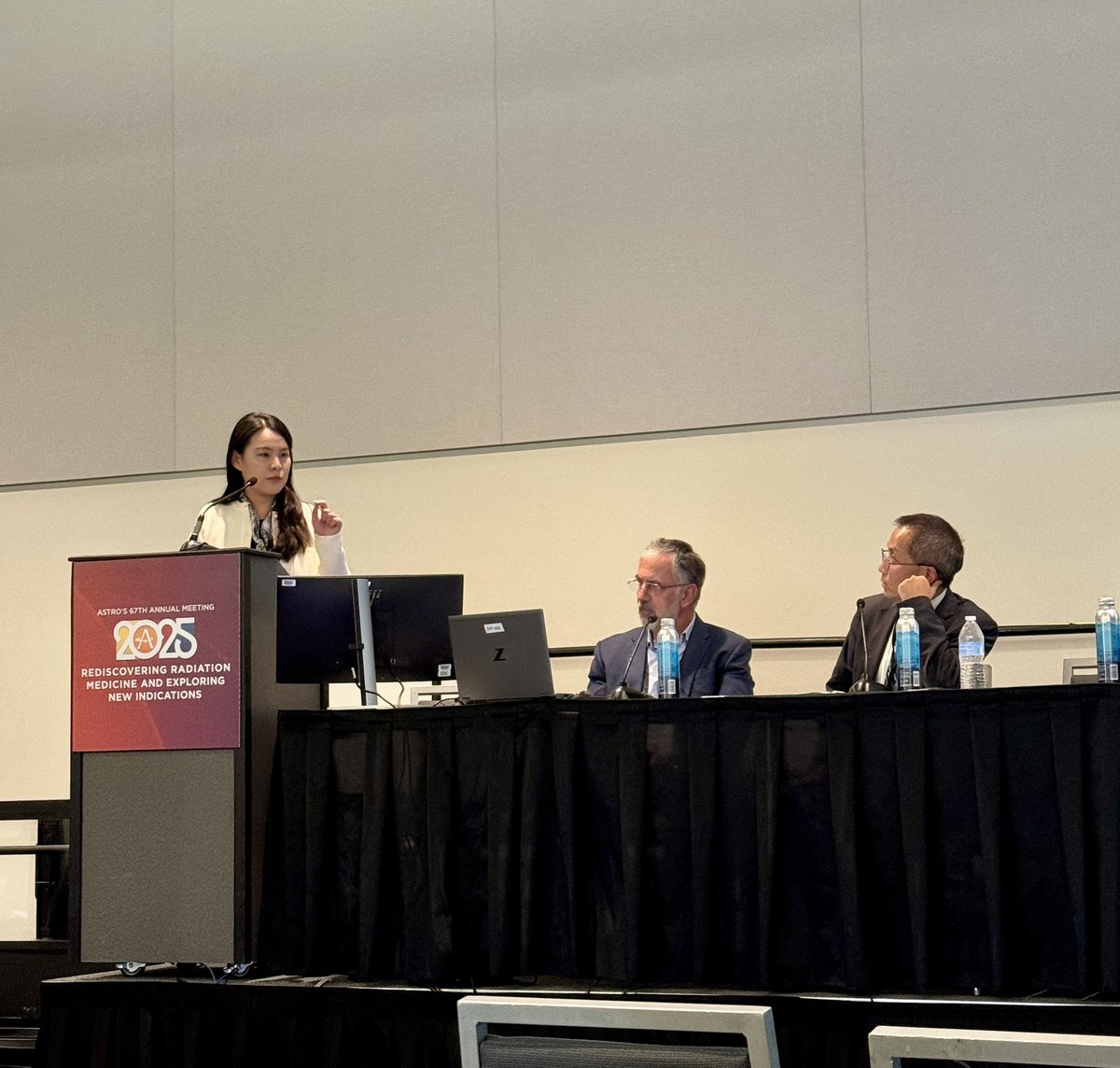
A grad student researcher in #medphys and member of the @MAIA_Laboratory, Qingying Wang presented her work entitled, “Universal Deep Learning Dose Prediction for IMRT Planning,” during a #cancerphysics session. #ASTRO25
Hao Gao, Ph.D., our Director of Physics Research and member of the @MAIA_Laboratory, presented his work entitled, “An Omni-Optimizer of Range Modulation, Scanning Path, Beam Current, and Spot Intensity for Proton Flash.” #ASTRO25
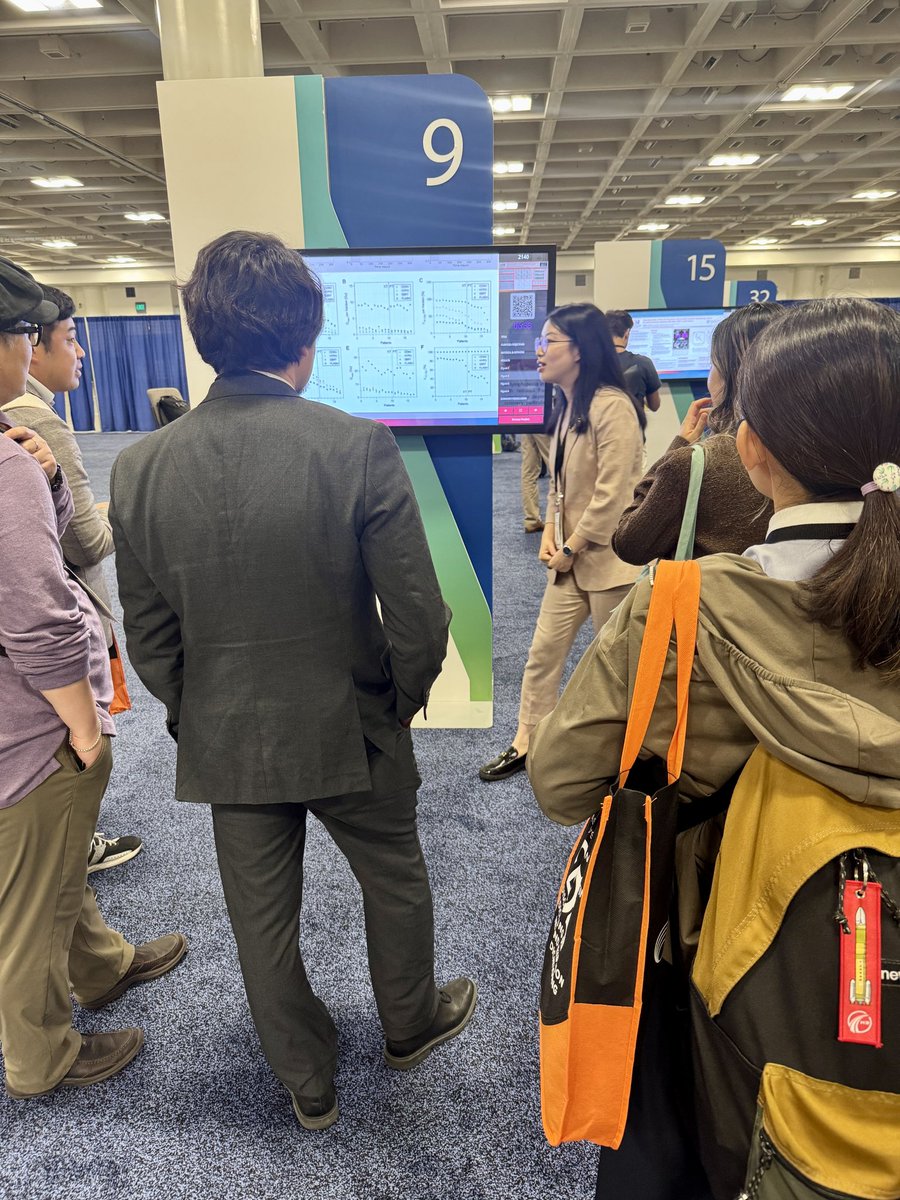
Jiaxin Li, Ph.D., postdoctoral fellow and member of the @MAIA_Laboratory, presented her work, “Personalized Simulation of Radiation-induced Immune Suppression for Head-and-Neck Cancer Across Various Radiotherapy Regimens.” Dr. Li is a recipient of the #ASTRO25 Recognition Award.
Today, our Vice Chair for Digital Health and AI, Dr. @SteveJiangPhD, is speaking at @UTAustin's AI+Health Seminar Series titled, "Clinical Deployment of AI: From Single Models to Compound Agentic Systems."
🔗: https://t.co/76vDdpp1K3