"My fear is increasing day after day. I am not exaggerating."
My father is in an Israeli prison. Health deteriorating. Deprived of food, water, medical care.
Elias Abu Safiya shares his concerns for the safety of his father, Dr. Hussam Abu Safiya
Sometimes people come to the clinic not because medicine can save them, but because they have nowhere else left to fall apart.
She was the first patient to arrive that morning, or at least that is what the nurse told me. “When we opened the clinic, we found her sitting quietly outside the door, waiting.”
Her papers said she was forty one years old, but her face, and the few white strands of hair escaping from beneath her hijab, carried at least twenty years more than that. War ages people in ways documents cannot record.
She sat in front of me. I knew her well. She came to the clinic often.
I asked her what was wrong. She looked slowly around the room as though she were seeing it for the first time. For a moment, I thought she had not heard me, so I repeated the question.
“What is the problem?”
She looked at the nurse standing beside me, then back at me and said quietly, “I want medicine for a headache.” Then she drifted away again, staring silently around the room as though she were lost inside it.
I wrote her a prescription for paracetamol, but something felt wrong. People do not arrive before sunrise and wait outside a clinic for hours just because of a headache.
She remained seated, so I asked gently, “Is there anything else?”
She hesitated, then said softly, “No.” But she kept glancing at the nurse. That was when I understood.
I asked him to leave the room.
The moment the door closed, I no longer needed to ask anything. Her face turned red, her eyes filled with tears, and yet she still struggled to speak.
I looked around helplessly, searching for something that might comfort her. There was only a bottle of water. I handed it to her.
Then she began.
“I married a man twenty years older than me,” she said. “He has children my age.”
She gave a small, broken smile.
“I was the only daughter in my family. They did not want me left alone in the house. It was not the life I wanted, but I tried to make peace with it. I tried to be content.”
Then her voice broke.
“But life keeps finding new ways to torture me.”
A few days ago, her husband began complaining of severe pain. They went to the doctor.
Advanced prostate cancer. It had already spread throughout the bones of his pelvis.
Now he cannot move at all.
“And he has no one except me to care for him.”
For more than a month, she said, she had been moving from one international organization to another, asking for one simple thing:
A wheelchair. Just a wheelchair.
“So I can at least take him to the hospital.”
No one answered.
She tried to buy one herself. The price was 1,200 dollars.
Before the war, her husband had worked as a laborer in Israel. Now they had no income.
“That amount,” she whispered, “is more than what we have lived on during the entire war.”
She stopped speaking and wiped away her tears.
Then she looked at me with a face I will never forget and said:
“He knows he is going to die from the cancer… we are only asking for him to die with dignity.”
This is what war leaves behind. Not only rubble. Not only death.
But human beings trapped inside endless humiliation. People drowning in illness, poverty, displacement, and helplessness inside a giant prison where even wheelchairs are prevented from entering.
Imagine that.
A place where the request is no longer for a dignified life. That dream has already become too distant, even for prayer.
Now people ask for only one final mercy:
To die with dignity.
#WoundedGaza
Happy International Day of the Midwife 💙
Today we’re celebrating the incredible midwives at our Aberdeen Women’s Centre in Sierra Leone - skilled, compassionate professionals who ensure women and babies receive safe, dignified care.
Thanks to Jonathan ⭐️ for his fantastic #londonmarathon today, raising funds for epilepsy medication for distribution at the clinics that we support in #sierraleone. #epilepsy
Today I met my university professor… the doctor who once taught me Organizational Behavior.
I approached him with a smile and said, “How are you, doctor? I hope you are well.”
He looked at me with tired eyes and replied, “I’m not well… who are you?”
I felt embarrassed and said gently, “You don’t remember me? I’m Mohammed… you taught me at the university.”
His answer shocked me:
“Which university? Which course? When?”
I froze.
I started wondering… did I mistake him for someone else?
Or did he lose his memory?
Or did the war take something from his mind?
I couldn’t continue the conversation. I left quietly,
feeling that I had just met a man who looked like my professor… but wasn’t him anymore.
When I returned to my tent, I called a friend who studied with me and is related to him.
I asked him what happened.
He paused… then said:
“He is the only survivor from his family.
Their house was bombed… everyone was killed.
Since that day, he hasn’t been the same.
It’s like he lost his mind… the shock broke him.”
I was devastated.
I wished I hadn’t left him standing there alone.
I wished I had hugged him… sat beside him…
He once taught me, and I loved him like a father.
War doesn’t only destroy homes…
it breaks minds, shatters souls,
and leaves people alive… but lost.
May God ease your pain, doctor.
Please keep him in your prayers. 💔
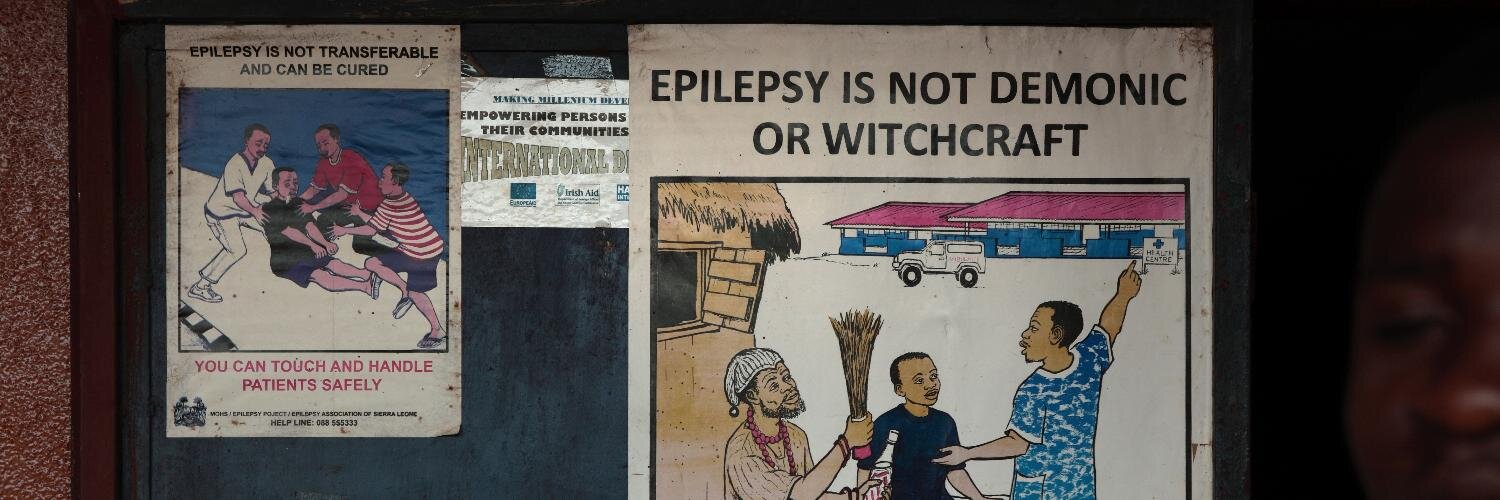
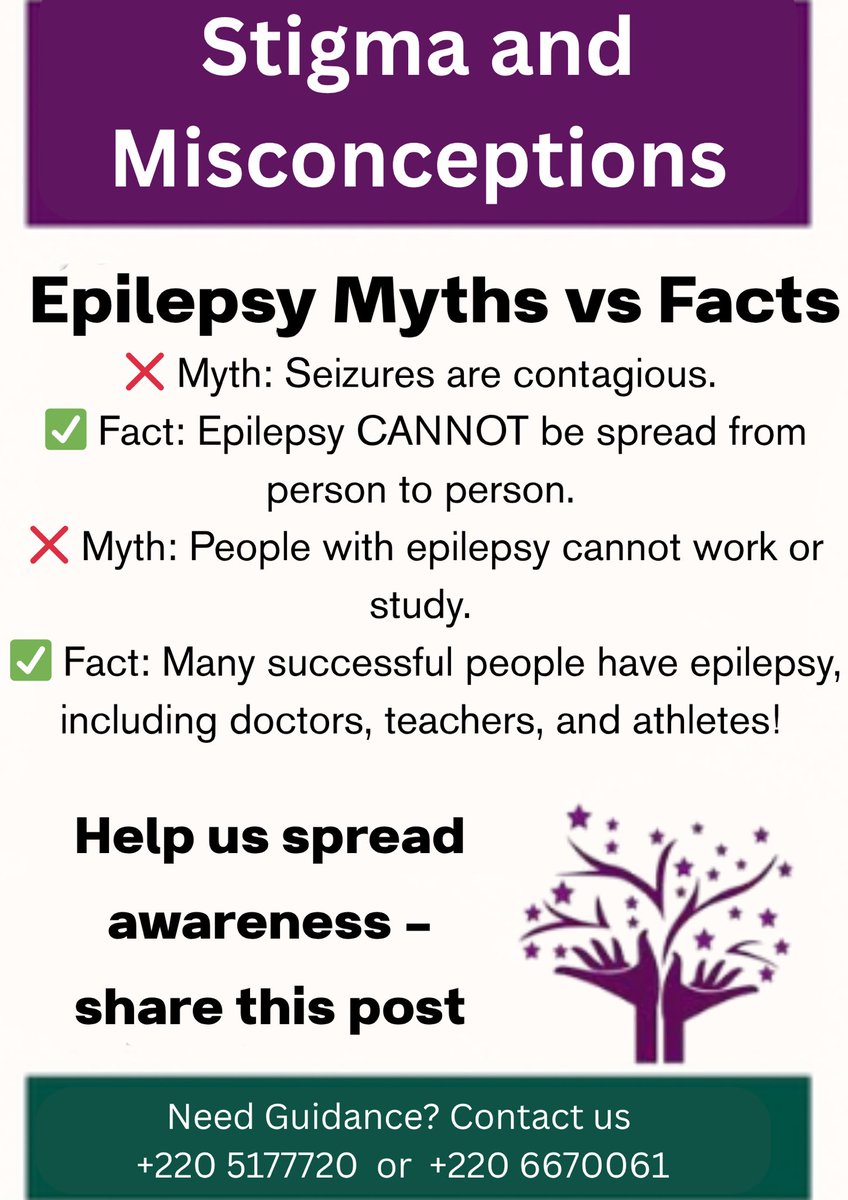
Untreated epilepsy destroys lives. Please help us to buy the annual shipment of medication to the network of epilepsy clinics in Sierra Leone. We need £14,000
https://t.co/NtMf5bfI2J
Israel has just bombed a tent in Khan Younis. Four people were killed. One of them was Dr. Mousa Khafaja, obstetrics and gynecology consultant at Nasser Hospital
Urgent Humanitarian Appeal
Jamal Abu Shamala (8 years old) suffers from complete paralysis, severe neurological seizures, and critical malnutrition.
He urgently needs to travel for treatment outside Gaza-before it's too late.
To contact his mother:
+972 59 224 6211
مناشدة إنسانية عاجلة
الطفل جمال أبو شمالة (8 سنوات) يعاني من شلل كامل وتشنجات عصبية
حادة وسوء تغدية خطير.
يحتاج للسفر العاجل للعلاج خارج غزة قبل فوات الأوان.
للتواصل مع والدته:
00972592246211
Today, I sat by the sea.
The wind moved in gusts. The water was gray. I had come seeking silence, but it was already there, settled like dust over everything.
Two girls passed. Barefoot. Their dresses were torn at the edges. No one stared at them. No one needed to. They were part of the scenery now, like broken stone, like rusted metal.
Each carried a small, worn purse on her shoulder. In better times, such a thing would have meant joy, a gift for Eid, a sign that a child had been seen, that she mattered. Here, it was a gesture preserved out of habit. A remnant of something that no longer existed.
That is Gaza.
Not the bombings, not the rubble, but this: a girl walking barefoot with a handbag she cannot fill.
Eid has arrived. We smile because it is expected. We say “Eid Mubarak” the way one might say “It will pass.” There is no celebration. There is only continuity.
The air stinks of metal. Since yesterday, the bombings have not ceased. Families die without fanfare. The names disappear. The houses collapse. We dig through concrete with our hands. The bodies are warm for only a moment.
Hospitals are full of the dead. The living are told to wait.
Bread is precious. Water is bitter. Aid comes late, and too little. There are no tears left in this place, only calculations. What time to run. Where to hide. Whom to carry if it comes again.
And from abroad, they speak. They wear suits. They sit in leather chairs. They call us a sacrifice. They say we are brave. That our death has meaning.
It does not.
A girl in rags is not a sacrifice.
She is a child.
She is hungry.
She is walking.
Cursed is the word that dignifies her suffering. Cursed is the sentence written on her behalf.
We are not symbols. We are not metaphors.
We are not strong, we have endured because there was no choice.
We are not hopeful, we are alive because the body clings to life.
And when it cannot cling, it falls. Quietly.
Somewhere in this city, a mother is heating water for tea she does not have.
A child waits.
A plane passes.
We do not look up anymore.
I sat by the sea.
It did not speak.
#GazaGenocide
Yesterday, at Al-Awda Hospital in northern Gaza, a girl-child came into this world, and the world rejected her. She had no brain. Not in the poetic sense of innocence or purity, but anatomically, literally: anencephaly. No cerebrum. No future thought, no dreams, no memory to be made. A skull empty of purpose. She was full-term. Her mother carried her for nine long months, through burning nights and weeping mornings, through dust, grief, and sirens. And then, birth. But no life to save. Only silence. The doctors stood helpless, mocked by the limits of their hands.
I saw them, people of medicine, their skilled, sterile fingers trembling. Not from confusion, but from recognition. Teratogenic damage. Developmental failure. Genetic disfigurement, not by chance, but by war. Bombs struck not only buildings, but chromosomes. The weapons, steel, shiny, American, fell not just to destroy the present, but to corrupt the womb. To poison the idea of tomorrow.
What do we call this horror? Radiation? Dioxins? Depleted uranium? Invisible toxins that do not kill quickly, they wait. They embed, cross placental walls, and twist the neural tube. They disrupt life before it begins.
There are more cases. Miscarriages. Premature births. Malformed limbs. Cleft palates wider than sorrow. Spinal cords like broken scrolls. The doctors whisper now, this is no cluster. It’s a pattern. A Lancet study warns of up to 200,000 indirect victims, not from blast wounds, but from genetic harm passed down to generations unborn.
But the world is deaf. It counts the dead by explosions, not deformities. It tracks casualties by limbs lost, not genes shattered.
And here, beneath the rubble, the deepest wound is in the womb. I saw her yesterday. The mother. She didn’t cry. She only looked. Her arms were empty. She had carried a daughter with no brain. But the child had eyelashes. Fingers. And that’s the most terrible thing: that life tried. That the body obeyed. That, even in apocalypse, the cells kept building.
Somewhere, another child may be born marked by air their mother once breathed. And they won’t know why.
They say war ends. That ceasefires come. That healing is possible. But how can it end when it lives in cells? When the placenta becomes a battlefield? When biology becomes the archive of war?
This is not just a war of fire and steel. It’s a war against life. Against women. Against the act of birth itself.
I have seen death, bodies torn, lungs gasping under broken ribs. But never have I heard a silence as loud as when a mother delivers a child already condemned by the sky above her.
And so I write. Not to accuse. Not to weep. But to remember.
Because some weapons do not explode.
They incubate.
#GazaGenocide
Dr Ahmad Muhanna abducted 499 days.
Dr Hussam Abu Safiya abducted 183 days.
Dr Mohammed Obaid abducted 149 days.
Dr. Mohammed Abu Musa abducted 372 days.
In Gaza this month we’ve seen 15 aid workers executed and buried in a mass grave, a disabled boy burned alive in his wheelchair, and a photographer murdered with her family 24 hours after her documentary was accepted to Cannes.
Yet the money and the bombs keep flowing to Israel.
Due to brain wonkiness the discount code for my workshops wasn't working (so sorry) but it is now. It would be so helpful if you have a few spare seconds & could RT this to maybe reach a few folk who would like to sign up. Thankyou 🌿