Proud Learning Disability Nurse, RYT, BIA , special interest in behaviour and PBS, reducing inequalities and all things mental health related; all views my own.
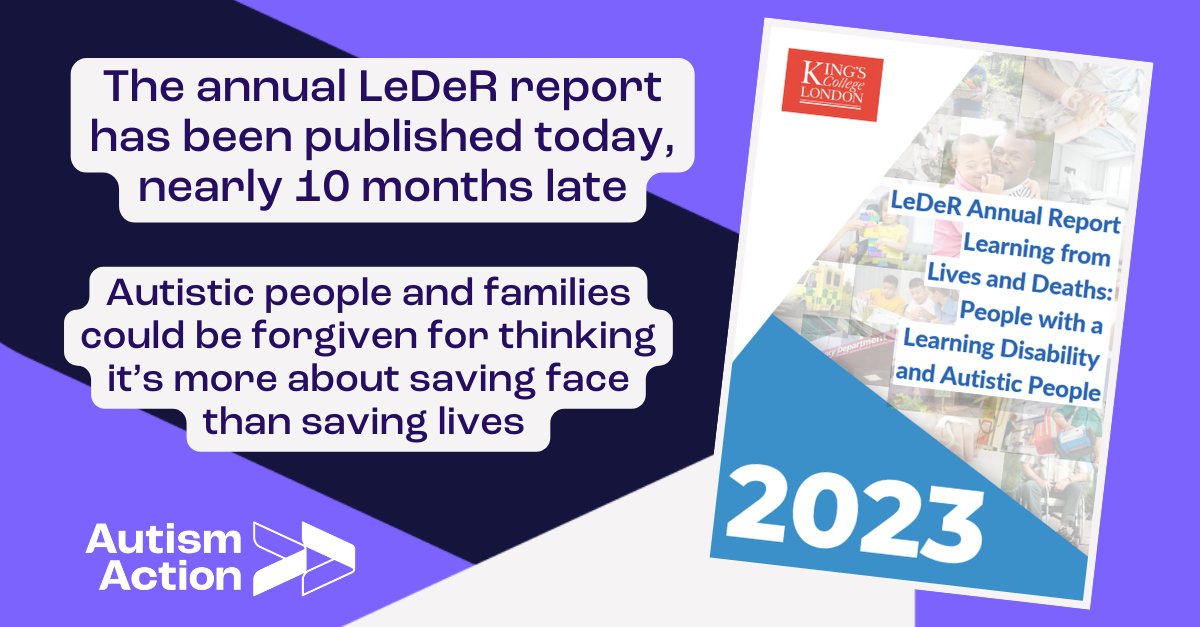
The annual LeDeR report has been published today, nearly 10 months late, along with a Ministerial Statement. Autistic people and families could be forgiven for thinking it’s more about saving face than saving lives.
Report: https://t.co/BtZvzFnUFD
Ministerial Statement: https://t.co/zFeIHDEErx
Year after year, autistic people and people with a learning disability continue to die prematurely, and year after year LeDeR reports much the same conclusions. Yet the Government is still not taking national action.
Data about autistic people without a learning disability is wholly inadequate, with no clear plans to improve it. Only 53 completed reviews for 2023 are included for this group.
The Government has given only a vague assurance that it is ‘committed to maintaining LeDeR going forward’. No acknowledgement that LeDeR was removed from the NHS Planning Guidance that actually directs NHS priorities.
The foreword by the group of people with learning disabilities has - for two years running - referred to this as the SPOT THE DIFFERENCE REPORT because they have been saying the same thing each year.
“We don’t want to be an empty chair at Christmas. We do not want to be just a memory or a photograph on the wall”
Crucial questions remain: What will the Government do right now to improve the LeDeR data in future years? And what urgent action will it take to drive national change to prevent future deaths?
#LeDeR #NHSEngland #autism #preventabledeaths #learningdisability
Sensory processing podcast | Autism Central
Sensory Processing Focus, will be hosted by Holly Sprake-Hill, a neurodivergent occupational therapist, and will bring together autistic people, parents, carers, and professionals to explore sensory processing.
If you have a learning disability and are over the age of 14, you should be registered on your GP's Learning Disability Register. This will give you some benefits like having an annual health check. Watch Harshi's video to find out more- https://t.co/109RPolNfE
Looking for a new job challenge? Interested in joining us?
We need 4 new staff to join our research team @KingstonUni
See thread for details:
1. Research Fellow (Experienced project manager)
2. Research Associate (Engagement manager)
3. 2 researchers with a learning disability
The toolkit was completed with colleagues from Public Health and Office for Health Improvement and is one of the approaches to reduce premature mortality for people with learning disability and autistic people. We're keen for feedback on the toolkit ; DM for a copy.
📷Weight Management
The NW Team has developed a Weight Management Toolkit for all health professionals
supporting people with a learning disability or autistic people. It encourages healthcare
professionals to ‘stop and think’ and ‘take action’ to support healthy weight.
@JaneSinclair72 Could check out people first Merseyside - they’ve lots of resources and just delivered a conference last week around dignity and voice in dying https://t.co/pHIRNdag1t
people with learning disabilities. Let's help out big issue vendors and increase awareness about the value people with a learning disability bring into our lives by buying a copy.
Inside the Big Issue: Learning Disability Week special edition - Big Issue
The theme for this year’s Learning Disability Week is Do You See Me? It is, all about being seen, heard and valued.
Mencap have partnered with Big Issue to make it more accessible to
@WeAreLSCFT Well done Lewis and great work Jo - we should add this info into our healthy weight toolkit and showcase the difference active support can make 🌟
Today put on your rose tinted spectacles and record three things you are grateful for. Just this simple practice is scientifically proven to improve your wellbeing.Gratitude is an antidote to negative emotions, a neutraliser of envy, hostility, worry, and irritation. It is savouring; it is not taking things for granted; it is present-oriented.
The more you practice gratitude, the more you strengthen the brain’s neural circuits for gratitude, making it easier to focus on feelings of gratitude. When you start to focus on the things you already have in your life that are good, your brain becomes better at discovering similar things. For example, if you consciously notice how beautiful the stars in the night sky are, you will be more likely to notice the stars and feel gratitude again. Even though the stars are always there, the gratitude focus is like a signal to your brain to notice them.
So start gratitude journaling and observe your wellbeing build #mentalhealth