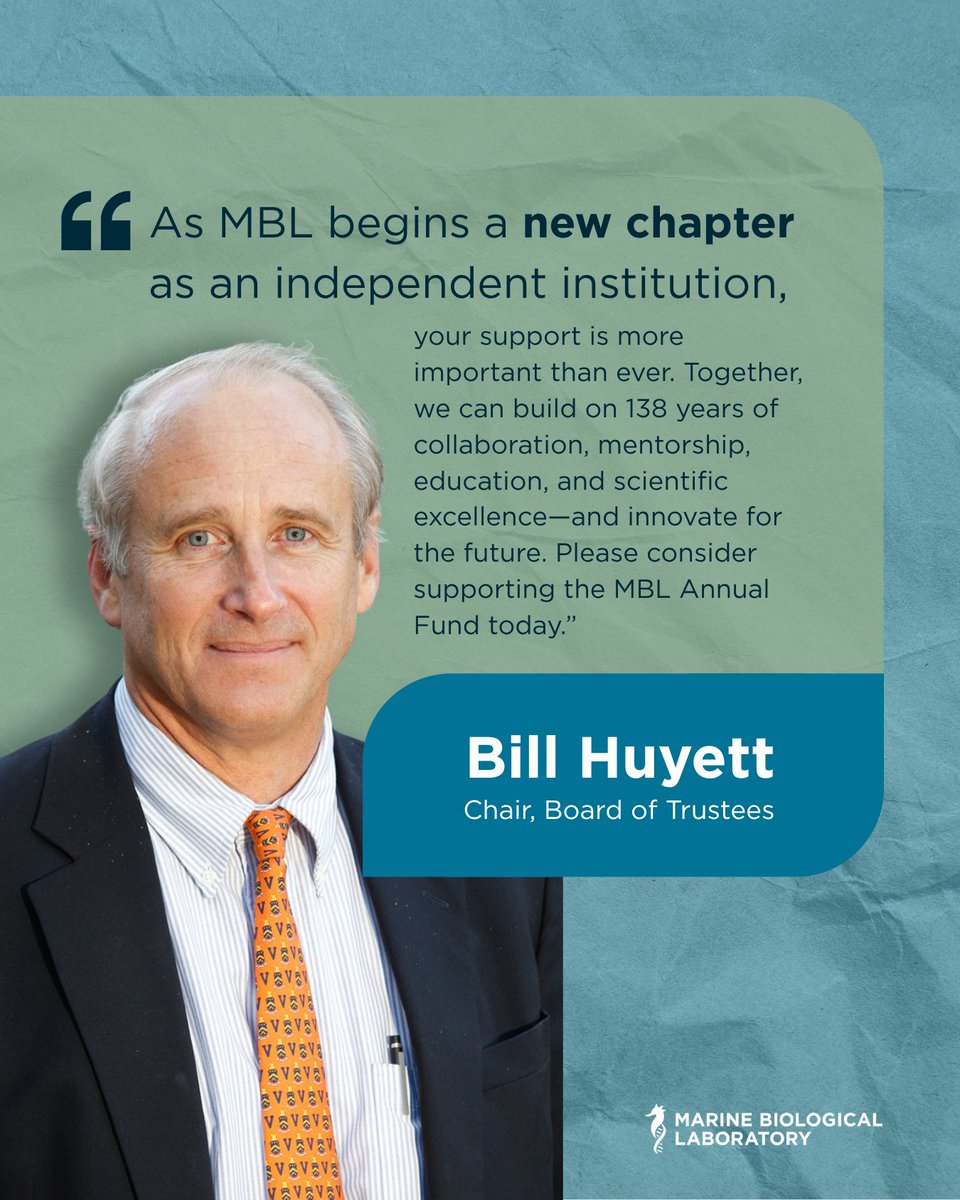
We're thrilled to announce the largest private gift in our 137-year history: a $25 million unrestricted donation from MBL Whitman Scientist Mark Terasaki.
His generosity will bolster our renowned research and education programs. 🔬
Learn more: https://t.co/ZvHbfmU7ut
⭐️ Did you know we publish a bi-monthly newsletter?
Subscribe to The Collecting Net for the latest stories, research highlights, education news, and more.
🔗 https://t.co/MYySc0dlRM
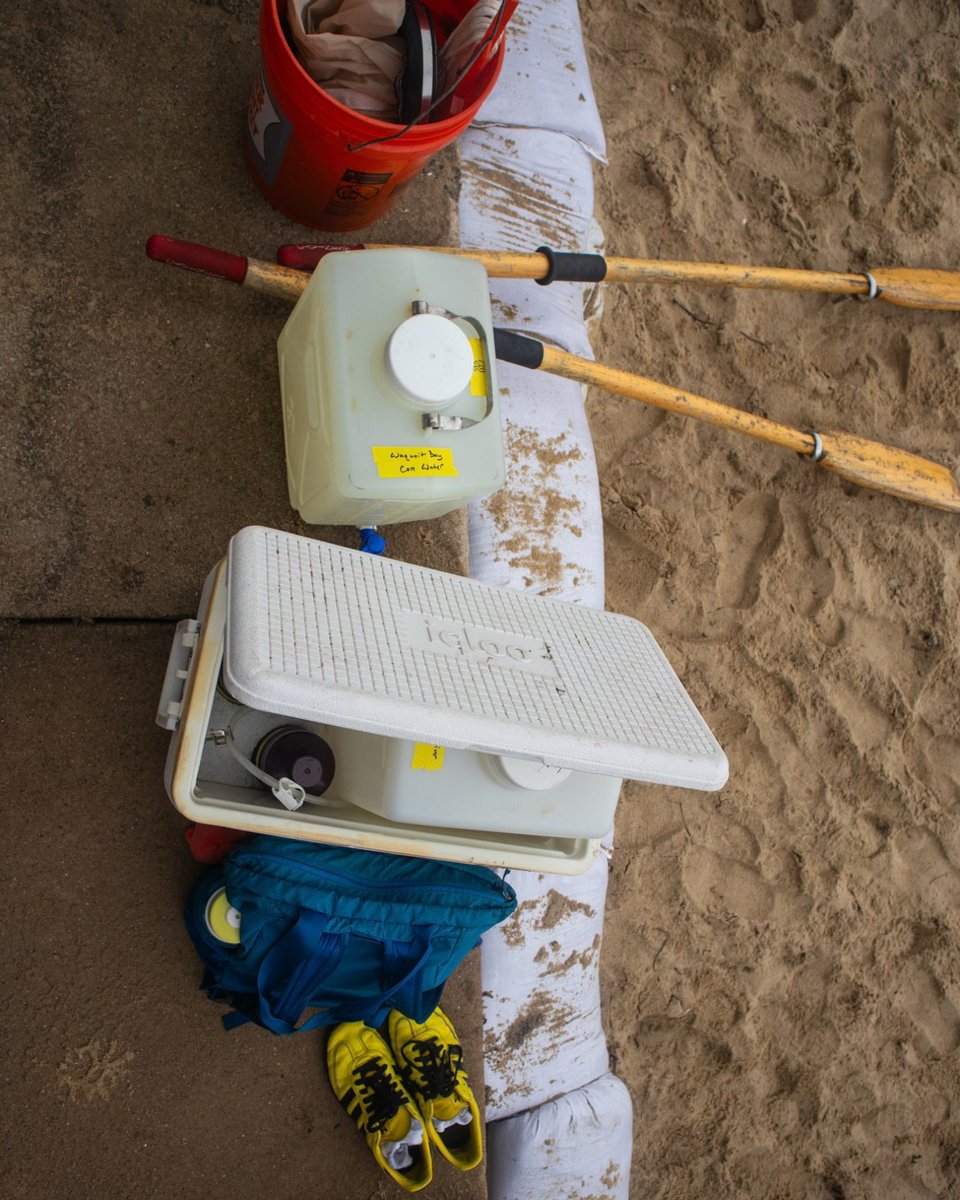
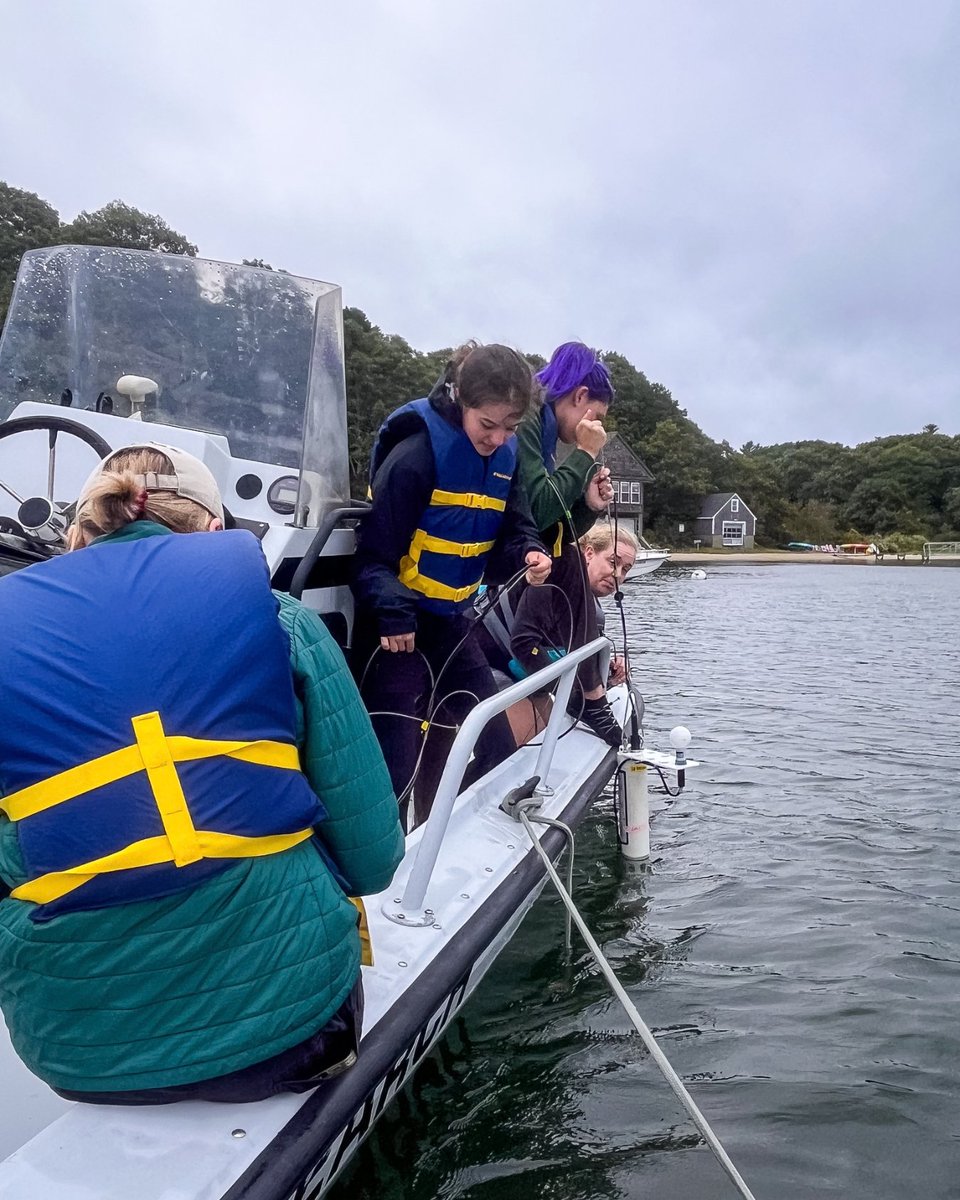
On Monday, undergraduate students in the 2026 Semester in Environmental Science (SES) course sampled water at multiple locations including Waquoit Bay to examine photosynthesis and chlorophyll content.
🌊 The goal: to compare marine and freshwater systems to glean insights
APPLICATIONS OPEN‼️
Apply to the Grass Fellowship by December 1 and gain access to research support including laboratory space, animals, equipment and supplies for one summer at the MBL.
Partnered with @grassfoundation
🔗 More info here: https://t.co/bEaA2YhrXL
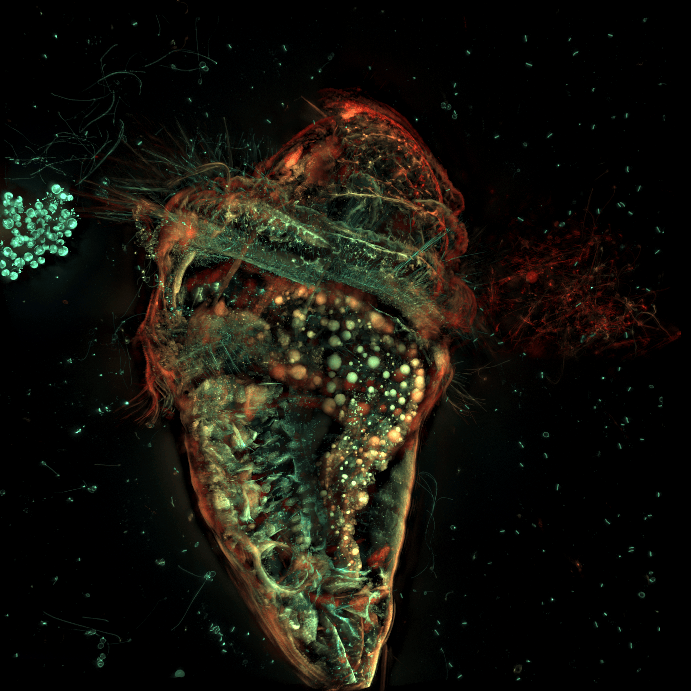
Happy #MicroscopyMonday!
This is a holomatography image of a larval tubeworm imaged on a Tomocube Mini.
Imaged by students Le Pham and Sophia Aredas during the 2026 Molecular and Cell Biology of Symbiosis course.
Learning from experts and from one another—amidst an environment of non-model organisms, cutting-edge technology, and deep scientific history—has made for a pretty great summer for MBL’s students.
Curious what they’ve accomplished?
🔗 Read here: https://t.co/vdYqDxAfCD
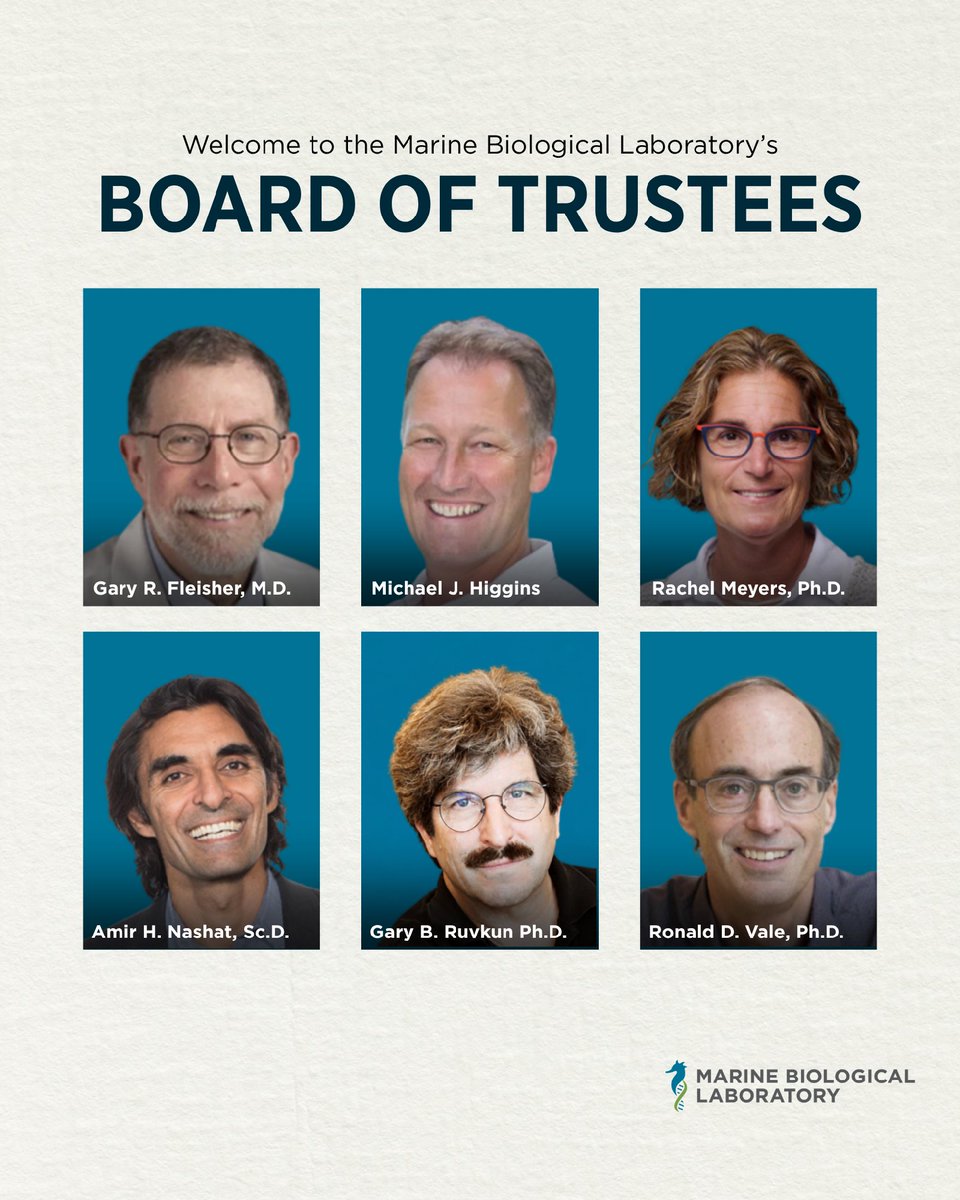
The Marine Biological Laboratory has expanded its Board of Trustees with the election of six distinguished leaders.
🔗 Full press release here: https://t.co/OT9mVBoyPX
APPLICATIONS OPEN‼️
Apply to the Whitman Center Fellowship program and gain access to state-of-the-art instrumentation, innovative imaging technology, genome sequencing, and availability of model freshwater and marine organisms.
🔗 More info here: https://t.co/32uq8EJySk
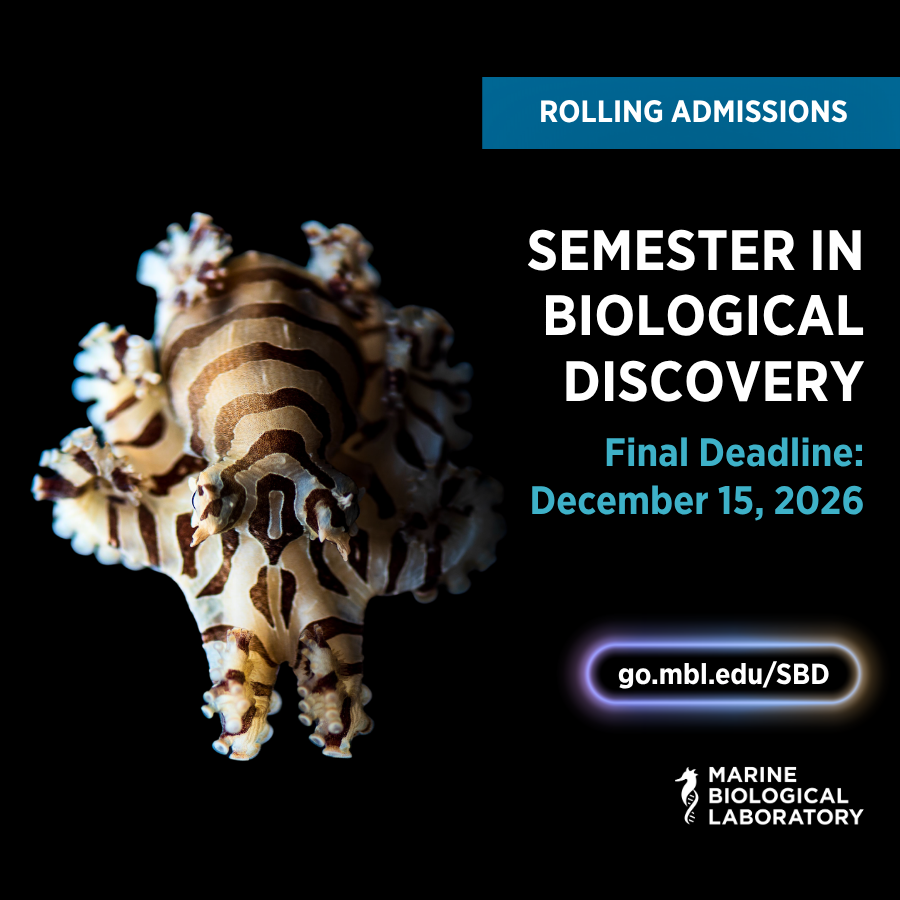
⏰ ROLLING ADMISSIONS!
Apply to the Semester in Biological Discovery program by December 15, and gain immersive research experience in discovery-driven biological sciences.
🔗 More info here: https://t.co/dzCGf4nX5c
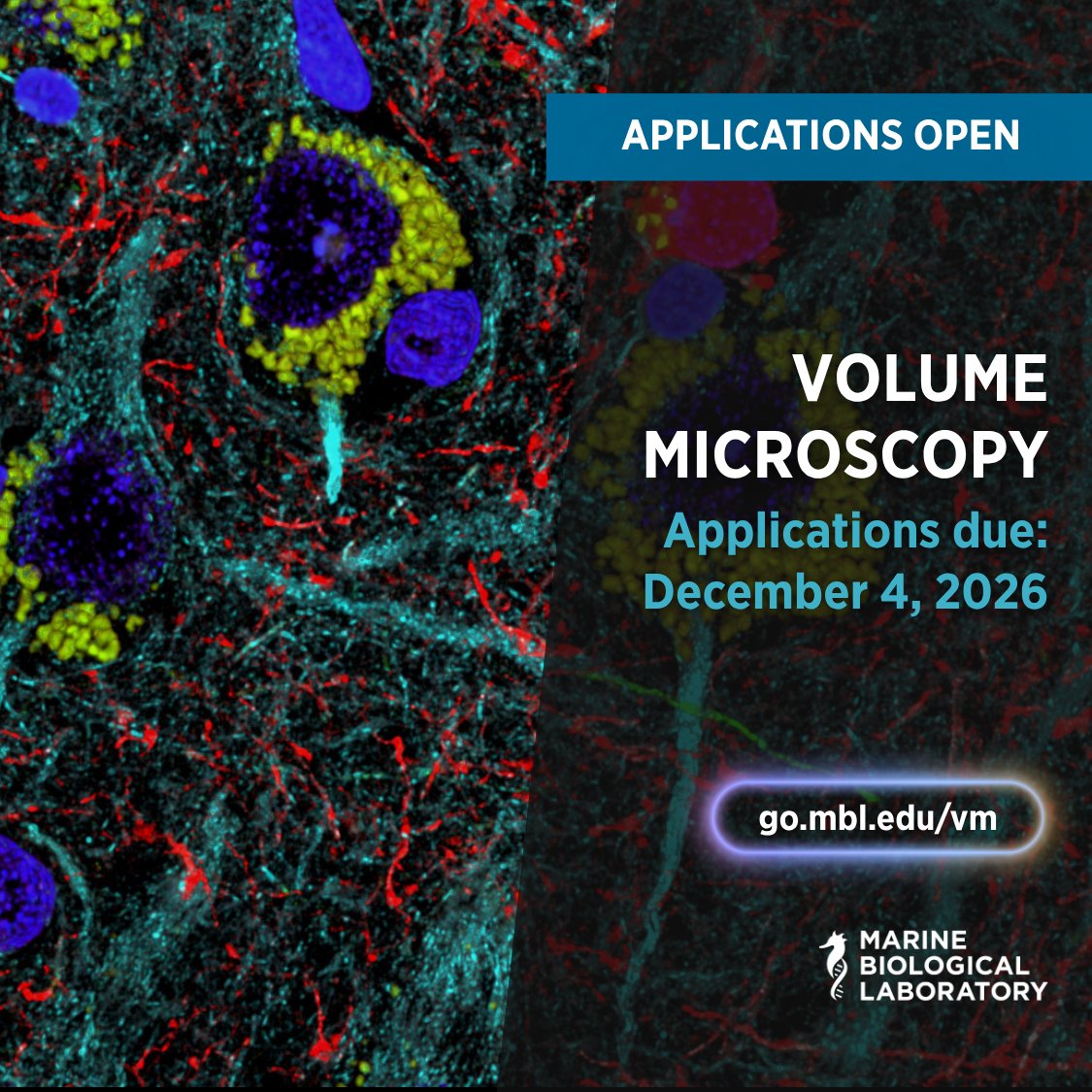
APPLICATIONS OPEN‼️
Volume Microscopy: from Array Tomography to PFIB SEM is a new course that will introduce participants into a dynamic area of technology development.
Photo credit: Kristina D. Micheva
🔗 More info here: https://t.co/A3p0lyXfc2
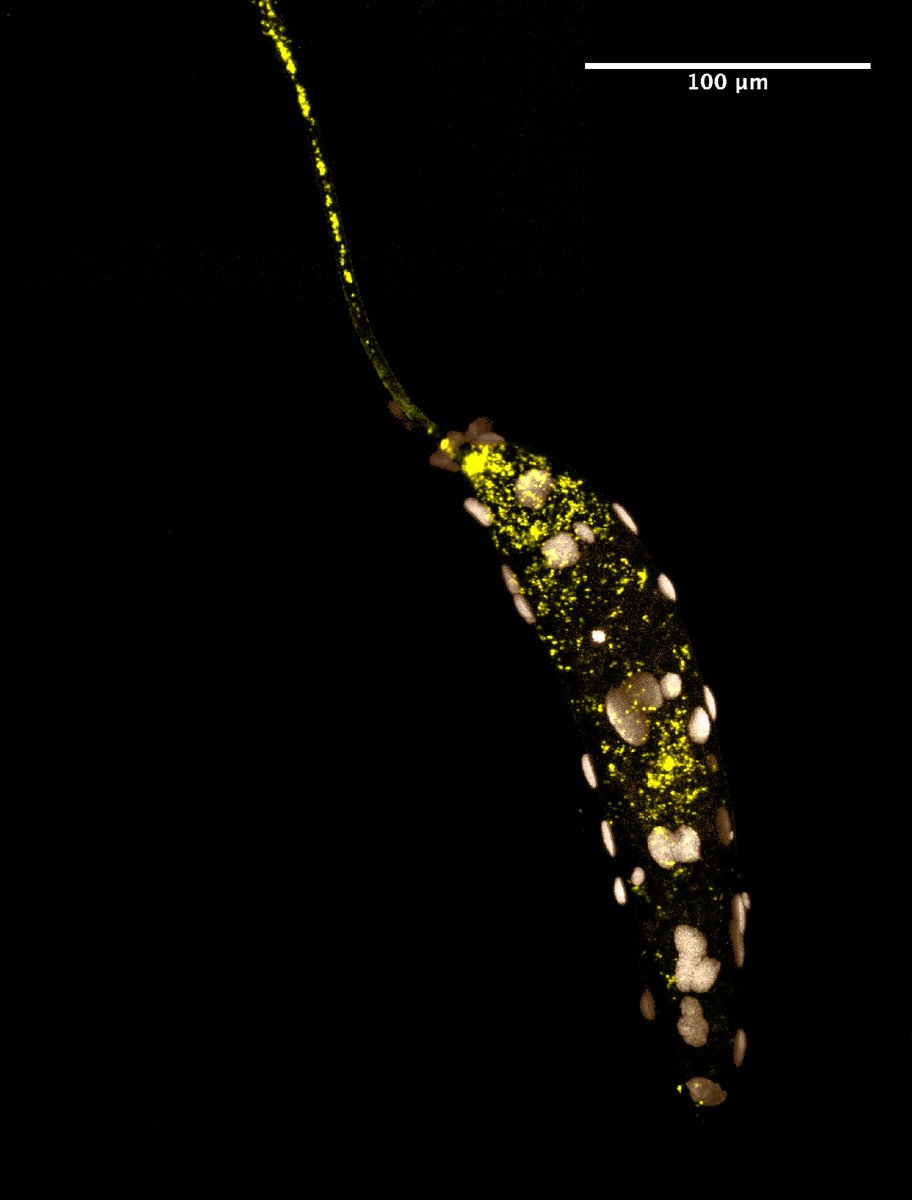
No, this isn’t a banana!
For today's #MicroscopyMonday, we have a confocal image of a parasitoid wasp egg, filled with a symbiotic bacterium.
Imaged by student Loretha Jack during the 2026 Molecular and Cell Biology of Symbiosis course.
🚤 What does it take to work on a specimen-collecting vessel?
We spoke with Taylor Sakmar, the new Senior Collector at the MBL, about the importance of the Collections department, what he enjoys about his unique job, and more.
🔗 Read his "Take 5" here: https://t.co/jwNVhFAGZ3
In 2018, five researchers from all different disciplines gathered for a National Science Foundation (NSF) Ideas Lab, themed around synthetic cells...
🔗 Full story here: https://t.co/h6k7aBwF5q
MBL’s Molecular Mycology: Current Approaches to Fungal Pathogenesis (MOMY) course are studying pathogenic fungi that cause infections like brain inflammation.
🔗 Read more here: https://t.co/EVscdPhjLU
Students in the MBL's Semester in Environmental Science course spent several days in the field collecting measurements to help them model the photosynthetic productivity of oak pine forests on the Cape.
#biology#environmentalscience#education
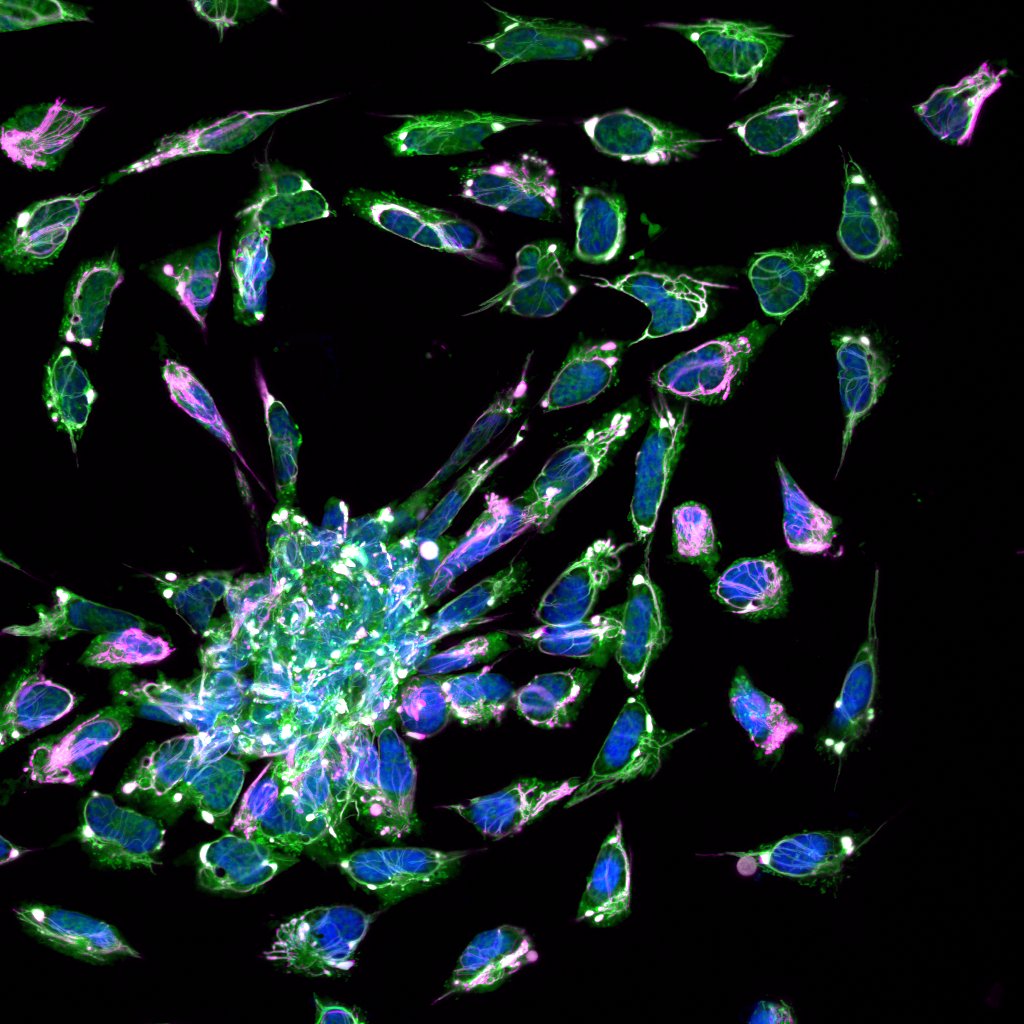
Happy #MicroscopyMonday!
Check out this confocal image of #squid blood cells (known as hemocytes) from the hummingbird bobtail squid (Euprymna berryi).
Imaged by student Yoon Chang during the 2026 Molecular and Cell Biology of Symbiosis course.
✨ A huge thank you to our Gemma team for their hard work collecting live specimens throughout the seasons that help MBL scientists study #development, #neurobiology, and so much more.
The #science happening at MBL wouldn’t be possible without you.
A tiny crustacean, Parhyale hawaiensis, thrives along the seacoast amidst the changing tides. Yet until recently, no one knew the genes underpinning how these small shrimp-like creatures know the timing of the tides.
https://t.co/YVJ7beqbM9
Go behind the scenes of the Microbial Diversity summer course, where 20 early-career researchers spend almost seven weeks discovering, cultivating, and studying microbes alongside leading scientists.
🔗 https://t.co/qacBxV85rQ