We receive complaints about information access and privacy, the fairness of government actions or decisions, and serious wrongdoings in the public service.
If you work for a public body or trustee (health professional/facility/agency that holds health information), try our five minute privacy check up
🔗https://t.co/hNOYEstSii
In Manitoba, human error is often a cause of privacy breaches reported to our office. This includes information being sent to the wrong person or place, electronic devices being stolen, or employees viewing personal information unnecessarily.
➡️ Safeguarding and storage of personal information in data systems
Learn about privacy breaches required to be reported to Manitoba Ombudsman and check out our tools for public bodies and trustees.
🔗 https://t.co/WRxvsavAWx
Protecting personal information is not just about complying with privacy legislation, but also actively working to prevent privacy breaches such as theft or loss, or unauthorized access/sharing/use of personal information.
January 28 is Data Privacy Day around the world. Manitobans give personal information to many different organizations and public bodies when receiving services or care. Those public bodies and health information trustees are required to protect that personal information.
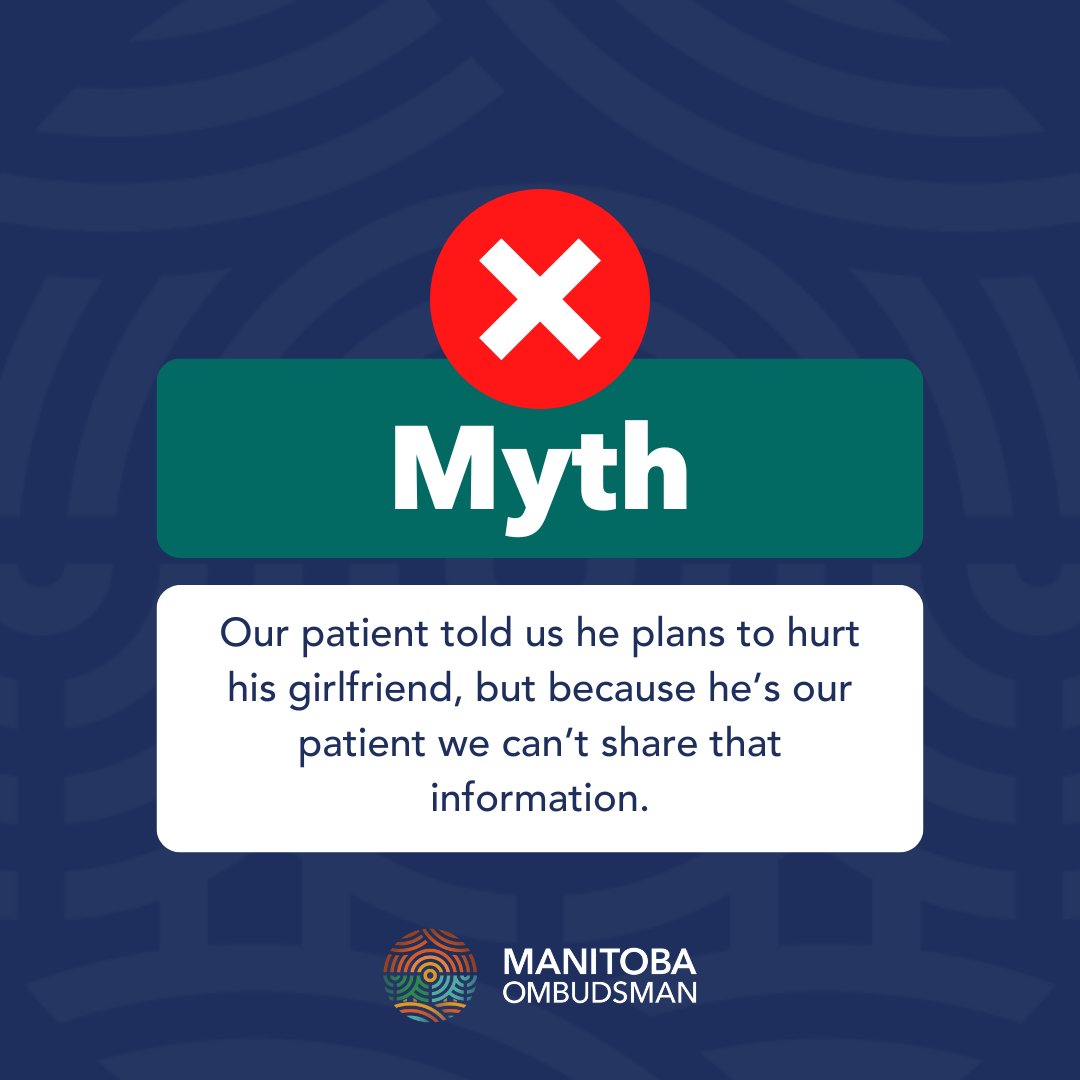
MYTH: Our patient told us he plans to hurt his girlfriend, but because he’s our patient we can’t share that information. WRONG. Manitoba privacy laws specifically allow sharing of information to prevent the risk of serious harm to the life, health or safety of an individual.
Employees and service providers need to know how to assess the risk of serious harm and when to apply these exceptions outlined in Manitoba privacy laws.
Read our joint resolution:
Manitoba Ombudsman joined our colleagues this week to discuss current and developing information access and privacy topics that impact Manitobans and Canadians.
This year's FPT meeting brought together information and privacy commissioners and ombuds to strengthen partnerships and tackle emerging privacy challenges in the digital age. Read about the meeting here: https://t.co/T6cgrXQAcs
(with legislation or policy) or in the public/citizen interest. “It’s important to have oversight that acts in the interest of citizens, prevents and corrects maladministration and helps facilitate public trust and confidence in public systems.” – Ombudsman Jill Perron
Thursday, October 10 is Ombuds Day in Canada. Ombuds (also called ombudsmen or ombudspeople) exist across the world and receive and resolve complaints from citizens, often investigating and reporting an outcome.
The MB Ombudsman office has existed for 54 years as an independent, impartial and non-partisan office, providing an avenue for citizens and employees where a neutral party can investigate and identify when public services have or have not acted fairly, equitably, compliantly
Helpful links for Manitoba public bodies:
🔗FIPPA Practice Notes and Guidelines: https://t.co/wP75PZ61CF
🔗PHIA Practice Notes and Guidelines: https://t.co/vf98JMhJ7e
Right to Know Day – September 28 #RTK2024
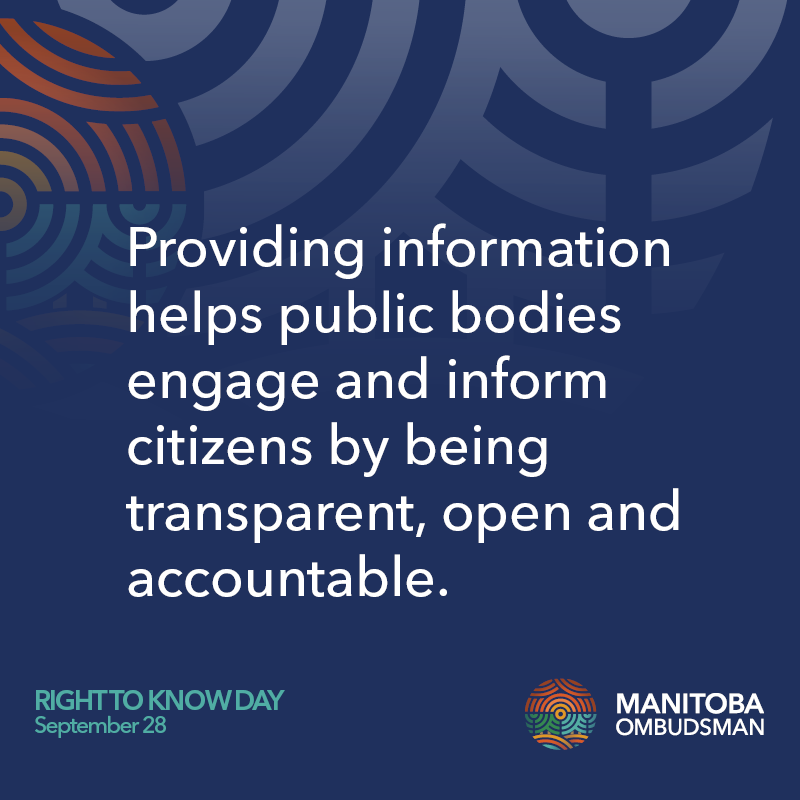
Public bodies can be proactive by making information readily available to citizens. Being transparent helps citizens see and understand how and why decisions are made.
It helps engage and inform citizens about decisions and public services and promotes good governance through accountability. We have practice notes, tips and guides to help public bodies understand their role and processes in responding to citizen requests for information.
Manitoba Ombudsman also receives complaints about the use or collection of personal and personal health information, fairness of government decisions and actions, and serious wrongdoing in the public service.
Right to Know Day – September 28 #RTK2024
Complaints can include:
✅Not having a response to your request in the required timeframe
✅ You think the fees for records are too high
✅ You did not get access to what you requested
Learn more about making a complaint:
https://t.co/ykJ4mvpdjK