Public safety modernization is increasingly interconnected. Technology, staffing, governance, cybersecurity, and operations all affect one another.
Innovation that works means connecting those decisions before one change creates another problem.
MAPS®: https://t.co/6Ku0QAoZPE
Today, we honor the veterans who have served our country with courage, dedication, and commitment.
To the veterans on our team, in our communities, and everywhere: thank you for your service and sacrifice.
#VeteransDay#ThankYouForYourService
A modern ECC needs to support the people, technology and operations behind emergency response.
Columbus County 911’s new purpose-built facility improves resilience, staff support and coordination between the ECC and EOC.
That is innovation that works.
https://t.co/UJbPU68O3I
A better court experience starts before someone enters the courtroom.
Digital wayfinding, self-service tools, electronic check-in, and digital workflows can improve access while reducing administrative burden on staff.
https://t.co/g308Ybw5NF
#Courts#GovTech
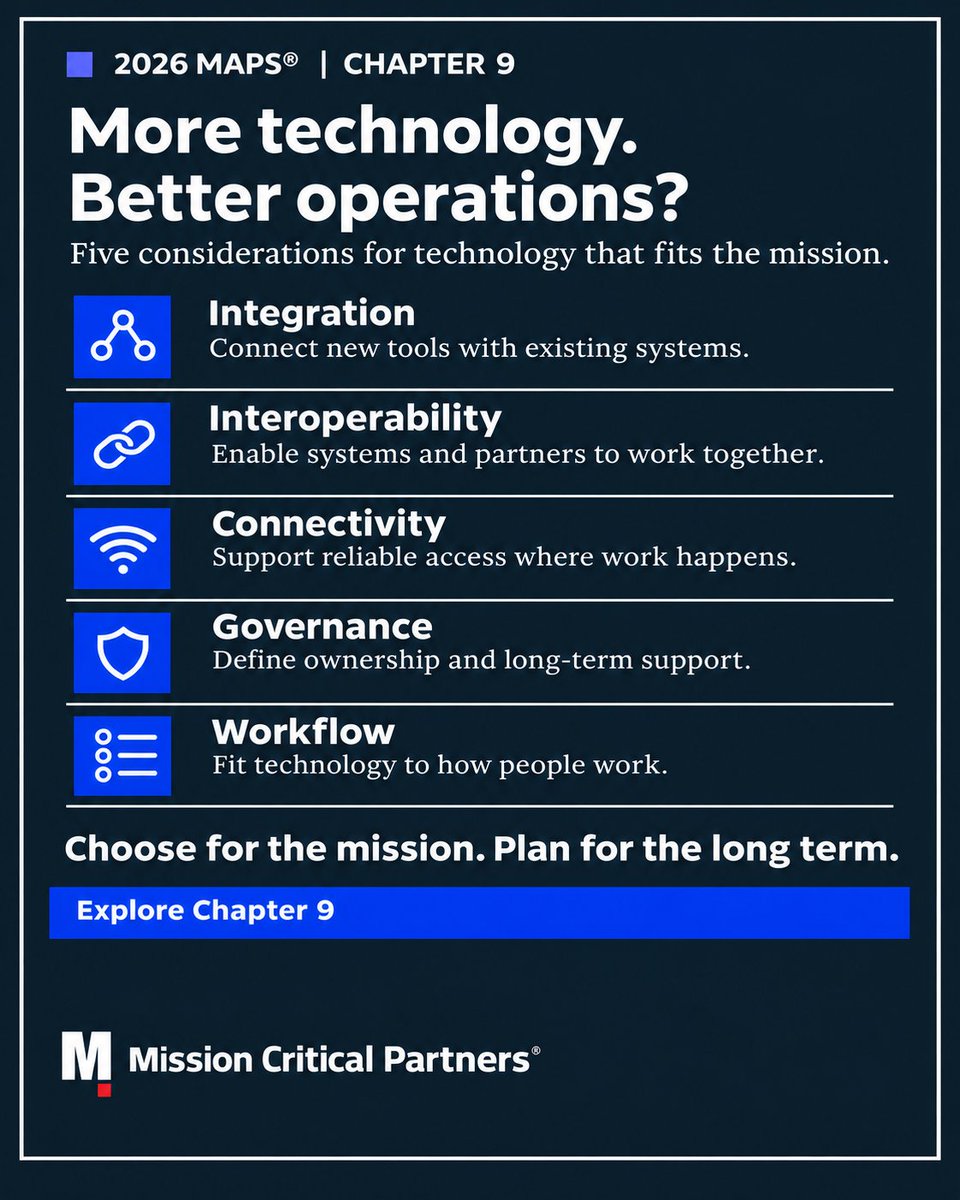
More technology does not automatically mean better operations. MAPS® Chapter 9 looks at cloud, mobility, AI, drones, integration, and interoperability.
Innovation that works means choosing technology because it improves the mission.
https://t.co/b9DfESR04b
#PublicSafety#GovTech
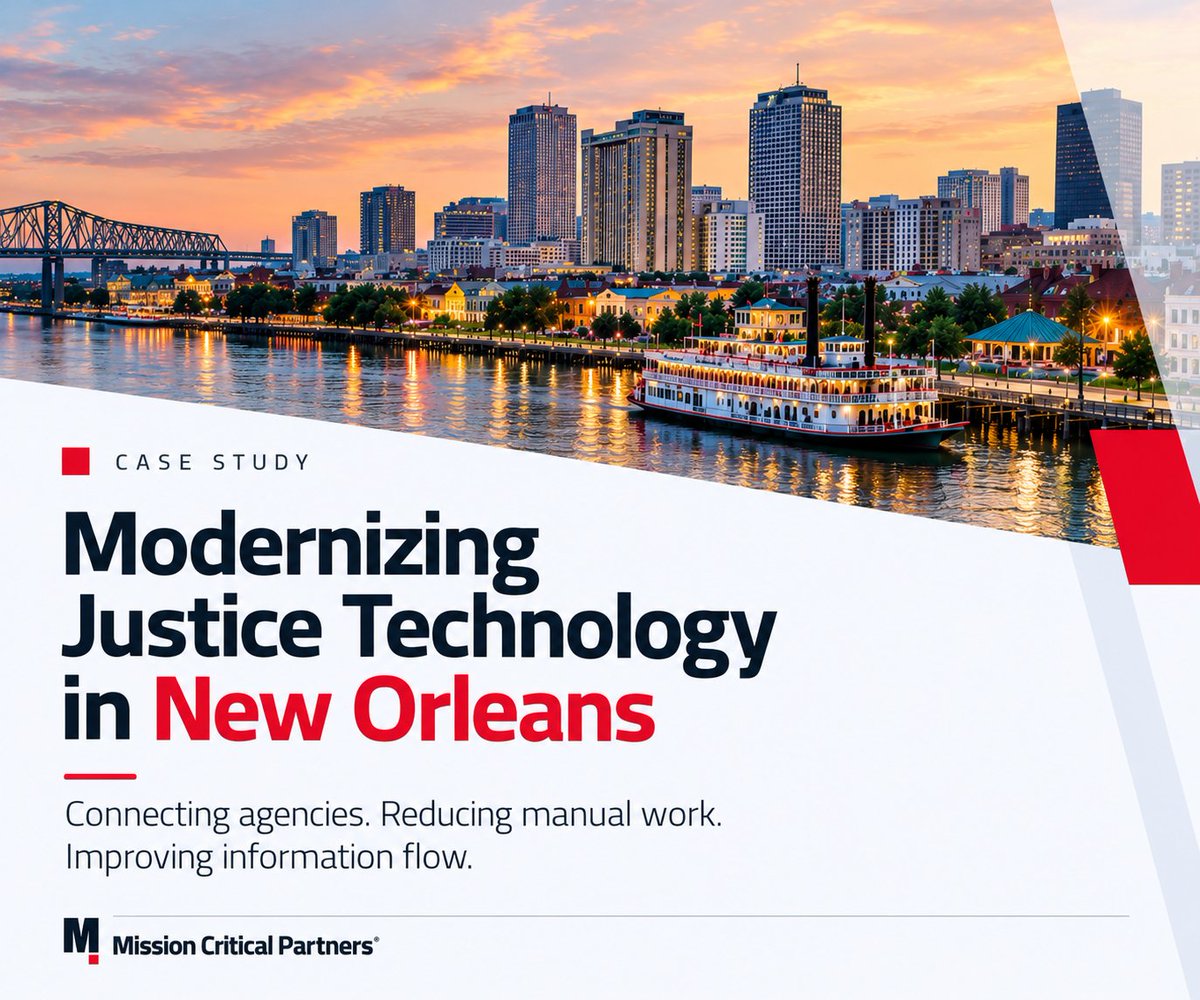
New Orleans is replacing decades of legacy justice technology with a connected, cloud-based environment built for real-time information sharing.
Less manual work. Better coordination. More time focused on serving the community.
https://t.co/R8DHBK06iw
#CriminalJustice#GovTech
LMR and LTE do not have to be an either-or decision.
Watch our on-demand webinar for practical strategies to improve interoperability, strengthen resilience, and build an integration roadmap that protects existing investments.
https://t.co/hhIIFuibwE
#PublicSafety#EmergencyComm
Finding a risk is only the beginning.
Real improvement happens when findings become assigned actions, deadlines, and changes that are tested to make sure they worked.
Jason Franks explains how to turn assessments into measurable improvement.
https://t.co/PpV8zrbBpz
#Cybersecurity
The better AI question for public safety: Where can it meaningfully support mission-critical work?
MAPS® Chapter 8 looks at practical uses, reliability, governance, and human oversight.
Innovation that works keeps people at the center.
https://t.co/rUenBkeE63
#PublicSafety#AI
To the police officers, firefighters, EMTs, paramedics, emergency communications professionals, and others serving on the front lines: thank you for your commitment, professionalism, and service to your communities.
Modernization is more than replacing old systems.
New Orleans is connecting justice agencies, reducing manual work, and improving information flow across law enforcement, courts, and corrections.
Innovation that works.
https://t.co/ZUeQQrGN6K
#CriminalJustice#GovTech
AI could reshape how public safety professionals use CAD and RMS by reducing manual work and surfacing useful information while keeping humans firmly in control.
Innovation that works means helping people focus on the work technology cannot replace.
https://t.co/xJGC7hkH9k
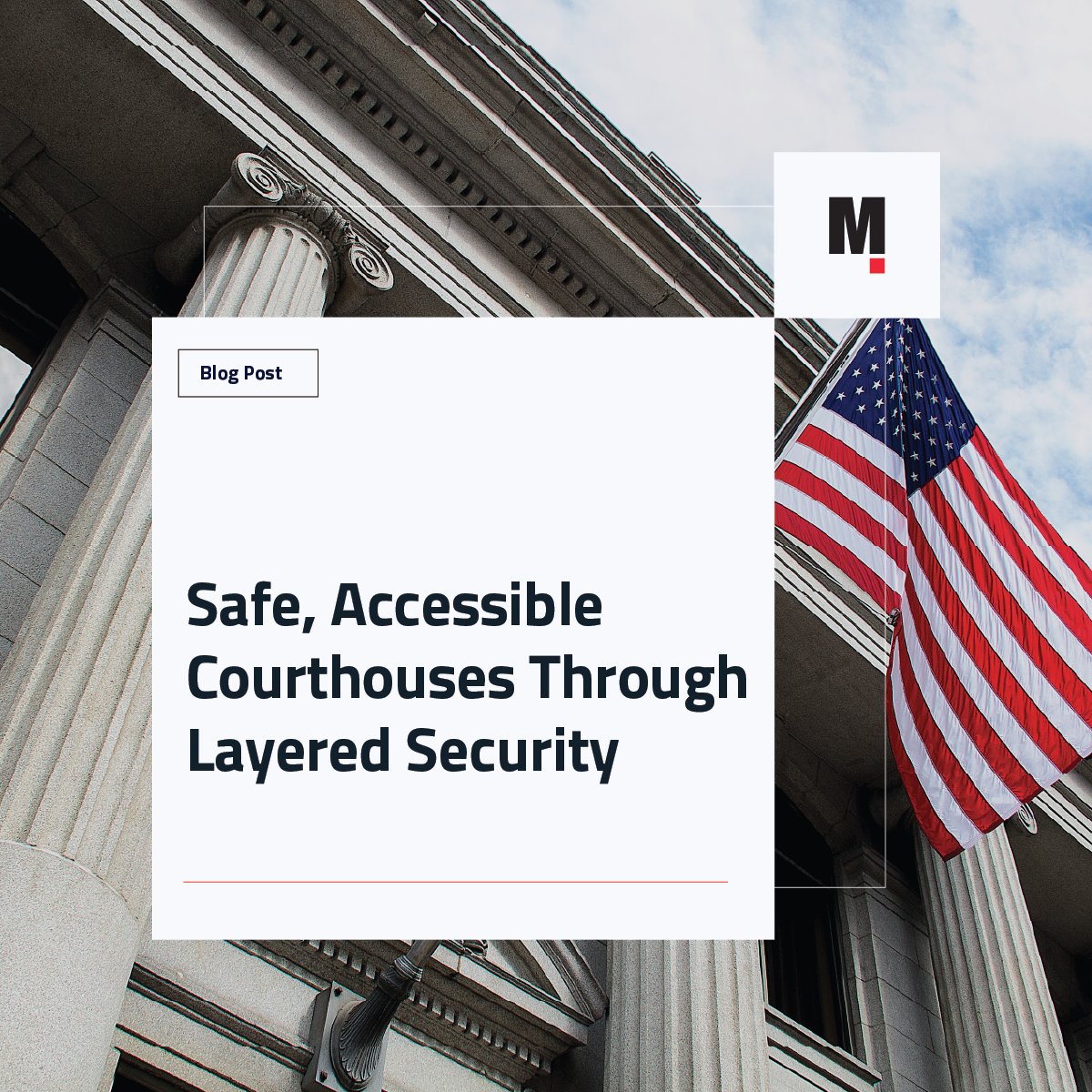
Courthouse security should protect people without making access to justice feel intimidating.
Layered security combines physical protection, technology, cyber safety, and design to create safer, more welcoming court environments.
Innovation that works.
https://t.co/EzQSoFnfBd
Readiness is built before the emergency. MAPS® Chapter 7 looks at relationships, exercises, communication, technology, and the resource pressures shaping emergency management.
Innovation that works strengthens what agencies rely on when it matters most.
https://t.co/gLNtA7BOqf
Court modernization should reduce friction, not just replace technology.
Marin County expanded online access, digitized documents, introduced e-filing, and modernized workflows to make services more accessible and responsive.
https://t.co/WiFak2WeSF
#Courts#GovTech
Real-world experience matters when evaluating the future of mission-critical communications.
Join Montgomery County Fire and Rescue’s Mike Baltrotsky on Oct. 20 as we explore how LMR and LTE can work together to improve interoperability and resilience.
https://t.co/LkTfj8DRkO
We’re excited to welcome Jim Lake to MCP as a senior consultant.
With more than 4 decades in public safety, Jim brings deep experience in emergency communications, operations, workforce wellness, accreditation, and modernization.
Welcome to the team, Jim!
https://t.co/u7SY3aMs0v
The ECC workforce challenge is bigger than hiring. Leadership, training, wellness, facilities, compensation, and technology all shape retention and resilience.
That is innovation that works.
Explore Chapter 6 of MAPS®: https://t.co/54cAMMpyGf
#PublicSafety
A statewide CJIS modernization replaced disconnected legacy systems with a cloud-hosted environment that gives authorized users faster, secure access to critical information.
Processes that once took days or weeks can now take seconds or minutes.
https://t.co/7rTWBwfNun
Risk does not stay inside one department. MAPS® Chapter 5 looks at why public safety agencies need a more coordinated approach to governance, risk, and compliance.
Innovation that works means fewer blind spots and clearer accountability.
https://t.co/572yn5wqif