I was having breakfast in my hotel today when an American asked me about Zambia🇿🇲.
I explained that we have 10 provinces compared to their 50 states:
Lusaka = a mix of New York + the Washington metropolitan area (DMV). Government, finance, embassies, deal-making, networking and everyone acting “busy.”
Southern = Texas + California. Cattle, farming, big land, quiet money, business-minded people, and Victoria Falls & Lake Kariba carrying the tourism economy.
Copperbelt = Michigan + Pennsylvania. Industrial backbone. Mining towns. Old money. Union vibes. People who remember when the economy was “serious.”
North-Western = Alaska. Rich in natural resources, sparsely populated, and everyone believes the future is there.
Western = Louisiana. Strong cultural identity, flood plains, proud traditions, and its own rhythm entirely.
Eastern = Iowa + Kansas.
Agriculture, hardworking people, and quietly influential politically.
Central = Ohio.
Right in the middle of everything. Farms, transport links, mining, logistics. The “swing province” energy.
Northern = Washington.
Rain, greenery, lakes, waterfalls and underrated natural beauty.
Muchinga = Colorado.
Mountains, scenery, adventure, wilderness and people forgetting how beautiful it actually is.
Luapula = Minnesota + a little Florida fishing-town energy. Water everywhere. Fish economy. Relaxed pace of life. Hidden tourism potential.
Zambia is basically America compressed into 10 provinces… just with better weather, less stress, nshima, fewer lights and highways. 🇿🇲
Operating on incomplete information is worse than having no information at all. The "$2bn" is just an estimate of the gross value of the metal in the GROUND at CURRENT metal price. There is zero guarantee that the in-situ resource will still be worth $2bn in future.
This was a private (not government) transaction between Leopard Exploration and Mining (LEM) and Shuka Minerals. LEM acquired a large-scale mining licence in December 2014 and this licence includes the historical Kabwe Zinc Mine. The zinc mine ceased operations in 1994. The $4.5m is structured as $1.5m cash + $3m in Shuka shares, meaning LEM will receive $3m worth of Shuka shares.
If people want to be angry, perhaps they should direct their anger towards the mines minister at the time who allowed LEM to acquire the mining licence that included the Kabwe Zinc Mine.
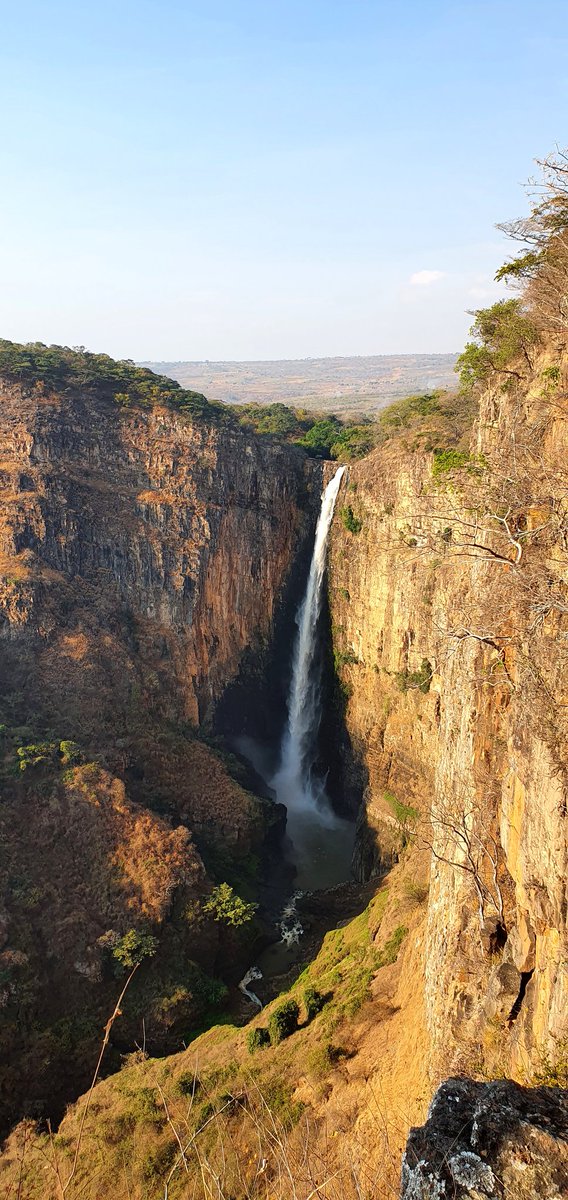
Zambia has the Zambezi river system that drains into the Indian Ocean and the Congo that drains into the Atlantic Ocean. The extensive river networks connected to the river sytems have numerous waterfalls. Here are 15 notable waterfalls.
1. Kalambo Falls
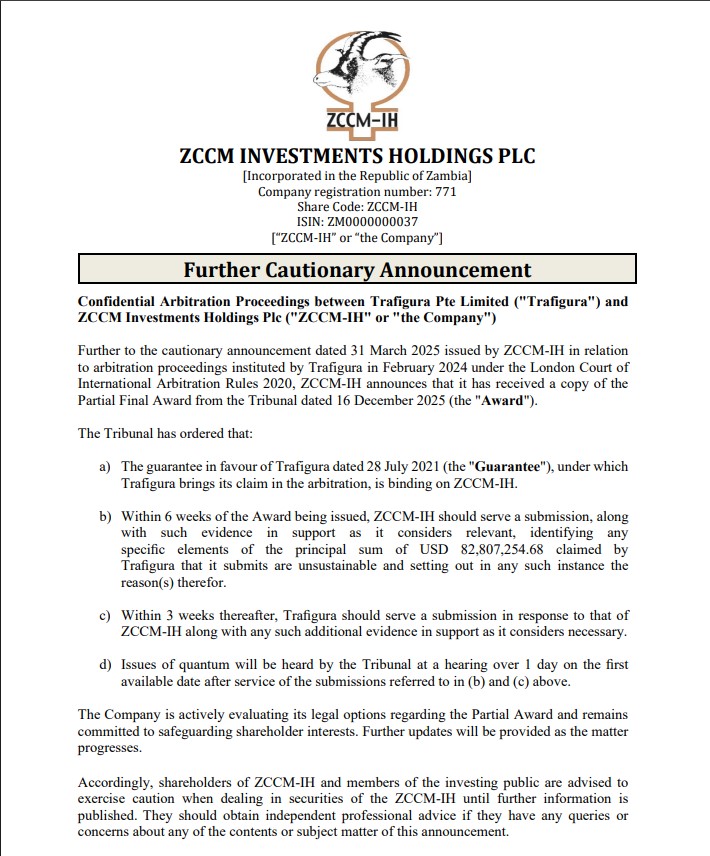
The chickens have come home to roost. Milingo Lungu who was the provisional liquidator for KCM is yet to account for the US$100m advance payment that Trafigura made to KCM. ZCCM-IH signed a guarantee basically saying that if KCM doesn't honour the agreement, come to us.
Well in 2023, Trafigura did go to ZCCM-IH and demanded payment under the guarantee. ZCCM-IH didn't pay so in Feb 2024 Trafigura filed for arbitration against ZCCM-IH in London.
On 16 Dec 2025, the tribunal issued a Partial Final Award, basically saying that ZCCM-IH can’t simply say “that guarantee doesn’t count.” The tribunal said it does count and it legally binds ZCCM-IH. Trafigura’s claim is for US$82,807,254.68
ZCCM-IH now has 6 weeks to submit which parts of the US$82.8m it says are not valid, and why. Then Trafigura will have 3 weeks to respond.
Either way, Zambian tax payers will be paying this money which was looted. when KCM was under the provisional liquidator. PF was something else
RESERVES HIT HISTORIC HIGH...Zambia Reclaims Its Economic Future as Reforms Lift the Country from Default to Stability...
The Government has announced that gross international reserves have risen to a historic high of US$5.2 billion, the strongest external buffer ever recorded. The disclosure was made by Finance Minister Dr. Situmbeko Musokotwane during QA Session on the National Assembly floor following a Ministerial Statement on recen credit rating upgrades.
The Minister stated that the strengthened reserve position reflects rising export earnings, improving investor confidence & the cumulative impact of sustained fiscal, monetary & structural reforms. He noted that the record reserve levels now provide Zambia with a powerful buffer against external shocks, reinforce exchange rate stability & strengthen the country’s external position.
The reserves milestone comes alongside decisive international validation of Zambia’s economic recovery through recent sovereign credit rating upgrades by S&P Global Ratings & Fitch Ratings, confirming the country’s transition from default to renewed stability & sustained growth momentum.
On 21.11.2025, S&P upgraded Zambia’s long-term sovereign rating from Selective Default (SD) to CCC+ with a Stable Outlook, confirming the country’s exit from default under S&P’s assessment. This was followed on 28.11.2025 by a further upgrade from Fitch, which lifted Zambia’s Long-Term Foreign-Currency Issuer Default Rating from Restricted Default (RD) to B– with a Stable Outlook, returning the country to the B-category for the first time since 2019.
Presenting his Statement to the House, the Minister noted that the upgrades reflect successful progress in debt restructuring, strengthened fiscal consolidation, stabilising macroeconomic conditions & clearer medium-term growth prospects. He stated that Zambia’s journey from its debut B+ ratings in 2011, through the 2020 default, to renewed B-category status in 2025, reflects both the depth of the crisis & the scale of the reforms that have restored national credibility.
As at June 2024, Zambia successfully concluded the restructuring of US$3.8 billion in Eurobonds & has now restructured US$12.7 billion out of the eligible US$13.5 billion external debt stock, representing 94 percent coverage. These milestones have normalised relations with commercial creditors & restored the foundations of debt sustainability.
The rating upgrades & the historic reserve build-up carry far-reaching implications for the economy. They reinforce Zambia’s restored international credibility, strengthen investor confidence & gradually improve access to financing on more affordable terms. Government has emphasised that while Zambia does not intend to return to unsustainable commercial borrowing, the improved credit profile will reduce risk premiums, support private sector access to capital & strengthen Zambia’s engagement with development partners.
The Minister further noted that the renewed confidence created by the debt restructuring programme and rating upgrades is already supporting rising foreign direct investment inflows across key sectors including mining, agriculture, energy, manufacturing & tourism, reinforcing foreign exchange inflows & strengthening macroeconomic stability.
Government has reaffirmed its unwavering commitment to prudent fiscal management, responsible debt practices, social sector protection, domestic revenue mobilisation & the completion of negotiations with remaining creditors. The recent upgrades & reserve accumulation, while historic, are regarded as a foundation for continued economic recovery rather than a final destination.
“The international community has taken notice. Investor confidence is returning. And the fundamentals for long-term prosperity are being rebuilt,” the Minister stated, adding that sustained discipline and reform will ensure Zambia’s credit standing & economic resilience continue to strengthen.
(c) @mofnpzambia
I draw your attention to SI No. 68 of 2025 which comes in effect on 1st January 2026. This will force mines to buy from local manufacturers. Mines will have to reserve at least 20% of their annual procurement budget for Zambian owned companies.
Last year cabinet approved the establishment of Zambia Minerals Investment Corporation (ZMIC) which will allow GRZ to trade minerals directly. Unlike the old model (ZCCM-IH) where GRZ got a dividend when mines declared a profit, ZMIC will take a percentage of the physical copper produced by all the mines and sell it on the open market.
ZMIC is tasked with entering into joint ventures specifically focused on value addition. ZMIC will also have the right to acquire substantial stakes (up to 30%) in new mining projects.
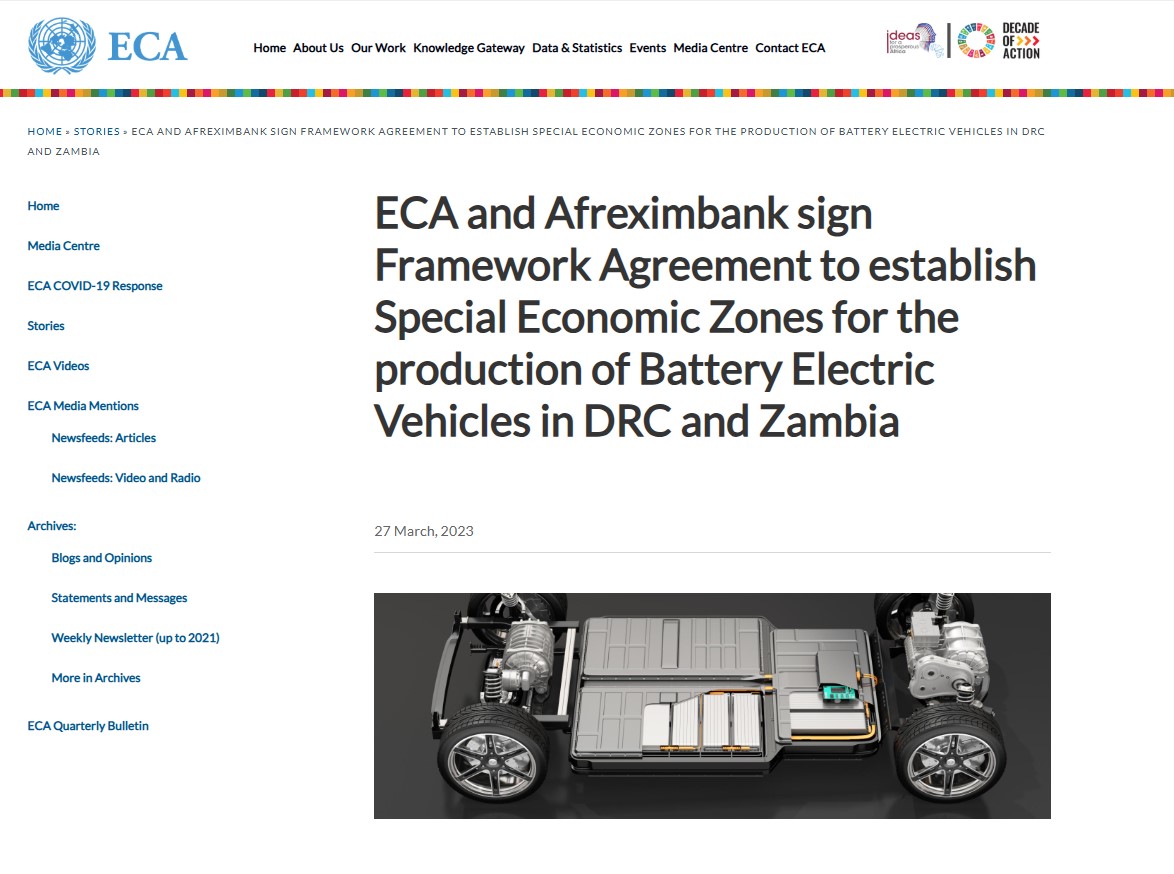
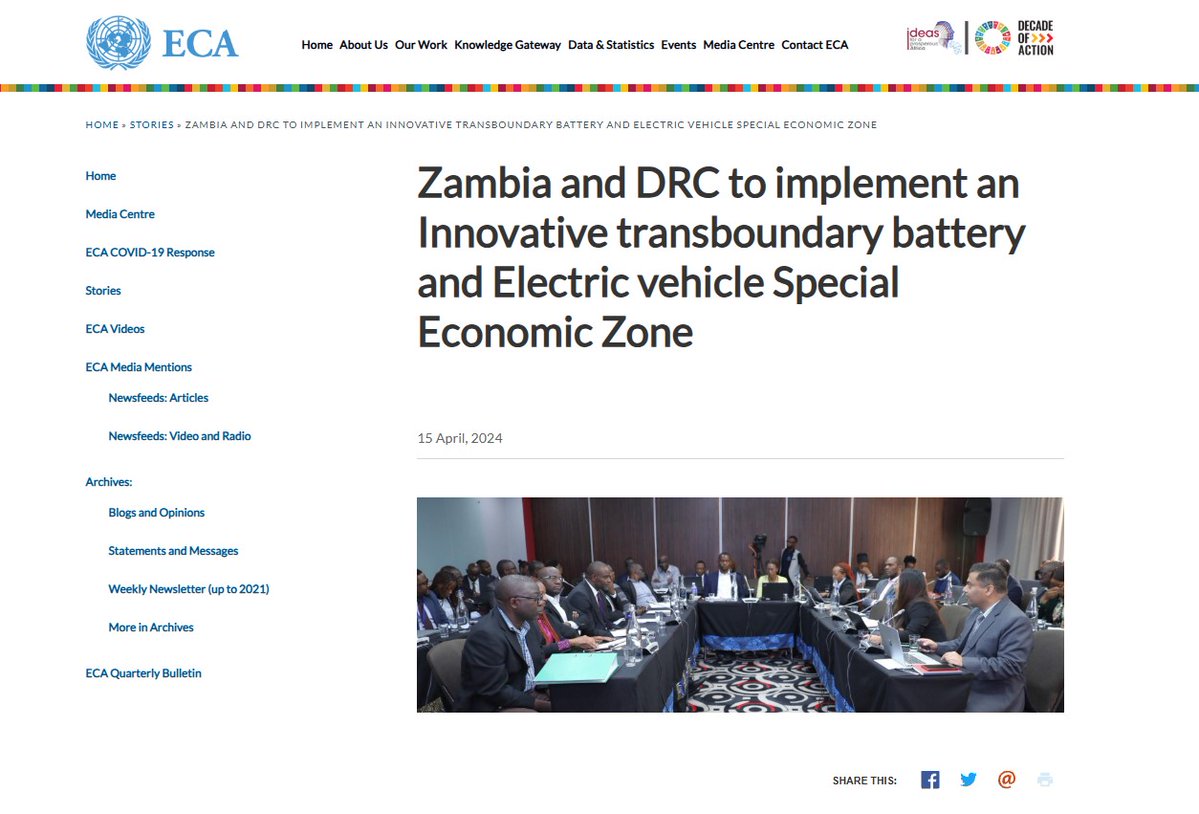
Zambia, DRC and USA also signed an MOU to create a regional value chain for EV batteries in 2022. This was followed by the Transboundary Battery and Electric Vehicle Special Economic Zone agreement in 2023.
A pre-feasibility study carried in 2023 confirmed that the project is technically and financially viable. It found that manufacturing battery precursors in Zambia and DRC would be significantly cheaper than in the US or China. This project is supported by Afreximbank, the United Nations Economic Commission for Africa (UNECA), and the US government
Things are happening, but we all seem to be preoccupied with politics to notice all of this. Any one interested in learning more about the Transboundary Battery and Electric Vehicle Special Economic Zone can follow the links below
https://t.co/jERHz13rz4.
https://t.co/ZDdnVYH1wM.
I just wish HH could drop this Bill 7, it is sucking so much oxygen from all the little steps that Zambia is taking forward. Someone asked me what GRZ is doing to stop transfer pricing. The fact that many Zambians don't know the measures GRZ has taken to stop illicit financial flows (IFFs) shows how poor GRZ PR is. Everyone talks about the illicit outflow of $3.5 billion highlighted in the 2024 Financial Intelligence Centre (FIC) Trends Report, but no one talks about the steps that have be taken to stop this.
Zambia now has an Economic and Financial Crimes Court (EFCC) which is a specialized court designed to speed up the prosecution of complex financial crimes
In July 2025, the National Prosecution Authority (NPA) issued new guidelines for the prosecution of economic and financial crimes to accelerate how complex financial cases like tax evasion by multinationals are handled in court.
Effective 1st January 2025, the Zambia Revenue Authority Act was amended to to extend legal immunity to ZRA staff. This change is designed to empower tax officers to audit multinational corporations aggressively without fear of personal lawsuits or intimidation.
GRZ has partnered with international bodies to train ZRA officers specifically on auditing mining firms. The organisations are:-
IGF (Intergovernmental Forum on Mining, Minerals, Metals and Sustainable Development): A body specifically focused on mining governance that provides specific expertise on how mining companies structure their costs.
ATAF (African Tax Administration Forum): The leading tax body for Africa that provides regional context and support on transfer pricing specific to African resource extraction.
OECD (Organisation for Economic Co-operation and Development): OECD has deployed veteran tax auditors from developed countries to work with ZRA tax officers on actual audit cases through its Tax Inspectors Without Borders (TIWB) initiative.
Other steps GRZ has taken to stop transfer pricing include:-
1. Effective 1st January 2025, utilisation of tax losses is capped at 50% of taxable income. Meaning, mining companies can not use historical losses to pay zero tax in a profitable year. This was very common in the past.
2. Removal of audit time limits. Previously, transfer pricing audits were statute-barred after six years. Mining companies used this to delay data submission until the audit window had expired.
3. Country-by-Country (CbC) Reporting. Mining companies are now required to file CbC reports, giving ZRA visibility into how much profit the group makes in every country vs how much tax they pay. This highlights any mismatches immediately.
With these measures, I am sure that the next FIC report will show fewer illicit financial flows.
IMAGE IS AI GENERATED
Friends,
Remember last month we shared that the USA had asked citizens of Zambia, Malawi & Mali to pay $15 000 as visa requirements.
Mali reacted and also imposed a $10 000 on Americans visiting Mali. Today USA has removed Mali from list. Mali went in Aura for Aura & won !!