“Runaki was part of the effort to deliver electricity reliably and modernise service provision.”
Revisit this piece from the Editor on Government Reforms Are Essential to Security: https://t.co/aHAwuhqTlp
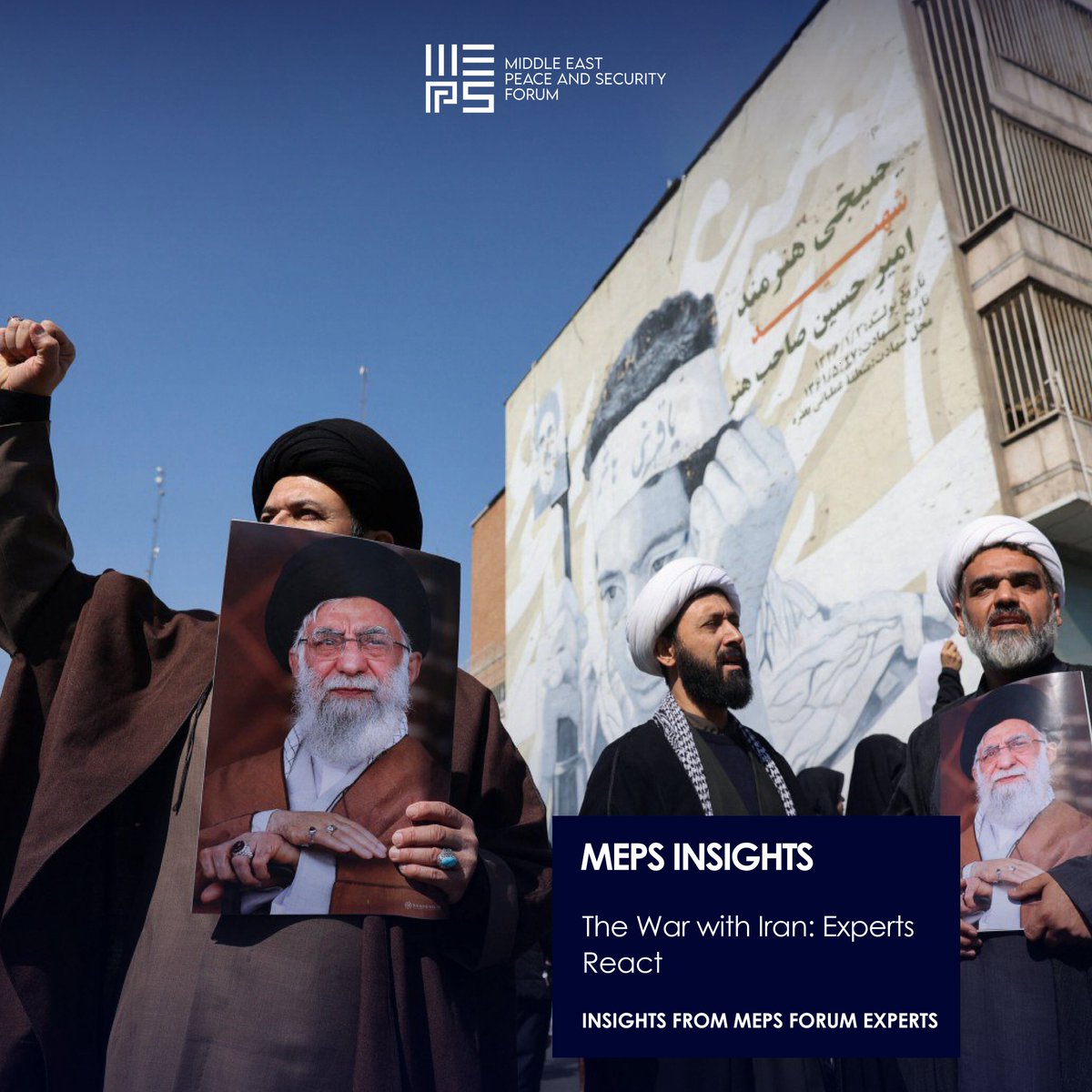
“The regime may well be able to maintain its hold on the country, a majority of whose population probably wish it would vanish.”
Revisit this report by MEPS Forum Experts following the Iran War: https://t.co/VL5qz5ikOA
“A core issue identified by the Board of Peace is the absence of a shared definition of peace—with priorities on security and reconstruction, but little clarity on sovereignty or self-determination.”
Revisit this report by @frencio_schiavi following the launch of President Trump's Board of Peace: https://t.co/hmHRXtBtmn
“The region’s trajectory remains deeply uncertain, shaped by unexpected shocks that have reshaped the balance of power and left the future order open and contested.”
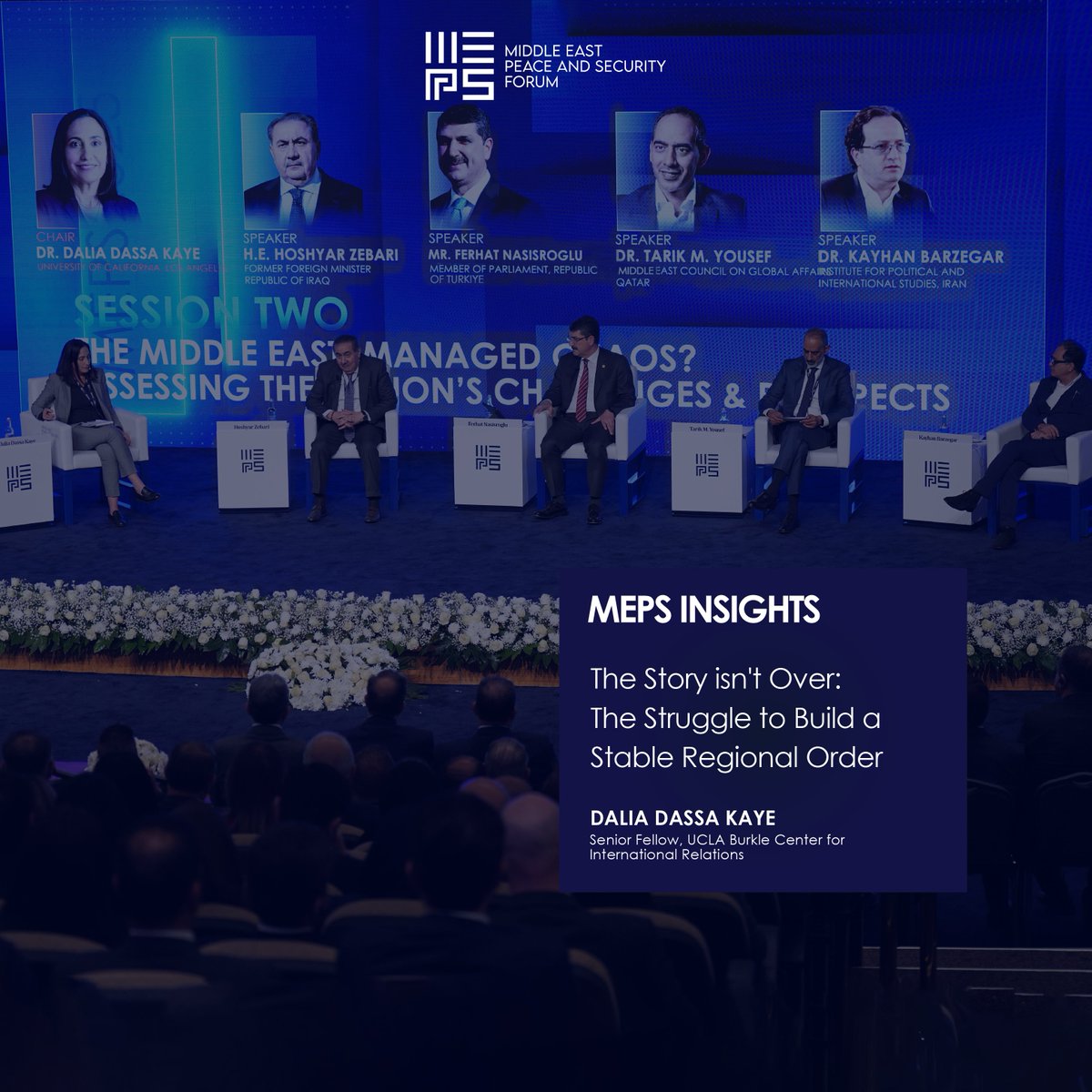
Revisit this report from our expert Dr. Dalia Dassa Kaye on the struggle to build a stable regional order: https://t.co/AU6JiZ2Z0s
“If there was genuine power sharing, many of the issues dominating the relationship would not still be unresolved.”
Read the full analysis: https://t.co/aHAwuhrraX
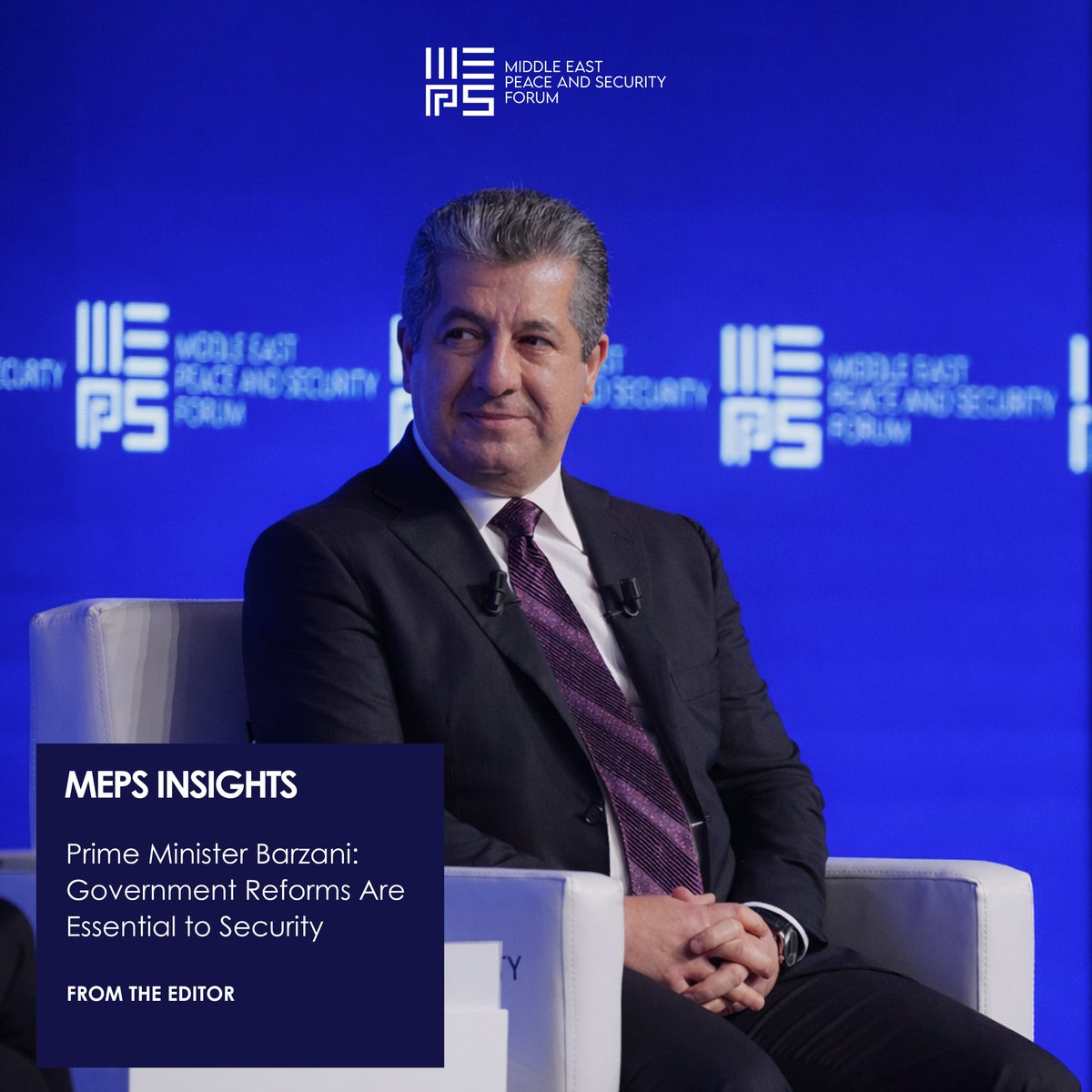
“Stability is not sustained by slogans, noted the Prime Minister, but by functioning institutions and a government that delivers on its promises and obligations.”
Read the full analysis: https://t.co/aHAwuhqTlp
“They rely largely, though not entirely, on the United States for defence, while deepening economic ties with China.”
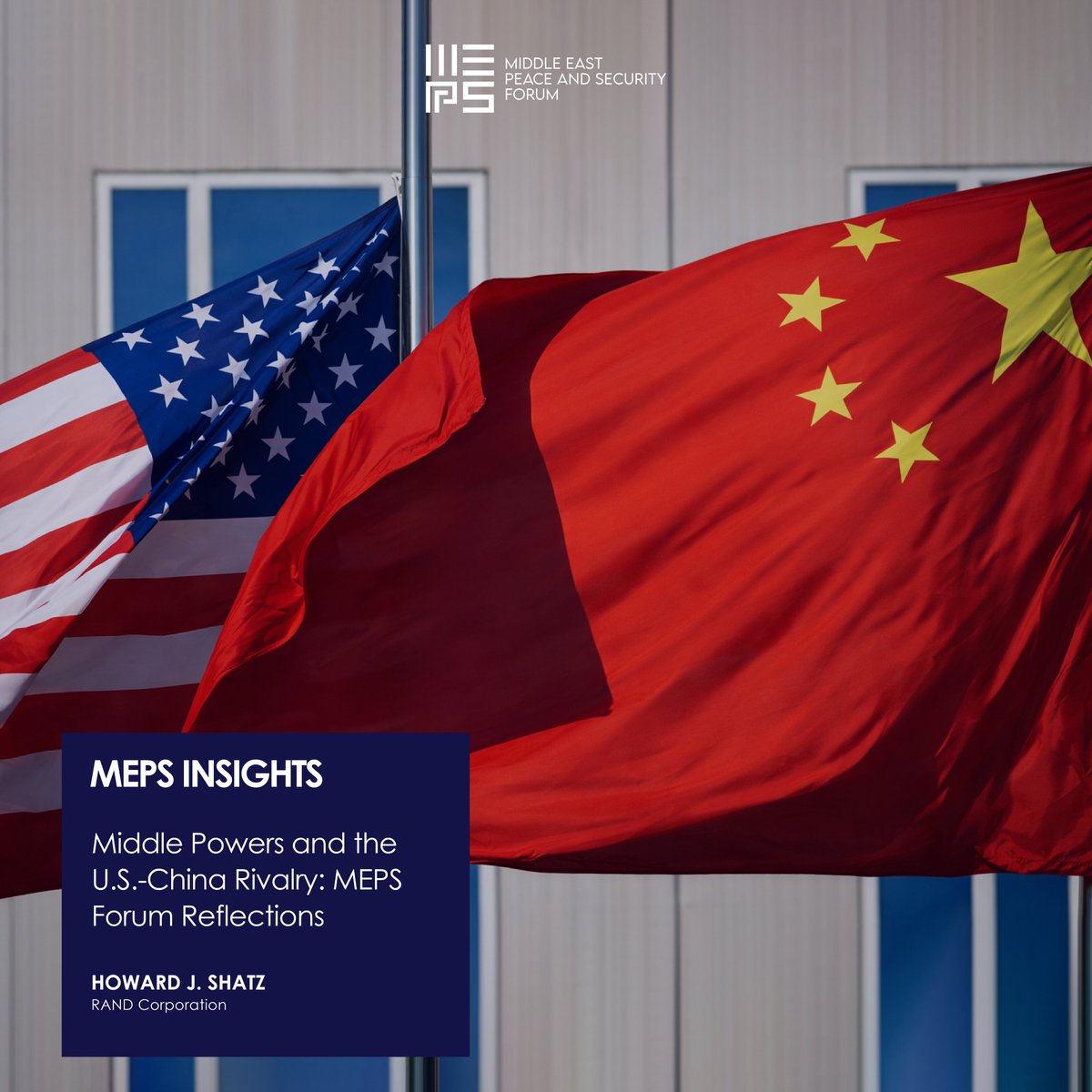
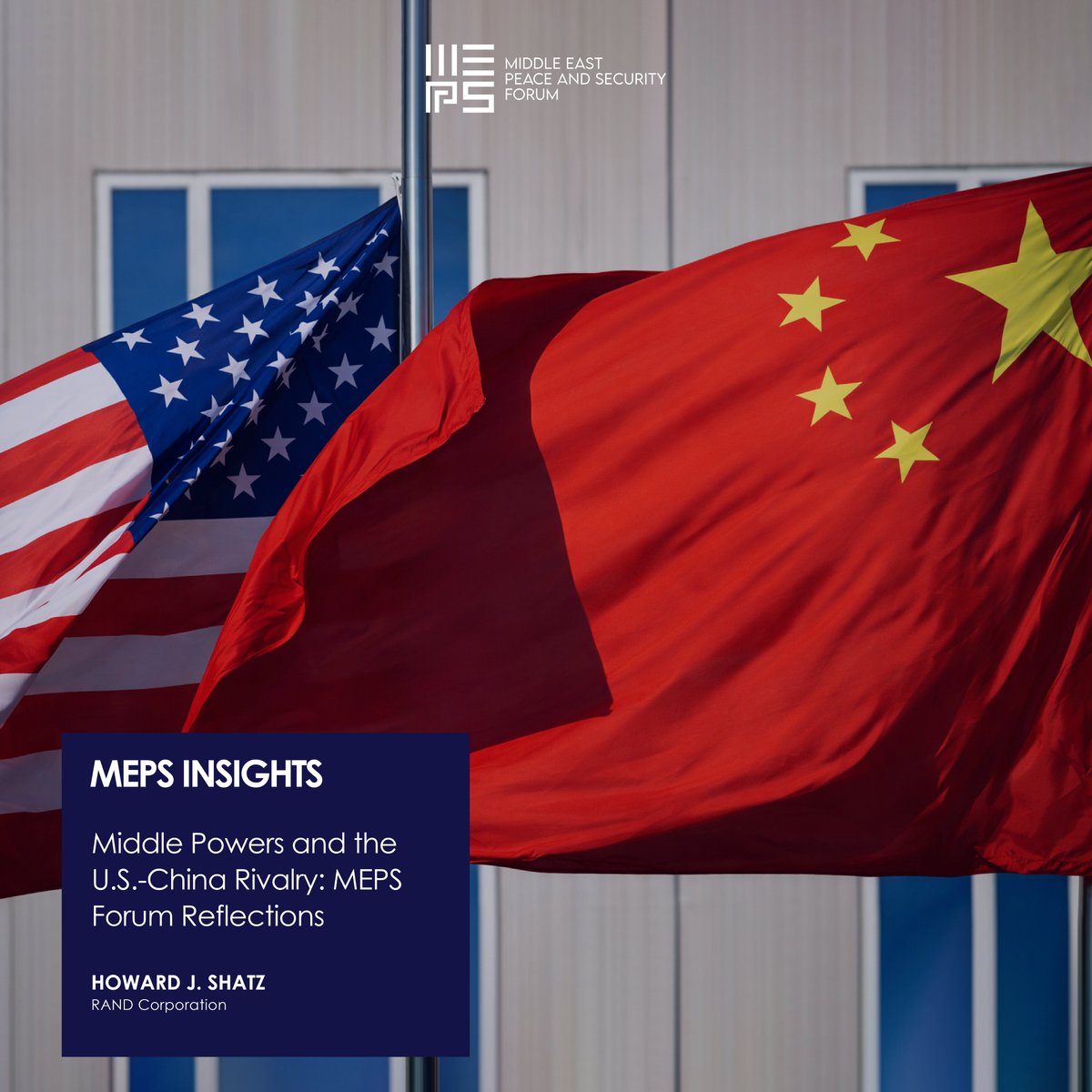
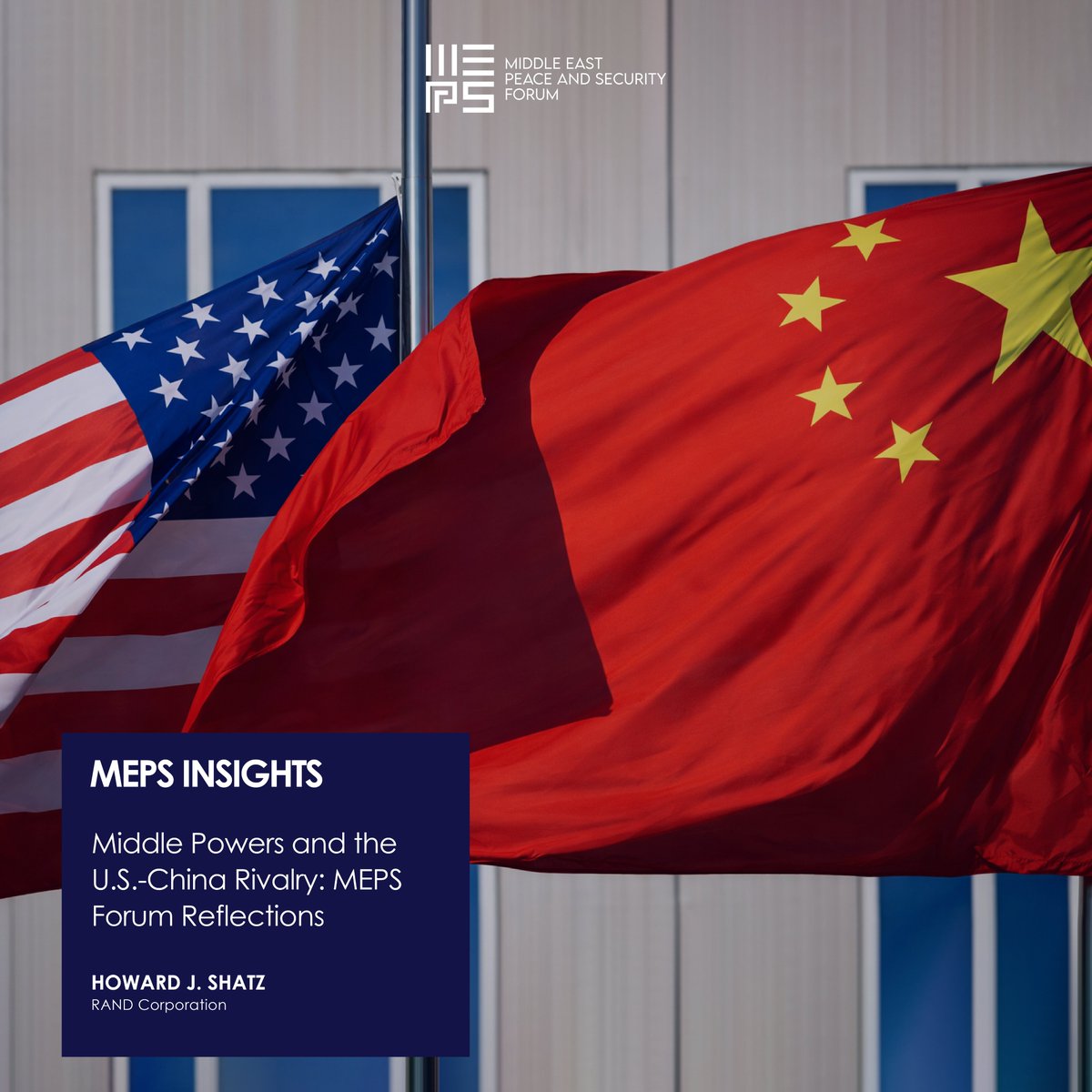
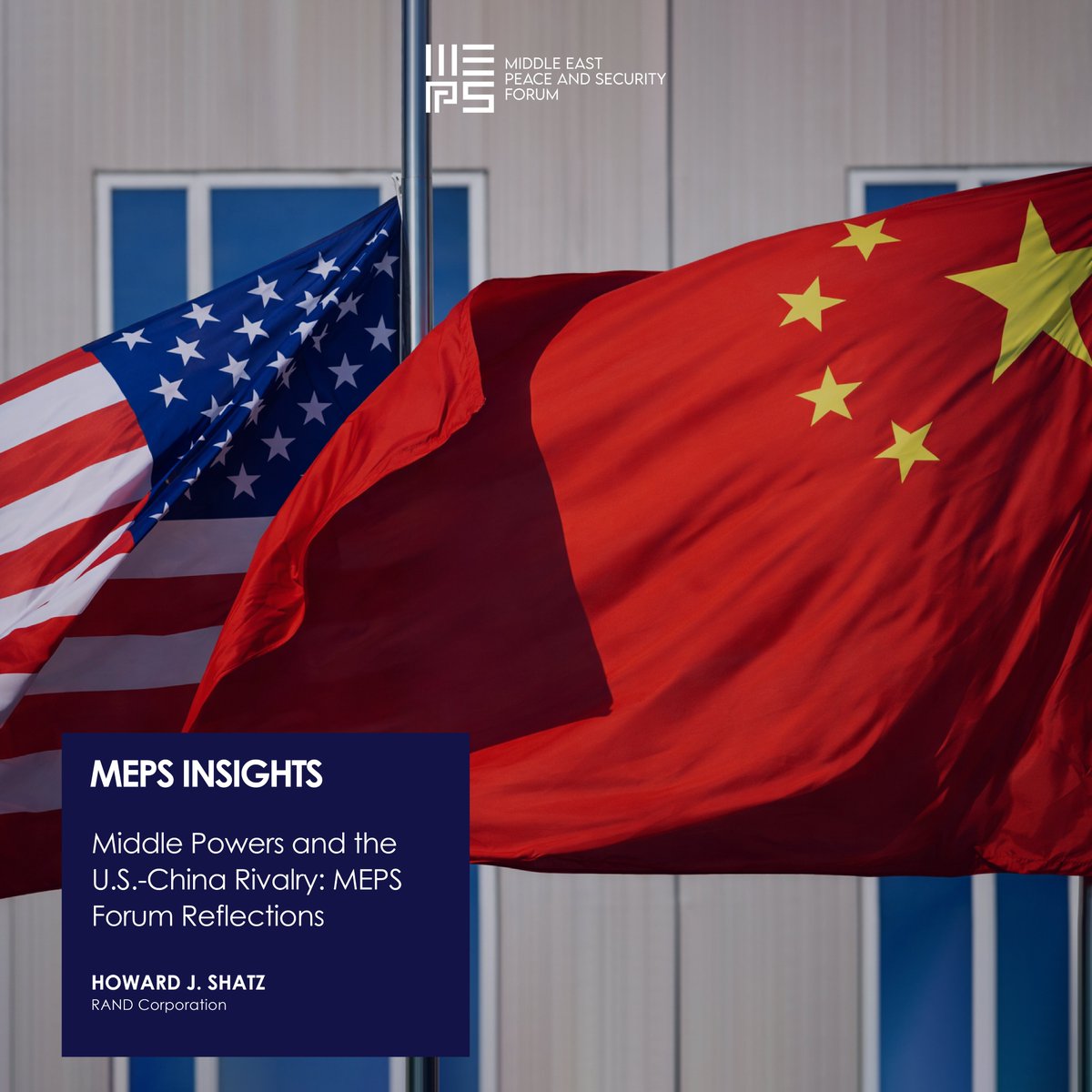
Revisit this piece by @HowardJShatz on middle powers navigating U.S.-China rivalry: https://t.co/gSonxYNgLb
Prime Minister Barzani: Government Reforms Are Essential to Security. In this MEPS Insights special, we examine H.E. @masrourbarzani's remarks at MEPS Forum 2025, which highlighted the KRG's reform agenda as a pillar of security.
Read the full analysis: https://t.co/aHAwuhqTlp
“The adoption of artificial-intelligence systems for economic advancement may prove a major thicket ahead.”
Revisit this piece by @HowardJShatz on middle powers navigating U.S.-China rivalry: https://t.co/gSonxYMIVD
“Thailand has entered into an agreement on rare earths with the United States, recognising that access is a matter of American sensitivity.”
Revisit this piece by @HowardJShatz on middle powers navigating U.S.-China rivalry: https://t.co/gSonxYMIVD
“Greater co-operation would enable its members to arrive at norms and standards useful to the region.” — @HowardJShatz
Read the full analysis: https://t.co/gSonxYMIVD
“Thailand has faced high tariffs, which it regards as contrary to agreed rules and inappropriate for geopolitical purposes.” — @HowardJShatz
Read the full analysis: https://t.co/gSonxYNgLb
“America has also used the threat of tariffs for geopolitical ends, such as calming a conflict between Thailand and Cambodia.” — @HowardJShatz
Read the full analysis: https://t.co/gSonxYMIVD
“Beyond price, however, American firms face a security environment riskier than that faced by Chinese companies.” — @HowardJShatz
Read the full analysis: https://t.co/gSonxYMIVD
“Engaging with both the United States and China has much to offer, but each is tacitly pressing others.” — @HowardJShatz
Read the full analysis: https://t.co/gSonxYNgLb
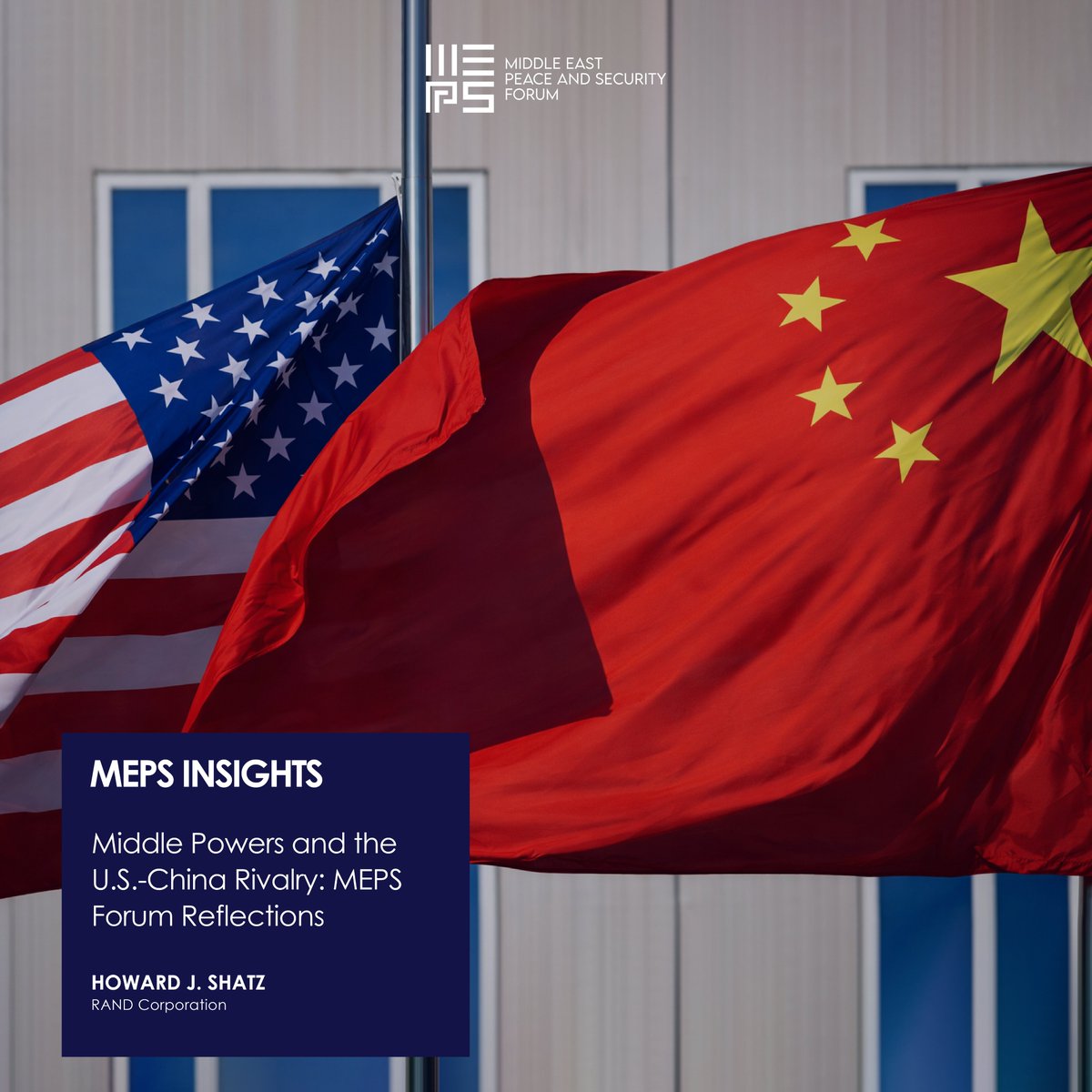
Middle Powers and the US-China Rivalry. Writing for MEPS Insights, @HowardJShatz draws on the insights of a high-level panel at MEPS Forum 2025 to assess how governments can manage the US-China rivalry.
Read the full analysis: https://t.co/gSonxYNgLb
"While Gaza is the most visible arena, the logic underpinning the Board of Peace is not confined to Palestine."
Revisit this piece by @frencio_schiavi following the launch of President Trump's Board of Peace: https://t.co/Mz4fBGkrOe
"After the June war, there was a view in Iran that it should not have accepted the ceasefire."
Revisit this piece by Dr. Dalia Dassa Kaye on the struggle to build a stable regional order: https://t.co/bkapTcpidD