Ekvatoral Pasifik’te işler sıradan gitmiyor !
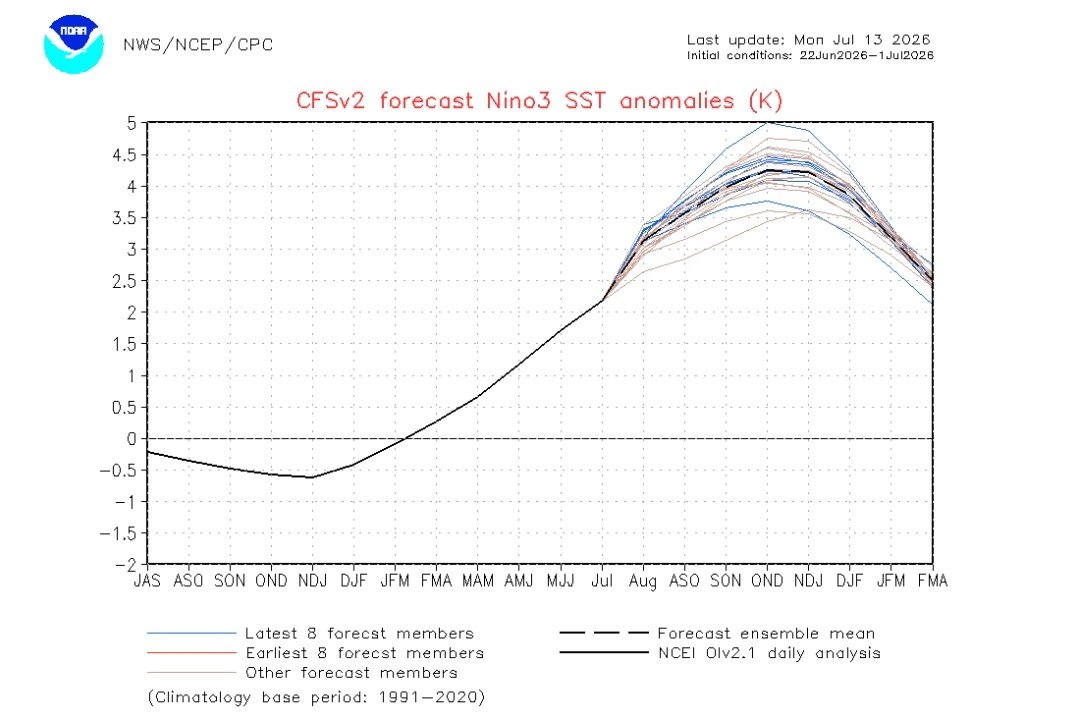
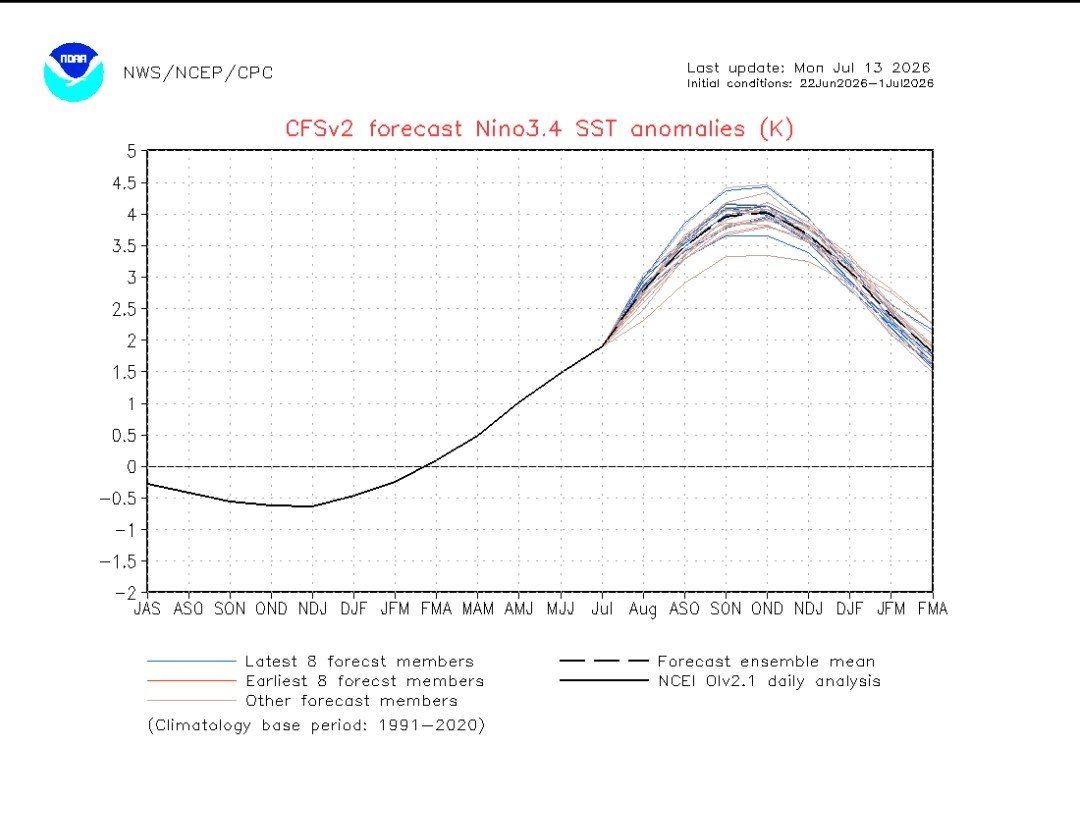
CFSv2’nin 13 Temmuz güncellemesi, Niño 3 ve Niño 3.4 bölgelerinde sonbahardan kış başına uzanan olağanüstü güçlü bir ısınma senaryosunu aynı anda büyütüyor; ensemble ortalamaları her iki bölgede de yaklaşık +4°C çevresine tırmanırken Niño 3’ün biraz daha yüksek kalması, doğu-merkez Pasifik’e yayılan hibrit ve havza çapında kenetlenmiş bir süper El Niño geometrisine işaret ediyor. Bu, tek başına kesin sonuç değil tabi ki; fakat okyanus basit bir ısınma ile kalmıyor , atmosferle birlikte daha büyük bir yeni bir dolaşım rejimine hazırlanıyor. Pasifik’in hamlesiyle özellikle, küresel hava düzeni sıradaki hamlesini bekliyor.Sonbahar ve kış kritik önemde.
Güneş'in galaksi merkezi etrafındaki orbital hızı (~828.000 km/sa) nedeniyle, gezegenler düzlemsel eliptik yörüngeler yerine uzayda sarmal yollar çizer.
Standart 2D modellerin aksine, 3D dinamik bu şekilde gerçekleşir.
C/2026 A1 için malesef çok umut verici haberler yok. Şimdiye kadar gördüğüm kadarıyla böyle parlaklık artış hızında düşüş olan kuyrukluyıldızlar parçalanıyorlar :(
Comet C/2026 A1 (MAPS) update: just how much and how rapidly *is* the comet brightening? Not sure what to make of currently reported brightess estimates for C/2026 A1 (MAPS). Looking at datasets from individual experienced observers in the S hemisphere (or using instruments in the S hemisphere):
- LOV (CCD) seems to indicate a pretty clear stall in the brightness increase since about March 14th, with the comet at 10th magnitude since then.
- PEA (CCD) on the other hand seems to show a relatively smooth brightness increase in the same time interval, with the comet brightening from 11th magnitude to brighter than 10th magnitude. It also indicates rapid brightening up to around March 10th, then an apparent stall from March 10th to 17th at 11th magnitude.
- MAT08 (visual using 25x100 binoculars) reports a 0.5 magnitude brightening between March 15th and 19th, similar to that reported by PEA and opposite to that of LOV.
- Rhemann & Jäger (CCD) report the comet stalled at around 10th magnitude from March 11th to 14th (similar to reports by PEA). It does seem to have brightened significantly in the images reported since, but no photometry has been posted (yet).
All of these observers are highly experienced, they know what they are doing. I selected observations using the same instrument and acquisition parameters (for each observer). They seem to show significantly different trends: relatively smooth brightening from some observers and a stalled brightness increase from others.
If the comet is healthy, it should be brightening steadily and fairly rapidly at this point. It is approaching the orbit of Venus and getting quite warm. A short stall in the brightening could be the result of uneven outgassing across the surface of the nucleus combined with the rotation of the nucleus, but a longer stall would mean major trouble.
More on this soon. Any thoughts on this would be much appreciated!
BREAKING! Kind of :) A new Kreutz sungrazer comet has been found - one of very few found before they enter LASCO C3 field of view. Currently designated 6AC4721 it will likely get a proper comet designation soon. It is likely a very small and faint comet (Kreutz fragment) that is unlikely to survive perihelion (around April 10th). Perhaps similar to C/2024 S1 (ATLAS). More soon!