☕ 𝗦𝗔𝗧𝗨𝗥𝗗𝗔𝗬 𝗠𝗢𝗥𝗡𝗜𝗡𝗚 𝗧𝗛𝗢𝗨𝗚𝗛𝗧:
The bit I can't stop thinking about from yesterday's Bloomberg story isn't what it means for Manchester City.
It's what it means for everyone else.
Bloomberg reports that some banks are pulling back from financing transfer receivables linked to City while the Premier League case remains unresolved.
The example that caught my attention was Palmeiras.
City bought Allan Elias for a reported £34m. Palmeiras could potentially turn the future instalments owed by City into cash today by financing that receivable through a bank.
But Bloomberg says one German lender pulled out.
So where does the immediate liquidity problem land?
Not necessarily at City.
At Palmeiras.
That's the bit I find fascinating.
City haven't been sanctioned yet. Their appeal hasn't been heard. And nobody is suggesting they can't meet their transfer obligations.
But uncertainty around one club can apparently already change how a bank views money owed to another.
And this market isn't small anymore.
Transfer-receivables financing in English football reportedly grew from £55m in 2020/21 to £779m in 2024/25.
Once clubs routinely borrow today against transfer money due tomorrow, everyone becomes a little more connected.
Buyer owes seller.
Seller monetises the debt.
Bank prices the buyer.
Then something changes the bank's view of the risk.
That's how a problem in one place can suddenly matter somewhere completely different.
The obvious focus is City's appeal and what sanction might eventually follow.
But the more interesting long-term question for me is what this tells us about football's financial plumbing.
Because the next club carrying serious financial or regulatory risk might not have City's resources behind it.
And if lenders start blinking, the first club to feel it might not even be the club with the problem.
Regulatory risk at one club.
Liquidity risk somewhere else.
That's worth watching.
𝗠𝗔𝗡𝗖𝗛𝗘𝗦𝗧𝗘𝗥 𝗨𝗡𝗜𝗧𝗘𝗗'𝗦 𝗝𝗔𝗡𝗨𝗔𝗥𝗬 𝗕𝗨𝗗𝗚𝗘𝗧: £50m
𝗕𝗨𝗧 𝗔𝗥𝗘 𝗧𝗛𝗘 𝗥𝗨𝗟𝗘𝗦 𝗥𝗘𝗔𝗟𝗟𝗬 𝗧𝗛𝗘 𝗥𝗘𝗔𝗦𝗢𝗡?
The Mail reports that Mauricio Pochettino will have less than £50m to spend, with United's “hands tied by the league's new financial rules”.
The budget may well be £50m.
But United's own latest results say the club remains compliant with the Premier League's financial rules.
@theorangeledger's modelling doesn't suggest they're particularly close to the 85% line either.
It currently estimates United at 56.5%.
That's their estimate, not the League's own calculation.
So why only £50m?
The cash position may tell us more.
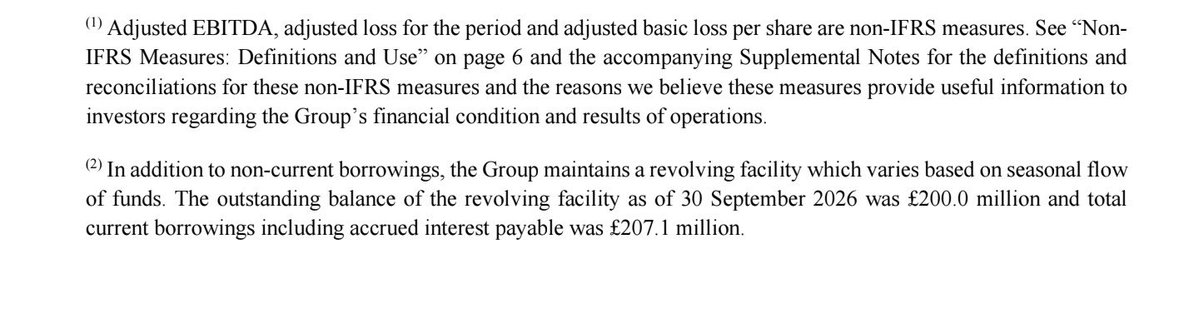
At 30 September, United had £55.5m in cash and £200m drawn on their revolving credit facility.
They'd also spent £143.1m net cash on player registrations during the quarter, having drawn £90m from that facility over the three months.
Which leaves two very different questions:
How much could United accommodate under the rules?
And how much are they actually prepared to fund?
We can't calculate an exact January budget from public information.
But the numbers we can see don't demonstrate that the rules themselves limit United to £50m.
If £50m really is the budget, what is actually setting it?
@DaviddRhome Completely get where you're coming from!
That's what makes the £50m figure interesting. If the rules aren't actually imposing that ceiling, then the conversation shifts pretty quickly towards funding and ownership choices!
What must Poch be thinking right now?!
𝗠𝗔𝗡𝗖𝗛𝗘𝗦𝗧𝗘𝗥 𝗨𝗡𝗜𝗧𝗘𝗗'𝗦 𝗝𝗔𝗡𝗨𝗔𝗥𝗬 𝗕𝗨𝗗𝗚𝗘𝗧: £50m
𝗕𝗨𝗧 𝗔𝗥𝗘 𝗧𝗛𝗘 𝗥𝗨𝗟𝗘𝗦 𝗥𝗘𝗔𝗟𝗟𝗬 𝗧𝗛𝗘 𝗥𝗘𝗔𝗦𝗢𝗡?
The Mail reports that Mauricio Pochettino will have less than £50m to spend, with United's “hands tied by the league's new financial rules”.
The budget may well be £50m.
But United's own latest results say the club remains compliant with the Premier League's financial rules.
@theorangeledger's modelling doesn't suggest they're particularly close to the 85% line either.
It currently estimates United at 56.5%.
That's their estimate, not the League's own calculation.
So why only £50m?
The cash position may tell us more.
At 30 September, United had £55.5m in cash and £200m drawn on their revolving credit facility.
They'd also spent £143.1m net cash on player registrations during the quarter, having drawn £90m from that facility over the three months.
Which leaves two very different questions:
How much could United accommodate under the rules?
And how much are they actually prepared to fund?
We can't calculate an exact January budget from public information.
But the numbers we can see don't demonstrate that the rules themselves limit United to £50m.
If £50m really is the budget, what is actually setting it?
That's exactly where it gets uncomfortable!
Avram Glazer says United's commercial strength doesn't depend on what happens on the pitch. Ratcliffe has been cutting costs and jobs, partly to get more money into the football side.
Yet here we are talking about £50m to fight a relegation battle!
No wonder supporters are asking questions 😭
𝗔𝗥𝗦𝗘𝗡𝗔𝗟'𝗦 𝗡𝗘𝗪 𝗦𝗘𝗖𝗨𝗥𝗜𝗧𝗬 𝗗𝗘𝗔𝗟 𝗛𝗔𝗦 𝗔 𝗖𝗟𝗔𝗨𝗦𝗘 𝗜 𝗗𝗜𝗗𝗡'𝗧 𝗘𝗫𝗣𝗘𝗖𝗧 𝗧𝗢 𝗙𝗜𝗡𝗗.
Relegation.
I've been going through the 51-page security agreement Arsenal filed at Companies House last month.
It gives Deutsche Bank security over a wide range of Arsenal assets.
But one definition caught my eye.
“Broadcasting Entitlement Receivables” doesn't just cover money Arsenal receive from the Premier League.
It expressly covers what happens if Arsenal stop competing in it.
The document refers to payments from the Football League:
“if AFC is relegated from the Premier League”
So the security over broadcasting income is drafted to follow Arsenal into the EFL if the club were ever relegated.
To be clear, this tells us absolutely nothing about Arsenal's chances of going down.
Financing documents are written to cover contingencies, including remote ones.
But I wanted to know whether that wording was routine.
So I checked substantial security agreements filed by Manchester United and Tottenham.
Both contain broad security over club assets.
I couldn't find the same explicit relegation wording in either.
That doesn't make Arsenal's clause unique. Three agreements aren't enough to establish that.
But it does make the wording worth noticing.
Arsenal's financing documents don't just contemplate the money earned as a Premier League club.
They expressly contemplate where the broadcast money comes from if it isn't one.
We follow the uncomfortable numbers. We should probably acknowledge the good ones too.
Manchester City's charity has now invested £1.25m through Healthy Goals into community football spaces.
Six more regenerated pitches have opened across Manchester.
Five were developed with Manchester City Council and are free to use.
Fair play. 👏
𝗔𝗥𝗦𝗘𝗡𝗔𝗟'𝗦 𝗡𝗘𝗪 𝗦𝗘𝗖𝗨𝗥𝗜𝗧𝗬 𝗗𝗘𝗔𝗟 𝗛𝗔𝗦 𝗔 𝗖𝗟𝗔𝗨𝗦𝗘 𝗜 𝗗𝗜𝗗𝗡'𝗧 𝗘𝗫𝗣𝗘𝗖𝗧 𝗧𝗢 𝗙𝗜𝗡𝗗.
Relegation.
I've been going through the 51-page security agreement Arsenal filed at Companies House last month.
It gives Deutsche Bank security over a wide range of Arsenal assets.
But one definition caught my eye.
“Broadcasting Entitlement Receivables” doesn't just cover money Arsenal receive from the Premier League.
It expressly covers what happens if Arsenal stop competing in it.
The document refers to payments from the Football League:
“if AFC is relegated from the Premier League”
So the security over broadcasting income is drafted to follow Arsenal into the EFL if the club were ever relegated.
To be clear, this tells us absolutely nothing about Arsenal's chances of going down.
Financing documents are written to cover contingencies, including remote ones.
But I wanted to know whether that wording was routine.
So I checked substantial security agreements filed by Manchester United and Tottenham.
Both contain broad security over club assets.
I couldn't find the same explicit relegation wording in either.
That doesn't make Arsenal's clause unique. Three agreements aren't enough to establish that.
But it does make the wording worth noticing.
Arsenal's financing documents don't just contemplate the money earned as a Premier League club.
They expressly contemplate where the broadcast money comes from if it isn't one.
@RealTolmie@etihad This could be significant 👍
The appeal isn't automatically a new hearing of the evidence. Fresh evidence requires permission, so if Etihad is allowed to present witnesses and bank records, that could be an important procedural development.
One to watch
@Deltic15 On current form, that game was always going to be a struggle!
Poch only had a couple of days with the team to prepare. Hopefully next weekend we start to see more of an identity
On Friday, Omar Berrada said he was “100 per cent” convinced Manchester United were moving in the right direction.
They're now 19th with one league win in 11.
Genuine question for United fans:
What are you seeing that gives you confidence in the direction of the club?
𝗠𝗔𝗡𝗖𝗛𝗘𝗦𝗧𝗘𝗥 𝗖𝗜𝗧𝗬: 𝗪𝗛𝗔𝗧 𝗛𝗔𝗣𝗣𝗘𝗡𝗘𝗗 𝗧𝗢 𝗣𝗔𝗥𝗔𝗚𝗥𝗔𝗣𝗛𝗦 𝟭𝟱𝟴–𝟭𝟱𝟵?
There are two paragraphs in the Commission decision I keep coming back to.
The Premier League reserved the right to allege “additional and perhaps more egregious acts of non-cooperation” if the Commission made certain findings against Manchester City.
The Commission made those findings.
But the Premier League didn't amend the Statement of Charges to bring the additional allegation, so the Commission made no determination on it.
Why not?
The published decision doesn't say.
What makes that more interesting is that the Statement of Charges had previously been amended.
So I asked the Premier League why this allegation wasn't pursued.
Its response:
“We can't comment on this case beyond our previous public statements.”
That's not an answer, but it isn't evidence of anything either.
This isn't a hidden “116th charge”.
It isn't proof that something was dropped improperly.
It's simply a question I can't answer from the published record:
Why reserve the right to bring an additional, potentially more egregious non-cooperation allegation, get the findings that would trigger it, and then not bring it?
I don't know.
But I'd like to.
𝗥𝗘𝗟𝗘𝗚𝗔𝗧𝗜𝗢𝗡 𝗖𝗛𝗔𝗡𝗚𝗘𝗦 𝗠𝗢𝗥𝗘 𝗧𝗛𝗔𝗡 𝗧𝗛𝗘 𝗗𝗜𝗩𝗜𝗦𝗜𝗢𝗡.
The Independent Football Regulator wants clubs lower down the pyramid to keep a financial buffer for when things go wrong.
Premier League clubs aren't being given a starting liquidity requirement.
So what happens when one of them is relegated?
The regulator's own figures show how big that shock can be.
Clubs relegated from the Premier League in 2024/25 saw, on average:
• revenue fall by £70m
• EBITDA fall by £32m
• external financing increase by £11m
In simple terms, less money coming in and a greater need for funding elsewhere.
And that's when the regulatory position changes too.
A relegated club moves into the Championship, where the proposed liquidity framework applies.
The IFR knows this creates a problem.
It says relegated clubs may face “significant changes in their financial circumstances” and acknowledges the difficulty of building a cash buffer while dealing with the financial stresses of relegation.
Existing clubs get three years to build towards the full expectation.
For a newly relegated Premier League club, the consultation only says there would be:
“transitional arrangements, on a club-by-club basis”
We don't yet know what those arrangements would look like, how long they might last or what a newly relegated club would be expected to hold.
That doesn't mean the IFR has got it wrong. This is still a consultation and it's clearly allowing for individual circumstances.
But the question is worth asking.
Relegation is already one of the biggest financial shocks in English football.
How do you ask a club to build a financial safety net at exactly the moment its finances are being hit hardest?
@DaviddRhome Today’s red was definitely on De Ligt letting that ball drop. No argument there!
Having a circus around him doesn’t help either. I just thought Yoro would be the one rising above it by now, rather than getting dragged down to their level
@DaviddRhome Yoro is the one who’s really disappointed me!
When United signed him, I honestly thought he’d grow into a world-class centre-back.
I’m still waiting!
𝗠𝗔𝗡𝗖𝗛𝗘𝗦𝗧𝗘𝗥 𝗖𝗜𝗧𝗬: 𝗪𝗛𝗔𝗧 𝗛𝗔𝗣𝗣𝗘𝗡𝗘𝗗 𝗧𝗢 𝗣𝗔𝗥𝗔𝗚𝗥𝗔𝗣𝗛𝗦 𝟭𝟱𝟴–𝟭𝟱𝟵?
There are two paragraphs in the Commission decision I keep coming back to.
The Premier League reserved the right to allege “additional and perhaps more egregious acts of non-cooperation” if the Commission made certain findings against Manchester City.
The Commission made those findings.
But the Premier League didn't amend the Statement of Charges to bring the additional allegation, so the Commission made no determination on it.
Why not?
The published decision doesn't say.
What makes that more interesting is that the Statement of Charges had previously been amended.
So I asked the Premier League why this allegation wasn't pursued.
Its response:
“We can't comment on this case beyond our previous public statements.”
That's not an answer, but it isn't evidence of anything either.
This isn't a hidden “116th charge”.
It isn't proof that something was dropped improperly.
It's simply a question I can't answer from the published record:
Why reserve the right to bring an additional, potentially more egregious non-cooperation allegation, get the findings that would trigger it, and then not bring it?
I don't know.
But I'd like to.