In 1942, a drunk German officer sat at dinner and bragged about the Jewish woman he had selected from the brothel the Nazis had forced open in town. He said her name out loud. The Tunisian Arab sitting across from him stayed calm, smiled, poured more wine, and finished the meal. Then he drove the officer home, sped through the dark streets, and knocked on a door close to midnight. That night, he hid 25 people for four months. He never spoke about it again.
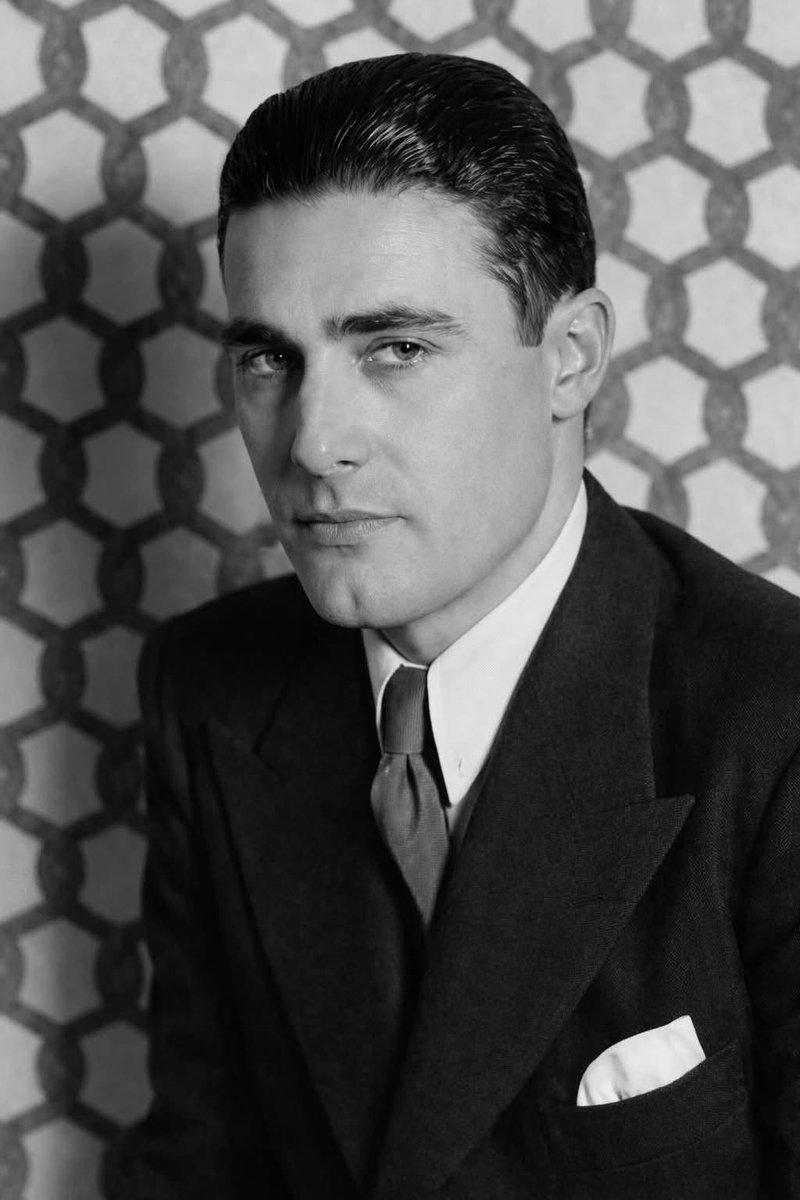
His name was Khaled Abdul-Wahab. He was 31 years old, a wealthy Muslim Tunisian who had studied art and architecture in New York and spoke fluent German. Nazi officers trusted him. They invited him to their dinners.
Tunisia was the only Arab country directly occupied by Nazi Germany during the war. Jewish families were pushed from their homes. More than 5,000 Jewish men were sent to forced labor camps. Yellow stars marked every chest.
That December night in the coastal town of Mahdia, Khaled listened as the officer boasted. The woman he named belonged to a family Khaled had known all his life.
He left immediately. He drove through the night. He knocked on their door at midnight.
Pack nothing. Come now.
He gathered 25 people — mothers, fathers, cousins, and children — and drove them nearly 20 miles to his family farm, hiding them inside the olive press, stables, and storage buildings.
This was not one brave act. It was four straight months of courage.
He fed them while supplies grew scarce. He kept babies quiet. He trusted his servants to stay silent. When German soldiers arrived to count Jewish families, the hidden people pinned yellow stars onto their clothes and stood motionless. When the soldiers left, the stars came off again.
One night, a drunken soldier wandered onto the farm and discovered them. An eleven-year-old girl hiding under a bed watched him laugh and threaten to kill everyone there. Then Khaled appeared. She remembered him her entire life as a guardian angel. He calmly walked the soldier outside, took away his weapon, and sent him off the property.
Nobody on that farm died.
In May 1943, British forces liberated Tunisia. All 25 people returned home alive.
Khaled went back to a quiet life. He married, raised daughters, painted, and worked in government service.
He never told anyone what he had done. Not his wife. Not his children. No one.
He died on September 4, 1997, at the age of 86. His story was buried with him.
Ten years later, his daughter Faiza was sitting in a café in Paris reading a Sunday newspaper when she came across an interview with an American historian describing a Tunisian Arab who had hidden 25 Jews in 1942.
The historian mentioned her father by name.
She was 45 years old and had never heard the story before.
She contacted the historian. One of the children saved on the farm had left behind 83 pages of testimony before her death. Every detail matched.
“I rediscovered my father,” Faiza later said.
Khaled was nominated for Israel’s highest honor given to non-Jews who saved Jewish lives. He would have been the first Arab to receive it.
The committee declined, saying he had not risked his own life enough.
Faiza answered with a line history should never forget:
“My father opened his home to Jews. They did not open theirs to us.”
Today, the 25 people Khaled saved have hundreds of descendants living across Israel, France, America, and Tunisia. The little girl hidden beneath the bed grew up, moved to Paris, and built a family of her own. None of them would exist if Khaled had stayed silent that night.
He had everything to lose. He acted anyway. Then he spent the rest of his life saying nothing about it.
The world nearly forgot him twice. Now you know his name.
Rabbi Herschel Gluck realized he had never met the Muslims living around him in north London. He walked to the nearest mosque and rang the doorbell.
That year he founded what is described as the world's first Muslim-Jewish Forum. Twenty-five years on, it still meets.
What does a mosque built for the future look like?
In Cambridge, England, it looks like a forest. Cambridge Central Mosque, opened 2019, is often called Europe's first eco-friendly mosque, its timber columns branching overhead like trees.
Last summer MACFEST brought Muslim and non-Muslim visitors to tour it together.
#CambridgeCentralMosque #MACFEST #Interfaith
In the Bronx, a Muslim school shares its building with a synagogue.
The imam offered them space when their congregation lost its own. That was 25 years ago. They are still there.
His name is Sheikh Musa Drammeh.
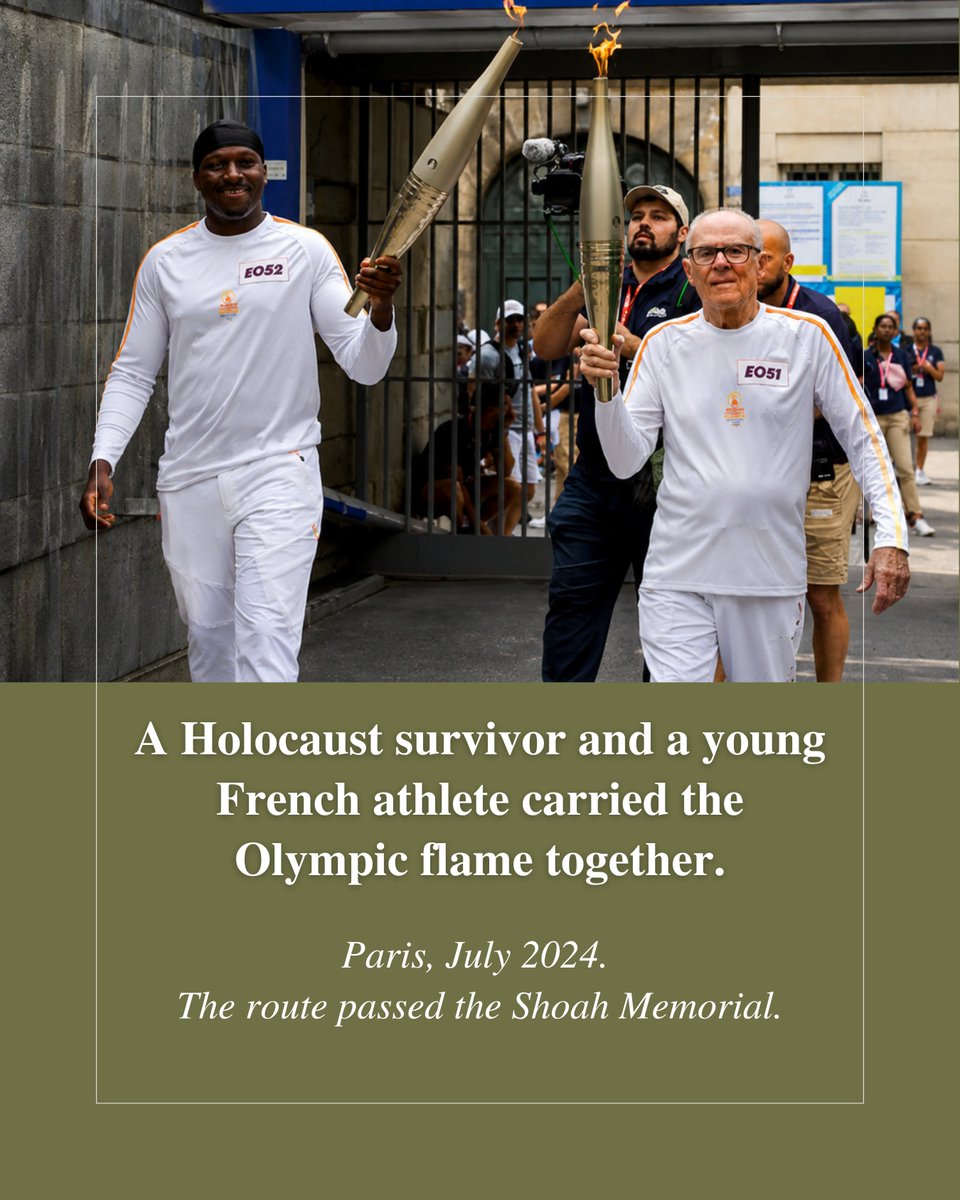
Last summer in Paris, a Holocaust survivor and a young French athlete carried the Olympic flame together, past the @Shoah_Memorial .
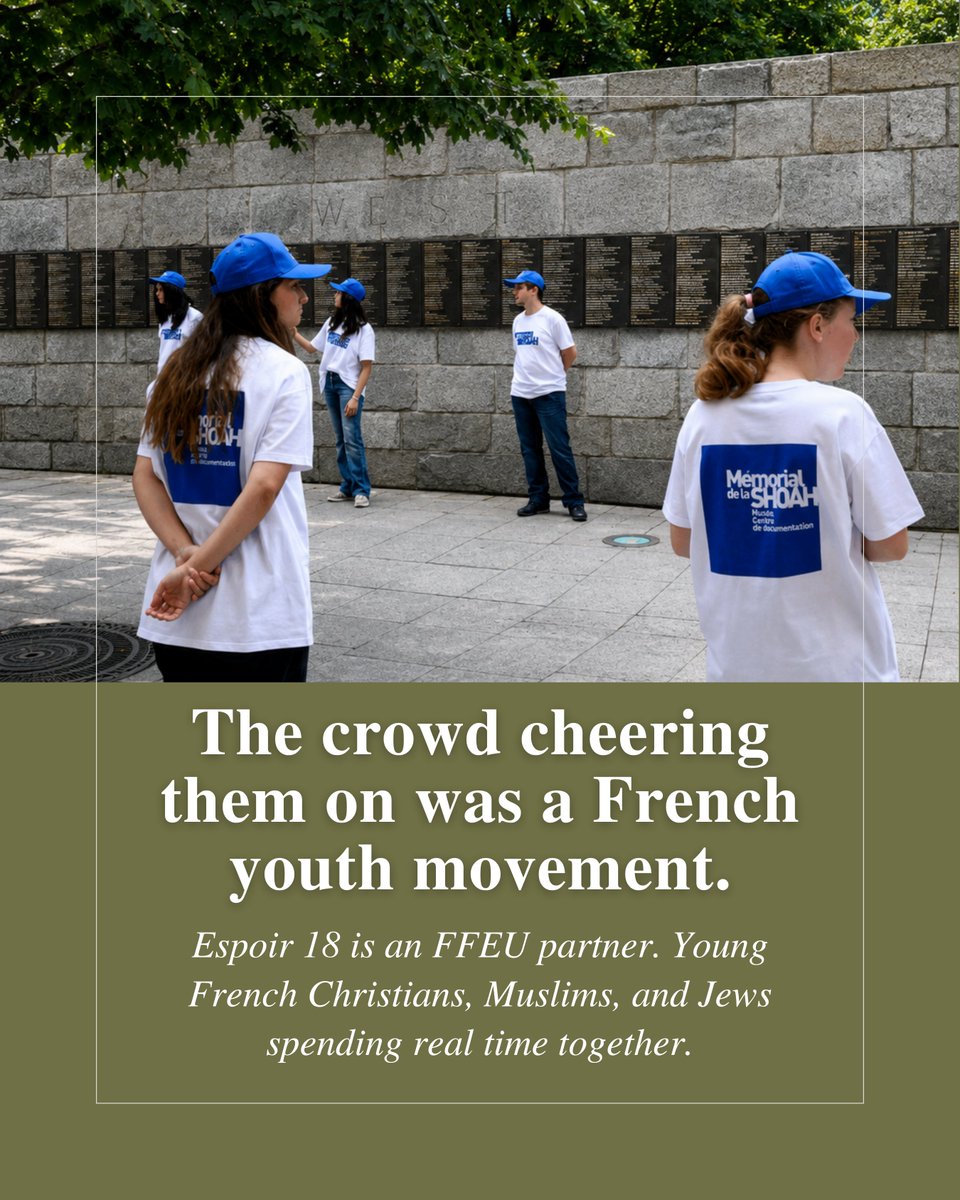
The crowd cheering was @espoir18paris, a French interfaith youth movement and FFEU partner.
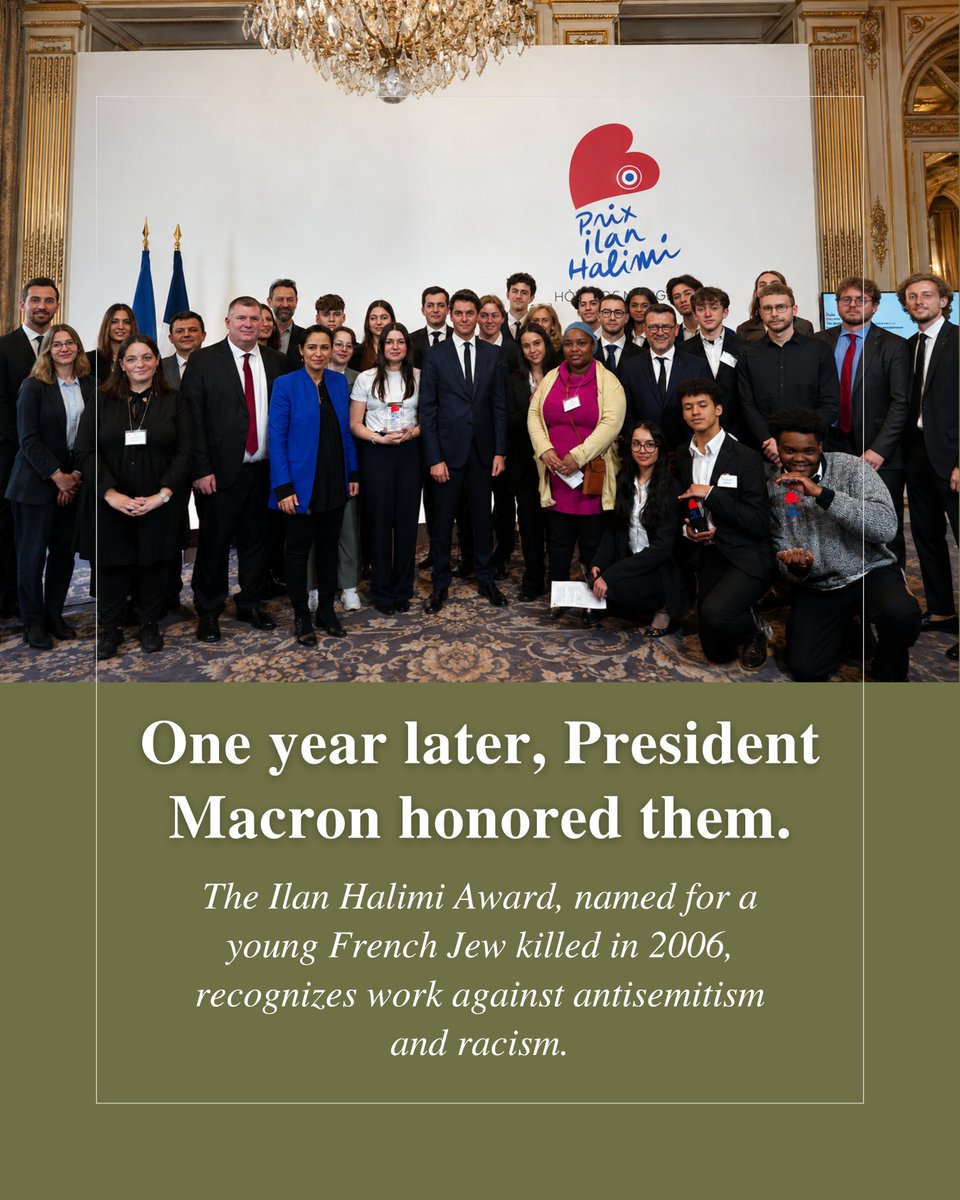
This year @EmmanuelMacron gave them the Ilan Halimi Award.
Our Co-Chair Mohammed Amin is also a Director of the Campaign for Shared European Values.
In that role, he was booked to be interviewed about the employment tribunal case.
It developed into an interview about our mission.
Interviewed by Kelvin MacKenzie about a failed employment tribunal application by a Heathrow security officer who was banned from wearing a Palestine badge at work.
Interview also covers the work of @MJF_Manchester
https://t.co/gjyImFYLqd
In 1967, two young Jewish ACLU lawyers, Bernard Cohen and Philip Hirschkop, argued Loving v. Virginia before the Supreme Court.
The ruling on June 12, 1967 legalized interracial marriage across the United States. Friday is Loving Day.
Some coalition work doesn't look like a march. It looks like a brief.
Wishing everyone celebrating, a joyous and blessed #EidUlAdha. May this special day bring peace, happiness, and prosperity to you and your loved ones. Celebrate with gratitude and don’t forget those who are not able to celebrate. #EidMubarak! 🌙✨
Kishwer Falkner wrote in The Times “Silence on antisemitism shames us as British Muslims”
I was interviewed about her article on GB News and agreed with her. Watch on my new website page.
https://t.co/Puux0SIMsK
At a time of rising fear and tension, Mohammed Amin MBE offers a clear and principled reminder: “If you increase connectivity, you decrease hostility.”
FFEU is proud to amplify the voice of a valued UK partner whose words reflect a core truth of our mission. The work of building relationships across difference is not a luxury for calmer moments. It is one of the strongest answers to hostility when it begins to grow.
@MJF_Manchester
Our Co-Chair @Mohammed_Amin was on GB News yesterday.
He emphasised the need for all Britons to speak up for the rights of Britain’s Jews to be free from threats of physical violence or verbal abuse.
Yesterday on @GBNEWS about Kishwar Falkner article “Silence on antisemitism shames us as British Muslims.”
Good conversation with the presenter @DawnNeesom.
I broadly agreed with the article.
https://t.co/jKTPkbNwLQ
This is from about 5 years ago but in the present climate of hostility, discrimination, and suspicion towards minoritised communities, it is even more important to reinforce this commitment.
#NoPlaceForHate
It was a pleasure to attend the @MJF_Manchester Iftar last night at @SalfordCouncil 's Civic Centre. So well hosted by Ceremonial Mayor Heather Fletcher with great speeches from @salford_mayor , Rabbi Councillor Arnold Saunders and others. It was a very special evening. @BoardofDeputies
At a very special Iftar last night at @SalfordCouncil 's Salford Suite. Always a joy to work with @CllrWalters and it would not be interfaith without the Revd. Peter Bennett. Thanks to Ceremonial Mayor Heather Fletcher and @MJF_Manchester for providing us with such a great opportunity to engage and promote interfaith. @BoardofDeputies
I would offer that Alex Pretti putting his body—with his hands up—between a woman and the BP agent who had just violently shoved her into the snow, offer stark competing visions of manhood. Pretti, a nurse caring for veterans, who took a face full of pepper spray to shield that woman, is a much better masculine ideal that the masked coward shoving the woman and executing a man on his knees. MAGA may venerate the latter, but most people in a healthy society want the former.
New page on my website: Review of the podcast series “The Rabbi, The Imam and The Power of Dialogue.”
Rabbi Dovid Lewis and Imam Nasser Kurdy discuss some very difficult subjects affecting Muslims and Jews in a spirit of mutual respect and friendship.
https://t.co/SN8YZGhg9s
We will probably never know the officers and investigators who stopped these two scumbags - but we owe them a huge debt of gratitude 🙏 https://t.co/B9UDHJ3LR2
We join with our friends @MJF_Manchester in condemning the antisemitic attack on the Heaton Park Synagogue: "There can never be any justification for a murderous attack of this kind. It is made even worse by the fact that the victims were at prayers on Yom Kippur."