@MusadaqZ information gaps.
By adopting modern Compliance Risk Management frameworks and AI-based digital monitoring, tax authorities can accurately pinpoint non-filers and under-taxed individuals. This two-pronged strategy will ensure that the tax burden is shared fairly, 3/
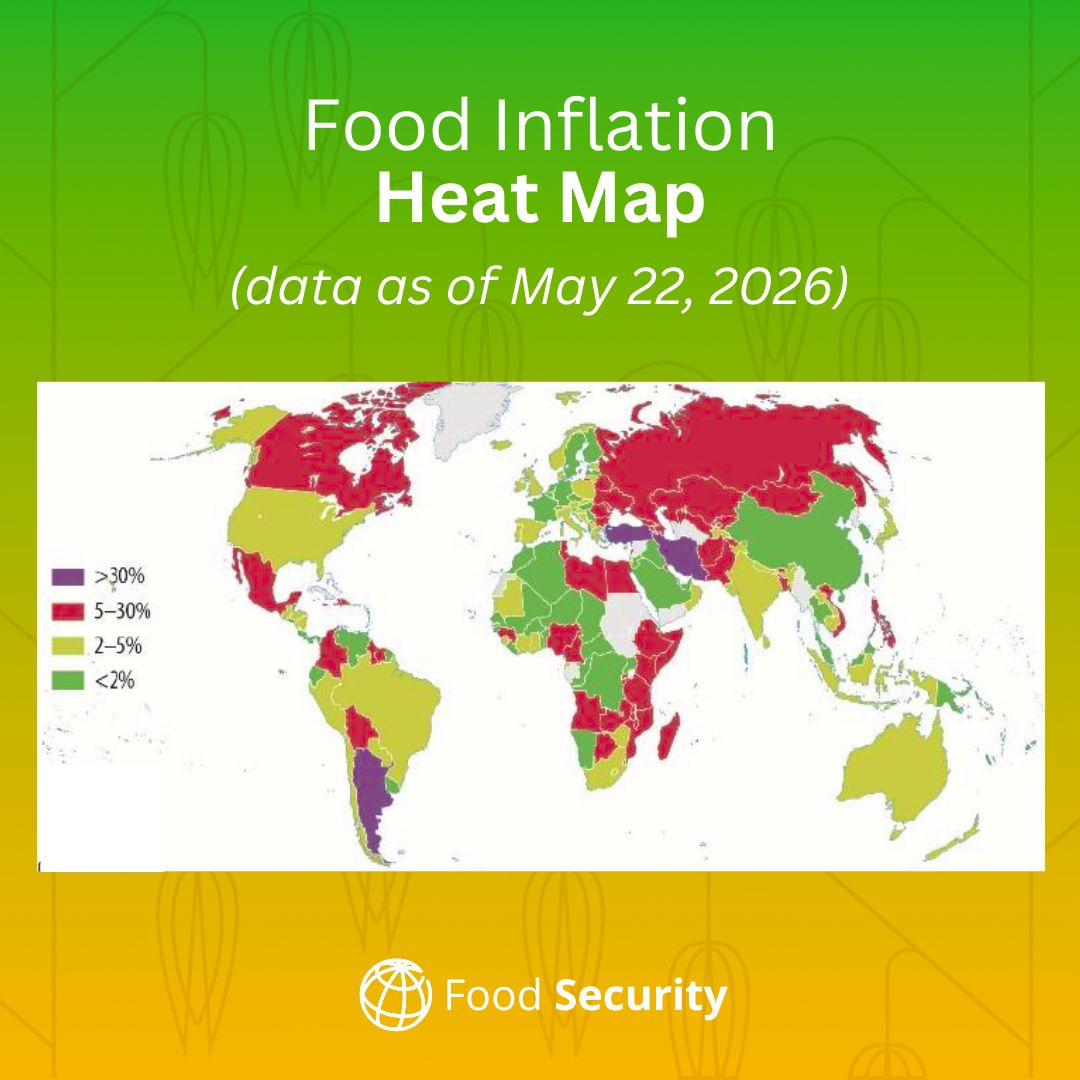
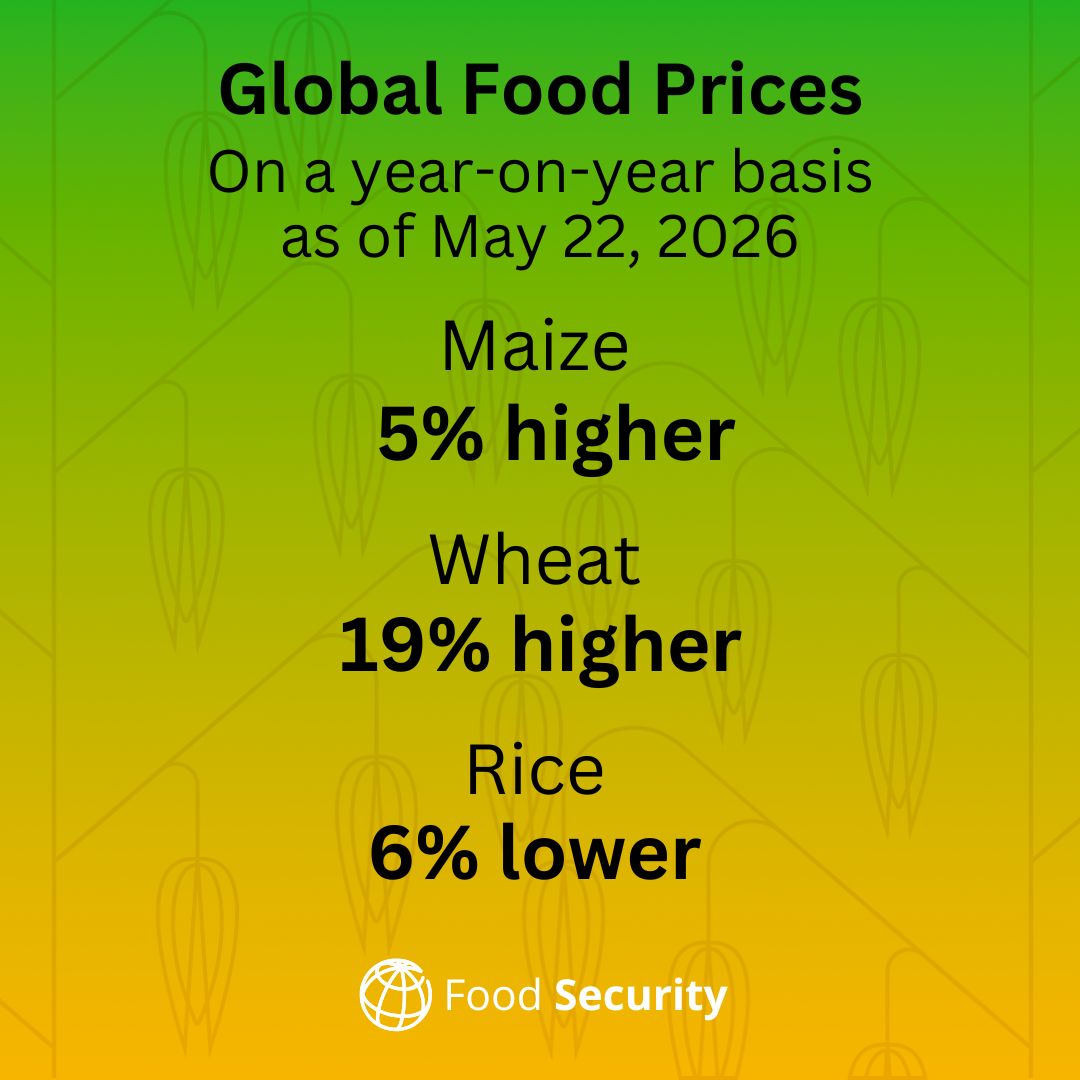
Global food security increasingly strained by climate extremes, supply chain disruptions, and rapid population growth. For Pakistan, food security remains a critical structural crisis: nearly 40% of country faces food insecurity, largely driven by poverty coupled with inflation.
The May #FoodSecurity Update is out!
Get insights on:
1️⃣ the global food market outlook
2️⃣ emerging issues
3️⃣ regional updates
Download: https://t.co/z1o9HwkKpd
Pakistan's Federal Budget has consistently been approved in under 15 days, a timeline so compressed, that meaningful legislative scrutiny is structurally impossible.
The consequences are predictable: committees lack the time to examine allocations critically, public consultations are bypassed entirely, and executive priorities go unchallenged. When compared to India's 7–8 weeks, Canada's 2–3 months, or the United States' 6+ months of congressional review, it becomes clear that Pakistan's budget process is not a deliberative exercise, it is a formality.
The result is a budget that reflects the priorities of a few rather than the needs of the many, leaving citizens and businesses with little say in decisions that directly shape their economic lives.
EPBD's proposed Budget Calendar offers a structured path out of this cycle. By extending the process to 6–8 weeks: beginning with Pre-Budget Consultation Papers in mid-April, followed by stakeholder hearings, parliamentary presentation in mid-May, and public debate through June before a June 30 passage deadline, the process can be transformed from a rubber stamp into a genuine democratic exercise.
Backed by an Independent Parliamentary Budget Office, mandatory debate periods, and institutionalized public hearings, this framework would ensure that budgets are scrutinized, contested, and ultimately made more responsive to the people and businesses they are meant to serve.
To read the full EPBD Shadow Federal Budget 2026-27 and explore our detailed recommendations, visit: https://t.co/SYtKieNOYm
On behalf of D-12 Community, we sincerely thank Chairman CDA sir @SohailAshrafGor for today’s productive meeting, immediate directions on key D-12 issues, and his commitment to transform D-12 into a Model Sector of Isb Hopeful for positive progress ahead. 🙏
@CDAthecapital#D12
Demand for minerals could double by 2040. For resource-rich developing countries, that’s not just a supply story—it’s a jobs, industry, and growth opportunity.
Read more from @Worldbankgroup Infrastructure VP Valérie Levkov on turning mineral wealth into development: https://t.co/8wJBJmwn9x
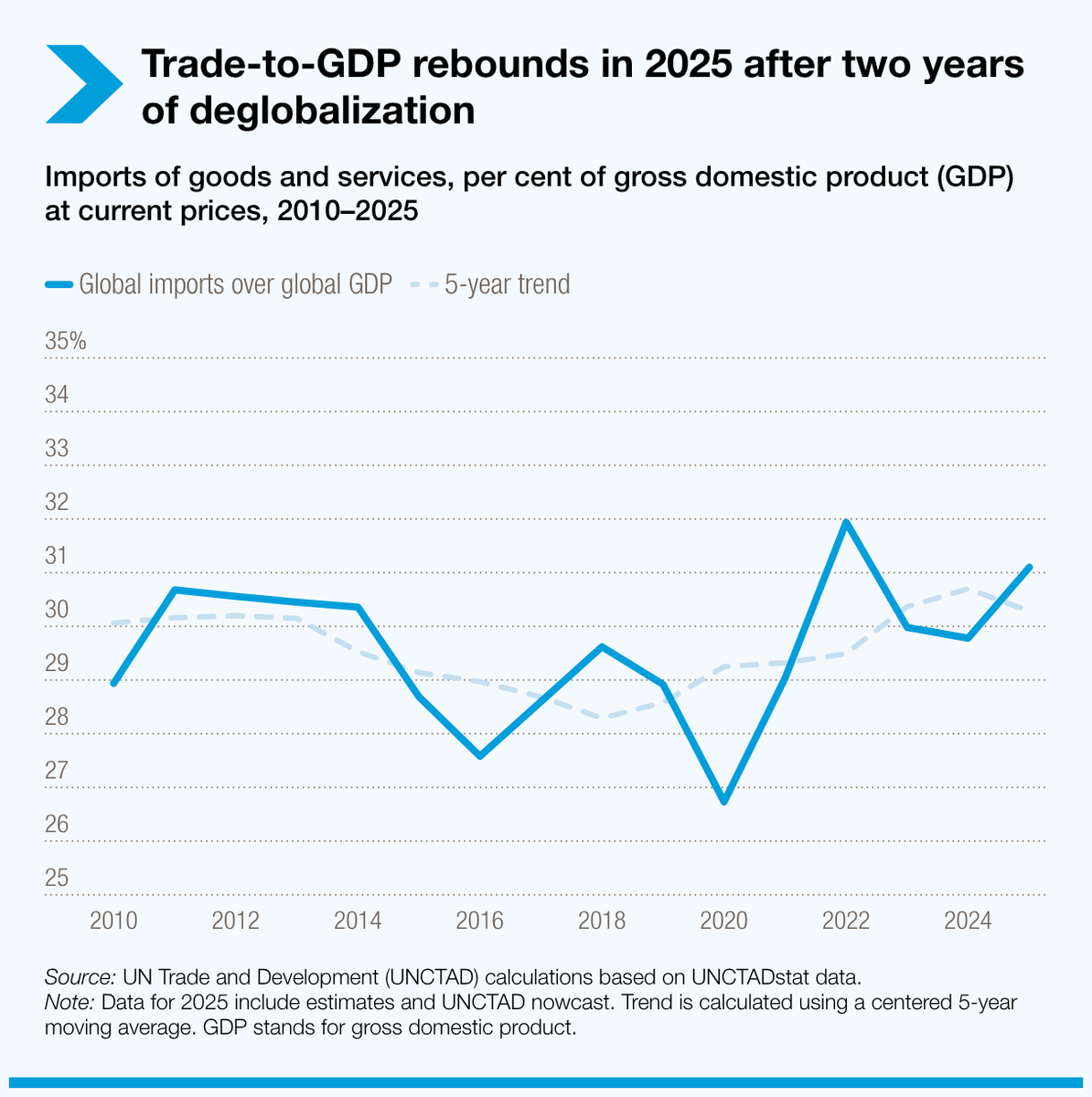
Globalization rebounded in 2025 as trade-to-GDP rose again.
But fragmentation is growing: Trade is concentrating in large economies, geographically closer trade links are growing faster, and geopolitics continue to reshape flows.
Explore: https://t.co/Ih6YUduUrq
A good initiative by @ansukhera
& @EPBDT
Think tank.
Shadow Policies, Real Stakes: Evaluating EPBD's Reform Blueprint for Pakistan https://t.co/KWZ6dxwUqx
@CDAthecapital@SohailAshrafGor
Urgent action needed: Streetlights at D-12 Markaz only family walking track/community cricket ground have been off for a week. Despite complaints, no action yet
This is the only evening walking space for families. Kindly restore lights immediately
We are pleased to announce that the Economic Policy & Business Development Think Tank (EPBD) has officially launched its Four comprehensive Shadow Documents.
This integrated economic roadmap presents a rigorous, data-driven alternative vision for our nation's macroeconomic future, establishing a new benchmark for structural reform and fiscal responsibility.
Tax Policy & Administration Reforms – Actionable solutions to broaden the revenue base and streamline public administration.
Shadow Federal Budget 2026-27 – A structured blueprint for optimized resource allocation and deficit reduction.
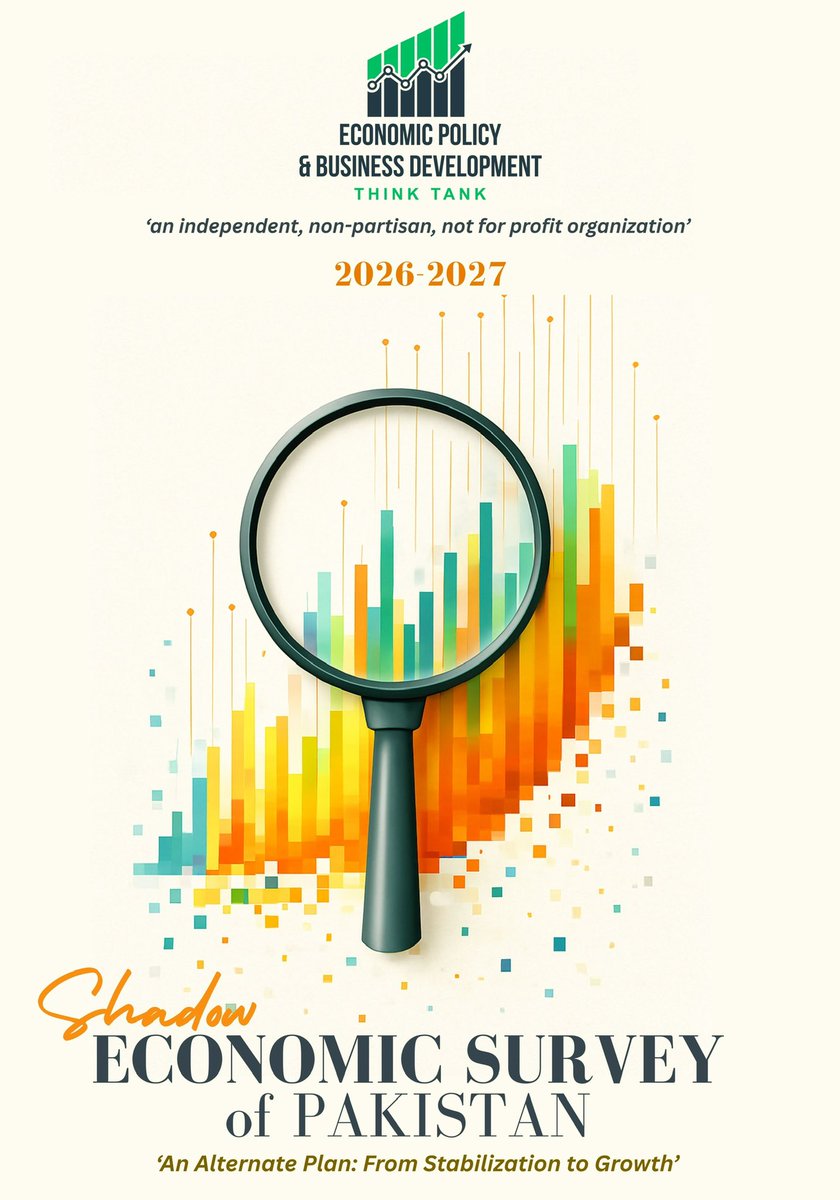
Shadow Economic Survey of Pakistan – A deep analytical dive into 21 identified sectors.
Shadow Five-Year Development Plan 2026-31 – A long-term framework targeting sustainable growth and equitable progress.
These frameworks represent months of intensive research by our policy experts and serve as a ready-to-implement roadmap for a more resilient, competitive economy. We invite all stakeholders, industry leaders, and members to engage with these documents as we advocate for a transparent and prosperous fiscal future.
🌐 Read the full documents here: https://t.co/NEm3q7XmAL…
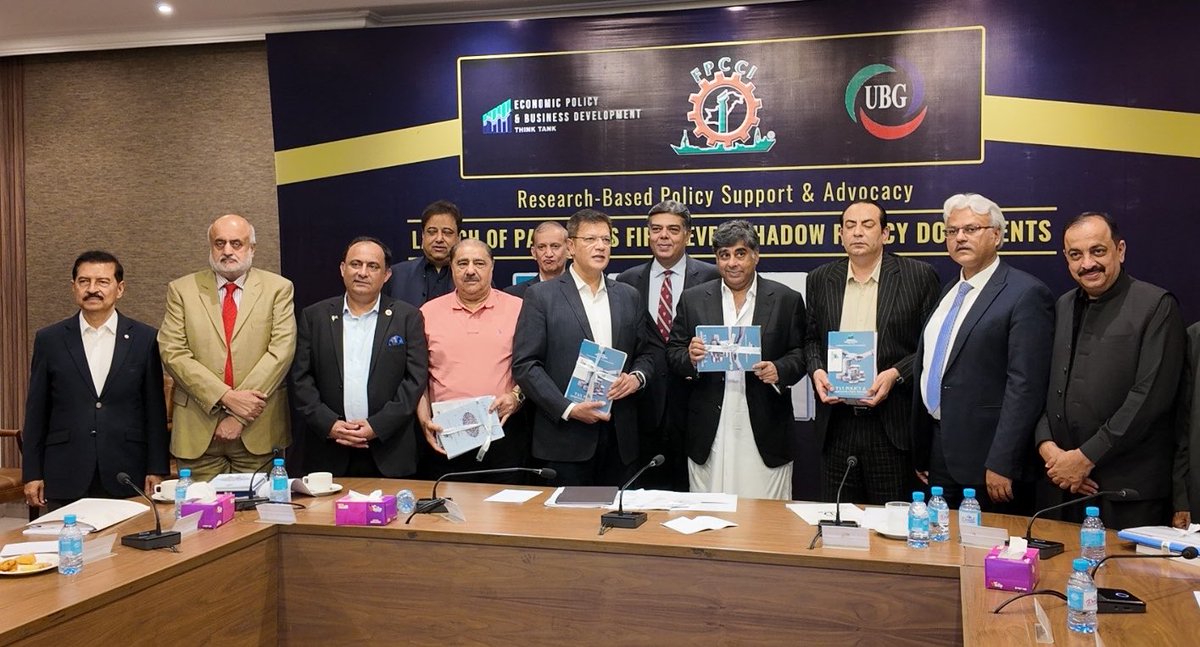
We are pleased to announce that ahead of the upcoming national fiscal announcements, the Economic Policy & Business Development (EPBD) think tank has launched its pioneering four comprehensive Shadow Policy Documents today. This integrated economic roadmap presents a rigorous, data-driven, people centric and growth oriented alternative vision for our nation's macroeconomic future, establishing new benchmarks for structural reforms and fiscal responsibility.
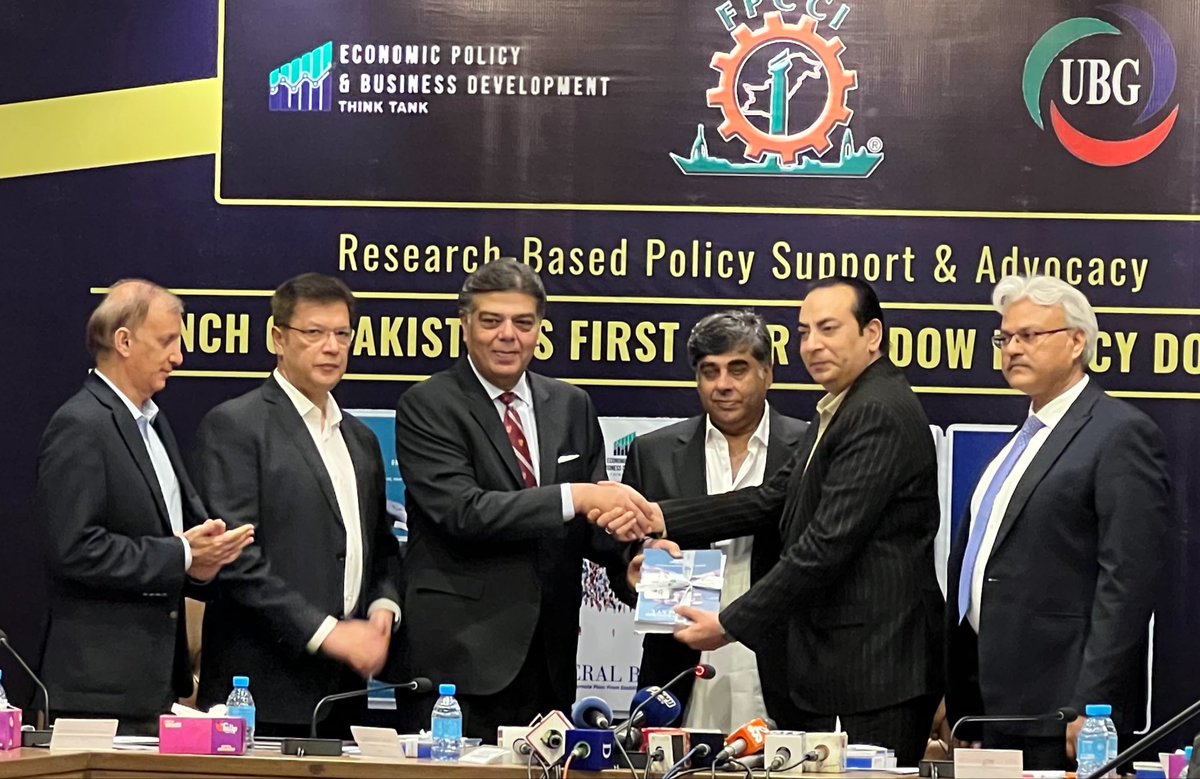
EPBD leadership, including Patron-in-Chief Mr. Bashir Jan Muhammad, Chairman Dr. Gohar Ejaz, HI, SI, CEO Sardar Ahmad Nawaz Sukhera, HI (@ansukhera), Mr. Eazaz Dar, and UBG Patron-in-Chief & Board Member EPBD Mr. S M Tanveer (Din Group) presented the following four Shadow Documents to FPCCI President Mr. Atif Ikram Sheikh (@atifikram1) at its launch ceremony at @FPCCIOfficial
Tax Policy & Administration Reforms – Actionable solutions to broaden the revenue base and streamline the growth-oriented business friendly tax administration.
Shadow Federal Budget 2026-27 – A structured blueprint for optimized resource allocation and deficit reduction, not only for next year but for three year with medium term framework.
Shadow Economic Survey of Pakistan – An in-depth analysis of past economic performance and identifying potential for growth in all critical economic indicators.
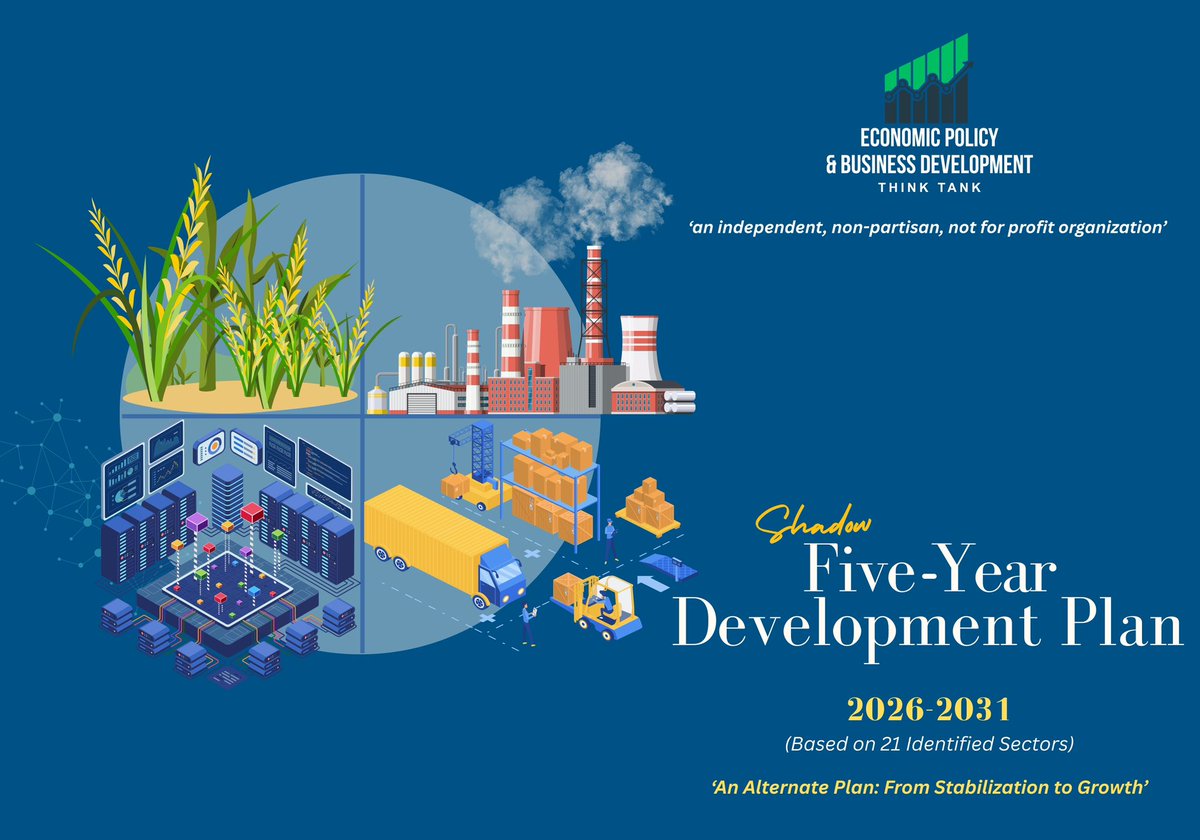
Five-Year Development Plan 2026-31 – A deep analytical dive into 21 prioritized sectors as drivers of growth with a roadmap to reach a reachable GDP growth of 8.5 percent over five years.
🌐 Read the full documents:
https://t.co/GXEhvpP02M
Five Year Development Plan 2026–31 - ‘A Blueprint for Development Transformation’.
The report lays out a long-term vision for economic revival, institutional reform, industrial expansion, and sustainable national growth.
Moving beyond short-term fixes, the plan focuses on transforming Pakistan’s development trajectory through investment, productivity, infrastructure, human capital, and private sector empowerment.
As part of EPBD’s upcoming series of Shadow Policy Documents, this report aims to shift the conversation from crisis management towards structured, future-oriented development.
An Alternate Plan: From Stabilization to Growth
#DevelopmentPlan #PakistanEconomy #PolicyReforms
The low and middle-income groups are burdened through regressive taxes, while large segments of wealth and retail remain under-taxed. This imbalance deepens income inequality and increases the cost of living for ordinary citizens.
The way forward lies in broadening the tax base, reducing reliance on indirect taxation, and ensuring fair direct taxation on high-income sectors and untaxed wealth. Strengthening tax administration, digitizing the economy, and promoting transparency can help create a more equitable and sustainable fiscal system for Pakistan
@SohailAshrafGor@CDAthecapital@dcislamabad@mosharrafzaidi@MohsinnaqviC42@KlasraRauf
Among other issues like missing street lights and footpaths, SR West in D-12 is in a dilapidated state.
As you can see in the video, the potholes aren't a mystery. 22-wheeler lorries pass through a residential sector daily, without any restriction, without any check.
This has been raised multiple times. No response. No action.
Simple question: What is the thought process behind allowing heavy commercial vehicles inside a residential sector? Who approved this? What weight limits exist, and who enforces them?
We pay taxes. We deserve functioning roads. Not patch jobs that collapse in weeks because the root cause is never addressed.
Fix the roads. Ban heavy lorries from residential sectors. Or at least explain why you won't.
Tax Policy and Administration Reforms - “Taxation that Enables, Not Strangles”
As part of EPBD’s upcoming series of four Shadow Policy Documents, this report presents a reform-oriented vision for a simpler, fairer, and growth-driven taxation system in Pakistan.
Focused on improving tax administration, broadening the tax base, and reducing the burden on productive sectors, the document outlines practical recommendations to support investment, business expansion, and long-term economic stability.
A roadmap from stabilization to growth.
Stay tuned…
#Tax #Pakistan #Pakistanbudget2026
@CDAthecapital
sir, @SohailAshrafGor
D-12 Markaz roads got TST 20 years ago. This temporary surface is now broken with potholes.
Patchwork is a waste of time & public money,one heavy rain will undo it. Kindly approve proper/complete road carpeting instead of patches.
#D12Markaz