Apple sold you an iPhone with its top camera settings switched off. On purpose.
$1,200 for a camera you've never actually used. Six settings are off by default, and they're the ones that can make your photos look dramatically better.
Fix these 6:
Claude has discovered a previously unknown enzyme system hidden in the DNA of bacteriophages. Beside the enzyme’s gene sits a long array of repeating DNA—a structure that looks somewhat similar to CRISPR.
We don’t yet understand what this system does, but only a handful of known systems share its features, and all of them are able to cut, copy, and paste DNA. Historically, the discovery of such programmable systems has helped revolutionize medicine. CRISPR, for instance, is now the foundation of genetic medicines. But it will take much more work to learn what this system does, and whether it can be put to similar use.
Read more: https://t.co/RuEosScSMb
Today we announced the Claude-led discovery of a molecular machine that we suspect could represent a new gene editing mechanism. Its precise function, biotechnological utility (if any), or level of significance is not yet clear, but at minimum it is work I would have been proud to do as a PhD student. The work was done mostly, though not entirely, by Claude: our life sciences team suggested a broad area of research, Claude read through the literature and a bunch of genome data and discovered something interesting, then Claude proposed experiments to verify the discovery and our team carried them out.
It’s easy to dismiss this as a one-off or curiosity, but we’ve repeatedly seen a pattern where AI performance in new intellectual domains goes from weak to superhuman in a matter of a few years. In 2023 models struggled to do math at the level of an average high-school student. In 2024 they started to do well on math competitions for the best high-schoolers in the country, in 2025 they started to solve minor open problems, in early 2026 more significant open problems, and in late 2026 they are beginning to solve the top few open problems in all of mathematics. We believe AI for biology is on a similar exponential trend.
The main difference between biology and mathematics, of course, is that math can be done purely theoretically, while biology requires experimentation. Some have used this to draw the conclusion that AI’s utility in biology will be limited. We think this is wrong. As we’ve demonstrated today, humans can collaborate with AI to perform the experiments, validate key results in a few weeks and, if necessary, work with the AI to iterate on what they find. Eventually it may even be possible for Claude itself to safely perform the experiments by autonomously controlling lab equipment, with appropriate safeguards in place, but we aren’t doing that today (our lab is also a BSL1/BSL2 facility that doesn't handle materials dangerous to humans).
More broadly, biomedical advancement has many stages — from fundamental biology discoveries, to translational research, to drug discovery, clinical trials, and finally the actual delivery of medicines and health care to patients. We are also interested in these later stages, but even simply accelerating the first stage of fundamental biological discoveries has the potential to speed up and broaden the entire pipeline. Improving our understanding of biology and sharpening biologists’ tools can drive forward all of the later stages, for example by identifying new drug targets, finding new therapeutic modalities, allowing for more precise measurement, and speeding up the experimental loop which itself further accelerates our understanding of biology. This will not in itself speed up clinical trial times, but if it succeeds it could greatly increase the number of promising candidates that go into the pipeline — an increase in throughput even though latency remains.
In Machines of Loving Grace, I wrote about AI’s potential to “cure most diseases in 5-10 years” — a goal that sounds impossible, but one I believe is just barely possible if AI is applied to every stage of the pipeline. The first step is showing that AI can first help with, and then drive, biological discoveries.
Claude’s discovery is the latest in a line of related prior work that goes back decades, beginning with systems like CRISPR, and continuing with discoveries like the bridge recombinase and VIPR in the past few years. Recently, there has been heightened interest in systems based on reverse transcriptase (RT) enzymes, the enzyme underlying the system Claude identified. And most recently, a Stanford team working independently described a novel RT system with an associated non-coding array that is in some ways similar to the one Claude found, though they are distinct systems that evolved independently from each other. I believe that we’re at the very beginning of finding such systems and developing them into powerful tools for biotechnology.
I’m proud of the resources Anthropic has invested in accelerating the public benefits of AI through the life sciences, and we’re aiming both to grow our life sciences team and to work with other scientists to extend this approach to a broad range of problems. If you have a proposal for a research collaboration or are interested in joining our life sciences team, please reach out.
By 2030: AI surpasses the combined intelligence of all 8 billion humans. 1 billion robots handle every job nobody wants. And the wealth they generate gets distributed to everyone — not a survival stipend. Real money. Universal High Income.
We're not waiting for a better world anymore. We're living in the last chapter of the old one.
The most useless thing you can do right now is spend your mental energy on problems that technology is about to make completely irrelevant.
Anthropic engineer:
"99% of people use Claude Code like Google, and only 1% are running swarms of self-learning Claude agents
I'm running 100+ agents in a loop. I have Chief agent, PM agents - they manage the whole team"
in a 30-minute workshop, an Anthropic engineer revealed how to get max value from Claude Code at min. cost
this is worth more than another $500 vibe-coding course
watch today, then read how to build self-improving agentic systems with Fable in the article below
Elon Musk: "In the next 6 to 12 months, we’ll be doing our first implants for vision, where even if somebody is completely blind, we can write directly to the visual cortex."
"Long term, you would have very high resolution and be able to see multispectral wavelengths... you could see in infrared, ultraviolet, radar. It's like a superpower situation."
Elon Musk y su empresa Neuralink han conseguido leer la mente. Es un hito histórico que cambiará la vida de mucha gente.
Piensas algo y la máquina es capaz de leerlo y reproducirlo. Aquí un hombre que le vuelve a decir “te quiero” a su esposa después de muchos años mudo. ❤️
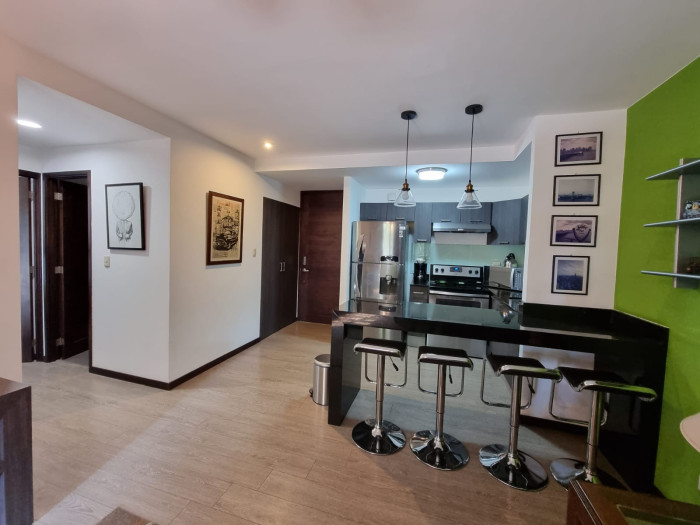
Vivir en zona 10 también puede significar tener comodidad y espacios para disfrutar tu día a día. 🌿
💰 Renta: Q8,800
Mantenimiento incluido + IVA.
🐾 Se permiten mascotas.
Escríbenos
Al WhatsApp https://t.co/ee2cdDOtu6
#Citymaxgold#BuildingTheFuture#Zona10#Profesionales
Zona 14 | Venta o renta
Apartamento de 189.21 m² con 2 habitaciones, 2.5 baños, 2 parqueos, terraza grande, estudio, sala familiar y bodega.
Venta: USD 700,000
Renta: USD 2,800
Evelyn Carranza | 3759-5624
#ejecutivos#zona14#familia
My iPhone got stolen. The thief plugged it in to charge.
That second, the front camera took a photo and emailed it to me with the exact location.
Not an app. A built-in feature. Here's the setup:
90% of AI content is written by people who've never shipped a production agent.
This newsletter is written from inside 100+ engineering teams that do it every week.
Subscribe for free 👇
https://t.co/Y8zvOjZzJ9