Can you use laundry detergents instead of laboratory detergents and enzymes to make an extremely cheap and accessible DNA extraction method with no refrigeration requirements?
Here are a few examples of people who have tried this and made laundry detergent extractions a reality:
⭐Nasiri et al. (2005) used laundry powder for blood cell lysis, followed by salting out with sodium chloride and washing with ethanol. They found their method was equivalent to the standard salting-out procedure using proteinase K and RNAses for both high-quality genomic DNA extraction and downstream PCR.
Nasiri et al. (2005). Modified salting‐out method: high‐yield, high‐quality genomic DNA extraction from whole blood using laundry detergent. Journal of clinical laboratory analysis, 19(6), 229-232.
https://t.co/UId6ty9zTE
⭐Mirnejad et al. (2012) tested laundry detergents for extracting bacterial genomic DNA. They used laundry detergent lysis, sodium acetate protein precipitation, and ethanol for precipitation and washes. Two of their detergents containing enzymes worked well for genomic extraction, PCR, and restriction digests:
Mirnejad et al. (2012). Rapid DNA extraction of bacterial genome using laundry detergents and assessment of the efficiency of DNA in downstream process using polymerase chain reaction. African Journal of Biotechnology, 11(1), 173-178.
https://t.co/wefbLOAzKV
⭐Guan et al. (2013) used laundry detergent and PCR mix buffer to extract DNA from cattle hair, and found three different detergents worked well enough to allow the amplification of four microsatellite regions:
Guan et al. (2013). A simple method to extract DNA from hair shafts using enzymatic laundry powder. PloS one, 8(7), e69588.
https://t.co/vyJy3dDnT5
⭐More recently, Talebi et al. (2019) described a successful laundry detergent method for whole blood of farm animals at a cost of €1-2 per 50 preps, using only 2.5 g per 100 samples, followed by salting out and cleaning DNA with ethanol.
Talebi et al. (2021). A handmade DNA extraction kit using laundry powder; insights on simplicity, cost-efficiency, rapidity, safety and the quality of purified DNA. Animal Biotechnology, 32(3), 388-394.
https://t.co/hsX2TQmMUS (closed access article)
Other methods can also be found in the literature that involve chloroform or magnetic beads to further clean up DNA.
None of this is a guarantee that laundry detergents will work for every or even most DNA extraction challenges, or that there aren't easier ways to do it.
But it could be something to try out if you want a cheap detergent/enzyme based cell lysis method, especially for high quality unfragmented DNA. After all, they are mostly just detergents and enzymes!
And if you have tried laundry detergents in your lab for DNA extraction, or fancy giving them a go, then we'd love to hear about your experiences of using them.
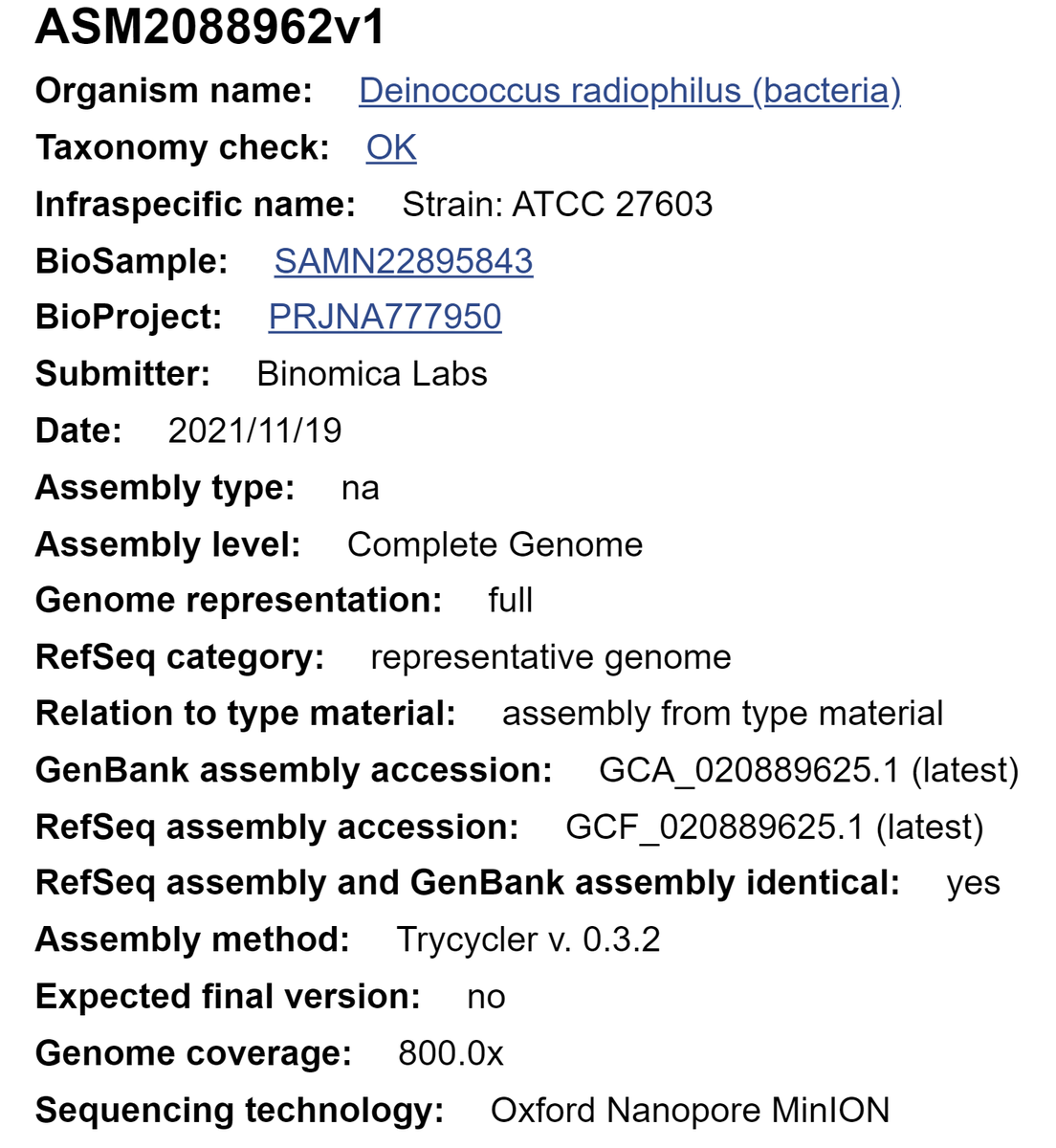
Still very much in disbelief that two degreeless heathens in a home lab with no formal training managed to produce a reference quality bacterial genome of a really hard-to-crack microbe and that our assembly is now THE representative genome of that organism. Amateur biology FTW!